
Spain, Portugal, Croatia, and Albania Drive Europe's Biggest Tourism Surge of 2026 as Travelers Abandon Overcrowded Hotspots for Authentic Coastlines, Historic Cities, and Affordable Mediterranean Escapes: New Update
Spain, Portugal, Croatia, and Albania are leading Europe's most significant tourism transformation of 2026, as travelers worldwide shift away from overcrowded destinations toward coastlines, historic cities, island adventures, and authentic cultural experiences — with Albania's Riviera, Portugal's Azores and Madeira, Croatia's Adriatic islands, and Spain's regional diversity all gaining unprecedented global attention.

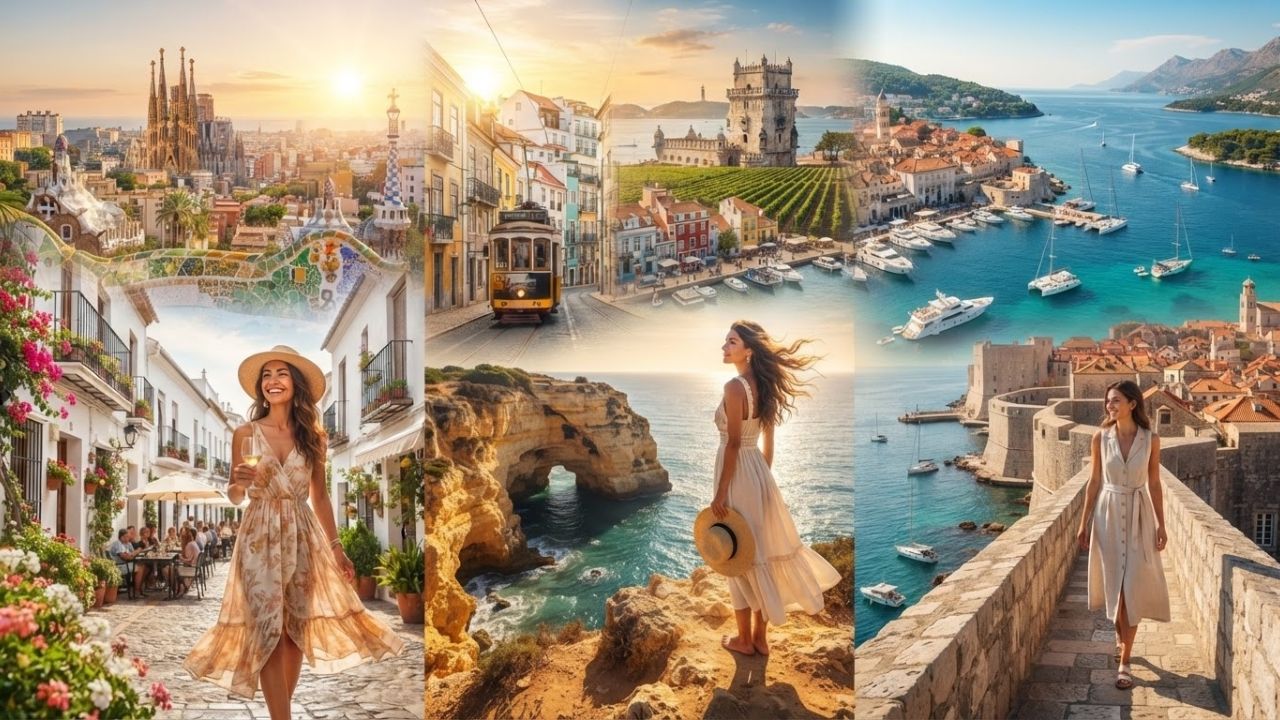
Image generated by AI
Published on July 28, 2026
Spain, Portugal, Croatia, and Albania are collectively driving Europe's most significant tourism surge of 2026, attracting millions of visitors who are actively moving away from overcrowded, overpriced hotspots in favor of destinations that deliver authentic culture, stunning coastlines, historic cities, and memorable local experiences without the congestion and high costs that have come to define Europe's most saturated tourist zones. The shift represents a fundamental change in traveler behavior — a move toward meaningful discovery over checklist-style tourism — and all four destinations are directly benefiting from this global recalibration of where and how people choose to spend their holidays. For travelers planning European trips in 2026, understanding what each of these four destinations uniquely offers has become essential for building itineraries that deliver genuine value and lasting memories.
Quick Summary
- Europe's Tourism Transformation: Spain, Portugal, Croatia, and Albania are leading a 2026 surge in European travel driven by demand for authentic experiences, cultural connection, and better value over overcrowded hotspots.
- Spain's Scope: Visitors are spreading beyond Madrid, Barcelona, and the Balearics into smaller towns, rural landscapes, and regional nature destinations across the country.
- Portugal Beyond Lisbon: Alongside Lisbon and Porto, Madeira and the Azores are gaining rapid popularity among travelers seeking nature, adventure, and outdoor experiences.
- Croatia's Island Dominance: Dubrovnik, Split, Zadar, and the Adriatic islands continue driving Croatia's success, with growing interest in national parks, countryside, and local culinary culture.
- Albania's Fast Rise: The Albanian Riviera and Tirana are attracting travelers seeking Mediterranean beaches with authentic atmosphere and significantly lower costs than comparable European alternatives.
For much of the past two decades, European tourism has been defined by intense concentration — vast numbers of visitors funneling into a narrow set of world-famous cities, islands, and landmarks, generating crowding, pricing pressure, and a diluted experience for travelers who had expected something more special. In 2026, the data and the booking patterns tell a clear story: that concentration is beginning to break. Travelers are making more deliberate, research-driven decisions about where to go, and the four destinations benefiting most from this shift — Spain, Portugal, Croatia, and Albania — each offer something that the most famous European hotspots no longer reliably deliver: a sense of discovery, a connection to genuine local culture, and experiences that feel earned rather than processed.
Europe's 2026 Tourism Surge: What Is Driving the Shift to These Four Destinations
The tourism growth of 2026 reflects a convergence of several travel behavior changes that have been building across successive post-pandemic travel seasons:
- Abandonment of Overcrowded Hotspots: Travelers who have visited — or read extensively about — the worst manifestations of overtourism in certain European cities are actively seeking destinations that offer comparative calm and authenticity.
- Demand for Authentic Experiences: The preference for genuine cultural connections, local cuisine, traditional neighborhoods, and meaningful travel over theme-park-style mass tourism attractions is reshaping destination choices at scale.
- Better Value Expectations: As costs have risen across Europe's most commercialized destinations, travelers are applying cost-benefit thinking more rigorously — and destinations like Albania, Portugal's interior, and Spain's regional towns are winning that comparison convincingly.
- Improved Air Connectivity: Better transport links are making previously less-accessible destinations easier to reach, expanding the universe of viable holiday options for travelers across all major source markets.
- Sustainable Tourism Awareness: Growing environmental and ethical consciousness is driving interest in destinations that actively protect natural areas, support local communities, and create responsible visitor experiences.
- Regional Discovery Trend: Travelers are increasingly willing to move beyond major gateway cities to explore smaller towns, rural landscapes, and natural areas — a behavioral shift that benefits all four countries profiled here.
Portugal: Coastal Beauty, Cultural Depth, and the Rise of Madeira and the Azores
Portugal has consolidated its position as one of Europe's most appealing travel destinations in 2026, building a reputation that extends well beyond its already-famous cities into a far broader portfolio of landscapes, island territories, and cultural experiences.
Lisbon and Porto remain anchor destinations for international visitors seeking European architecture, historic neighborhoods, and vibrant urban culture. Both cities continue to deliver exceptional value compared with western European capitals of comparable appeal, with their food scenes, fado music culture, maritime heritage, and compact explorability all drawing strong traveler appreciation.
The Algarve continues to perform as Portugal's coastal powerhouse — its dramatic cliffside coastline, sandy beaches, and luxury resort infrastructure sustaining high demand from European holiday-makers throughout the summer season and increasingly into shoulder months.
The most notable growth story within Portugal, however, is the accelerating international popularity of Madeira and the Azores. Both island territories are attracting travelers specifically seeking nature, adventure, and outdoor experiences — from whale watching and volcanic hiking in the Azores to levada walks, tropical gardens, and dramatic Atlantic scenery in Madeira. These destinations perfectly match the emerging global demand for meaningful travel that combines natural wonder with cultural discovery in places that still feel genuinely undiscovered.
Portugal's villages, vineyards, and coastal communities are also gaining traction among a new generation of travelers whose preferences specifically favor authentic local connections over manufactured tourist experiences — a travel philosophy that Portugal's diverse regional character serves exceptionally well.
Croatia: Adriatic Dominance Expanding Into Year-Round Discovery
Croatia's position as one of Europe's most desirable coastal destinations continues to strengthen in 2026, with the country's combination of Adriatic coastline, ancient walled cities, island sailing culture, and cultural heritage sustaining its strong global appeal while evolving beyond its original summer beach tourism identity.
Dubrovnik remains Croatia's most internationally recognized destination — its UNESCO-listed ancient city walls, dramatic hilltop panoramas, and deep historical atmosphere drawing visitors from every major travel market. Split, Zadar, and other Adriatic coastal cities are also attracting growing visitor numbers through their own combinations of archaeological heritage, waterfront promenades, beach access, and entertainment.
Croatia's island network is a central pillar of its tourism offer. Sailing experiences, island-hopping adventures, and premium coastal holidays attract visitors who value the freedom and discovery that the Adriatic's island geography uniquely provides — an experience that is difficult to replicate in comparable Mediterranean destinations.
Increasingly, Croatia is also developing tourism beyond summer coastal holidays. Visitors are exploring the country's national parks, inland countryside, local cuisine, and cultural institutions — movements that extend the season, broaden the geographic spread of visitor spending, and create a more sustainable, year-round tourism economy. The country's strong Mediterranean identity continues to make it one of Europe's most compelling destinations for travelers seeking a combination of natural beauty, relaxation, and authentic local tradition.
Albania: Europe's Fastest-Growing Emerging Destination in 2026
Albania is generating some of the most striking growth numbers in European tourism in 2026, attracting international visitors with a proposition that is almost uniquely positioned in the current market: Mediterranean beaches and coastal beauty combined with authentic atmosphere, traditional culture, and significantly lower costs than comparable European destinations.
The Albanian Riviera has become the country's most talked-about tourism asset, offering coastal scenery along the southern Adriatic that combines stunning blue waters, historic hillside villages, and a relaxed, uncommercial atmosphere that is precisely what many travelers feel they can no longer find in the region's more famous beach destinations. The Riviera's combination of natural beauty and relative accessibility has made it a compelling destination for travelers who have been priced out of or disappointed by more developed Mediterranean coastlines.
Beyond the coast, Albania offers adventure and cultural tourism opportunities in mountain regions, historic cities, and natural landscapes that remain far less visited than comparable destinations across Europe. The cities and ancient ruins of the Albanian interior provide historical depth for travelers willing to move beyond the beach, while the mountain landscapes of northern Albania offer increasingly organized trekking and outdoor adventure experiences.
Tirana, Albania's capital, is developing rapidly as a city tourism destination in its own right — offering modern cultural attractions, a growing food scene, and easy access to natural areas in the surrounding countryside. The city's improving infrastructure and increasing international connectivity are making it a practical and accessible starting point for Albanian journeys.
Albania's growth is a textbook example of the global travel trend toward hidden gems — destinations where unique, uncrowded experiences are still available at prices that make longer stays genuinely feasible for budget-conscious travelers.
Practical Traveler Advice: Planning Your 2026 European Trip to These Destinations
Travelers considering Spain, Portugal, Croatia, and Albania for 2026 should follow these practical steps:
- Book early for Croatia's peak summer season. Dubrovnik, Split, and the most popular Adriatic islands fill quickly between June and September — accommodation and sailing charters should be reserved well in advance.
- Explore Portugal beyond Lisbon and Porto. Madeira and the Azores require separate flight bookings from mainland Portugal — plan these island extensions separately and book well ahead as seat capacity is limited.
- Consider Spain's regional alternatives to Barcelona and Madrid. Valencia, the Canary Islands, Andalusia's smaller towns, and Spain's rural interior all offer exceptional experiences at meaningfully lower costs and crowd levels than the flagship cities.
- Visit Albania's Riviera in June or September. July and August see peak demand — early and late summer offer better availability, lower prices, and slightly more authentic local atmosphere along the southern coastline.
- Check visa and entry requirements for Albania. Unlike Spain, Portugal, and Croatia (all EU/Schengen Area), Albania is not a Schengen member — travelers should verify entry requirements based on their nationality before booking.
- Use sustainable and locally owned accommodation. All four destinations reward travelers who stay in locally run guesthouses, family hotels, and agri-tourism properties rather than international chain hotels — both for price and for authentic cultural connection.
- Explore shoulder season travel across all four destinations. April–May and September–October offer excellent conditions, lower prices, smaller crowds, and a more genuine sense of local life in all four countries.
What to Expect Next: Europe's Tourism Landscape Looking Ahead
The tourism growth trajectories of Spain, Portugal, Croatia, and Albania are expected to continue and potentially accelerate through the remainder of 2026 and into 2027. As air connectivity improvements bring more European and international source markets within practical reach of these destinations — particularly Albania, which continues to add international routes — the pool of travelers with easy access to these countries will expand further.
Sustainable tourism is emerging as an increasingly important policy priority across all four destinations. Local authorities and national tourism bodies are actively developing frameworks to manage visitor numbers in the most sensitive areas — ancient cities, protected coastlines, and natural reserves — while channeling tourism growth toward regions that can absorb it without environmental or cultural damage.
The 2026 European tourism surge led by Spain, Portugal, Croatia, and Albania signals a durable shift in how the world's travelers think about European holidays — one that rewards curiosity, values authenticity, and prioritizes experience over familiarity. Travelers who plan ahead, explore regional alternatives to each country's most famous sites, and engage actively with local culture will find that these four destinations collectively offer some of the most rewarding and memorable travel experiences available anywhere in the world this year.
FAQ: Spain, Portugal, Croatia, and Albania Tourism in 2026
Why are Spain, Portugal, Croatia, and Albania attracting more tourists in 2026?
The four destinations are benefiting from a fundamental shift in traveler behavior — a growing preference for authentic experiences, cultural connection, better value, and less crowding compared with Europe's most commercialized tourist hotspots. Improved air connectivity and growing sustainable tourism awareness are also driving visitors toward these destinations.
What are Portugal's most exciting emerging tourism destinations beyond Lisbon?
Beyond Lisbon and Porto, Madeira and the Azores are seeing rapid growth in international tourism demand, particularly among travelers seeking nature, outdoor adventure, and experiences that feel genuinely undiscovered. The Algarve remains Portugal's strongest coastal tourism zone, while rural villages, vineyards, and coastal communities across the country are also gaining traction.
What is the Albanian Riviera and why is it popular?
The Albanian Riviera is a stretch of southern Adriatic coastline offering Mediterranean beaches, clear water, hillside villages, and an authentic, uncommercial atmosphere at prices significantly lower than comparable European beach destinations. It is attracting travelers who want genuine coastal experiences away from the crowding and high costs of more developed Mediterranean coastlines.
Is Albania part of the Schengen Area, and do I need a visa?
Albania is not a Schengen Area member, unlike Spain, Portugal, and Croatia. Entry requirements for Albania vary by nationality — travelers must verify their specific visa and entry requirements before booking, as rules differ significantly from the Schengen zone that applies to the other three destinations.
What are Croatia's top destinations beyond Dubrovnik?
Beyond Dubrovnik, Croatia's strong tourism destinations include Split, Zadar, the country's extensive Adriatic island network (popular for sailing and island-hopping), and a growing range of inland and national park experiences. The country is actively developing year-round tourism options including cultural attractions, local cuisine, and countryside exploration beyond its summer beach season.
Suggested SEO Metadata & Assets
Related Travel Guides
Disclaimer
This article is for informational and educational purposes only. It does not constitute legal, financial, or professional advice. While we strive to provide accurate and up-to-date information, travel policies, regulations, and conditions change rapidly. Always verify information with official sources before making travel decisions. Nomad Lawyer makes no representations about the accuracy, reliability, completeness, or suitability of the information provided. Readers should consult qualified professionals for advice specific to their circumstances. The views expressed in this article are those of the author and do not necessarily reflect the views of Nomad Lawyer.
Kunal K Choudhary
Co-Founder & Contributor
A passionate traveller and tech enthusiast. Kunal contributes to the vision and growth of Nomad Lawyer, bringing fresh perspectives and driving the community forward.
Learn more about our team →