
Laos, Cambodia, Vietnam, Philippines, Sri Lanka, and Indonesia Emerge as Southeast Asia's Most Affordable Budget Travel Destinations in 2026, Challenging Thailand With Cheaper Escapes, Rich Culture, and Authentic Adventures: Everything You Need to Know
Rising costs across Thailand's most iconic destinations — including Bangkok, Chiang Mai, Koh Phi Phi, and Koh Samui — are pushing millions of budget travelers in 2026 toward emerging alternatives including Laos, Cambodia, Vietnam, the Philippines, Sri Lanka, and Indonesia beyond Bali, where lower expenses, untouched landscapes, ancient heritage, and vibrant local culture are creating an exciting new era for Southeast Asian backpacker travel.

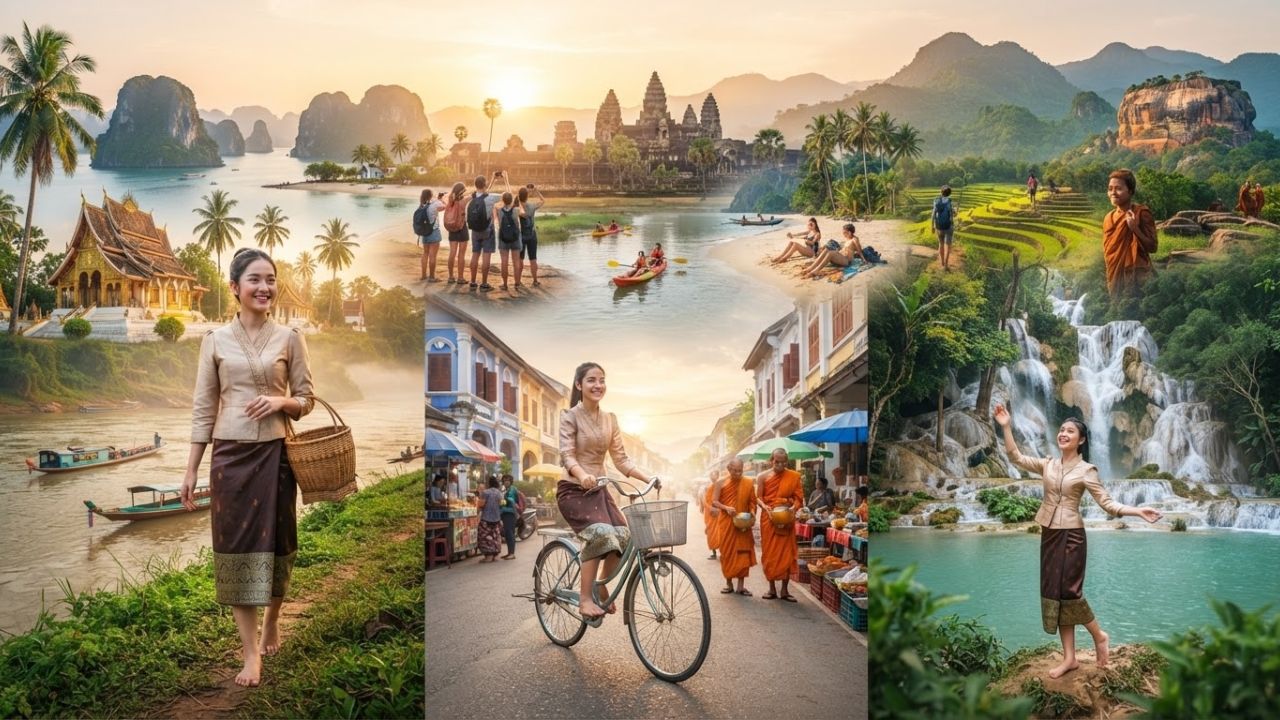
Image generated by AI
Published on July 28, 2026
Southeast Asia's budget travel map is undergoing its most significant transformation in decades as Laos, Cambodia, Vietnam, the Philippines, Sri Lanka, and Indonesia emerge in 2026 as genuine affordable alternatives to Thailand — offering cheaper accommodation, lower food costs, growing backpacker infrastructure, stunning beaches, ancient heritage sites, and authentic local experiences that rival everything that originally made Thailand famous among global travelers. Rising prices in Bangkok, Chiang Mai, Koh Phi Phi, and Koh Samui — direct products of Thailand's extraordinary tourism success — are encouraging millions of value-seeking visitors to explore destinations where affordability and authenticity remain intact. For travelers planning a Southeast Asian adventure in 2026, the options have never been more diverse, and the price advantages of these emerging destinations have never been more compelling.
Quick Summary
- Thailand's Price Problem: Rising costs in Bangkok, Chiang Mai, Koh Phi Phi, and Koh Samui are pushing budget travelers toward less developed alternatives.
- Top Alternatives: Laos, Cambodia, Vietnam, the Philippines, Sri Lanka, and Indonesia beyond Bali are the six destinations leading Southeast Asia's new budget travel era.
- Laos Highlights: Luang Prabang (UNESCO World Heritage), Vang Vieng, and the 4,000 Islands region near Cambodia offer some of the region's best-value slow travel experiences.
- Cambodia's Dual Appeal: Angkor Wat and Siem Reap for history; Koh Rong and Koh Rong Samloem for affordable island escapes.
- Indonesia Beyond Bali: The Gili Islands, Lombok, Flores, and Komodo National Park provide authentic adventure travel at lower cost than Bali's popular zones of Seminyak, Canggu, and Ubud.
For more than a generation, Thailand defined what budget travel in Southeast Asia meant. Affordable guesthouses in Khao San Road, ten-baht street meals, overnight buses between major cities, and legendary island parties on full-moon beaches became the benchmark of value-for-money international travel. That Thailand still exists — but the most famous parts of it have grown considerably more expensive as mass tourism, global real estate investment, and rising living costs have permanently altered the price environment in its most popular destinations. The travelers who arrive in 2026 searching for the Thailand experience of a decade ago are finding it most faithfully replicated not in Thailand itself but in the neighboring countries that watched Thailand's tourism model evolve and have not yet reached the same development ceiling.
Southeast Asia Budget Travel in 2026: The Full Destination Breakdown
The six destinations reshaping Southeast Asia's budget travel landscape in 2026 each offer a distinct mix of affordability, culture, and experience. Here is the complete destination-by-destination picture:
Laos: Southeast Asia's Most Affordable Slow Travel Destination
Laos has established itself as one of the most financially accessible destinations in the entire region, offering travelers a quieter, more reflective alternative to the high-traffic corridors of Thailand's busiest tourist zones. Lower tourism density has helped preserve the country's traditional lifestyle, cultural practices, and natural landscapes in ways that are increasingly rare across the region.
Luang Prabang remains Laos's most celebrated attraction — a UNESCO World Heritage city that combines centuries-old Buddhist temple architecture, French colonial-era buildings, and a contemplative riverside atmosphere. Travelers can experience morning alms-giving ceremonies, explore hilltop monasteries, and move between heritage sites at a pace that genuinely allows cultural absorption, all while spending significantly less than equivalent experiences in Thailand's major cities.
Vang Vieng offers a contrast — built around adventure tourism rather than cultural heritage. Set against dramatic limestone karst mountains and positioned along the Nam Song River, the town draws travelers interested in kayaking, hiking, tubing, and rock climbing within landscapes of exceptional natural beauty.
Southern Laos adds the 4,000 Islands region — located along the Mekong River near Cambodia — which provides a peaceful island-style travel experience far removed from the commercialization of Thailand's busiest islands. River-facing guesthouses, slow boat crossings, and sunsets over the Mekong define the experience here.
Cambodia: Ancient Wonders Meet Affordable Island Escapes
Cambodia's tourism proposition rests on one of the world's greatest heritage sites and a rapidly developing coastal destination that offers white-sand beaches at prices well below comparable Thai island options.
Angkor Wat is Cambodia's defining attraction — one of the world's largest and most architecturally significant religious monuments, drawing visitors from across the globe for its scale, intricacy, and historical depth. Siem Reap, the gateway city, has built a mature tourism ecosystem around Angkor — hotels, restaurants, tuk-tuk networks, and guided experiences — while maintaining overall travel costs that remain considerably lower than Thailand's major destinations.
On the coast, Koh Rong and Koh Rong Samloem provide the tropical island experience that many visitors associate with Southern Thailand. White sand beaches, clear water, and relaxed atmospheres characterize both islands, though Koh Rong Samloem continues to attract travelers specifically seeking a quieter, less commercially developed beach setting. Cambodia's combination of ancient heritage and affordable island access makes it one of Southeast Asia's most versatile budget destinations in 2026.
Vietnam: Food, Culture, and Coastal Adventures on a Budget
Vietnam has constructed one of Southeast Asia's strongest integrated tourism networks, offering travelers the opportunity to move through a country of extraordinary diversity — from northern highlands to central coast to southern urban energy — while maintaining accessible travel costs throughout.
Hoi An ranks among Vietnam's most beloved cultural stops — a UNESCO World Heritage-listed former trading port known for its remarkably preserved historic architecture, lantern-lit streets, celebrated local cuisine, and affordable custom tailoring services. It offers one of Southeast Asian tourism's most complete cultural immersion experiences at a price point that remains welcoming for backpackers.
In terms of natural attractions, Halong Bay draws visitors with its dramatic limestone island formations and scenic bay cruises, while Ninh Binh delivers comparable mountain and river landscapes with notably smaller crowds. The established north-to-south travel route linking Hanoi, central Vietnam, and Ho Chi Minh City gives independent travelers a clear, flexible backbone for multi-week journeys at manageable cost.
The Philippines: Thousands of Islands, English-Friendly Travel, and Affordable Diving
The Philippines presents a compelling challenge to Thailand's island tourism dominance through the sheer scale and variety of its archipelago — more than 7,000 islands offering beaches, diving locations, marine ecosystems, and cultural destinations across an enormous geographic spread.
Palawan is the Philippines' most internationally recognized tourism zone. El Nido and Coron are celebrated for their limestone cliff formations, turquoise lagoons, island-hopping circuits, and exceptional snorkeling and diving conditions — delivering scenery that competes directly with Thailand's most famous islands while frequently offering more affordable options.
Siargao has evolved beyond its original identity as a surfers' destination into a broader hub combining beach culture, adventure activities, digital nomad communities, and backpacker infrastructure — making it representative of the Philippines' growing diversity as a budget travel destination. The country's widespread English-language use across tourism infrastructure makes independent navigation significantly more accessible for international travelers than in many neighboring destinations.
Sri Lanka: A Complete Island Experience Combining Beaches, Wildlife, and Heritage
Sri Lanka offers a fundamentally different type of value from the beach-focused countries typically dominating Southeast Asia's budget travel conversation. The island nation compresses an extraordinary range of experiences — tropical coastline, wildlife reserves, mountain landscapes, and ancient cultural heritage — into a compact geography that allows travelers to move between radically different environments within short travel times.
The southern coastline — including Mirissa, Weligama, and Hikkaduwa — offers surfing, beach relaxation, and backpacker-friendly guesthouses at prices that compare favorably with beach destinations across Southeast Asia. Beyond the coast, Sri Lanka's wildlife safari circuit provides encounters with wild elephants, leopards, and diverse ecosystems at reserves including Yala and Minneriya.
The cultural triangle of Sigiriya, Kandy, and Anuradhapura brings visitors face-to-face with ancient civilizations, Buddhist heritage, and remarkable archaeological sites. And the highland railway routes through tea country — particularly around Ella — rank among the world's most scenic train journeys, combining stunning landscape with memorable travel experience at accessible ticket prices.
Indonesia Beyond Bali: Authentic Adventure in an Underrated Archipelago
Bali's most popular areas — Seminyak, Canggu, and Ubud — have experienced price growth driven by international demand, rising to levels that increasingly challenge the budget travel proposition that originally drew backpackers to Indonesia. However, Indonesia's wider archipelago still delivers exactly the affordable authenticity that those travelers came looking for.
The Gili Islands, located near Lombok, offer a car-free, bicycle-based tropical experience with excellent diving, clear water, and a relaxed communal atmosphere that differs markedly from both Bali's busiest zones and Thailand's most commercialized beach destinations. Lombok itself provides beaches, waterfalls, and cultural experiences across a broader landscape that remains far less visited than Bali.
Flores and Komodo National Park give adventure travelers a genuinely wild proposition — Komodo dragons, active volcanoes, remote diving sites, and landscapes that connect to Indonesia's most elemental natural character. These remain destinations where authentic exploration is still possible, and they represent the spirit of discovery that Southeast Asia's great backpacker journey was always built around.
Impact on Travelers: What the Budget Travel Shift Means for 2026 Planning
The rise of these six destination clusters creates a set of real changes for travelers planning Southeast Asian journeys:
- Lower Overall Trip Costs: Accommodation, food, and activity expenses across Laos, Cambodia's islands, and Indonesia's outer islands remain significantly below comparable Thailand benchmarks.
- Less Crowded Attractions: Many key sites — including Ninh Binh in Vietnam, Koh Rong Samloem, and Flores — offer experiences comparable to famous Thai equivalents with notably smaller visitor volumes.
- More Infrastructure Than Assumed: All six destinations have developed tourism infrastructure — booking platforms, guesthouses, guided tours, transport networks — making independent travel more accessible than first-time visitors might expect.
- Cultural Authenticity: Lower tourism development means that local culture, traditional practices, and community life remain more visible and accessible to travelers than in Thailand's most commercialized zones.
- English Accessibility: The Philippines specifically offers English-language ease that reduces navigation complexity for independent travelers without language skills in Southeast Asian languages.
What Authorities and Tourism Bodies Are Saying
Tourism authorities across these six destination countries are actively investing in infrastructure, marketing, and visitor experience improvements to capture the traveler demand that is beginning to divert away from Thailand's most saturated markets. The shift represents a natural evolution in a region where tourism development has historically clustered in a small number of gateway destinations while adjacent countries with comparable or superior natural and cultural assets received far smaller visitor volumes.
The broader trend reflects an industry-wide recognition that today's travelers increasingly prioritize value, authenticity, and unique experiences over established-name destinations — a preference that works strongly in favor of countries like Laos, Cambodia, and Sri Lanka that offer genuine discoveries at prices that allow longer stays and deeper engagement.
Practical Traveler Advice: Planning Your 2026 Southeast Asia Budget Trip
Travelers considering these emerging destinations should follow these practical steps:
- Research visa requirements early. Entry rules vary significantly between these six countries — Cambodia, Vietnam, the Philippines, and Sri Lanka each have different e-visa, visa-on-arrival, and passport validity requirements that must be confirmed well before departure.
- Use overland connections where possible. Border crossings between Laos, Cambodia, Vietnam, and Thailand are well-established for budget travelers and can significantly reduce transport costs compared to flying between each country.
- Book accommodation in advance for peak periods. Destinations like Luang Prabang, Hoi An, and Koh Rong Samloem have limited high-quality budget accommodation — book ahead during December–March peak season.
- Compare islands before committing. Within Cambodia and the Philippines, different islands offer very different atmospheres — Koh Rong Samloem is quieter than Koh Rong; Coron is less developed than El Nido. Choose based on your preferred atmosphere rather than name recognition.
- Factor in transport time for Indonesia's outer islands. Reaching Flores or the Gili Islands from Bali requires boat or additional flight connections — build transit time into your itinerary.
- Try Sri Lanka's railway system. The highland train routes around Ella are a highlight of any Sri Lanka itinerary and should be booked in advance as they fill quickly, particularly on the scenic Kandy–Ella line.
- Use local transport networks. Tuk-tuks in Siem Reap, motorbike taxis in Vietnam, and local ferries in the Philippines and Indonesia keep travel costs low while connecting travelers to destinations off the main tourist trail.
What to Expect Next: Southeast Asia's Budget Travel Landscape in 2026 and Beyond
The diversification of Southeast Asia's budget travel market is expected to accelerate through 2026 and into subsequent years as more travelers discover the affordability and authenticity that these emerging destinations offer. Thailand will continue to attract enormous visitor volumes — its infrastructure, international brand, and established attractions remain globally compelling — but the countries highlighted here are building genuinely competitive propositions that will continue capturing a growing share of the region's budget travel market.
For destinations like Laos and Cambodia's outer islands, the challenge will be managing tourism growth in a way that preserves the authenticity and affordability that currently makes them attractive — the very qualities that Thailand's most developed zones have begun to lose. Travelers who visit now are likely to encounter these destinations at a particularly rewarding point in their development: established enough to be comfortable and accessible, but not yet so crowded or commercialized that the experience has been diluted.
Southeast Asia's budget travel revolution is fully underway in 2026, and Laos, Cambodia, Vietnam, the Philippines, Sri Lanka, and Indonesia beyond Bali are leading it. Travelers prepared to look beyond Thailand's most famous names will find landscapes, cultures, and experiences every bit as rewarding — often more so — at prices that make longer stays, deeper exploration, and more frequent returns genuinely feasible. The backpacker spirit that Thailand originally nurtured is alive and well across the region; it has simply found new homes.
FAQ: Southeast Asia Budget Travel Alternatives to Thailand 2026
Why are travelers choosing alternatives to Thailand in 2026?
Rising costs in Thailand's most famous destinations — including Bangkok, Chiang Mai, Koh Phi Phi, and Koh Samui — driven by decades of tourism development, have made them significantly more expensive than they were during Thailand's original backpacker heyday. Travelers seeking value, less crowded attractions, and authentic local culture are increasingly exploring neighboring countries where affordability remains stronger.
What is the most affordable country in Southeast Asia for budget travelers?
Laos is consistently cited as one of the most affordable destinations in Southeast Asia, offering budget accommodation, inexpensive local food, and low-cost activities across its major destinations, including Luang Prabang, Vang Vieng, and the 4,000 Islands region.
What does Cambodia offer besides Angkor Wat for budget travelers?
Beyond the world-famous Angkor Wat temple complex near Siem Reap, Cambodia's Koh Rong and Koh Rong Samloem islands offer white sand beaches and tropical atmospheres at prices well below comparable Thai island destinations — with Koh Rong Samloem particularly favored by travelers seeking a quieter beach experience.
Is Indonesia still worth visiting beyond Bali's tourist areas?
Yes. While Seminyak, Canggu, and Ubud in Bali have become significantly more expensive, Indonesia's Gili Islands, Lombok, Flores, and Komodo National Park continue to offer authentic, affordable adventure travel with remarkable natural and wildlife experiences including the famous Komodo dragons.
Why is the Philippines recommended for independent budget travelers?
The Philippines offers more than 7,000 islands with exceptional beach, diving, and coastal adventure options — including world-renowned destinations like El Nido and Coron in Palawan and the surf and adventure hub of Siargao. Its widespread English-language use makes independent travel significantly more accessible than in many neighboring Southeast Asian countries.
Related Travel Guides
Laos Sustainable Travel Growth — Why Slow Tourism Is Transforming the Mekong Region in 2026
Disclaimer
This article is for informational and educational purposes only. It does not constitute legal, financial, or professional advice. While we strive to provide accurate and up-to-date information, travel policies, regulations, and conditions change rapidly. Always verify information with official sources before making travel decisions. Nomad Lawyer makes no representations about the accuracy, reliability, completeness, or suitability of the information provided. Readers should consult qualified professionals for advice specific to their circumstances. The views expressed in this article are those of the author and do not necessarily reflect the views of Nomad Lawyer.
Kunal K Choudhary
Co-Founder & Contributor
A passionate traveller and tech enthusiast. Kunal contributes to the vision and growth of Nomad Lawyer, bringing fresh perspectives and driving the community forward.
Learn more about our team →