Southwest Airlines and Austin Bergstrom International Airport Launch Aviation Talent Pipeline for 2026

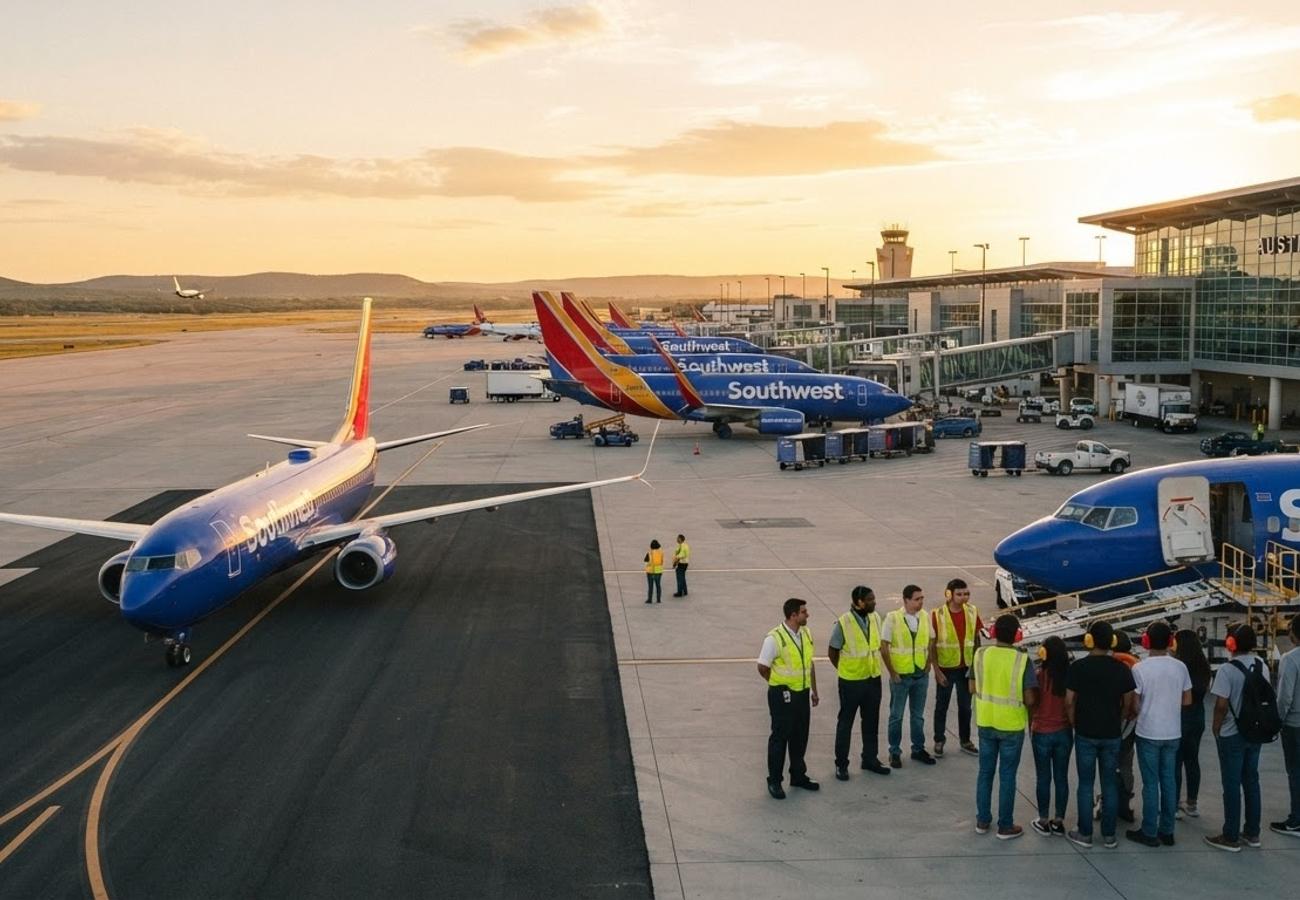
Image generated by AI
Southwest Airlines is preparing to inject more than 2,000 new jobs into the Central Texas economy with the launch of a new crew base at Austin Bergstrom International Airport (AUS) in March 2026.
The airline and airport authorities recently opened the airfield to local middle and high school students, bypassing traditional classroom presentations in favor of a hands-on "career day." This initiative provides an early look at the operational scale of one of the region's busiest hubs and creates a direct pipeline for local talent to enter the aviation sector.
The Shift Toward Experiential Aviation Recruitment
The recruitment strategy at Austin Bergstrom International Airport is moving away from static job boards toward immersive exposure. By granting students access to restricted areas of the airfield and terminal, Southwest is showcasing the interdependence of ground operations, maintenance support, and crew scheduling.
The focus has shifted toward highlighting roles that do not require a four-year degree. Instead, the airline is prioritizing specialized training, safety certifications, and high-level communication skills. For the visitor or prospective employee, this represents a democratization of aviation careers, moving the spotlight from the cockpit to the critical infrastructure that enables a high-frequency hub to function.
Economic Impact and Regional Expansion
The career day is a strategic precursor to a massive operational scale-up. According to public company data, the new crew base opening in March 2026 will require a surge in staffing for:
- Flight Crew: Pilots and flight attendants.
- Ground Operations: Ramp agents and baggage handlers.
- Technical Support: Maintenance crews and facilities coordination.
- Logistics: Dispatch support and crew scheduling.
As the largest carrier at Austin Bergstrom, Southwest already manages more than 100 daily departures. The expansion agreement with the City of Austin includes specific workforce development mandates, ensuring that the growth benefits the local community through youth internships and partnerships with regional training centers.
Cultural and Environmental Value: Building Local Resilience
For the Central Texas community, this trend is about more than just employment; it is about regional economic resilience. By targeting underrepresented communities and partnering with local community colleges, the airport is transforming from a transit point into a center for technical education.
The real impact for the visitor is a more efficient, locally-managed airport. When a hub utilizes a homegrown workforce, the operational knowledge stays within the city, reducing turnover and improving the reliability of the passenger experience. This approach supports a sustainable economic ecosystem where the airport serves as an anchor for professional growth in the region.
Visitor Insider Tips for Austin Bergstrom (AUS)
For those traveling through or visiting Austin during this period of rapid expansion, keep these local insights in mind:
- Peak Window Avoidance: With the new crew base increasing flight frequency, avoid the terminal during the "morning rush" (6:00 AM to 9:00 AM) when the majority of Southwest's daily departures peak.
- Local Dining: Skip the main terminal food courts and head to nearby East Austin eateries for authentic Texas BBQ before your flight; the area is a hub for local culinary heritage.
- Transport Hack: Utilize the airport's expanding ride-share zones, but be mindful of the increased traffic congestion around the airport perimeter as construction for the expansion continues.
- Cultural Etiquette: When interacting with ground crew, remember that AUS is currently in a high-growth phase; patience with ramp agents during peak boarding times is highly appreciated by the local staff.
Tourism and Aviation Outlook
The long-term trajectory for Austin Bergstrom is one of aggressive growth. By establishing a dedicated crew base and a formalized talent pipeline, Southwest is positioning Austin as a primary node in its national network. This will likely lead to more nonstop destinations and a decrease in connection times for travelers heading to the Texas Hill Country.
The collaboration between the City of Austin and Southwest Airlines sets a precedent for how airlines can integrate into the social fabric of a city, ensuring that the infrastructure of travel also serves as a vehicle for local social mobility.
Austin is no longer just a stopover; it is becoming an aviation powerhouse.
Related Travel Guides
This article is for informational purposes. Flight routes, passenger regulations, visa rules, and transit advisories are subject to change by airlines and aviation authorities. Readers are advised to verify schedules and travel documentation with relevant carriers and border agencies before departure.
Related Stories

Southwest Airlines Reports 29% Surge in Corporate Revenue as Cabin Overhaul Drives Q3 2026 Growth

Mexico Ecotourism Market Projected to Hit USD 9.29 Billion by 2034 as Green Travel Surges