
Southwest Airlines Flight SWA4972 Diverts to Las Vegas Following Late Departure
Southwest Airlines Flight SWA4972 from Dallas Love Field to Phoenix diverted to Harry Reid International Airport in Las Vegas on August 3, 2026.

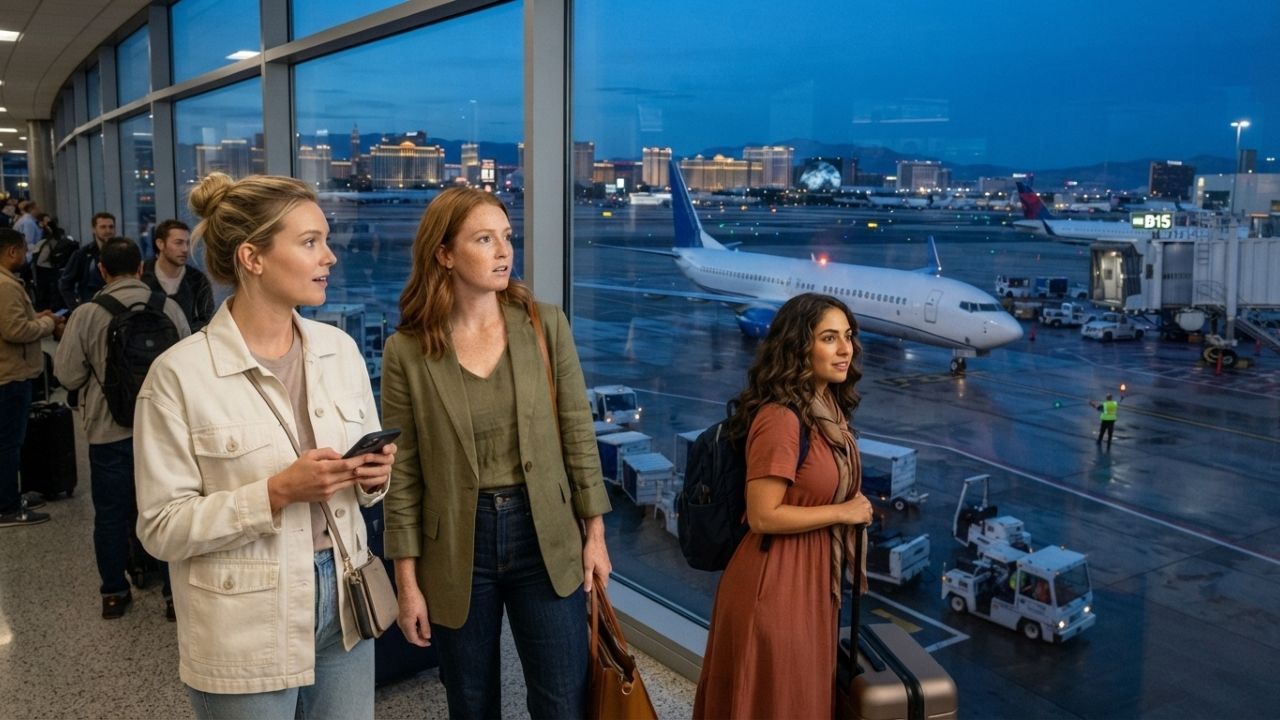
Image generated by AI
Southwest Airlines Flight SWA4972 from Dallas Love Field to Phoenix was forced to divert to Las Vegas on August 3, 2026, due to operational changes. The Boeing 737-800 carrying the passengers landed safely at Harry Reid International Airport, resulting in a delay of approximately 1 hour and 40 minutes for travelers.
A late-night flight across the Desert Southwest corridor ended with an unscheduled arrival in Nevada. On Monday, 3 August 2026, the westbound service departed behind schedule and altered its flight path while en route. The twin-engine passenger jet safely completed its landing, showing the operational flexibility of regional air networks when route adjustments are required.
Night Flight Route Change and Las Vegas Diversion
The flight, operating under the numbers SWA4972 and WN4972, was scheduled to carry passengers from Dallas Love Field (DAL) in Texas to Phoenix Sky Harbor International Airport (PHX) in Arizona. The route was operated by a Boeing 737-8H4 (also categorized as a 737-800) registered with the FAA as N8671D. Originally scheduled to depart at 10:15 PM local time, the aircraft left the gate at 10:42 PM CDT and took off at 10:51 PM, starting its flight with an initial ground delay.
Instead of continuing directly to Phoenix, the aircraft remained in the air for approximately three hours and thirteen minutes before diverting to Harry Reid International Airport (LAS) in Las Vegas. According to flight tracking data from FlightAware, the aircraft landed safely at 11:55 PM PDT, arriving approximately one hour and forty minutes later than the scheduled arrival time. No emergency was declared during the flight, indicating that the diversion was handled as a routine operational adjustment.
Impact of Southwest Route Adjustments on Southwest Travel Corridors
For the traveler, this unscheduled stop illustrates the complexities of night flight operations on interstate routes. Under the Federal Aviation Administration (FAA) framework, flight crews and dispatch teams continuously assess variables such as weather patterns, airport capacity constraints, and crew duty limits. When a flight path is adjusted, safety remains the primary factor, even if it introduces delays to the scheduled arrival.
Our analysis of the policy suggests that when a flight is diverted within the United States, carriers must coordinate to minimize traveler disruption. For passengers who miss connections due to late-night diversions, Southwest Airlines is required to evaluate the cause of the disruption. If the delay is due to internal airline issues, the carrier typically provides meal vouchers, hotel accommodation, and rebooking on the next available flight.
Navigation and Transit Alternatives for Desert Southwest Commuters
For travelers navigating the Texas, Arizona, and Nevada corridors, flight disruptions emphasize the importance of prepared transit alternatives:
- Real-Time Status Monitoring: Keep track of flight status through the carrier's mobile application or live tracking services to catch delays before departing for the airport.
- Baggage Retrieval Policies: During a diversion, checked luggage normally stays on the aircraft. If the flight is terminated at the alternate destination, passengers must coordinate with ground staff to reclaim their bags at the local terminal.
- Alternative Ground Transport: Phoenix and Las Vegas are separated by approximately 300 miles. If flights are cancelled, ground transit via Interstate 93 South serves as a direct, five-hour alternative.
Regional Tourism and Future Infrastructure Resilience
The safe landing at Las Vegas demonstrates the utility of large secondary hubs in managing regional air traffic disruptions. Harry Reid International Airport is equipped to process unscheduled arrivals at all hours, preventing prolonged holding patterns and allowing passengers to be accommodated efficiently.
By routing the aircraft to Las Vegas, the airline avoided complications at the busier Phoenix hub during late-night operations. This coordination between air traffic control, flight crews, and ground teams ensures that regional tourism corridors remain resilient even when flights do not proceed exactly as planned.
Related Travel Guides
Disclaimer
This article is for informational and educational purposes only. It does not constitute legal, financial, or professional advice. While we strive to provide accurate and up-to-date information, travel policies, regulations, and conditions change rapidly. Always verify information with official sources before making travel decisions. Nomad Lawyer makes no representations about the accuracy, reliability, completeness, or suitability of the information provided. Readers should consult qualified professionals for advice specific to their circumstances. The views expressed in this article are those of the author and do not necessarily reflect the views of Nomad Lawyer.
Kunal K Choudhary
Co-Founder & Contributor
A passionate traveller and tech enthusiast. Kunal contributes to the vision and growth of Nomad Lawyer, bringing fresh perspectives and driving the community forward.
Learn more about our team →