
Cathay Pacific Restores Hong Kong-Dubai and Riyadh Routes September 2026 Reconnecting Asia and Middle East
Cathay Pacific will resume daily Hong Kong-Dubai passenger flights and four weekly Riyadh services on September 1, 2026, restoring critical Asia-Middle East aviation connectivity after months of suspension caused by regional instability and operational challenges affecting the carrier's Gulf network.

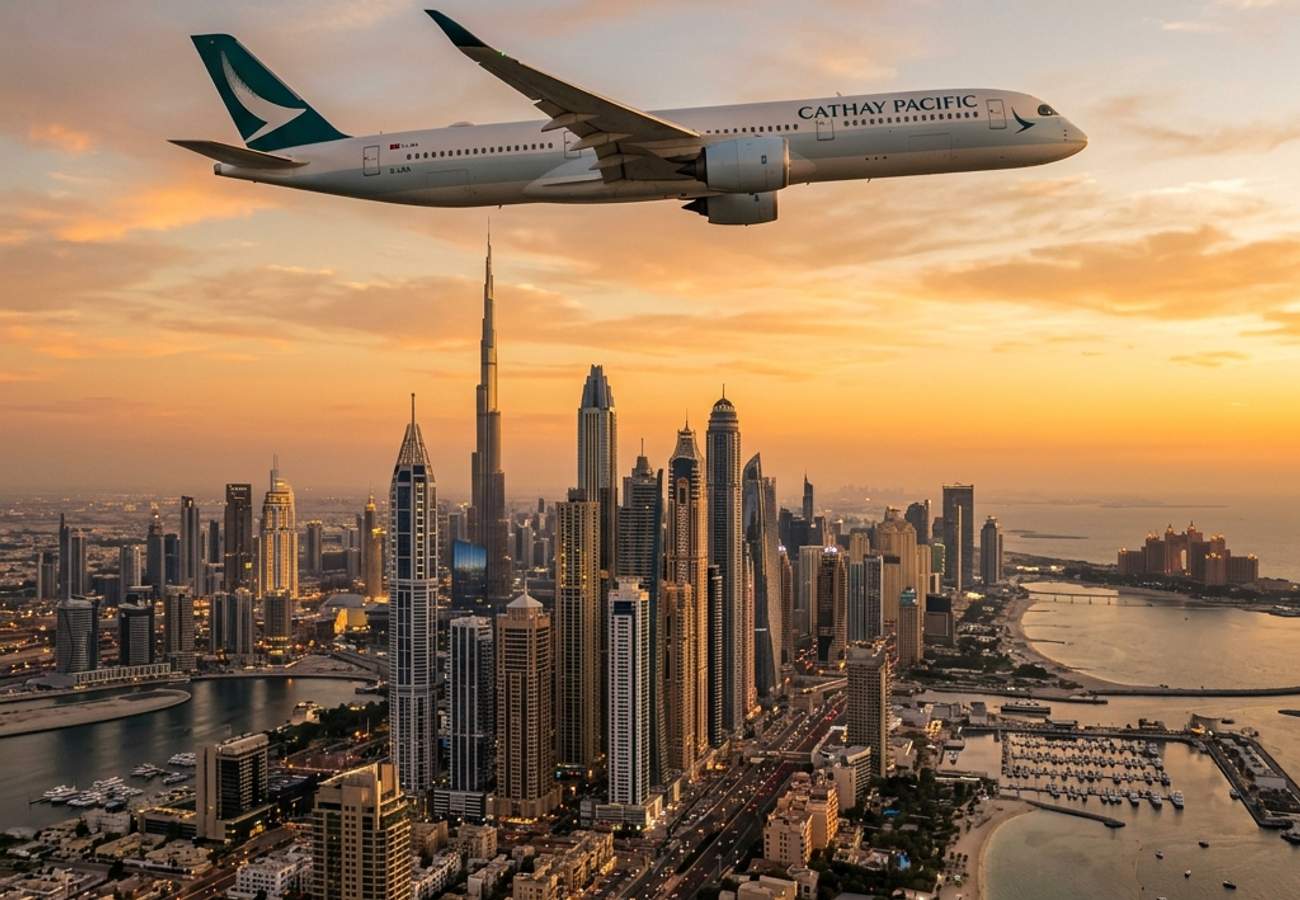
Image generated by AI
Cathay Pacific will resume daily Hong Kong-Dubai passenger flights and four weekly Riyadh services on September 1, 2026, restoring critical Asia-Middle East aviation connectivity after months of suspension caused by regional instability and operational challenges.
The Core Development
Cathay Pacific is preparing to restore a vital segment of its international network. Passenger services to the Middle East will resume from September 1, 2026. The carrier will operate daily flights between Hong Kong and Dubai. Four weekly passenger services to Riyadh restart on the same date. Riyadh cargo freighter operations begin earlier, on August 1, 2026.
The routes were suspended due to regional instability and operational challenges affecting Middle East aviation. Their return marks a significant milestone in the airline's global recovery strategy. Cathay Pacific has steadily rebuilt its international operations throughout 2026. It has prioritized strategically important long-haul markets generating strong passenger and cargo traffic. Dubai and Riyadh fit this profile precisely.
The renewed operations benefit international tourism, trade, corporate travel, cargo logistics and transit passengers. These passengers connect between Asia, the Gulf, Europe and Africa. As international demand recovers during 2026, the restoration demonstrates growing confidence in long-haul travel.
Key Facts Breakdown
- Dubai passenger service resumes September 1, 2026, with daily frequency
- Riyadh passenger service resumes September 1, 2026, with four weekly flights
- Riyadh cargo freighter operations restart August 1, 2026
- Routes were suspended due to regional instability and operational challenges
- Hong Kong serves as primary Asia-Pacific gateway for international travelers
- Dubai functions as global transit hub linking six continents
- Riyadh expanding through significant tourism and infrastructure investment
- Airline will continue monitoring Middle East developments before September restart
- Combined passenger and cargo restoration reinforces Asia-Gulf trade corridors
- Hong Kong International Airport benefits from additional transit passenger volumes
How Resumed Flights Benefit International Travelers
The return of these routes provides meaningful advantages across multiple traveler segments.
Hong Kong serves as a major gateway into East Asia and Mainland China. Dubai offers extensive connections across Europe, Africa and the Middle East. Travelers flying between these regions gain additional scheduling flexibility and improved connection times. Wider access to Cathay Pacific's long-haul network follows.
Business travelers benefit from the restoration of regular schedules. Corporate travel between major financial centers requires reliable, frequent service. Daily Dubai frequency addresses this demand directly. Easier access to major financial centres supports corporate travel flows.
Leisure travelers regain convenient options for holidays, family visits and multi-destination itineraries. The four weekly Riyadh flights open access to Saudi Arabia's growing tourism sector. Tourism growth improves visitor movement across regions.
Cargo customers also see improved logistics capacity. The August 1 Riyadh freighter restart supports regional trade flows. Enhanced logistics capacity strengthens supply chains one month ahead of passenger operations.
Network Recovery Supports Hong Kong's Aviation Ambitions
Cathay Pacific's route restoration aligns with broader objectives for Hong Kong International Airport.
Additional transit passengers strengthen the airport's competitive position among major Asian aviation hubs. The Gulf corridor represents a critical link in Hong Kong's global connectivity proposition. Restoring long-haul capacity builds a stronger global network. Improved hub connectivity drives higher transit passenger numbers. Expanded premium travel options support increased business demand. More international arrivals support tourism recovery.
Tourism authorities benefit from more international arrivals flowing through Hong Kong. The ripple effect extends to hospitality businesses, retail sectors and convention organizers.
Why Dubai and Riyadh Remain Important Aviation Markets
Dubai remains one of the world's most connected airports. It serves passengers traveling between Asia, Europe, Africa and the Americas. The airport's six-continent reach makes it irreplaceable in global aviation networks.
Riyadh continues expanding its international aviation profile through significant tourism and infrastructure investment. Saudi Arabia's broader economic transformation strategy creates growing demand for both inbound and outbound travel.
Both destinations serve corporate meetings, tourism, education and international events. The routes also facilitate business exchanges and support international investment flows across regions.
| Route | Service Begins | Frequency | Strategic Importance |
|---|---|---|---|
| Hong Kong – Dubai | September 1, 2026 | Daily | Connects Asia with the Gulf, Europe and Africa |
| Hong Kong – Riyadh | September 1, 2026 | Four weekly | Expands business and tourism connectivity with Saudi Arabia |
| Riyadh Cargo Services | August 1, 2026 | Scheduled freighter operations | Supports regional trade and logistics |
Passenger Benefit Impact
| Passenger Benefit | Travel Impact |
|---|---|
| More flight availability | Increased flexibility for trip planning |
| Better global connections | Faster onward travel via Hong Kong and Dubai |
| Business travel support | Easier access to major financial centres |
| Tourism growth | Improved visitor movement across regions |
| Cargo recovery | Enhanced logistics capacity |
Why This Matters
The resumption signals a calculated shift in Gulf-Asia aviation dynamics. Cathay Pacific's timing reveals a deliberate operational strategy.
Cargo operations to Riyadh restart a full month before passenger services. This phased approach allows the airline to rebuild operational confidence and supply chain reliability before committing to passenger schedules. It reflects lessons learned from previous regional disruptions.
The daily Dubai frequency positions Cathay Pacific to recapture high-yield corporate traffic. This traffic flows between two of the world's most important financial centers. Dubai's status as a six-continent transit hub means these flights serve far more than point-to-point demand.
Passengers connecting through Dubai gain access to Cathay Pacific's broader Asia-Pacific network via Hong Kong. The reverse flow works equally. This bidirectional connectivity strengthens both hubs simultaneously.
Riyadh's four-weekly frequency reflects a measured re-entry into the Saudi market. Saudi Arabia's aggressive tourism investment strategy creates growing outbound demand. Cathay Pacific's return gives the carrier early positioning in a market competitors have targeted aggressively.
Our analysis of the flight data indicates a strategic sequencing decision. August cargo operations generate revenue while testing operational readiness. September passenger launch follows once reliability is confirmed. This risk-managed approach could become an industry template for future route reinstatements in volatile regions.
For Hong Kong International Airport, the restoration strengthens its competitive position against rival Asian hubs. Transit passenger volumes directly depend on long-haul network breadth. Reconnecting the Gulf corridor restores a critical link that competitors exploited during Cathay Pacific's absence.
Market trends suggest additional Asia-Middle East route announcements from competing carriers will follow. The Gulf-Asia corridor represents one of the fastest-recovering long-haul segments in 2026. Airlines establishing frequency and reliability early will capture disproportionate market share.
Industry Outlook
The airline has stated it will continue monitoring Middle East developments before the September restart. This signals that operational flexibility remains a priority. If conditions deteriorate, Cathay Pacific retains the option to adjust frequencies or delay resumption.
The phased cargo-then-passenger approach may become a template for other carriers restoring suspended long-haul services. Testing operational readiness through freighter operations before committing to passenger schedules reduces risk exposure.
Industry observers expect the September restoration to trigger competitive responses. Rival Gulf carriers may adjust their own Asia frequencies in reaction. This could benefit travelers through increased capacity and competitive pricing on the Hong Kong-Gulf corridor.
The broader aviation sector continues rebuilding suspended services as operational conditions improve. Cathay Pacific's announcement aligns with this industry-wide trend. The carrier's focus on high-demand international routes reflects growing confidence in long-haul travel recovery throughout 2026.
Combined passenger and cargo restoration between Asia and the Gulf reinforces both passenger and freight connectivity. As international tourism expands through 2026, improved connectivity between Hong Kong, Dubai and Riyadh supports airlines, airports, tourism authorities, hospitality businesses and travelers seeking efficient global connections.
The latest network expansion reflects growing optimism within the aviation industry. It reinforces the importance of strong intercontinental air links in supporting worldwide travel recovery.
Cathay Pacific's phased Middle East return sets a pragmatic template for route restoration in uncertain times.
Related Travel Guides
Disclaimer
This article is for informational and educational purposes only. It does not constitute legal, financial, or professional advice. While we strive to provide accurate and up-to-date information, travel policies, regulations, and conditions change rapidly. Always verify information with official sources before making travel decisions. Nomad Lawyer makes no representations about the accuracy, reliability, completeness, or suitability of the information provided. Readers should consult qualified professionals for advice specific to their circumstances. The views expressed in this article are those of the author and do not necessarily reflect the views of Nomad Lawyer.
Raushan Kumar
Founder & Lead Developer
Full-stack developer with 11+ years of experience and a passionate traveller. Raushan built Nomad Lawyer from the ground up with a vision to create the best travel and law experience on the web.
Learn more about our team →