Auckland to Shanghai Route Marks 20 Years: Aviation History and Cultural Travel Guide

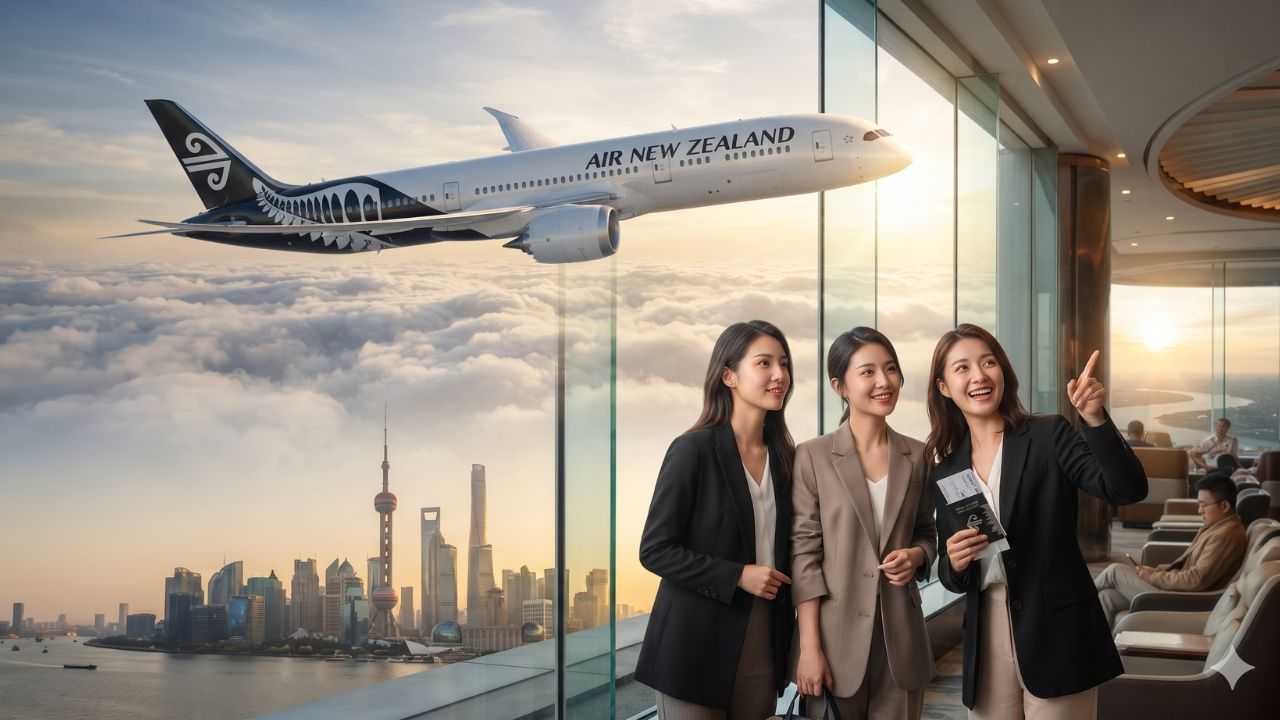
Beneath the passenger deck of every evening Boeing 787-9 departing Auckland for Shanghai sit hundreds of tonnes of fresh South Island salmon and Central Otago cherries, racing north across the equator before the morning markets open. Since its launch in November 2006, this 9,300-kilometer air link has carried over 2.2 million travelers, transforming what began as an adventurous long-haul experiment into one of the Southern Hemisphere's most enduring connections to mainland China. What started with three flights a week now scales to 10 weekly return services during peak seasons, reflecting an intimate web of family ties, bilateral trade, and travelers discovering the stark geographic contrasts between Aotearoa and the Yangtze River Delta.
Two Decades of Trans-Pacific Flight: Scaling the Shanghai Corridor
When Air New Zealand dispatched its inaugural Boeing 777 from Auckland Airport toward Shanghai Pudong International Airport in November 2006, the operational environment was vastly different from today. Long-haul travel between Oceania and China required specialized planning: Mandarin-fluent cabin crew and regionally tailored dining menus were established from day one. Passenger demand accelerated quickly. By October 2007, the carrier expanded frequencies to five weekly direct departures, progressing to a daily schedule by late January 2013.
The route entered a modern technological phase in November 2014, when Air New Zealand served as the global launch customer for the Boeing 787-9 Dreamliner and became the first carrier to fly the aircraft type into Chinese airspace. Authorized by the Civil Aviation Administration of China (CAAC) and verified by the Civil Aviation Authority of New Zealand, flight schedules now scale dynamically to accommodate peak migration windows. From January to February 2027, the carrier boosts capacity to 10 weekly return rotations, providing the necessary lift for seasonal family reunions around Chinese New Year. Scott Wilkinson, Air New Zealand Chief Commercial Officer, observed that this milestone honors the passengers, corporate partners, and flight personnel who built the link—including founding crew members such as Karen Lu, who completed the airline's original five-week training program in Auckland, visited the Bay of Islands to absorb regional heritage, and continues to fly this sector two decades later.
Belly Cargo and Cross-Border Commerce: Inside the Freight Pipeline
Long-distance aviation serves an economic purpose far beyond leisure seating. The Auckland-Shanghai route functions as a lifeline for New Zealand primary producers needing rapid access to high-value Asian culinary hubs. Monitored by the Ministry for Primary Industries, belly-hold freight ensures perishable goods reach Chinese dining tables within 48 hours of harvest. During the height of travel shutdowns in March 2020, widebody passenger jets flew passenger-free cargo runs on this route, hauling native honey, live seafood, and milk products to prevent complete supply chain disruption.
In the previous financial year (FY26), the carrier moved 3,500 tonnes of air freight along this corridor. The breakdown demonstrates the strong Asian demand for premium New Zealand provenance:
| Commodity Category | Annual Volume (FY26) | Primary Destination Channel |
|---|---|---|
| Premium Seafood & Fresh Salmon | 626 Tonnes | High-end culinary dining & hospitality |
| Seasonal Cherries | 350 Tonnes | Holiday gift giving & premium supermarkets |
| Dairy (Milk Powder) | 190 Tonnes | Consumer retail & specialized manufacturing |
| Health Supplements | 160 Tonnes | Cross-border e-commerce & retail |
Commercial reach extends further inland through the strategic airline partnership established between Air New Zealand and Air China in 2015. Endorsed through international frameworks supported by the International Air Transport Association, the codeshare alliance allows passengers arriving in Shanghai or Beijing to transfer directly onto domestic networks reaching more than 30 regional Chinese cities. Incoming Chinese travelers arriving in Auckland connect into regional provincial airports, dispersing tourism spending outside major metropolitan centers in alignment with regional development priorities tracked by the Ministry of Business, Innovation and Employment.
What Makes the Auckland-Shanghai Crossing Distinct
Crossing between Auckland and Shanghai means moving between opposite seasons, atmospheric scales, and urban densities. Auckland sprawls across volcanic fields between the Manukau and Waitematā harbors, dominated by maritime winds, indigenous Maori heritage, and open skies. Shanghai, by contrast, presents a futuristic vertical cityscape framing the historic Huangpu River, where classical Shikumen alleyways sit beneath towering megastructures.
For travelers stepping aboard in Auckland, the 12-to-13-hour overnight flight compresses these worlds into a single rest period. Inflight service reflects New Zealand's distinct cultural warmth—exemplified during the 2010 Chinese New Year when flight attendants performed an unscripted haka for boarding travelers at the gate. Today, passenger manifests reflect a balanced mix of overseas family visitors, independent adventurers heading south to explore alpine reserves, and business specialists managing trade between both nations.
Visitor Insider Tips: Navigating Terminals, Layovers, and Local Streets
Making the journey between New Zealand and Shanghai requires specific transit preparation, especially during high-demand holiday weeks:
- Terminal Timing and Check-In Rules: Both Auckland Airport and Shanghai Pudong experience severe terminal congestion during peak holiday periods. Arrive at least three full hours prior to international boarding. Keep physical copies of entry visas, hotel reservations, and onward itinerary receipts easily accessible, as document checks require manual airline review before boarding passes are released.
- Transit Visas in Shanghai: Eligible passport holders connecting through Shanghai can take advantage of the 144-hour visa-free transit window, provided they hold verified outbound tickets to a third country within the designated timeframe. Check specific sovereign entry rules with official consular services or the Official New Zealand Tourism Portal before departure.
- Neighborhood Bases: When arriving in Shanghai, avoid staying directly around the crowded East Nanjing Road shopping strip. Instead, base yourself near the leafy residential streets of the former French Concession or the historic alleys of Jing'an, where quiet tea houses and neighborhood dumpling shops offer a calmer base with rapid subway access. In Auckland, skip downtown hotel towers and look toward Ponsonby or Devonport for historic timber architecture and quiet harbor ferry access.
- Ground Transit Tricks: At Pudong, skip standard airport taxis and ride the Maglev train directly to Longyang Road station, covering 30 kilometers in under eight minutes, before transferring to the Shanghai Metro network. In Auckland, dedicated airport express buses run directly into the central railway station while airfield construction work continues across international arrival pathways.
Cultural and Environmental Context: Soft Diplomacy and Decarbonization
Aviation corridors serve as informal channels of cultural diplomacy. Flight attendants like Karen Lu and Eda Lin, who joined for the original route launch, underwent comprehensive cultural training that included visits to historic sites such as Waitangi in the Bay of Islands to understand indigenous traditions. This cultural grounding allows cabin staff to act as cultural translators for passengers traveling between East Asia and the South Pacific.
However, operating ultra-long-haul routes across the Pacific poses clear environmental challenges. While the deployment of the Boeing 787-9 Dreamliner reduced fuel burn per seat compared to earlier widebody jets, the aviation sector faces strict international mandates. Guided by the Ministry of Transport and international net-zero targets established for 2050, carriers must rapidly accelerate the procurement of Sustainable Aviation Fuel (SAF). Preserving fragile natural habitats—from New Zealand's protected conservation parks cataloged by UNESCO World Heritage to China's wetland migration reserves—requires international carriers to balance high passenger capacity with responsible carbon reductions over the coming decade.
FAQ: Visiting Shanghai and New Zealand 2026
What is the best time of year to fly between Auckland and Shanghai? March to May and September to November offer temperate weather in both destinations, avoiding Shanghai's humid summer typhoons and New Zealand's wet mid-winter conditions.
Can I transit through Shanghai without a standard Chinese tourist visa? Yes, qualifying international passport holders holding confirmed onward travel tickets to a third destination can utilize the 144-hour visa-free transit policy at Shanghai Pudong International Airport.
How early should I arrive at the airport for this long-haul service? Arrive at least three hours before scheduled departure at both Auckland Airport and Shanghai Pudong to allow sufficient time for mandatory document verification and security processing.
What passenger protection rules apply if flights face extensive technical delays? Flights departing under international aviation frameworks follow Montreal Convention standards and CAAC directives, requiring airlines to arrange hotel accommodations, meals, and timely rerouting for disrupted passengers.
Two decades after its first flight, this South Pacific corridor proves that the distance between hemispheres narrows whenever authentic hospitality, shared trade, and deep cultural curiosity take wing.
This article is for informational purposes. Flight routes, passenger regulations, visa rules, and transit advisories are subject to change by airlines and aviation authorities. Readers are advised to verify schedules and travel documentation with relevant carriers and border agencies before departure.
Related Stories
Air Tahiti Nui and Oceanian Airlines Expand Direct Routes to Sydney and Christchurch 2026
Western Sydney International Airport Opens 2026: Singapore Airlines and Air New Zealand Expand Routes