
Australia Aviation Weather Disruptions 2026: Navigating Wind Shear and Flight Diversions
Severe atmospheric volatility in the South Pacific is triggering widespread flight diversions and missed approaches across Australia and New Zealand. Learn how to manage the logistics of weather-induced delays and understand your passenger rights.

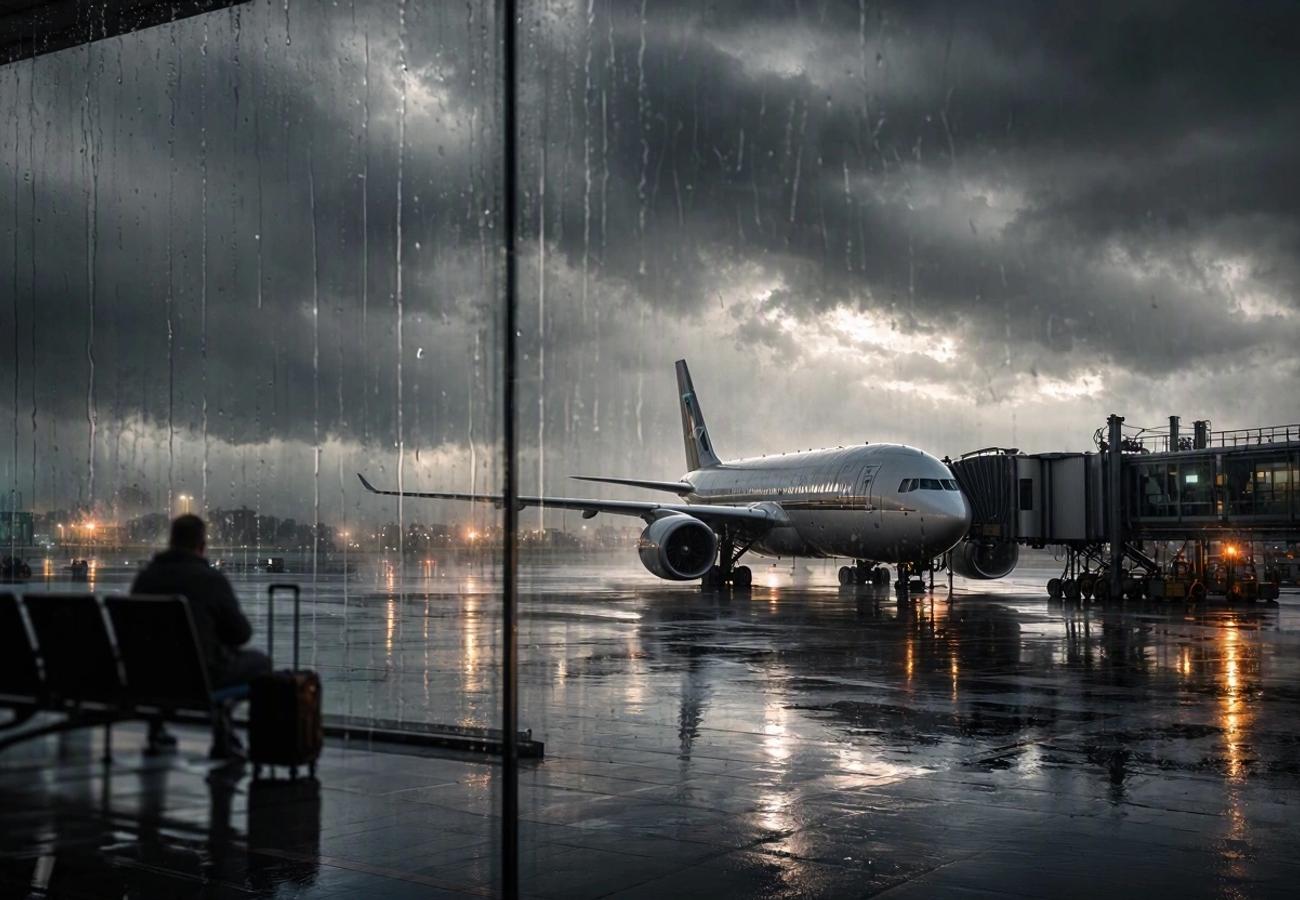
Image generated by AI
Are you planning a trip through Sydney, Melbourne, or Auckland and worried about sudden cancellations? With the South Pacific experiencing a systemic increase in atmospheric volatility, travelers are facing a new reality of missed approaches and diverted flights due to severe convective storm clusters.
The New Climate Reality in Oceania Transit
Aviation networks across Australia, New Zealand, and the Pacific Islands are currently grappling with high-energy storm fronts and maritime wind shear. These are not isolated weather events but systemic drivers of instability that suppress the throughput of major hubs. Coastal gateways—specifically Sydney, Melbourne, Brisbane, Auckland, and Wellington—are particularly vulnerable to tropical air masses from the Coral Sea and polar depressions from the Southern Ocean.
When these fronts hit urban heat islands, they create localized shear vectors during terminal descent. If an aircraft's crosswind limits are exceeded or the "stabilised approach" criteria are compromised, pilots must execute an immediate missed approach. While this ensures safety, it creates a domino effect of gate-hold orders and passenger stranding. For those monitoring their flights, checking the Australian Bureau of Meteorology or New Zealand’s MetService provides the most accurate real-time data on these atmospheric disturbances.
Aerodynamic Hazards and Operational Impacts
The primary cause of recent disruptions is low-level wind shear—an abrupt change in wind velocity or direction within the lowest 1,600 feet of the airport surface. Under regulations from the Civil Aviation Safety Authority (CASA), pilots must abort landings if they cannot maintain a constant airspeed and glidepath.
The following table outlines the specific aerodynamic phenomena currently impacting South Pacific transit and the resulting operational actions:
| Aerodynamic Phenomenon | Altitude Envelope | Flight Deck Impact | Mandatory Procedural Action | Regulatory Safety Focus |
|---|---|---|---|---|
| Microburst Downdraft | Surface to 1,000 ft AGL | Rapid airspeed loss; vertical descent >1,000 fpm | Full TOGA thrust; climb to AOA limits | Avoidance of CFIT |
| Rapid Horizontal Shear | Surface to 1,500 ft AGL | Speed excursions; glidepath deviation | Abort landing before decision height | Prevention of runway excursions |
| Severe Low-Level Crosswind | Surface to 500 ft AGL | Lateral drift; unstable crab angle | Initiate go-around; redirect to alternate | Mitigation of directional loss |
| Convective Wake / Gust Front | Terminal Manoeuvring Area | Sudden roll upset; pitch oscillations | Immediate break-out; enter holding route | Prevention of spatial disorientation |
Traveler Logistics Guide
When a "go-around" occurs or a flight is diverted, the logistics shift from the airline's schedule to the passenger's survival. Here is how to handle these specific scenarios:
1. Understanding the Diversion Trigger Flights carry a strict fuel budget: taxi fuel, trip fuel, contingency reserves, and a final reserve. When a pilot performs a go-around, they use maximum thrust, which burns fuel rapidly. If contingency reserves are depleted, the aircraft must divert to an alternate airport (such as Canberra, Newcastle, or Avalon) to avoid touching the inviolable final reserve.
2. Connection Strategies If you are diverted to a secondary airport, do not assume a bus will be provided immediately. These smaller hubs often have limited ramp space and passenger processing capacity.
- Immediate Action: Check your airline's app for "Re-accommodation" notifications.
- Hotel Logistics: Because diversions often happen in clusters, local hotels fill up within minutes. If you are stranded, prioritize booking a room via a third-party app before waiting in the airline queue.
3. Digital Check-in and Monitoring Use digital boarding passes. In the event of a diversion to a regional airport, physical desks may be unmanned or overwhelmed. Having your documentation on a smartphone allows you to communicate your status to ground staff more efficiently.
4. Baggage Recovery In diversion scenarios, checked luggage often remains on the aircraft or is offloaded at the alternate airport. Always pack a "24-hour survival kit" (medications, chargers, change of clothes) in your carry-on.
Regional Connectivity Impact
The volatility of the South Pacific corridors is reshaping how regional travel is managed. New trans-Tasman regulatory frameworks now mandate stricter "duty of care" responsibilities for airlines. This means that in the event of weather-induced stranding, airlines are under increased pressure to provide accommodation and sustenance, overseen by independent ombudsman supervision.
However, the strain on secondary aerodromes remains a bottleneck. When multiple inbound flights to Sydney are diverted simultaneously, the infrastructure at alternate airports reaches a breaking point, leading to longer tarmac delays and slower passenger processing.
FAQ: Australia Aviation Weather 2026
Why is my flight doing a "go-around" or missing the approach? Pilots must abort landing if wind shear or microbursts make the approach "unstable." This is a non-punitive safety requirement to prevent runway overruns or hard landings.
What happens to my luggage if the flight diverts? Luggage typically stays on the plane. If you are moved to a hotel at a diversion airport, you may not have access to your checked bags until the flight resumes its original route.
Do I have rights to a hotel if the weather causes a diversion? Under modernized trans-Tasman frameworks, airlines have a "duty of care." However, availability is limited during mass disruptions. Always have a backup booking method ready.
How can I tell if my flight will be diverted? Monitor the "Final Reserve" and "Contingency Fuel" mentions in pilot announcements. If the crew mentions multiple missed approaches and a "diversion to alternate," begin preparing for a change in destination.
Stay flexible, pack your essentials in your carry-on, and always monitor the wind shear alerts before heading to the terminal.
Related Travel Guides
Disclaimer
This article is for informational and educational purposes only. It does not constitute legal, financial, or professional advice. While we strive to provide accurate and up-to-date information, travel policies, regulations, and conditions change rapidly. Always verify information with official sources before making travel decisions. Nomad Lawyer makes no representations about the accuracy, reliability, completeness, or suitability of the information provided. Readers should consult qualified professionals for advice specific to their circumstances. The views expressed in this article are those of the author and do not necessarily reflect the views of Nomad Lawyer.
Naina Thakur
Contributor & Travel Specialist
Travel enthusiast and legal writer covering visa regulations, responsible tourism, and cultural journeys across global destinations.
Learn more about our team →