
South Korea Studies Ferry Funding for Ulleungdo Travel as Pohang Route Prepares for Airport Era
South Korea Studies Ferry Funding for Ulleungdo Travel as Pohang Route Prepares for Airport Era

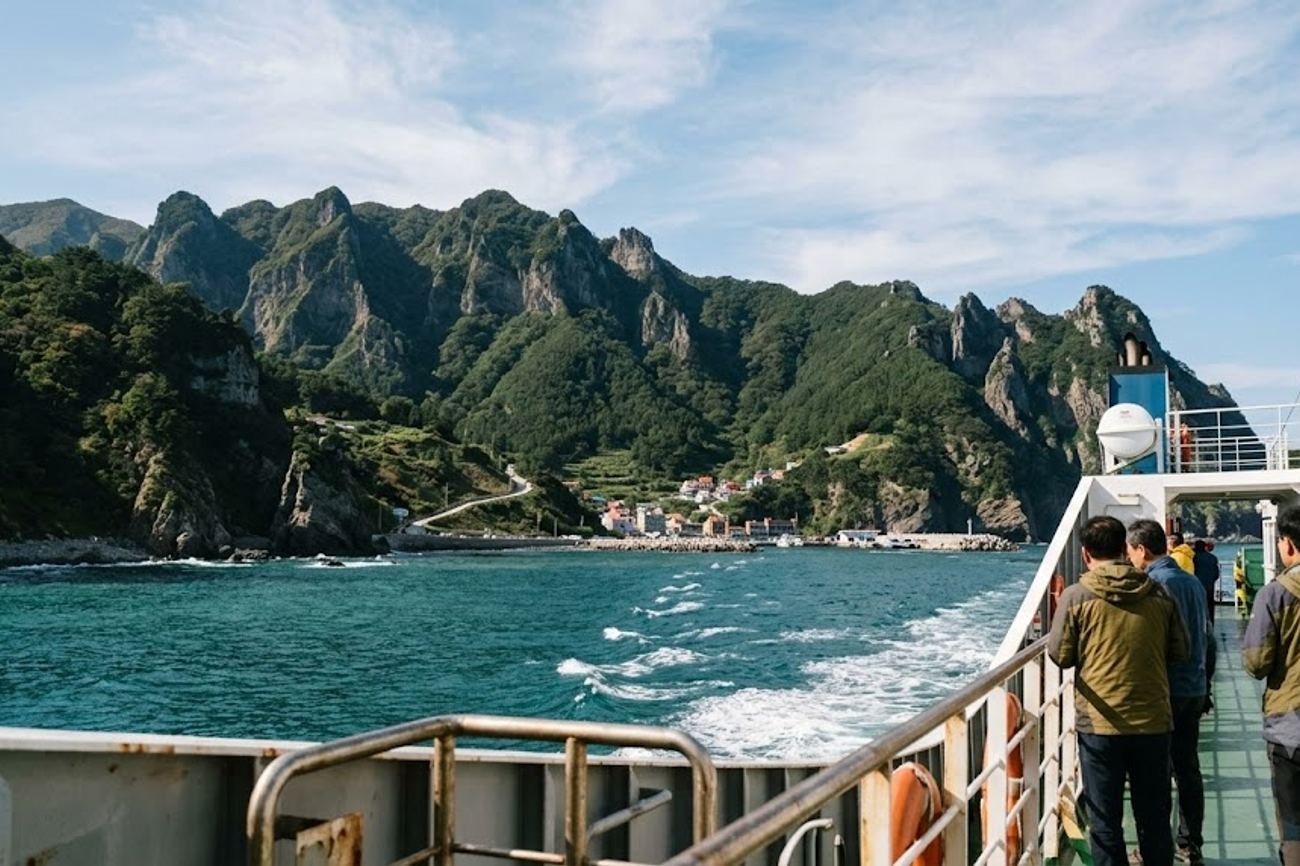
Image generated by AI
Winter ferry demand for Ulleungdo surged by 27.8% year-over-year between January and February 2026, a spike directly correlated to a KRW 80,000 fare subsidy. This data point reveals a high price elasticity for island travel and signals that the South Korean government is already using financial levers to stabilize visitor flows well before the scheduled 2028 opening of Ulleung Airport.
The Ulleungdo Connectivity Pivot in Numbers
The transition from a purely maritime access model to a hybrid air-sea system is currently being quantified through a formal study launched by the Gyeongsangbuk-do provincial government in August 2026. This research, slated for completion in February 2027, is not merely an infrastructure review but a financial stress test for the Pohang–Ulleung corridor. The objective is to determine if a semi-public operating model is required to prevent a commercial collapse of ferry services once air travel introduces a faster, more consistent alternative.
The current economic baseline for winter travel demonstrates the impact of government intervention. With a standard adult return fare listed at KRW 160,000, the KRW 80,000 support package effectively halved the cost of transit during the lowest-demand months of December, January, and February. The resulting 27.8% increase in passenger volume confirms that cost is a primary barrier to off-peak visitation, suggesting that future semi-public models will likely rely on similar subsidy frameworks to maintain year-round viability.
Furthermore, the operational data from the Korea Maritime Transportation Safety Authority (KOMSA) highlights a shift in gateway preference. While total passenger traffic for all Ulleungdo routes saw a slight decline from 86,885 in Q1 2025 to 84,380 in Q1 2026, the Pohang–Ulleung Sadong route bucked this trend. Traffic on this specific corridor climbed from 66,731 to 76,934 in the same period—a 15% increase. This concentration of traffic in Pohang justifies why the province has selected this specific route as the primary laboratory for its semi-public operating model.
Comparative Gateway Analysis: Pohang vs. Donghae
The strategic necessity of maintaining multiple mainland gateways is evidenced by the volatility of maritime operations. While the Pohang route is the focus of the semi-public study, the Donghae (Mukho Port) corridor serves as a critical redundancy. Data from September 2026 illustrates that maritime access is rarely binary (open or closed) but rather fragmented by vessel and route.
The following table compares the operational stability of the two primary gateways during a critical window in September 2026:
| Date (2026) | Pohang Route Status | Donghae (Mukho) Route Status | Primary Cause of Disruption |
|---|---|---|---|
| September 8 | Partial (Evening sailing controlled) | Normal | High-wave advisory (Pohang) |
| September 12 | Normal | Normal | N/A |
| September 15 | Normal | Non-operating | Vessel maintenance (Donghae) |
This variance proves that relying on a single corridor—even one as dominant as Pohang—creates a systemic vulnerability. When the Mukho corridor was offline due to mechanical maintenance on September 15, the Pohang route provided the only viable maritime lifeline. This pattern of "intermittent availability" is why the Gyeongsangbuk-do government is pursuing a semi-public model; purely commercial operators may abandon less profitable routes, but the International Maritime Organization and regional planners recognize that diversified access is a matter of regional security and tourism resilience.
Practical Traveler Advisory and Strategic Insights
For the individual traveler or tour operator, the data suggests that the "airport era" of Ulleungdo is currently in a transition phase where maritime risk remains the dominant variable.
If you are planning a visit between now and 2028, the following data-driven strategies are essential:
- Prioritize Pohang as your primary gateway. With a 15% increase in Q1 traffic and the focus of government subsidies, Pohang offers the highest frequency and most stable capacity.
- Build 48-hour "buffer windows" into itineraries. The September 2026 data shows that maintenance or weather can shut down a specific corridor (like Mukho) without warning. Avoid booking tight connections to Seoul or Jeju immediately following an island departure.
- Target the "Subsidy Window." If traveling in December, January, or February, the KRW 80,000 fare support makes this the most cost-effective time to visit, provided you can tolerate the higher probability of high-wave advisories.
South Korean authorities are evaluating ferry subsidies to maintain maritime accessibility to Ulleungdo as the region transitions toward air travel. This strategic funding aims to balance passenger logistics between traditional sea routes from Pohang and the upcoming airport infrastructure managed by the Ministry of Land, Infrastructure and Transport. 4. Diversify your booking. Ensure you have the contact details and booking options for both Pohang and Donghae operators. As seen on September 15, 2026, one port may be closed for maintenance while the other remains fully operational.
Projections for the 2028 Air-Sea Hybrid Model
The trajectory established by the August 2026 study suggests that Ulleungdo will not replace ships with planes, but will instead segment its market. Based on current IATA trends for remote island destinations, we can project a bifurcated transport economy:
Air travel will likely capture the high-yield, time-sensitive segment (business travelers, luxury tourists, and short-stay visitors). This will likely drive up the average daily spend on the island but reduce the average length of stay.
Maritime travel will evolve into a "utility and logistics" corridor. The semi-public model currently under study is designed to protect the movement of vehicles, heavy baggage, and large tour groups—needs that aviation cannot meet. The 15% growth in Pohang’s Q1 traffic suggests that the "slow travel" maritime experience still holds significant market share, which the government intends to preserve through public funding.
The final findings in February 2027 will likely reveal a subsidy formula that ties ferry fares to the airport's landing fees, ensuring that the cost of sea travel remains competitive enough to prevent a total monopoly by air carriers. This would mirror the "public service obligation" (PSO) models seen in European regional aviation and maritime networks.
FAQ: Ulleungdo Access Trends 2026-2028
Will ferry prices increase once the airport opens in 2028? Unlikely for the primary corridors. The current semi-public study is specifically designed to create a subsidy framework to keep fares sustainable, preventing commercial operators from spiking prices or abandoning the route.
Is it better to book flights or ferries for a 2027 trip? Ferries remain the only option until the 2028 airport opening. However, data shows that booking the Pohang route provides the highest operational reliability.
Why is the government subsidizing winter travel? To combat extreme seasonality. The 27.8% increase in winter demand proves that financial incentives can successfully flatten the visitor curve, benefiting local businesses year-round.
Which gateway is the most reliable? Pohang is currently the most stable, showing growth in passenger volume and serving as the central hub for the province's long-term maritime planning.
The shift toward a semi-public maritime model proves that in the race toward aviation, the most successful destinations are those that treat the sea not as a hurdle, but as a strategic asset.
Related Travel Guides
- Japan Stands Alongside Taiwan as Asia Cruise Tourism Enters a New Era of Bigger Ports and Higher Visitor Spending
- US Cruise Spotlight Grows as Royal Caribbean Names Lori Robinson Godmother of Legend of the Seas
- USA Oceania Cruises Unveils 12 Stunning Global Voyage Segments for Travellers Exploring the 2028 World Journey
Disclaimer
This article is for informational and educational purposes only. It does not constitute legal, financial, or professional advice. While we strive to provide accurate and up-to-date information, travel policies, regulations, and conditions change rapidly. Always verify information with official sources before making travel decisions. Nomad Lawyer makes no representations about the accuracy, reliability, completeness, or suitability of the information provided. Readers should consult qualified professionals for advice specific to their circumstances. The views expressed in this article are those of the author and do not necessarily reflect the views of Nomad Lawyer.
Naina Thakur
Contributor & Travel Specialist
Travel enthusiast and legal writer covering visa regulations, responsible tourism, and cultural journeys across global destinations.
Learn more about our team →