
South Africa Travel Surge: American Arrivals Lead Overseas Growth as Overnight Visitors Top One Million

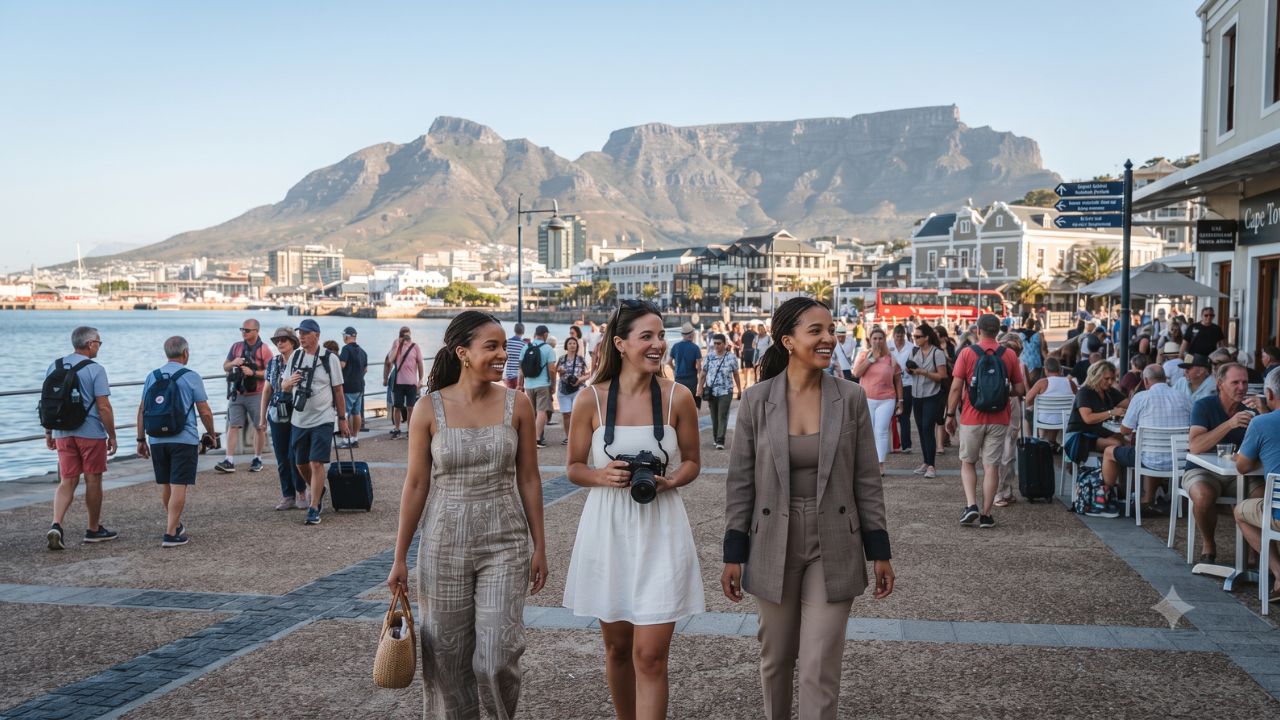
While regional land borders carry the vast majority of cross-border traffic across Southern Africa, international long-haul leisure travel has crossed a major threshold with total overnight visitors exceeding 1,005,286 in a single month. The United States cemented its position as the country's single largest overseas source market, generating 37,134 travelers in August 2026—outpacing traditional European strongholds and South American markets.
Behind these headline figures sits a notable evolution in how global travelers experience the Western Cape, the Greater Kruger safari circuits, and KwaZulu-Natal. The official monthly statistical release from Statistics South Africa demonstrates that overseas inbound travelers reached 203,376, accounting for 20.2% of all tourist entries. Continental European demand remains the anchor of long-haul volume at 105,641 visitors, but shifting holiday preferences, direct aviation capacity, and expanding safari itineraries have given North American holidaymakers an outsized presence across luxury lodges, boutique wine estates, and coastal reserves.
Long-Haul Arrivals Accelerate Across Key International Source Markets
South Africa's overall visitor economy recorded 1,271,233 foreign visitors out of 1,304,763 foreign arrivals during August 2026, marking a 3.2% year-on-year increase in border entries. Overnight stays increased by 7.4% compared to the 935,738 recorded during August 2025, contrasting with an 11.5% drop in same-day transit visits to 265,947. Total border transit movements, encompassing entries, departures, and transits, reached 3,222,690 individuals.
The ten leading overseas source countries generated 70.4% of all overseas arrivals, with nine of those ten markets recording positive year-on-year growth. The United States led the table with 37,134 tourists, growing 1.5% from 36,590 in August 2025 with an additional 544 travelers. The United Kingdom retained second place with 25,749 tourists, though it represented the sole top-ten market to contract, down 2.4% from 26,373 (a decrease of 624 visitors).
Continental Europe demonstrated strong growth momentum. Germany ranked third overall, sending 14,731 visitors compared to 13,742 in August 2025—a gain of 989 travelers representing 7.2% growth and capturing 7.2% of total overseas arrivals. France delivered the fastest rate of expansion among the leading ten markets, surging 14.1% from 10,946 to 12,492 visitors (an increase of 1,546 travelers) to secure fourth position. Italy followed in fifth with 12,340 visitors (+4.1% from 11,859), while Australia provided 11,632 travelers (+3.0% from 11,290). The Netherlands generated 11,021 arrivals (+9.8% from 10,041), Spain posted 6,732 visitors (+12.5% from 5,983), Brazil registered 6,022 tourists (+1.6% from 5,929), and Saudi Arabia recorded 5,370 travelers (+12.4% from 4,776).
Regionally, Europe supplied 51.9% of overseas arrivals (105,641 tourists), followed by North America at 20.2% (40,995), Asia at 8.9% (18,195), Australasia at 8.2% (16,639), the Middle East at 6.6% (13,467), and Central and South America at 4.1% (8,439).
At the regional continental level, Southern African Development Community (SADC) partners represented 787,231 tourists or 78.3% of total overnight volume. Mozambique led all African origins with 231,398 visitors, followed by Zimbabwe at 224,686 and Lesotho at 135,672—together providing 75.2% of SADC traffic. Non-SADC African nations generated 13,933 tourists (1.4%), while unspecified origins accounted for 746 visitors (0.1%).
What Sets South Africa's Travel Rhythms Apart
Unlike many seasonal safari destinations that shut down during regional winters, South Africa operates on a dual-climate advantage. August marks the late dry season across the northern savanna, creating optimal wildlife visibility around watering holes in SANParks conservation areas like Kruger National Park. Simultaneously, the southern coastal belts of Hermanus and False Bay experience peak southern right whale calving season, while the semi-arid west coast bursts into Namaqualand wildflower blooms.
The nature of travel from leading long-haul origins is overwhelmingly holiday-focused. Statistical records show that 97.6% of all international tourists entered for holiday purposes, which encompasses personal leisure, family visits, recreation, and safari expeditions. Among American visitors, 36,807 out of 37,134 traveled strictly for holiday, compared to 231 on business, 85 for education, and 11 for medical reasons. Brazilian arrivals mirrored this pattern, with 5,954 out of 6,022 entering for holiday, 43 for business, and 25 for study.
Air transport serves as the primary artery for overseas journeys. Of the 1,005,286 total overnight tourists, 256,656 entered via air transport. While overland border posts handle regional African travel, long-haul visitors rely almost exclusively on aviation gateways like OR Tambo International in Johannesburg and Cape Town International. Official transit logs indicate 35,646 American tourists arrived by air, alongside 11,136 Australians, 5,763 Brazilians, and 5,356 Saudi travelers.
August 2026 Overseas Inbound Travel Performance
The following table summarizes official inbound traveler statistics across South Africa's top overseas markets, detailing annual volume shifts and transport choices:
| Overseas Market | August 2025 Arrivals | August 2026 Arrivals | Net Change | YoY Growth (%) | Air Arrivals 2026 | Holiday Share (%) |
|---|---|---|---|---|---|---|
| United States | 36,590 | 37,134 | +544 | +1.5% | 35,646 | 99.1% |
| United Kingdom | 26,373 | 25,749 | -624 | -2.4% | N/A | N/A |
| Germany | 13,742 | 14,731 | +989 | +7.2% | N/A | N/A |
| France | 10,946 | 12,492 | +1,546 | +14.1% | N/A | N/A |
| Italy | 11,859 | 12,340 | +481 | +4.1% | N/A | N/A |
| Australia | 11,290 | 11,632 | +342 | +3.0% | 11,136 | N/A |
| Netherlands | 10,041 | 11,021 | +980 | +9.8% | N/A | N/A |
| Spain | 5,983 | 6,732 | +749 | +12.5% | N/A | N/A |
| Brazil | 5,929 | 6,022 | +93 | +1.6% | 5,763 | 98.9% |
| Saudi Arabia | 4,776 | 5,370 | +594 | +12.4% | 5,356 | N/A |
Visitor Insider Tips for Authentic Exploration
Planning a trip to South Africa requires understanding regional distances, seasonal microclimates, and local conservation practices:
- Safari Timing and Bush Etiquette: August and September offer prime game viewing in the Greater Kruger and Sabi Sand reserves because foliage is thin and animals congregate around perennial water sources. Morning game drives depart at dawn when temperatures hover around 8°C to 12°C, requiring windproof layers, before afternoons warm up to 26°C. Never stand up in an open safari vehicle or speak loudly near breeding elephant herds.
- Flight and Transit Connections: Direct transatlantic flights from Atlanta, Newark, and Washington Dulles land at OR Tambo in Johannesburg or Cape Town International. Allow at least 2.5 to 3 hours for transit connections when flying domestically onward to Hoedspruit, Skukuza, or George, as international arrivals must collect luggage and clear customs before re-checking for regional flights.
- Neighborhood Bases and Culinary Traditions: In Cape Town, base yourself in neighborhoods like Tamboerskloof, Oranjezicht, or Green Point for walkable access to local cafes rather than isolated resort enclaves. Taste traditional Cape Malay dishes such as bobotie and pickled fish in Bo-Kaap, try braai culture at Mzoli's in Gugulethu, or sample Karoo lamb bredie paired with regional Pinotage in the Stellenbosch and Franschhoek valleys.
- Tipping and Payment Realities: South Africa is largely cashless in metropolitan hubs. Visa and Mastercard with chip-and-PIN are accepted across restaurants, shops, and car rental agencies. However, carry small cash notes (R10 to R20) to tip official parking attendants and petrol station attendants who pump fuel and clean windscreens. Restaurant gratuity standard is 10% to 15% for attentive table service.
Cultural Heritage and Conservation Economics
Inbound long-haul tourism provides valuable financing for biodiversity protection, community conservancies, and World Heritage preservation. Initiatives guided by South African Tourism and cultural bodies channel safari revenues into anti-poaching units, wildlife veterinary care, and ranger training academies across provincial and private reserves.
South Africa protects ten recognized UNESCO World Heritage Sites, ranging from the fossil-rich caves of the Cradle of Humankind to the floral biodiversity of the Cape Floral Region Protected Areas and the marine wetlands of iSimangaliso Wetland Park. Sustainable tourism operators work directly with adjacent rural communities, establishing joint-venture lodges where lease fees and employment quotas ensure indigenous families benefit directly from wildlife preservation rather than human-wildlife conflict.
As international arrivals from the Americas, Europe, and the Middle East continue to climb, travelers are encouraged to choose fair-trade tourism certified operators, support community craft co-operatives, and respect water conservation guidelines across drought-sensitive coastal regions.
FAQ: Visiting South Africa in 2026
What is the best time of year to visit South Africa?
May through September is ideal for northern wildlife safaris due to dry conditions and excellent animal visibility. November through March brings warm summer beach weather and grape harvesting across the Western Cape winelands.
Do international visitors need a visa to enter South Africa?
Citizens of the United States, Canada, the United Kingdom, Australia, and European Union member states receive a visa-free tourist entry stamp valid for up to 90 days upon arrival with a valid passport.
How do I travel between Cape Town and Kruger National Park?
Direct domestic commercial flights operate daily between Cape Town International (CPT) and safari airports including Kruger Mpumalanga International (MQP), Hoedspruit (HDS), and Skukuza (SZK), taking roughly 2.5 hours.
Is South Africa safe for independent and solo travelers?
Independent travel is common and rewarding when following sensible urban precautions. Use ride-hailing apps after dark, avoid displaying expensive jewelry, and remain within established tourist corridors and game reserves.
From the sun-drenched granite peaks of Table Mountain to the untamed tracks of the lowveld, South Africa rewards travelers who look beyond the standard itinerary.
Related Travel Guides
Disclaimer
This article is for informational and educational purposes only. It does not constitute legal, financial, or professional advice. While we strive to provide accurate and up-to-date information, travel policies, regulations, and conditions change rapidly. Always verify information with official sources before making travel decisions. Nomad Lawyer makes no representations about the accuracy, reliability, completeness, or suitability of the information provided. Readers should consult qualified professionals for advice specific to their circumstances. The views expressed in this article are those of the author and do not necessarily reflect the views of Nomad Lawyer.
Raushan Kumar
Founder & Lead Developer
Full-stack developer with 11+ years of experience and a passionate traveller. Raushan built Nomad Lawyer from the ground up with a vision to create the best travel and law experience on the web.
Learn more about our team →