
Slovakia Emerges as Central Europe's Adventure Capital: Mountain Tourism Surges to 5.73 Million Arrivals
Slovakia records 5.73 million arrivals in 2025, driven by an 11.8% year-on-year jump in overnight guests seeking alpine treks and geothermal recovery.

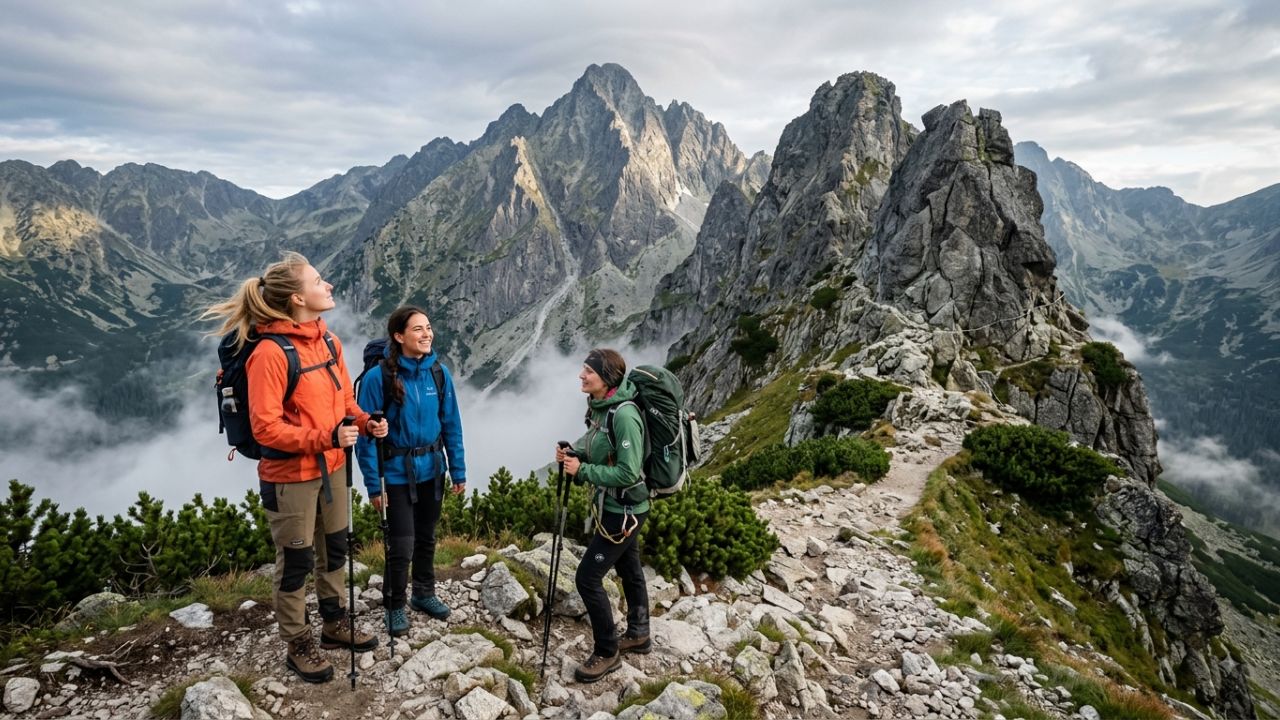
Image generated by AI
Slovakia welcomed approximately 5.73 million visitor arrivals across domestic and international stays in 2025, fueled by an 11.8% year-on-year surge in foreign accommodation overnight guests. Generating €1.10 billion in tour operator revenues, the country's rugged alpine peaks and subterranean cave networks are positioning it as a leading destination for active nature tourism.
The adventure travel market in Central Europe is observing a major shift, with travelers increasingly seeking raw, uncrowded mountain environments over traditional, high-density European cities. Slovakia has emerged as a primary destination within this trend, offering a unique combination of steep granite peaks, extensive cave networks, and natural geothermal springs. According to official data from the Statistical Office of the Slovak Republic, the country recorded 5.73 million total arrivals in 2025, with foreign overnight guests rising 11.8% year-on-year to reach 2,421,263 travelers. This surge brings the country within touching distance of its historical 2019 pre-pandemic record of 2,475,094 guests.
For the traveler, the real impact of this shift is the opportunity to experience a high-intensity adventure holiday in an untouched natural environment. Organized travel packages are increasingly focusing on experience-led journeys that combine physical challenge with regional recovery. This growth has supported local economies in rural mountain districts, funding trail maintenance, alpine rescue services, and family-owned guesthouses.
High-Altitude Trails, Subterranean Caves, and Whitewater Rivers
Mountaineering and high-altitude trekking are the primary drivers of this active nature tourism, generating a 20% surge in overnight stays across the country's major mountain ranges. The Ministry of Tourism and Sport of the Slovak Republic notes that outdoor activities in the Prešov Region and the Žilina Region outperformed all traditional leisure sub-sectors. The granite peaks of the High Tatras (Vysoké Tatry) alone attracted over 1.2 million overnight visitors. Endurance hikers are drawn to the 770-kilometre Cesta Hrdinov SNP (Path of the Heroes of the SNP) trail traversing the country, while climbers test exposure-heavy routes like Ostrá and Jakubiná or vertical iron-cable ascents at Via Ferrata Dve Veže and Ferrata HZS Martinské hole.
Slovakia's adventure offerings extend deep underground and onto fast-flowing rivers:
- Speleotrekking and Cave Exploration: The Slovak Caves Administration manages a vast subterranean network of more than 7,000 discovered caves. Adrenaline seekers complete technical crawls and river crossings in the Demänovská Cave System, which features 43 kilometres of mapped passages, or cross roaring torrents via single-wire bridges at Krásnohorská Jaskyňa.
- Whitewater Rafting: The Dunajec River Gorge in Pieniny National Park serves as a class III and IV rafting corridor, where paddlers navigate narrow rock canyons beneath the Three Crowns peaks. In the south, the Váh River offers kayaking routes framed by medieval ruins, while the artificial complex at Divoká Voda near Bratislava supports hydro-speeding on Class IV rapids.
- Apex Predator Tracking Safaris: Poloniny National Park, a UNESCO World Heritage site near the eastern border, offers guided safaris to track Eurasian Brown Bears, Gray Wolves, Eurasian Lynx, and European Bison under strict eco-tourism licensing.
These diverse environments offer travelers an authentic encounter with wild nature, supported by professional guides and trackers.
Sustainable Tourism and Environmental Protection Frameworks
The rapid expansion of mountain tourism demands strict environmental management to protect delicate ecosystems. For the visitor, the real impact is an eco-preservation framework that coordinates visitor flows and keeps human footprints in check. The Štátna ochrana prírody SR (State Nature Conservancy) enforces uncompromising rules in Tatra National Park (TANAP). All alpine trails above mountain huts are legally closed to the public from November 1 to June 15 each year to protect wildlife during vulnerable nesting seasons and minimize winter avalanche accidents.
Off-trail alpine climbs and technical runs require licensed UIAGM/IFMGA mountain guides or certified park escorts. In the dense forests of Poloniny National Park and Muránska Planina, carnivore tracking is governed by strict daily visitor caps to prevent the disruption of apex predator habitats.
To support traveler safety during high-altitude treks, the elite Slovak Mountain Rescue Service (Horská záchranná služba - HZS) operates a comprehensive rescue network. During the peak summer season, HZS units executed 559 search and rescue callouts, with the High Tatras accounting for 40% of emergency extractions. Travelers rely on the official HZS mobile app, which uses satellite GPS to locate stranded climbers within a 20-to-30-metre radius, linking emergency coordination directly with real-time weather feeds.
Geothermal Recovery: The Post-Adventure Wellness Model
Slovakia's tourism sector is capitalizing on a unique hybrid model that combines heart-pounding physical exertion with geothermal recovery. Tectonic faults running deep beneath the Carpathian mountain range heat ancient mineral-rich aquifers, creating natural thermal springs directly adjacent to major trail networks.
After completing vertical ascents in the High Tatras or exploring the Demänovská Cave System, travelers transition directly to thermal hubs in Liptov and Poprad. Geothermal complexes like Bešeňová, Tatralandia, and AquaCity Poprad feature calcium- and magnesium-rich waters that naturally soothe muscle fatigue. Progressive tour operators are packaging these natural elements into comprehensive itineraries, combining long-distance trekking along the Cesta Hrdinov SNP with therapeutic sulfur and balneological mineral baths in historic spa towns like Rajecké Teplice and Piešťany.
Destination Specialist Local Insider Tips
To help you explore the mountain peaks, caves, and thermal spas of Slovakia safely and responsibly, local specialists suggest the following tips:
- Respect the Winter Trail Closures: Ensure your hiking trip is scheduled between June 16 and October 31. Hikes above mountain huts in TANAP are strictly prohibited from November 1 to June 15.
- Savor Bryndzové Halušky and Kapustnica: Sample regional gastronomy. Try bryndzové halušky (potato dumplings tossed with sheep cheese and topped with fried bacon) or kapustnica (a rich sauerkraut and sausage soup) at a local salaš (sheep farm tavern).
- Remove Your Shoes at Guesthouses: When staying in independent penzióny (guesthouses), always remove your outdoor footwear at the door. Hosts will provide slippers to keep interior wooden floors clean.
- Download the HZS Mobile App Before Hiking: Ensure the official Mountain Rescue Service app is installed on your phone. It allows you to call for emergency help and transmits your exact coordinates even in remote valleys.
- Bring Cash for Small Mountain Huts: While cards are accepted in cities, high-altitude mountain huts (chaty) often require cash in Euros for food and lodging, as internet connections can be unreliable.
- Use Public Transport for Mountain Access: Take the cheap Tatry electric railway (TEŽ) which connects Poprad-Tatry station with main trailheads like Starý Smokovec and Štrbské Pleso, reducing emissions and avoiding car parking fees.
Long-Term Outlook for Slovakian Wilderness Travel
The long-term outlook for tourism in Slovakia is positive, supported by the country's focus on conservation-led development and sustainable regional infrastructure. By establishing a balance between adventure recreation and environmental protection, Slovakia is positioning itself as a leading model for eco-tourism in Central Europe.
Continued investments in mountain rescue services, green transportation links connecting regional rail to national parks, and community-led guesthouse networks will ensure that the Carpathian wilderness remains a clean, safe, and welcoming destination. This balanced approach protects delicate ecosystems while supporting local communities, ensuring that future generations can experience the freedom of Slovakia's wild frontier.
Related Travel Guides
Disclaimer
This article is for informational and educational purposes only. It does not constitute legal, financial, or professional advice. While we strive to provide accurate and up-to-date information, travel policies, regulations, and conditions change rapidly. Always verify information with official sources before making travel decisions. Nomad Lawyer makes no representations about the accuracy, reliability, completeness, or suitability of the information provided. Readers should consult qualified professionals for advice specific to their circumstances. The views expressed in this article are those of the author and do not necessarily reflect the views of Nomad Lawyer.
Kunal K Choudhary
Co-Founder & Contributor
A passionate traveller and tech enthusiast. Kunal contributes to the vision and growth of Nomad Lawyer, bringing fresh perspectives and driving the community forward.
Learn more about our team →