
Slovakia Is Now on Alert as Climate Tourism Calls for Better Extreme Heat Travel Safety Across the Country
Slovakia Is Now on Alert as Climate Tourism Calls for Better Extreme Heat Travel Safety Across the Country

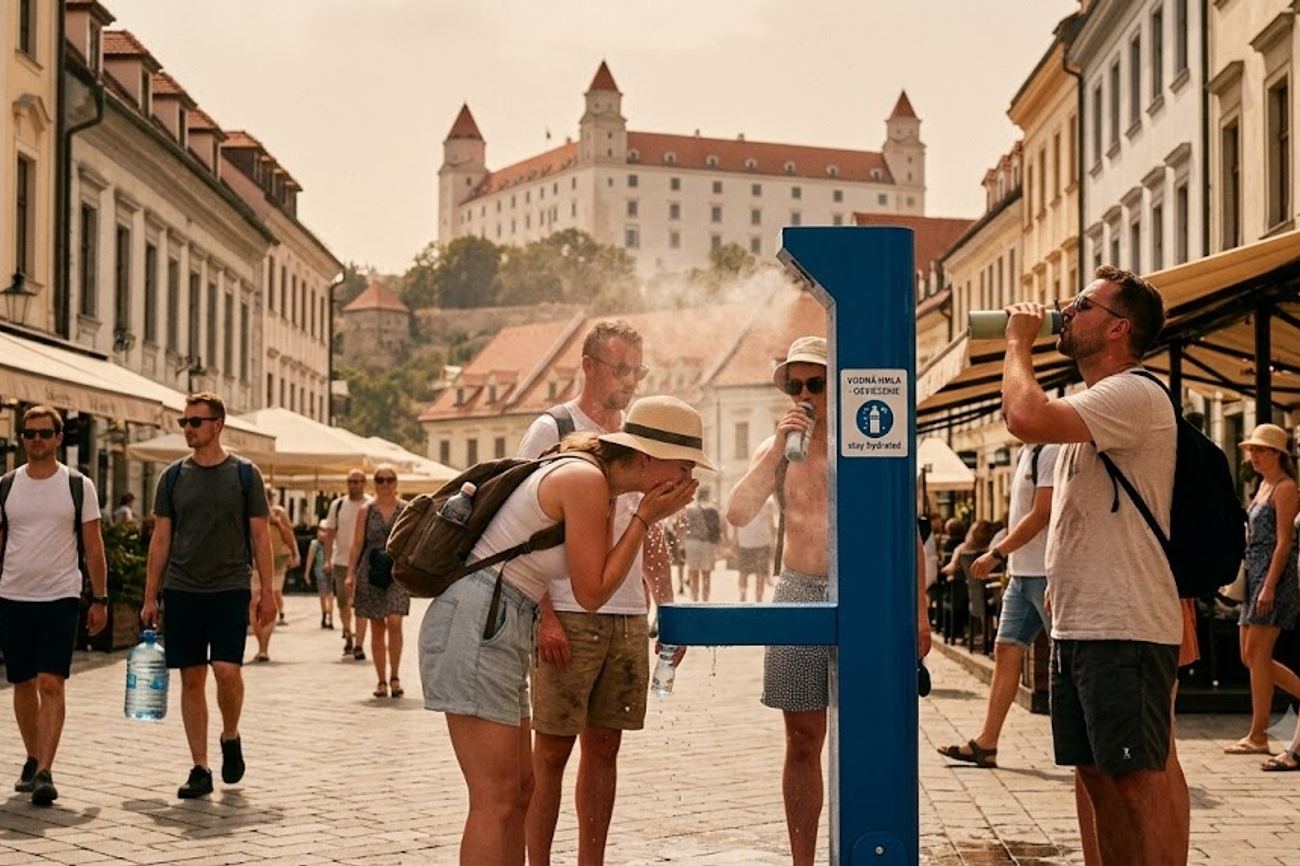
Image generated by AI
[Bratislava, September 18, 2026] — Slovakia has officially recorded its third-warmest summer since national meteorological tracking began in 1931, highlighted by a new national temperature record of 42.2°C. The findings, confirmed today, reveal a season of unprecedented thermal extremes that are forcing a reassessment of travel safety and seasonal planning for visitors to the Central European nation.
The extreme heat peaked on August 6, when the station at Dolné Plachtince hit the record 42.2°C, shattering the previous national high of 40.3°C set in Hurbanovo on July 20, 2007. This spike followed a rapid escalation of temperatures in late July and early August, including a measurement of 41.4°C at Kamenica nad Hronom just one day prior to the ultimate record.
The Thermal Trigger
The 2026 summer season was characterized by both isolated peaks and sustained heat persistence. June ranked as the fourth-warmest June on record, while August emerged as the second-warmest August since 1931. July followed as the 20th-warmest.
The intensity of the heat is most evident in the number of days exceeding the 40°C threshold. Slovakia experienced five such days in 2026: June 29, June 30, August 4, August 5, and August 6. To put this in perspective, only three days of 40°C or higher had been recorded in the entire 95-year history of Slovak meteorological data prior to this year. This means a single summer season produced approximately 1.67 times the number of extreme-heat days as all previous years combined.
Localized data indicates the severity varied by region. Hurbanovo registered 56 tropical days (defined as days reaching at least 30°C) and endured a continuous 22-day heatwave. Meanwhile, Mužla recorded 87 summer days (at least 25°C), illustrating a pattern of persistent warmth across the lowlands.
Who Is Affected
While the heat was a national phenomenon, the impact is unevenly distributed across different traveler profiles and geographic zones.
| Traveler Group | Primary Risk | Impact Level |
|---|---|---|
| City Tourists | Urban heat island effect during walking tours | High |
| Hikers & Cyclists | Heat exhaustion on exposed trails | High |
| Vulnerable Groups | Children and elderly facing respiratory/cardiac strain | Critical |
| Tourism Operators | Operational shifts in scheduling and resource demand | Moderate |
| Mountain Visitors | Variable trail conditions due to uneven rainfall | Moderate |
The southern lowlands and urban centers bore the brunt of the heat. Hurbanovo reported a monthly average temperature for August of 25.6°C, which sits 4.2°C above the 1991–2020 norm. In contrast, elevated regions like Vyšná Boca remained significantly cooler, with a monthly average of 16.2°C, and Podolínec showed a smaller anomaly of 1.2°C above normal.
What This Means for Travelers
For those currently booking or traveling within Slovakia, this data translates into a shift in "Climate Tourism" strategy. While there are no changes to visa requirements, passport controls, or Slovak Border Police protocols, the physical experience of travel has changed.
Passenger Impact Assessment:
- Seasonal Shifting: The traditional peak window of May to September is becoming more volatile. Official guidance now strongly favors May, June, September, and October for city breaks to avoid the extreme thermal peaks seen in July and August.
- Itinerary Flexibility: Travelers can no longer rely on a single national average. A trip to the southern plains requires vastly different hydration and clothing strategies than a trip to the High Tatras.
- Activity Timing: Demanding outdoor activities—such as hiking in the mountains or exploring heritage sites—must be shifted to early morning or late evening. Indoor alternatives like museums, spas, and caves are now essential "heat refuges" in any itinerary.
- Health Precautions: There is an increased necessity for travelers with pre-existing health conditions to monitor live warnings via the Slovak Hydrometeorological Institute (SHMÚ) to avoid peak-heat exposure.
Rainfall Volatility and Terrain Risks
The extreme heat was accompanied by erratic precipitation patterns, creating a dual risk of drought and flash flooding. August 2026 saw staggering disparities in rainfall across the country.
In the Dargov region, rainfall plummeted to just 5.2 millimeters, representing a mere 7.2% of the 1991–2020 norm. Conversely, the Silica region received 124.7 millimeters, or 178.1% of its normal rainfall. This means Silica received nearly 25 times the rainfall of Dargov in the same period.
For the traveler, this means that "summer weather" is no longer a monolith. A visitor may encounter bone-dry, fire-prone trails in one district and saturated, mud-slicked paths or storm-damaged roads in another. This volatility makes real-time local monitoring more important than general seasonal forecasts.
Safety and Emergency Preparedness
The Slovak government and tourism bodies are emphasizing the use of technology to mitigate these risks. Travelers are urged to utilize the official Slovak rescue application, which integrates weather warnings, terrain data, and GPS-based emergency assistance.
A critical warning for adventure tourists: standard travel insurance often excludes specialized mountain rescue. Given the increased physical strain caused by 40°C+ temperatures, the likelihood of heat-related emergencies in remote areas has risen. Visitors are advised to verify that their policies explicitly cover high-altitude or specialist rescue operations.
While there is no evidence of widespread hotel cancellations or a permanent shift in visitor numbers, the operational burden on the hospitality sector has increased. Hotels and attractions are facing higher demand for cooling infrastructure and drinking water, and outdoor guides are being forced to re-evaluate route exposure and participant fitness levels.
FAQ: Slovakia Extreme Heat 2026
Are there any new travel restrictions or visa changes due to the heat? No. There are no confirmed changes to Slovakia’s visa, passport, border, or nationwide transport rules. Entry requirements remain standard.
When is the best time to visit Slovakia to avoid extreme heat? Official guidance recommends visiting in May, June, September, and October. These months are generally cooler and less crowded than the July-August peak.
What should I do if I am hiking during a heat warning? Use the official Slovak rescue app for real-time alerts, move strenuous activity to cooler hours, and ensure your insurance covers specialized mountain rescue.
Is the heat the same across the entire country? No. Southern lowlands and cities are significantly hotter. Elevated regions and mountain destinations like Vyšná Boca remain much cooler than the national average.
Real-time monitoring is no longer optional for the Slovak summer; it is a safety requirement.
#Slovakia2026 #SHMU #BratislavaTravel #ClimateTourism #TatraMountains #ExtremeHeatSafety
Related Travel Guides
- Mexico Teams Up With Bahamas And More As Canada Issues New Travel Advisory Over Online Dating Threats And Demonstrations For Travellers
- Western Australia Faces New Beach Safety Crisis After Fatal Shark Attack Shuts Perth Coastline
- Scotland’s Glasgow Subway Faces New Travel Warning As Delayed Underground Services Disrupt Morning Passengers
Disclaimer
This article is for informational and educational purposes only. It does not constitute legal, financial, or professional advice. While we strive to provide accurate and up-to-date information, travel policies, regulations, and conditions change rapidly. Always verify information with official sources before making travel decisions. Nomad Lawyer makes no representations about the accuracy, reliability, completeness, or suitability of the information provided. Readers should consult qualified professionals for advice specific to their circumstances. The views expressed in this article are those of the author and do not necessarily reflect the views of Nomad Lawyer.
Kunal K Choudhary
Co-Founder & Contributor
A passionate traveller and tech enthusiast. Kunal contributes to the vision and growth of Nomad Lawyer, bringing fresh perspectives and driving the community forward.
Learn more about our team →