
Oceanwide Expeditions Orders Two Eco-Sail Ships for Arctic and Antarctic Polar Cruises by 2030
Netherlands-based Oceanwide Expeditions has announced the construction of two new hybrid eco-sail expedition vessels, scheduled for delivery in 2029 and 2030. Built on the Hondius-class design and incorporating hybrid sail propulsion, the ships will carry 146 passengers each through Arctic and Antarctic regions with dramatically lower fuel consumption.

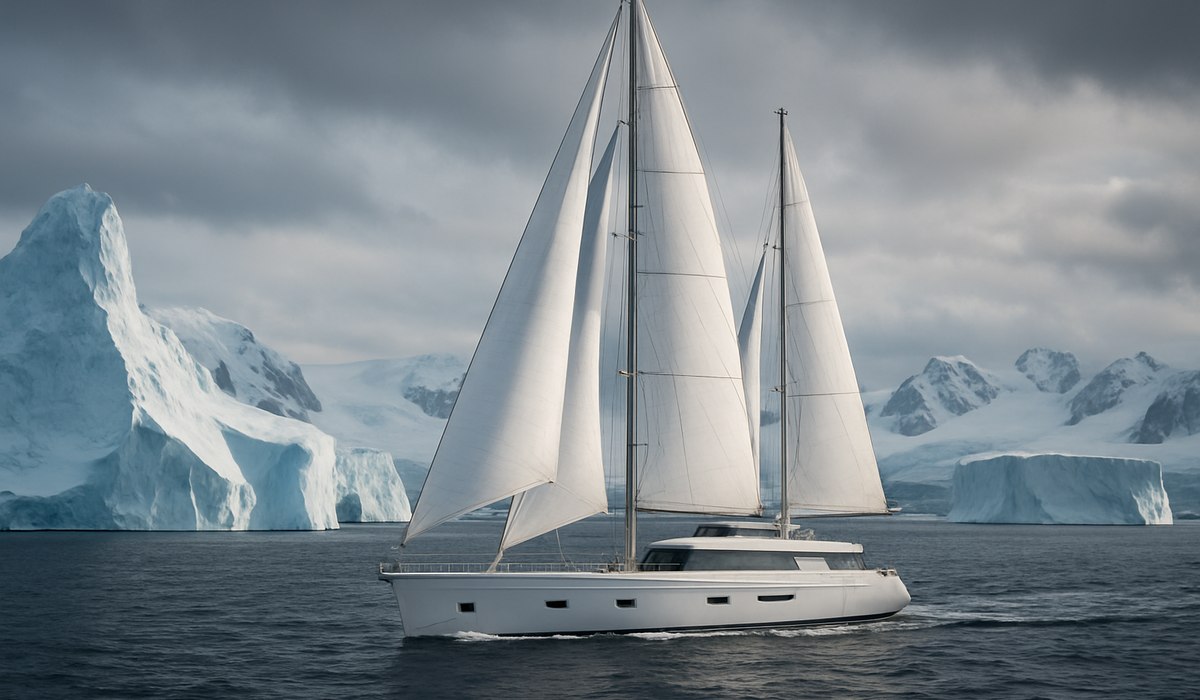
Image generated by AI
Polar Expedition Cruising's Most Sustainable Leap Forward
Netherlands-based Oceanwide Expeditions—one of the world's original and most respected polar expedition cruise operators, with over 30 years of experience navigating Arctic and Antarctic waters—has announced the construction of two new hybrid eco-sail expedition vessels, fundamentally upgrading the company's green credentials and establishing what may become the new standard for responsible polar tourism. The two ships, set to join the Oceanwide fleet in 2029 and 2030 respectively, are based on the company's proven Hondius-class hull design and will integrate advanced hybrid sail propulsion systems that significantly reduce reliance on diesel engines—delivering lower fuel consumption, reduced emissions, and quieter wildlife observation conditions in the world's most environmentally sensitive marine ecosystems.
Oceanwide Expeditions CEO Remi Bouysset articulated the company's vision: "Sailing has always been part of our DNA"—a recognition that the company's expedition DNA traces directly to the era when wind power was the only available propulsion in polar waters, and that returning to a hybrid of that tradition represents both ecological responsibility and authentic expedition philosophy.
The Ships: What We Know (and What's Coming)
Oceanwide has released key parameters while reserving final details for future announcement:
Hull Design: Both ships will be built on the Hondius-class design framework—the same platform as the company's 2019 flagship m/v Hondius, which has earned exceptional operational reviews since its introduction for its stability, safety, and passenger experience quality in polar pack ice conditions.
Propulsion: The new vessels will incorporate hybrid sail propulsion systems—a sophisticated integration of wind-driven sails with electric and/or diesel engine backup. This hybrid architecture enables:
- Zero-emission operation under favorable wind conditions in open water
- Reduced-emission operation in calmer conditions where partial engine support is required
- Full engine capability for precise maneuvering in narrow ice channels and during zodiac embarkation/disembarkation operations
Passenger Capacity: Each vessel will accommodate up to 146 passengers—a deliberate small-group configuration that is central to Oceanwide's expedition philosophy. Small groups mean:
- Faster zodiac loading and landing operations at remote sites
- Lower environmental footprint per voyage
- More intimate wildlife observation experiences without the crowd pressure of larger expedition ships
Delivery Timeline: First vessel in 2029, second in 2030. Construction start is expected in the near term, with shipyard partner and vessel names to be announced as planning progresses.
Oceanwide's Environmental Certifications and Industry Standards
The new ships will operate under Oceanwide's existing certification frameworks—which include dual accreditation from the world's two leading polar expedition standards organizations:
IAATO (International Association of Antarctica Tour Operators) — the primary self-regulatory organization governing responsible Antarctic tourism. IAATO membership requires adherence to strict landing protocols, wildlife distancing rules, and biosecurity measures.
AECO (Association of Arctic Expedition Cruise Operators) — the Arctic equivalent, governing Arctic expedition operations with similar environmental protection standards.
Oceanwide's hybrid eco-sail vessels are expected to meet and exceed the vessel emission standards that both organizations are moving toward as the polar tourism industry confronts its carbon footprint.
What Guests Get
- IAATO and AECO-certified expeditions — the gold standard of responsible polar tourism compliance
- Small group experience — maximum 146 passengers, translating to personalized expedition leader attention and faster operational tempo
- Hybrid wind-powered sailing — quieter operations creating superior conditions for wildlife observation (whales, seals, and penguins are sensitive to diesel engine noise)
- Polar-rated hull with ice-class designation, enabling operation in moderate ice conditions that larger ships cannot navigate
- Expert expedition team — naturalists, historians, photographers, and scientists embedded in each voyage
Oceanwide Eco-Sail Fleet Specifications
| Specification | Detail |
|---|---|
| Base Design | Hondius-class |
| Passenger Capacity | 146 per vessel |
| Propulsion | Hybrid sail (wind + electric/diesel) |
| Delivery: Vessel 1 | 2029 |
| Delivery: Vessel 2 | 2030 |
| Operating Regions | Arctic + Antarctic |
| Certifications | IAATO + AECO compliant |
| Carbon Impact | Significantly reduced vs. diesel-only |
| Expedition Staff | Naturalists, historians, scientists |
What This Means for Travelers
The announcement is highly significant for the growing cohort of high-value eco-conscious travelers who want polar expedition experiences without the psychological tension of contributing disproportionately to the emissions footprint of the fragile ecosystems they're visiting.
Polar expedition cruising has historically carried an inherent contradiction: the only way to experience Antarctica or the High Arctic in meaningful depth is by ship, but the diesel-heavy vessels used by most operators produce emissions inconsistent with the environmental values that attract polar expedition clients in the first place.
Oceanwide's hybrid eco-sail design directly addresses this contradiction. Under favorable wind conditions—which are common in both the Drake Passage and Arctic waters—the new ships can operate with near-zero fuel burn, dramatically reducing the expedition's carbon footprint per passenger without compromising safety or schedule.
For travelers planning polar adventures in the 2029-2030 timeframe, Oceanwide's new ships should be the preferred booking target in the sub-200-passenger expedition category. Early booking inquiries with Oceanwide at their official website will be essential—small expedition vessels with genuine hybrid sailing capability will be intensely sought-after.
FAQ: Oceanwide Eco-Sail Ships
How do hybrid sail ships actually work in polar waters? In open ocean conditions with sustained wind, the sails provide primary propulsion and the engines run at minimal power or off entirely. In calm conditions, port approaches, and ice navigation, engines provide full control. The system is managed dynamically by the ship's officers based on wind, current, and operational requirements.
Will the new ships be more expensive than current Oceanwide offerings? Typically, vessels with advanced sustainability technology carry a modest premium in expedition pricing. However, Oceanwide has positioned hybrid eco-sail as consistent with its core mission rather than a "luxury premium" product—the goal is long-term operational cost reduction through fuel savings that may partially offset capex costs.
Can the eco-sail ships operate in ice conditions? Yes. The Hondius-class hull design carries ice-class ratings that enable operation in moderate polar ice conditions. The hybrid propulsion system is designed to maintain full engine output capability when precise maneuvering is required in ice passages.
Related Travel Guides
Antarctica Expedition Cruise Guide 2026: Choosing the Right Ship and Operator
Arctic vs Antarctic: Which Polar Region Should You Choose for Your Expedition?
IAATO-Certified Antarctic Tour Operators: Who Meets the Gold Standard?
Disclaimer
This article is for informational and educational purposes only. It does not constitute legal, financial, or professional advice. While we strive to provide accurate and up-to-date information, travel policies, regulations, and conditions change rapidly. Always verify information with official sources before making travel decisions. Nomad Lawyer makes no representations about the accuracy, reliability, completeness, or suitability of the information provided. Readers should consult qualified professionals for advice specific to their circumstances. The views expressed in this article are those of the author and do not necessarily reflect the views of Nomad Lawyer.
Raushan Kumar
Founder & Lead Developer
Full-stack developer with 11+ years of experience and a passionate traveller. Raushan built Nomad Lawyer from the ground up with a vision to create the best travel and law experience on the web.
Learn more about our team →