
Singapore's Largest Contemporary Qixi Festival Transforms Kreta Ayer Square in August 2026
Singapore's largest contemporary Qixi Festival brings an urban reimagining of China's Valentine's Day to Kreta Ayer Square through August 23, 2026, blending celestial art and heritage.

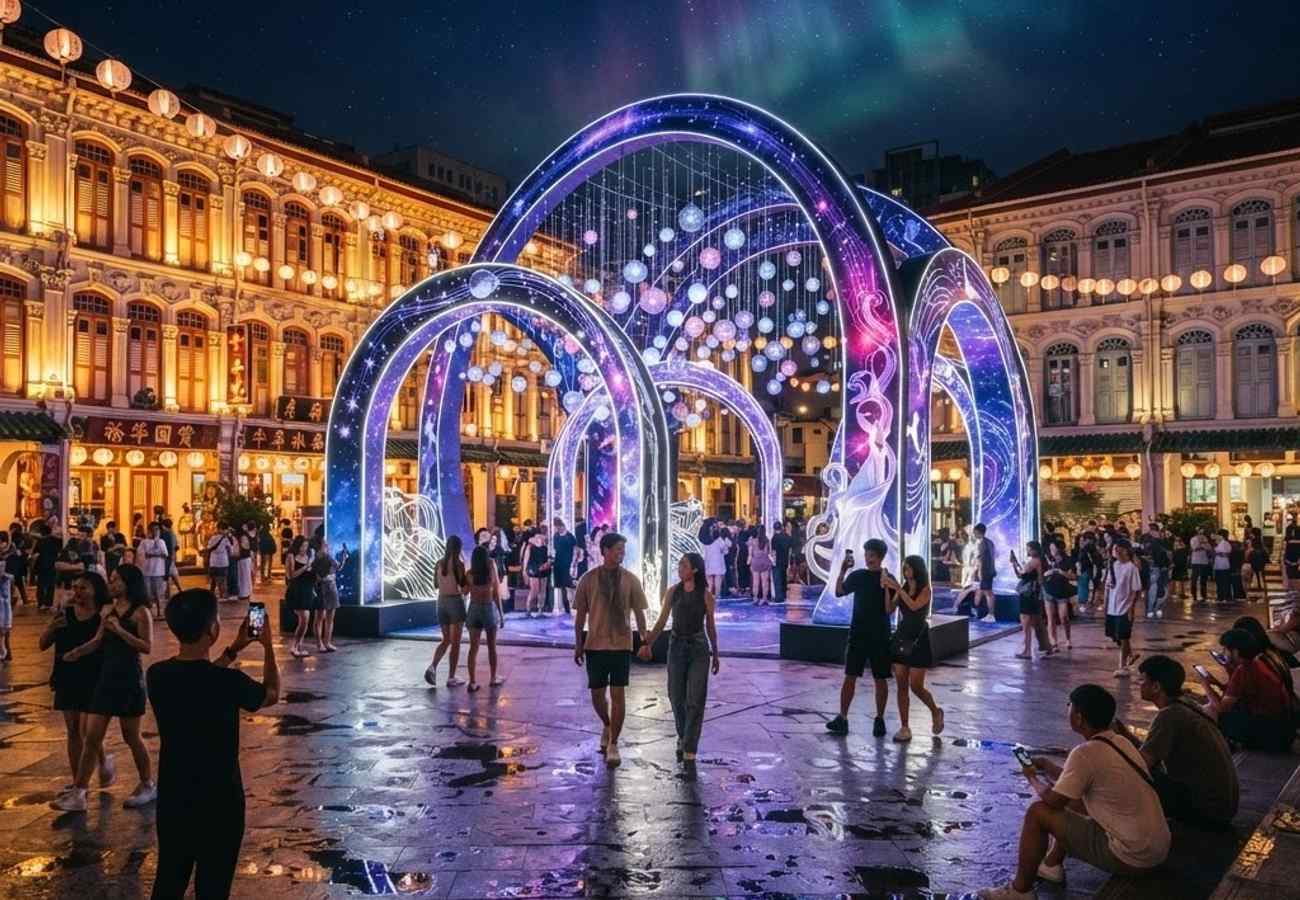
Image generated by AI
The largest contemporary Qixi celebration in Singapore has taken over Kreta Ayer Square, offering a modern urban interpretation of China’s “Valentine’s Day” until August 23, 2026.
The Local Trend Revealed
In the heart of Singapore’s historic Chinatown, a shift is occurring in how ancient folklore is presented to the modern traveler. The Qixi Festival—traditionally a quiet observance of the myth involving a cowherd and a weaver girl separated by the Milky Way—has been scaled up into a city-wide contemporary event.
Rather than sticking to rigid traditional rituals, the 2026 iteration at Kreta Ayer Square utilizes "urban scenography." This means the space is no longer just a plaza but a curated experience where celestial-themed lighting, kinetic sculptures, and immersive installations translate the legend of the starry sky into a visual language that resonates with Gen Z and international visitors. The event acts as a strategic bridge, connecting the gritty, authentic heritage of Chinatown's shophouses with Singapore's identity as a global hub for digital art and design.
Cultural & Environmental Value
For the visitor, the real impact is the democratization of heritage. By stripping away the requirement for deep linguistic or historical knowledge, the festival uses movement and light to tell a story of reunion and separation. The use of open-air public spaces like Kreta Ayer Square ensures that the event remains accessible, reducing the need for ticketed, indoor venues and encouraging a flow of foot traffic that directly benefits the local micro-economy.
The festival integrates seamlessly with the surrounding Smith Street and Kreta Ayer corridors. This layout encourages a sustainable "walking district" approach, where travelers move fluidly between the high-tech installations of the square and the traditional confectionery shops and heritage eateries of the neighborhood, supporting local vendors without the need for motorized transport.
Visitor Insider Tips
To get the most out of the Qixi experience without the stress of peak-season crowds, keep these local insights in mind:
- The Golden Window: Avoid Friday and Saturday nights if you dislike dense crowds. Target Tuesday or Wednesday evenings between 6:00 PM and 8:00 PM. This allows you to participate in the early-evening workshops and calligraphy sessions before the romantic lighting installations reach peak capacity.
- Dining Strategy: Skip the main tourist strips of Smith Street during the festival peak. Venture into the smaller alleys of Chinatown to find authentic hawker stalls that provide a quieter atmosphere for a pre-festival meal.
- Weather Readiness: August in Singapore is characterized by high humidity and sudden tropical downpours. While the installations are designed for light rain, carry a compact umbrella. The "festival glow" is actually more vivid immediately after a rain shower when the pavement reflects the celestial lights.
- Cultural Etiquette: When participating in symbolic rituals, such as tying wish ribbons or contributing to collaborative art walls, be mindful of the shared space. These are community-driven installations; adding your message thoughtfully preserves the art for others.
Tourism Outlook
The elevation of Qixi into a large-scale public event signals Singapore's intent to move beyond the "big three" Chinese holidays (Lunar New Year, Mid-Autumn, and Dragon Boat Festival). By diversifying its cultural calendar, the Singapore Tourism Board and local heritage associations are creating a year-round draw for cultural tourists.
The trend toward "interdisciplinary performance"—mixing contemporary dance and digital art with ancient myths—positions Singapore as a leader in cultural preservation through innovation. Long-term, this approach ensures that heritage doesn't become a museum piece but remains a living, evolving part of the urban fabric.
A celestial celebration of love, reimagined for the modern nomad.
Related Travel Guides
Disclaimer
This article is for informational and educational purposes only. It does not constitute legal, financial, or professional advice. While we strive to provide accurate and up-to-date information, travel policies, regulations, and conditions change rapidly. Always verify information with official sources before making travel decisions. Nomad Lawyer makes no representations about the accuracy, reliability, completeness, or suitability of the information provided. Readers should consult qualified professionals for advice specific to their circumstances. The views expressed in this article are those of the author and do not necessarily reflect the views of Nomad Lawyer.
Kunal K Choudhary
Co-Founder & Contributor
A passionate traveller and tech enthusiast. Kunal contributes to the vision and growth of Nomad Lawyer, bringing fresh perspectives and driving the community forward.
Learn more about our team →