
Singapore Airlines and Starlink Partnership 2026: High-Speed In-Flight Wi-Fi for A350 Fleet
Singapore Airlines has partnered with SpaceX to equip its Airbus A350-900 fleet with Starlink high-speed internet, offering passengers fiber-like connectivity and low latency at 30,000 feet.

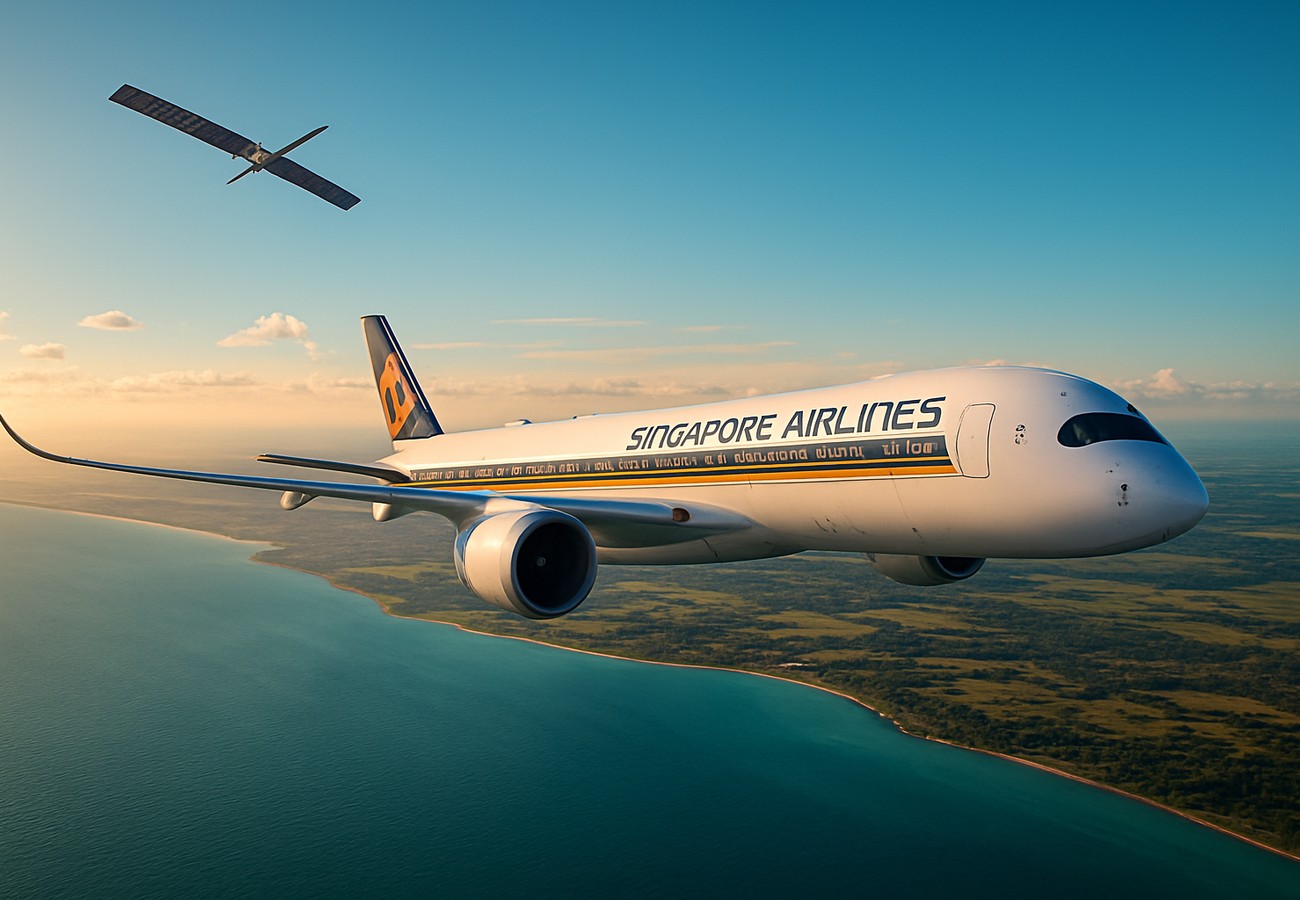
Image generated by AI
Quick Summary
- Strategic Partnership: Singapore Airlines (SIA) is integrating SpaceX’s Starlink satellite internet across its widebody fleet.
- Target Fleet: The initial rollout is focused on the Airbus A350-900, the backbone of SIA's international long-haul network.
- Technical Leap: Utilizing Low Earth Orbit (LEO) satellites, the system offers fiber-like speeds and significantly reduced latency compared to legacy geostationary systems.
- Passenger Capabilities: Travelers will have access to high-definition video conferencing, live gaming, and 4K streaming from every seat.
- Global Coverage: The Starlink constellation ensures consistent connectivity even over transoceanic and polar routes, eliminating traditional "dead zones."
Singapore Airlines is redefining the parameters of in-flight connectivity in 2026 through a multi-million dollar partnership with SpaceX. By equipping its flagship Airbus A350-900 fleet with Starlink aviation terminals, the carrier is effectively erasing the digital divide between ground and air. This technological leap utilizes a constellation of thousands of LEO satellites to provide passengers with high-speed broadband that mirrors the reliability of home or office networks. For business travelers, this means seamless participation in HD video conferences, while leisure passengers can enjoy uninterrupted live gaming and 4K streaming. As SIA prioritizes its widebody international network for this upgrade, the move sets a new competitive standard for the global aviation industry, positioning "essential digital utility" at the heart of the premium passenger value proposition.
Singapore Airlines x Starlink Integration 2026: Technical and Operational Metrics
The following table summarizes the key technical specifications and the expected passenger impact of the Starlink integration.
| Metric / Feature | Starlink Aviation Performance | Legacy Satellite Systems |
|---|---|---|
| Orbit Type | Low Earth Orbit (LEO) | Geostationary (GEO) |
| Average Latency | <100ms (Fiber-like) | 600ms - 800ms (High Delay) |
| Max Capacity per Plane | Up to 350 Mbps | 15 - 100 Mbps (Shared) |
| Hardware | Phased Array Electronically Steered Antenna | Traditional Gimballed Dish |
| In-Flight Capabilities | 4K Streaming, Live Gaming, HD Zoom | Basic Web Browsing & Messaging |
| Geographic Coverage | True Global (Including Polar) | Limited at High Latitudes |
| Primary Fleet (SIA) | Airbus A350-900 | Various (Mix of GEO providers) |
Low Earth Orbit (LEO) Technology: Bypassing the Latency Barrier
The core advantage of the SIA-Starlink partnership is the shift to LEO technology:
- Reduced Distance: By orbiting at roughly 550km (versus 35,000km for GEO satellites), data travels a much shorter distance, resulting in nearly instantaneous response times.
- Stable Links: The electronically steered antenna maintains a continuous link with the satellite constellation, even during high-speed transoceanic flight.
- Capacity Management: The system supports hundreds of devices simultaneously, ensuring that every passenger in the A350-900 cabin enjoys consistent speeds without degradation.
The Airbus A350-900 Rollout: Prioritizing the International Widebody Fleet
SIA has strategically chosen its most modern widebody aircraft for the initial implementation:
- Long-Haul Backbone: The A350-900 serves SIA's most prestigious routes, including non-stop flights to North America and Europe, where high-speed connectivity is most valued.
- Minimal Disruption: The installation process is being overseen by SIA's internal engineering teams, ensuring hardware integration is completed during scheduled maintenance cycles.
- Network Expansion: While the A350 is the priority, the airline has signaled that the Starlink framework could eventually expand to its Boeing 777-300ER and Airbus A380 fleets.
Cabin Transformation: Live Gaming and HD Conferencing at 30,000 Feet
The Starlink integration fundamentally alters what is possible in the aircraft cabin:
- Business Continuity: Corporate travelers can now engage in real-time collaboration and cloud-based tasks that were previously impossible due to bandwidth caps.
- Entertainment Evolution: Passengers are no longer limited to stored In-Flight Entertainment (IFE) and can instead stream content from their own personal accounts on Netflix, Disney+, or YouTube.
- Live Interaction: The low-latency connection supports online gaming and social media interaction that feels as responsive as a ground-based connection.
Engineering Excellence: Aerodynamic Antennas and Fuselage Integration
The hardware installation is a feat of modern aerospace engineering:
- Phased Array Antenna: The Starlink terminal is a low-profile, electronically steered array mounted atop the fuselage, designed to minimize aerodynamic drag.
- Fuel Efficiency: The design ensures that the addition of the antenna does not compromise the A350’s fuel efficiency or structural integrity.
- Cabin Distribution: High-capacity wireless access points (WAPs) are being installed throughout the cabin to distribute the satellite signal evenly across all classes.
Global Connectivity: Eliminating "Dead Zones" on Transoceanic and Polar Routes
One of the most significant benefits for SIA is the reliability over remote regions:
- Polar Coverage: Traditional satellites often lose signal as flights cross high northern or southern latitudes; Starlink maintains a stable link across the poles.
- Transoceanic Stability: The massive SpaceX constellation ensures that aircraft are always within range of multiple satellites, even in the middle of the Pacific or Atlantic.
- Regulatory Compliance: SIA is working closely with international telecommunications regulators to ensure seamless handover between diverse geographical regions.
Strategic Value: Differentiating through Essential Digital Utilities
Management at Singapore Airlines views high-speed Wi-Fi as an essential component of 21st-century travel:
- Passenger Loyalty: By providing a "home-like" digital experience, SIA aims to secure the loyalty of tech-savvy business and leisure travelers.
- Industry Benchmark: This move positions SIA as a technological leader, likely prompting other premium carriers to accelerate their own satellite internet investments.
- Future Innovations: The high-bandwidth connection is also seen as a catalyst for future real-time aircraft health monitoring and advanced cabin management systems.
FAQ: Singapore Airlines and Starlink 2026
Which Singapore Airlines flights have Starlink Wi-Fi? The rollout is currently focused on the Airbus A350-900 fleet, particularly for long-haul international routes.
Is the Starlink Wi-Fi free for all passengers? While SIA often provides free Wi-Fi to PPS Club members and premium class passengers, check your specific booking or the SIA website for the latest 2026 pricing and data tiers.
Can I use Zoom or play online games with Starlink on SIA? Yes. The low-latency Starlink system is designed to support high-definition video conferencing and live gaming at 30,000 feet.
Related Travel Guides
Disclaimer
This article is for informational and educational purposes only. It does not constitute legal, financial, or professional advice. While we strive to provide accurate and up-to-date information, travel policies, regulations, and conditions change rapidly. Always verify information with official sources before making travel decisions. Nomad Lawyer makes no representations about the accuracy, reliability, completeness, or suitability of the information provided. Readers should consult qualified professionals for advice specific to their circumstances. The views expressed in this article are those of the author and do not necessarily reflect the views of Nomad Lawyer.
Kunal K Choudhary
Co-Founder & Contributor
A passionate traveller and tech enthusiast. Kunal contributes to the vision and growth of Nomad Lawyer, bringing fresh perspectives and driving the community forward.
Learn more about our team →