
Singapore Advances With Indonesia and Others as Cruise Expansion Tests Travel Technology Across ASEAN Borders
Singapore Advances With Indonesia and Others as Cruise Expansion Tests Travel Technology Across ASEAN Borders

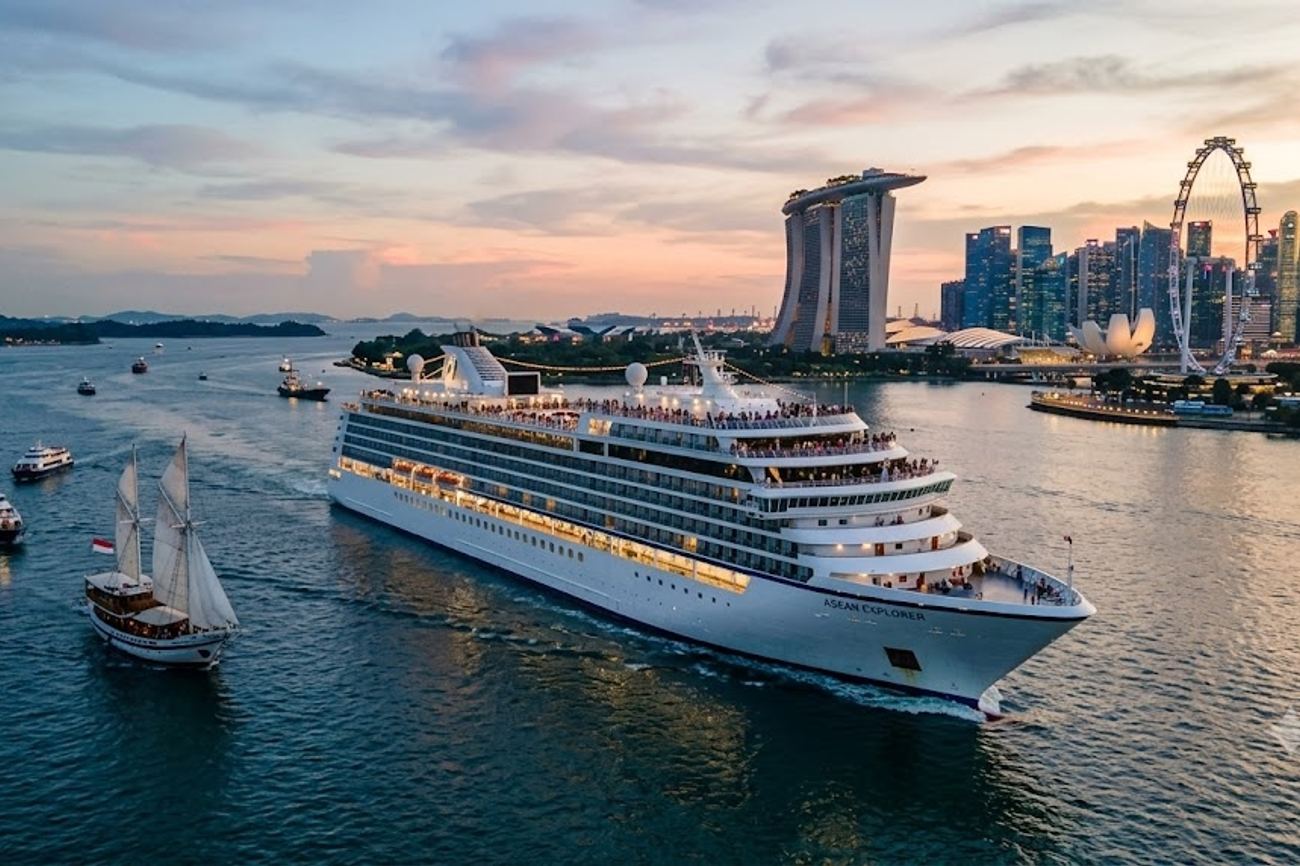
Image generated by AI
[Singapore, May 2026] — Southeast Asia is grappling with a critical "digital divide" in its cruise infrastructure as regional passenger volumes surge, with Singapore and Malaysia currently dominating 70% of the market. While the region generated US$10 billion in cruise-related economic output in 2024, the lack of interoperable digital entry systems across ASEAN member states is creating operational friction for multi-destination itineraries.
The crisis of coordination comes as the Association of Southeast Asian Nations (ASEAN) aggressively pushes for "multi-destination cruising" to distribute wealth toward secondary and tertiary ports. Currently, travelers must navigate a fragmented landscape of six distinct national digital portals—ranging from Singapore’s biometric lanes to Vietnam’s eVisa system—making the administrative burden of adding a third or fourth port call a significant deterrent for cruise operators and passengers alike.
The Digital Friction Trigger
The immediate catalyst for this infrastructure push is the widening gap between physical port capacity and digital processing capabilities. While the Singapore Tourism Board (STB) reports that the region's economic output per passenger visit (US$2,564) is 2.4 times the global average, the administrative process remains siloed.
According to the ASEAN Secretariat’s official statement from the 29th Meeting of ASEAN Tourism Ministers held in Cebu on January 29, 2026, member states have formally committed to streamlining travel facilitation and improving cruise safety standards. The goal is to shift the cruise economy away from a "hub-and-spoke" model centered on Singapore and toward a networked model where passengers can move seamlessly between multiple coastal nations. However, adding a new port to an itinerary currently requires cruise lines to manage separate immigration procedures, health declarations, and customs rules for every single border crossing, as there is no unified ASEAN cruise passenger interface.
Markets Impacted and Current Tech Stacks
The regional cruise economy is characterized by a sharp divide between where passengers land and where the workforce is located. While Singapore and Malaysia capture the vast majority of visits, Indonesia and the Philippines provide 85% of the sector's employment.
The following table outlines the current digital hurdles for passengers and operators across the primary cruise markets:
| Market | Primary Digital System | Maritime Application | B2B/Operator Impact |
|---|---|---|---|
| Singapore | SG Arrival Card / Biometrics | Token-less immigration at Marina Bay Cruise Centre | High benchmark; vessel and passenger tech remain separate |
| Malaysia | Malaysia Digital Arrival Card (MDAC) | Requires vessel number and last port of embarkation | Unique digital workflow for every entry |
| Indonesia | All Indonesia | Integrated immigration, customs, and health (Batam deployment) | Combined national border processes |
| Philippines | eTravel | Dedicated Cruise Travel Registration portal | National digital passenger-data environment |
| Thailand | Thailand Digital Arrival Card (TDAC) | Applies to sea, land, and air entry | Mandatory digital submissions for non-Thais |
| Vietnam | National Electronic Visa system | 37 approved sea border gates for eVisa | Port choice must strictly match visa eligibility |
What This Means for Travelers
For the average passenger booking a Southeast Asian cruise right now, "digital transformation" does not yet mean "simplicity." Instead, it means managing a checklist of different government portals.
The Passenger Impact:
- Redundant Data Entry: You cannot currently use one "ASEAN Pass." You must submit separate digital declarations for each country you visit (e.g., an SG Arrival Card for Singapore and an MDAC for Malaysia).
- Visa Rigidity: In markets like Vietnam, your ability to visit a specific port is tied to whether that specific sea border gate is approved for the National Electronic Visa system.
- Variable Processing Times: While you may experience passport-less biometric clearance in Singapore, you should expect traditional manual checks or different digital workflows in secondary ports in Indonesia or the Philippines.
- Increased Itinerary Options: On the positive side, the push for "secondary destination" investment means more diverse ports of call are becoming available, even if the paperwork remains tedious.
The Singapore Benchmark and Future Timeline
Singapore is currently the only regional player with a fully integrated "tech stack" for both passengers and vessels. The Immigration & Checkpoints Authority (ICA) has already implemented passport-less biometric clearance using facial and iris recognition at the Marina Bay Cruise Centre. The scale of this success is evident: in 2025, approximately 127 million travelers cleared Singaporean checkpoints without producing a physical passport.
Furthermore, the new Singapore Cruise Centre at HarbourFront is utilizing automated token-less lanes designed to boost passenger clearance capacity by 25%. On the operational side, the Maritime and Port Authority of Singapore (MPA) is utilizing digitalPORT@SG to consolidate vessel and immigration data, providing a blueprint that ASEAN ministers in Cebu are looking to replicate regionally.
The immediate timeline involves the ASEAN Secretariat working with member states to synchronize these systems. The objective is to move from "national advancement" to "regional interoperability." If successful, the 3.9 million passenger visits recorded in 2024 could expand significantly as the "friction cost" of adding ports to an itinerary drops.
FAQ: ASEAN Cruise Travel 2026
Do I need a separate digital arrival card for every country on my cruise? Yes. Currently, there is no unified ASEAN travel document. You must comply with the specific digital requirements of each nation, such as the SG Arrival Card for Singapore and the eTravel portal for the Philippines.
Can I use biometrics to enter all Southeast Asian ports? No. While Singapore has fully implemented biometric clearance at the Marina Bay Cruise Centre, most other regional ports still require traditional passport checks or national digital declarations.
How does the "secondary destination" policy affect my trip? It means cruise lines are adding more stops in smaller cities and less-visited coastal areas of Indonesia, Vietnam, and the Philippines to spread economic benefits beyond the major hubs.
Are eVisas available for all cruise ports in Vietnam? No. You must ensure that the specific sea border gate your cruise ship is docking at is one of the 37 approved gates listed by the Vietnamese government for eVisa entry.
The physical corridors are open; the digital gates are still locking.
#SingaporeCruise #ASEANTourism #MaritimeTech #MarinaBayCruiseCentre #CruiseIndustry2026 #TravelInteroperability
Related Travel Guides
- Visa Study Shows Adoption of Digital Remittances Accelerates in Asia Pacific, with Trust Emerging as a Critical Enabler
- Uruguay Speeds Up the Transition to Digital Tourism as Montevideo and Other Cities Increase Cashless Payments for International Travelers
- UK Joins Brazil and More as Overseas Travellers Turn to Solo Holidays Across America in Growing Numbers
Disclaimer
This article is for informational and educational purposes only. It does not constitute legal, financial, or professional advice. While we strive to provide accurate and up-to-date information, travel policies, regulations, and conditions change rapidly. Always verify information with official sources before making travel decisions. Nomad Lawyer makes no representations about the accuracy, reliability, completeness, or suitability of the information provided. Readers should consult qualified professionals for advice specific to their circumstances. The views expressed in this article are those of the author and do not necessarily reflect the views of Nomad Lawyer.
Raushan Kumar
Founder & Lead Developer
Full-stack developer with 11+ years of experience and a passionate traveller. Raushan built Nomad Lawyer from the ground up with a vision to create the best travel and law experience on the web.
Learn more about our team →