
Selar Expeditions’ Captain Arctic Reaches Float-Out Milestone in Mauritius
Selar Expeditions' Captain Arctic reaches major construction milestone in Mauritius. 36-passenger near-zero-emissions vessel features solar sails.
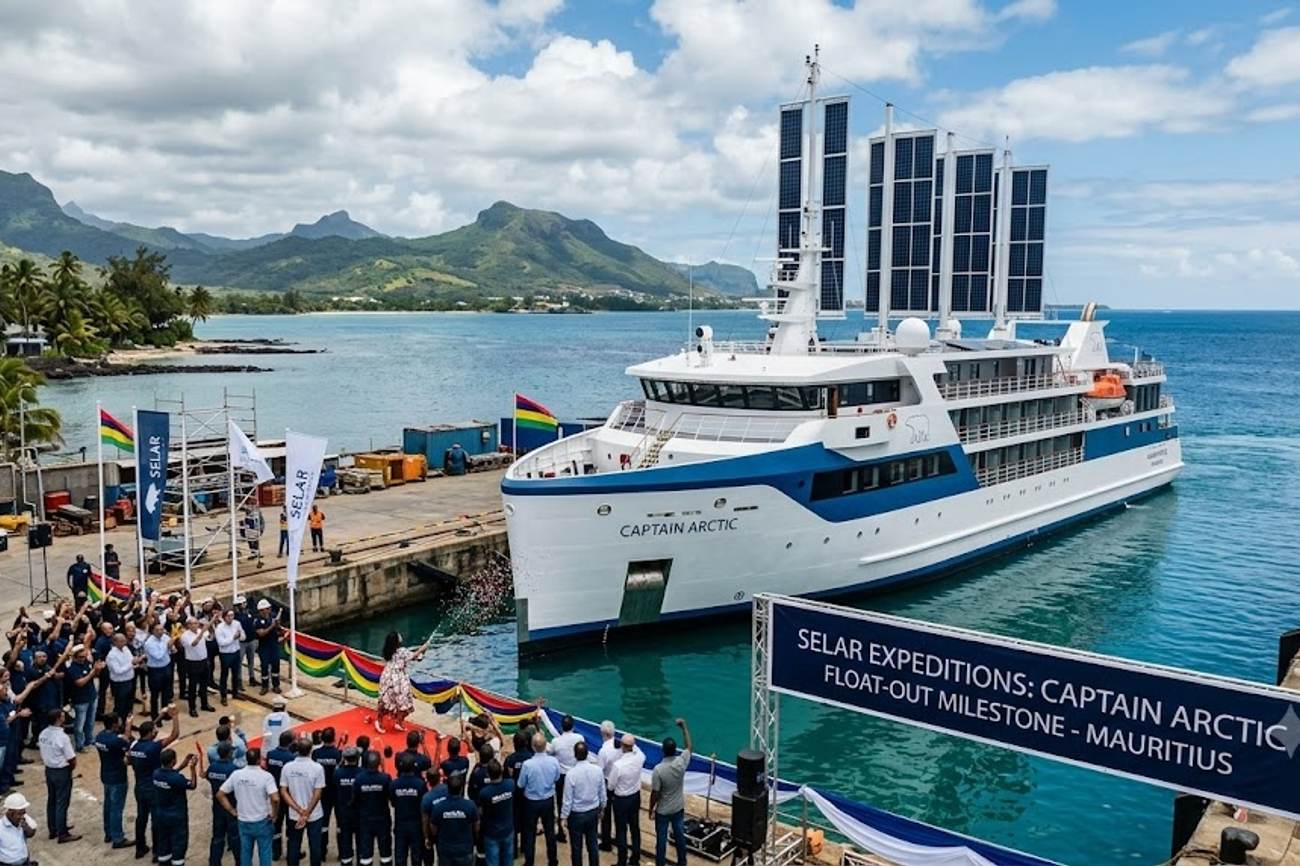
Image generated by AI
The Captain Arctic officially entered the water in August at the Chantier Naval de l’Ocean Indien (CNOI) in Mauritius. The vessel is now transitioning from the building dock to final construction and operational readiness, with delivery expected later in 2026.
Designed for year-round Arctic expeditions, the 70-metre vessel is engineered to minimize the environmental footprint in fragile polar ecosystems. Selar Expeditions' operational crew has already joined the ship in Mauritius to integrate with shipyard specialists, accelerating the transition to commercial service.
Vessel Specifications & Technical Impact
The Captain Arctic departs from traditional cruise architecture to prioritize environmental preservation:
- Capacity: Limited to 36 passengers to reduce congestion in sensitive coastal zones.
- Tonnage: 2,200 tons.
- Propulsion: Hybrid system utilizing wind-assisted propulsion and renewable energy.
- Solar Integration: Two rigid aluminium solar sails, each weighing approximately 10 tonnes.
- Energy Capture: Approximately 20,000 square feet of solar panels integrated into the sail structures.
Passenger Rights & Advisory: Polar Expedition Travel
For passengers booking high-latitude expeditions on unconventional vessels like the Captain Arctic, the regulatory landscape differs from standard Caribbean or Mediterranean cruises. Our analysis of maritime and travel frameworks indicates the following:
- Contract of Carriage: Passengers should scrutinize the "Force Majeure" clauses. Polar travel is highly susceptible to ice conditions and extreme weather; unlike standard routes, deviations in polar itineraries are often legally protected under expedition cruise contracts.
- Environmental Compliance: As the vessel targets near-zero emissions, passengers may encounter stricter onboard waste management protocols. Our analysis suggests that "Green Cruising" mandates often shift more responsibility toward the passenger regarding plastic use and waste separation.
- Insurance Requirements: Given the remote nature of Arctic operations, standard travel insurance is often insufficient. Passengers should ensure policies specifically cover "Emergency Medical Evacuation" from polar regions, as standard DOT or EU-based travel protections do not cover the high costs of Arctic extraction.
Industry Analyst View
The launch of the Captain Arctic reflects a systemic shift toward "small-ship" exploration. Data from the CLIA 2025 Environmental Technologies and Practices Report highlights a broader industry trend: 82.4% of reporting fleets (234 ships) now utilize advanced wastewater treatment, and 58.5% (166 ships) have adopted shore-side electricity.
However, the Captain Arctic represents a more aggressive leap than the industry average. While many lines are transitioning to LNG (Liquefied Natural Gas), Selar is betting on solar-wind hybridization. This approach addresses the "vibration and noise" pollution that plagues larger vessels (>3,000 pax), which our analysis indicates is a primary driver of ecological disruption in Arctic breeding grounds.
Related Travel Guides
Disclaimer
This article is for informational and educational purposes only. It does not constitute legal, financial, or professional advice. While we strive to provide accurate and up-to-date information, travel policies, regulations, and conditions change rapidly. Always verify information with official sources before making travel decisions. Nomad Lawyer makes no representations about the accuracy, reliability, completeness, or suitability of the information provided. Readers should consult qualified professionals for advice specific to their circumstances. The views expressed in this article are those of the author and do not necessarily reflect the views of Nomad Lawyer.