
Thailand Rivals Singapore, Malaysia and Other Regional Cruise Hubs as US$10 Billion Boom Exposes the Local Value Gap
Thailand Rivals Singapore, Malaysia and Other Regional Cruise Hubs as US$10 Billion Boom Exposes the Local Value Gap

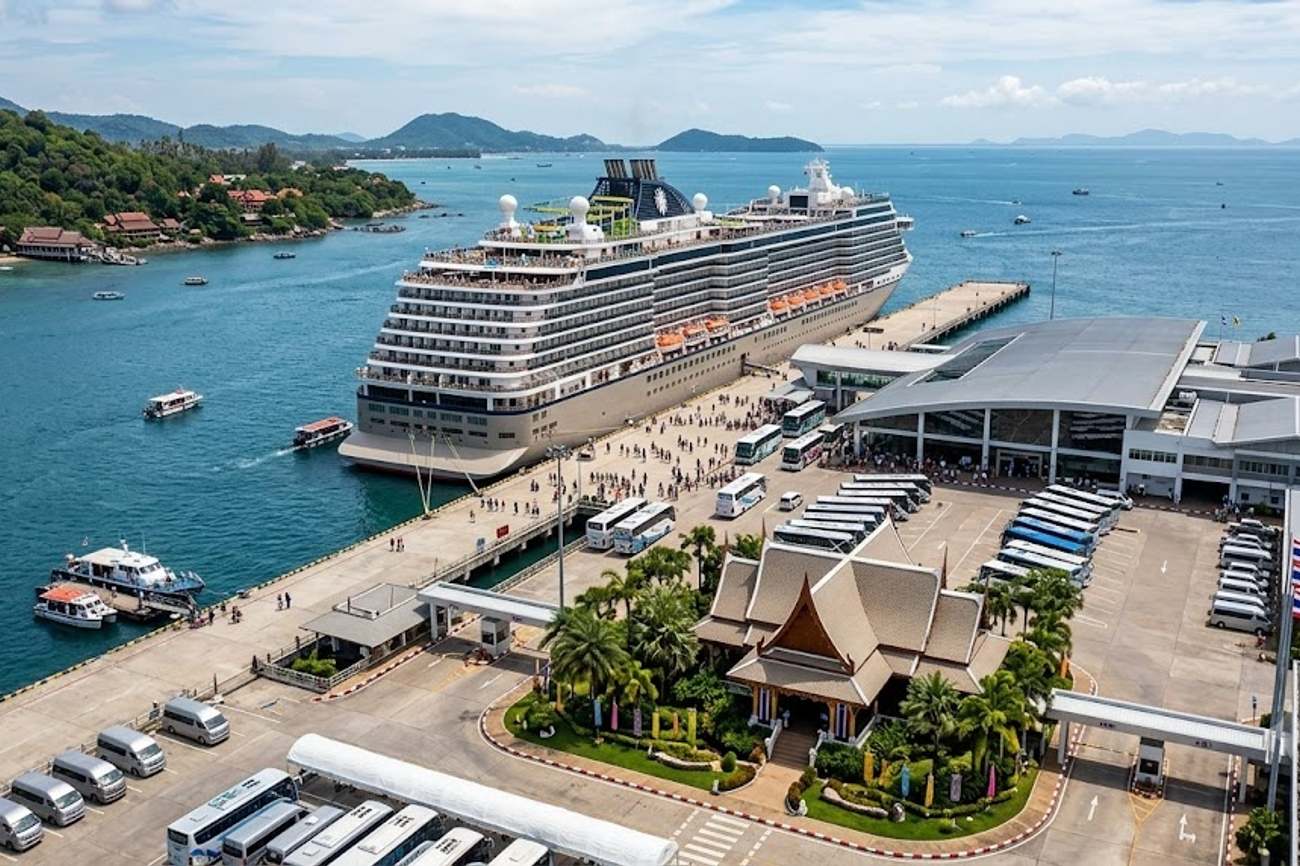
Image generated by AI
Southeast Asia's cruise-related economic output reached US$10 billion in 2024, while the region's share of global passenger visits remained at only 2%. This stark disparity reveals a high-value capture model where the region generates 2.4 times the global average in economic output per passenger visit, signaling a shift from volume-based tourism to a high-yield economic strategy.
The High-Yield Cruise Model in Numbers
The 2024 regional assessment indicates that Southeast Asia is punching significantly above its weight in the global cruise market. While the region accounts for a modest 2% of the world's cruise passenger traffic, it commands 5% of the global cruise-related economic output. This efficiency is driven by an estimated US$2,564 in economic output per passenger visit.
The broader economic impact extends beyond the immediate spending of tourists. The US$10 billion total includes a complex web of B2B transactions: cruise-line procurement, port service fees, crew wages, and the supply chain for food and fuel. In total, the industry supported 530,000 jobs and contributed US$4.5 billion to the regional GDP across Singapore, Thailand, Vietnam, Malaysia, and the Philippines.
However, the distribution of this wealth is heavily skewed. Singapore acts as the primary engine, capturing 48% of all regional passenger visits. Malaysia follows with 22%, creating a concentrated hub-and-spoke model where a few primary ports dictate the economic flow of the entire region.
Comparative Market Analysis: Home-Ports vs. Transit Hubs
The data reveals a fundamental difference between "home-port" economies and "transit-port" economies. A home-port, such as Singapore, captures revenue before the ship even sails (pre-cruise hotel stays, airport transfers) and after it returns. Transit ports, like those in Malaysia and Thailand, rely on the "shore excursion window"—the limited hours passengers spend on land.
According to data from the World Tourism Organization (UNWTO), the ability to convert a short port call into a longer land-based stay is the primary growth lever for emerging markets. In Southeast Asia, 47% of cruise passengers expressed a desire to return for land-based travel, suggesting that the cruise ship is increasingly serving as a "teaser" for future high-spend independent trips.
Regional Cruise Performance Metrics (2024)
| Metric | Singapore (Home-Port) | Malaysia (Transit Focus) | Thailand (Excursion Focus) |
|---|---|---|---|
| Passenger Share | 48% of regional total | 22% of regional total | Not specified (Total: 379,036) |
| Operational Volume | 1.8M passengers / 340 calls | 1M+ (Penang movements) | 162 ship calls |
| Revenue/Growth | High (Integrated Logistics) | High Transit (650,518 int'l) | THB 1.89B (6.9% YoY growth) |
| Economic Driver | Pre/Post-cruise stays | Heritage/Urban proximity | Organized excursion chains |
What This Means for Travelers
The data suggests that the "cruise-only" approach to Southeast Asia is becoming less efficient for the traveler. Because Singapore captures nearly half of the region's traffic, the infrastructure there is optimized for high volumes, but the real value for the traveler lies in the "shoulder days."
Actionable Booking Advice:
- The "Plus-Two" Strategy: If departing from Singapore, book arrival 48 hours prior to embarkation. The data shows Singapore's economy is built on integrated tourism; using this time to explore the city-state allows you to experience the destination without the time constraints of a ship's schedule.
- Independent Exploration in Penang: For those visiting Malaysia, the proximity of the Swettenham Pier Cruise Terminal to George Town suggests that avoiding cruise-line-organized buses can save money and time. The urban layout favors independent walking tours over coach excursions.
- Excursion Timing in Thailand: With 162 ship calls and a heavy reliance on excursion revenue, Thailand's ports (like Laem Chabang) often involve long transit times to major attractions. To maximize value, prioritize excursions that minimize travel time or book "port-adjacent" experiences to avoid spending 4-6 hours in transit.
The Trajectory of Regional Cruise Value
The shift from 2023 to 2024 shows a clear trend: the region is moving away from simply counting "heads" and toward measuring "yield." Thailand's 6.9% revenue growth, despite a relatively small number of ship calls compared to Singapore, indicates that the industry is successfully increasing the spend-per-passenger.
Future growth will likely depend on the "conversion rate"—the percentage of the 47% of passengers who intend to return for land-based travel. Destinations that can integrate their cruise terminals with seamless transport to hotels and inland attractions will capture a larger share of the GDP. We can expect to see more "cruise-to-land" packages promoted by IATA member airlines and regional tourism boards to capitalize on this intent.
FAQ: Southeast Asia Cruise Trends 2024-2026
Will cruise prices in Southeast Asia increase? Likely yes. As destinations shift toward a "high-yield" model (evidenced by the US$2,564 output per passenger), operators are more likely to prioritize premium itineraries over budget-volume voyages to maximize regional economic output.
Is now a good time to book a Southeast Asian cruise? Yes, but with a caveat. With 85% of travelers reporting positive experiences, demand is rising. Booking 6-9 months in advance is recommended, especially for Singapore-based departures, to secure competitive pre-cruise hotel rates.
Which ports offer the best independent experience? Penang (Malaysia) is currently the leader for independent travelers. The data shows over 1 million passenger movements with a terminal located directly on the George Town waterfront, removing the need for expensive organized tours.
How does Southeast Asia compare to the global cruise market? The region is a high-efficiency outlier. While it only handles 2% of global passengers, it generates 5% of the world's cruise economic output, making it one of the most profitable regions per capita for the industry.
The era of the budget port-call is ending; Southeast Asia is now engineering the high-value cruise experience.
#SingaporeTourismBoard #CruiseEconomy2024 #SoutheastAsiaGDP #MaritimeTourismYield #PenangCruiseTraffic #ThailandTourismRevenue
Related Travel Guides
Disclaimer
This article is for informational and educational purposes only. It does not constitute legal, financial, or professional advice. While we strive to provide accurate and up-to-date information, travel policies, regulations, and conditions change rapidly. Always verify information with official sources before making travel decisions. Nomad Lawyer makes no representations about the accuracy, reliability, completeness, or suitability of the information provided. Readers should consult qualified professionals for advice specific to their circumstances. The views expressed in this article are those of the author and do not necessarily reflect the views of Nomad Lawyer.
Preeti Gunjan
Contributor & Community Manager
A passionate traveller and community builder. Preeti helps grow the Nomad Lawyer community, fostering engagement and bringing the reader experience to life.
Learn more about our team →