SCAT Airlines Launches Boeing 737-8 Route: Shymkent to Singapore via Sanya Guide 2026

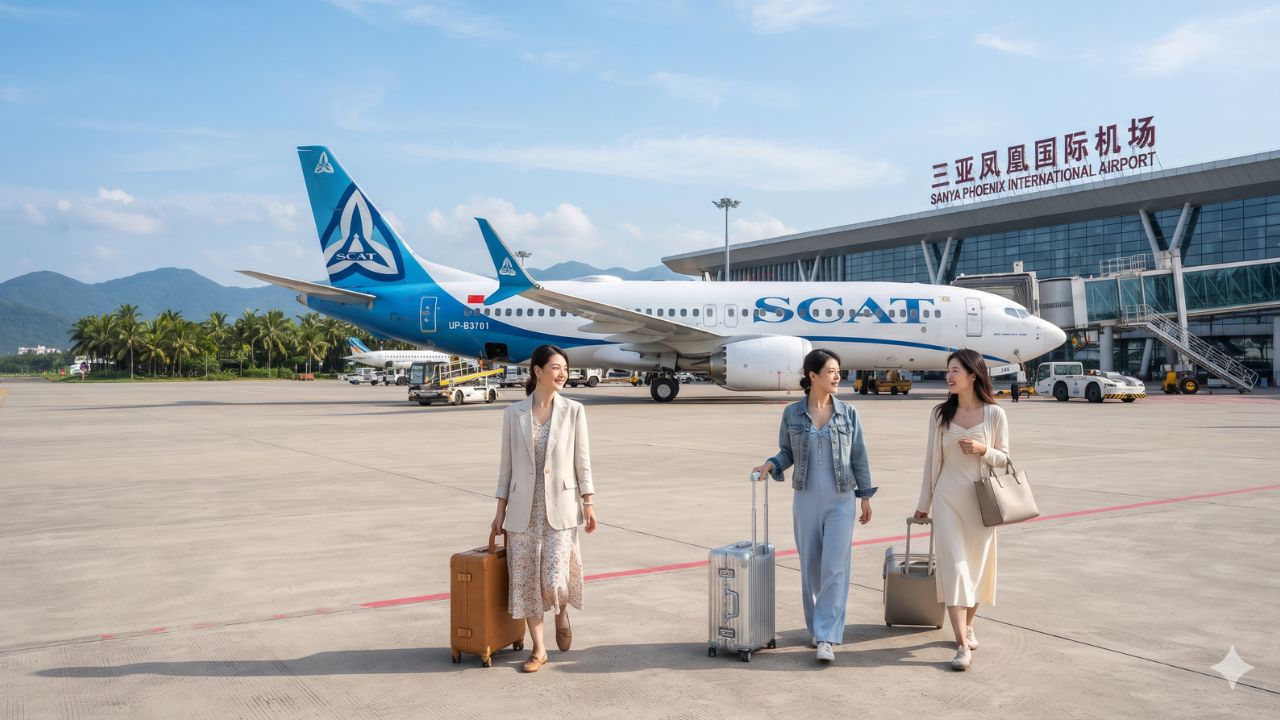
For the first time since 2019, travelers can board a single-aisle aircraft at Singapore Changi and disembark on the ancient Silk Road steppes of southern Kazakhstan, all while transiting China's tropical resort coast without clearing customs. In a historic repositioning of Eurasian aviation corridors, Kazakhstan’s privately owned carrier SCAT Airlines has inaugurated scheduled passenger flights linking Shymkent, Sanya, and Singapore aboard fuel-efficient Boeing 737-8 aircraft.
Operating under flight numbers DV777 and DV778, the twice-weekly service leverages fifth-freedom traffic rights to connect four distinct Asian markets. Backed by bilateral treaty revisions established through the Ministry of Transport of the Republic of Kazakhstan and the Civil Aviation Authority of Singapore, the new route restores Singapore’s direct aviation link to Central Asia while introducing low-cost fifth-freedom seating across the South China Sea.
The Fifth-Freedom Dynamic: How Flight DV777 Functions
Fifth-freedom traffic rights represent one of commercial aviation’s most powerful instruments, allowing an airline to carry revenue passengers between two foreign countries during a flight that originates or terminates in its homeland. Under this framework, SCAT Airlines is not merely shuttling Kazakh travelers to the tropics; it is actively selling standalone tickets between Sanya on Hainan Island and Singapore Changi.
Outbound flight DV777 departs Shymkent International Airport (CIT) in southern Kazakhstan, touches down at Sanya Phoenix International Airport (SYX) on the southern tip of Hainan, and completes its journey south at Singapore Changi Airport (SIN). Through-passengers bound between Kazakhstan and Singapore remain in a sterile international transit area at Sanya for roughly 1.5 to 2 hours, bypassing Chinese immigration and customs controls completely.
The standalone sector between Sanya and Singapore covers nearly 2,000 kilometers over the South China Sea, taking approximately three hours of flight time. Initial commercial figures confirm an immediate market appetite, with average passenger loads exceeding 85% seat occupancy across the inaugural weeks of operation.
Corridor Architecture: Connecting Four Eurasian Nations
The Shymkent–Sanya–Singapore route establishes a quadrilateral travel ecosystem linking Kazakhstan, China, Singapore, and neighboring Uzbekistan:
| Nation & Role | Hub Airport & Terminal | Flight Sector Details | Visa Policy & Border Feature |
|---|---|---|---|
| Kazakhstan (Origin & Airline Base) | Shymkent International (CIT) — Terminal A | Northern terminus; links to Turkestan, Almaty, and Astana | 30-day visa-free access for Singaporean and Chinese citizens |
| China (Commercial Transit & 5th Freedom) | Sanya Phoenix International (SYX) — Terminal 2 | Sterile 1.5–2 hour transit; standalone South China Sea sector | 30-day Hainan visa-free scheme; no visa needed for airside transit |
| Singapore (Southeast Asian Terminus) | Singapore Changi (SIN) — Terminal 4 | Southern terminus; first direct Central Asian link since 2019 | Visa-free entry for Kazakh citizens; global Indo-Pacific hub |
| Uzbekistan (Overland & Route Partner) | Tashkent (TAS) / Samarkand (SKD) | Located ~120 km south of Shymkent; direct SCAT flights to Sanya | Overland border crossings; UNESCO Silk Road heritage corridor |
What Makes This Eurasian Corridor Geographically and Culturally Distinct
Historically, flying between Southeast Asia and Central Asia was an exhausting logistical headache. Travelers originating in Singapore had to detour thousands of kilometers out of direction, connecting through Gulf mega-hubs like Doha and Dubai or northern hubs like Seoul and Beijing.
By utilizing the extended range and fuel efficiency of the Boeing 737 MAX 8, SCAT Airlines bypasses congested hub infrastructure entirely. The route pairs Shymkent—a historic trade oasis founded in the 12th century along the northern Silk Road—with Sanya, China’s primary coastal tax-free playground, before descending into Singapore's modern financial center.
This route also unlocks unprecedented access to Uzbekistan. Located just 120 kilometers north of Tashkent, Shymkent serves as an organic overland staging ground. Independent travelers can fly from Singapore to Shymkent, cross the Chernyaevka overland border into Uzbekistan within two hours, and explore the blue-domed architectural monuments of Samarkand and Bukhara listed under the UNESCO World Heritage Convention.
Additionally, SCAT Airlines operates parallel Boeing 737 services linking Sanya directly with Samarkand, creating multi-country open-jaw itineraries that were logistically impossible five years ago.
Visitor Insider Tips for Booking the Shymkent–Sanya–Singapore Route
Travelers planning journeys along this Central Asian corridor should take note of several operational nuances:
- Booking Standalone Fifth-Freedom Fares: If vacationing in Singapore and seeking an affordable beach getaway, search for flights specifically on the Sanya–Singapore sector of DV777 and DV778. SCAT’s fifth-freedom pricing is frequently 30% cheaper than traditional legacy carriers flying between Singapore and southern China.
- Sterile Transit Realities in Sanya: Through-passengers traveling between Kazakhstan and Singapore remain inside Terminal 2 at Sanya Phoenix International Airport during the 90-to-120-minute layover. Ensure you carry your physical boarding passes and keep your cabin baggage with you, as checked luggage transfers automatically to your final destination.
- Overland Transit to Uzbekistan: When landing at Shymkent International Airport with plans to visit Tashkent, pre-arrange a licensed cross-border taxi or take a shared intercity shuttle from Shymkent's Kolos station to the Zhibek Zholy border crossing. The crossing is open 24 hours, but early morning arrivals avoid midday truck queues.
- Winter Packing Strategy: The temperature contrast along this route is dramatic. Shymkent in November and December regularly drops below freezing with snow, while Sanya and Singapore remain hot and tropical at 28°C to 32°C. Pack warm wool base layers in your carry-on luggage for arrival in Kazakhstan while dressing light for the departures in Southeast Asia.
Cultural and Aviation Evolution Along the Modern Silk Road
The launch of route DV777 mirrors a broader shift across Central Asian and Chinese aviation policy. Following the comprehensive air agreement signed between Kazakhstan and Singapore in late 2024, sovereign aviation authorities have embraced point-to-point regional links to dismantle national isolation.
For Sanya, this service represents its fourth international fifth-freedom passenger route, supporting Hainan Province’s ongoing evolution into an open Free Trade Port. By welcoming foreign carriers to embark and disembark international passengers on its soil, Sanya recorded a 45% surge in overnight international arrivals during the first nine months of 2026.
Simultaneously, the route supports sustainable air travel economics. Deploying single-aisle Boeing 737-8 aircraft on medium-haul international routes reduces carbon burns per seat-mile compared to half-empty widebody aircraft, proving that regional secondary hubs can sustainably support intercontinental connectivity.
FAQ: SCAT Airlines Shymkent–Sanya–Singapore Route
How frequently does SCAT Airlines operate the Shymkent–Singapore route?
SCAT Airlines flies twice weekly between Shymkent and Singapore via Sanya utilizing Boeing 737-8 aircraft under flight numbers DV777 and DV778.
Do through-passengers need a Chinese visa during the Sanya layover?
No. Through-passengers transiting Sanya Phoenix International Airport remain in a sterile international transit zone for 1.5 to 2 hours without clearing Chinese border control.
Can travelers buy tickets only between Sanya and Singapore?
Yes. Thanks to fifth-freedom traffic rights, passengers can purchase standalone flight tickets for travel solely between Hainan Island and Singapore Changi Airport.
How far is Shymkent from the Uzbek border?
Shymkent is approximately 120 kilometers north of Tashkent, making it an easy two-hour overland journey by private taxi or scheduled cross-border bus.
The modern Silk Road no longer travels by caravan across mountain passes, but by high-altitude jet streams linking tropical seas directly to the great steppes.
Related Travel Guides
This article is for informational purposes. Flight routes, passenger regulations, visa rules, and transit advisories are subject to change by airlines and aviation authorities. Readers are advised to verify schedules and travel documentation with relevant carriers and border agencies before departure.
Related Stories

China and Central Asia Accelerate Air Silk Road: Bilateral Flight Caps Surge Across Five Republics and Mega-Hub Corridors
Delta Air Lines Flight Delays Sweep USA: Weight and Balance Automation Glitch Disrupts Pre-Thanksgiving Travel Across Major Hubs