
Saudi Arabia Tourism Boom Remains Strong as Riyadh Security Alert Creates New Confidence Challenge
A localized security alert in Riyadh and Al-Kharj tests Saudi Arabia's tourism boom, highlighting the balance between Vision 2030 investments, traveler trust, and Riyadh Air.

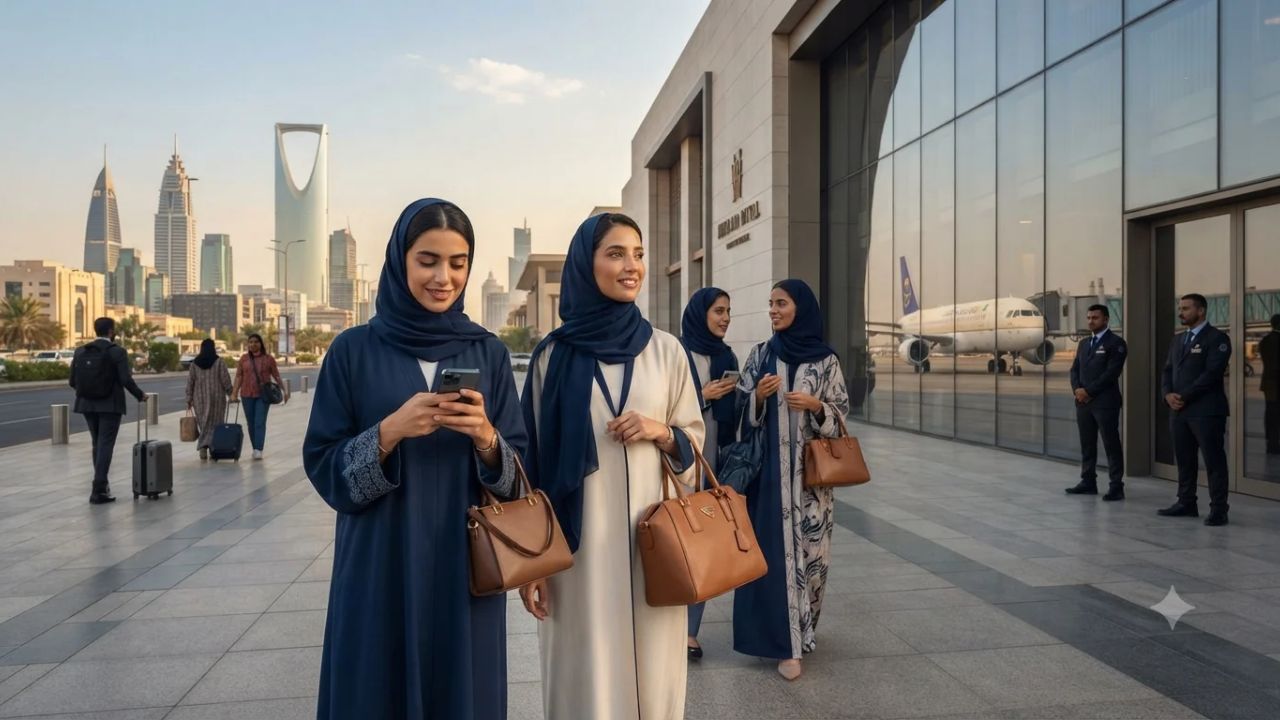
Image generated by AI
A multibillion-dollar sovereign diversification campaign targeting 150 million annual visitors by 2030 faces a critical psychological stress test after localized security alerts in Riyadh and Al-Kharj prompted immediate reviews across international corporate and leisure travel networks. Triggered by a shooting incident in the capital last weekend, emergency mobile notifications advised residents and foreign visitors to seek shelter and avoid exposed public areas before authorities declared the immediate danger neutralized. While commercial aviation operations overseen by the General Authority of Civil Aviation (GACA) and hospitality operations across the capital maintained continuous functionality without structural damage, the episode illuminates the fragile relationship between physical infrastructure development and international traveler perception. For the Saudi Tourism Authority and flagship carrier Riyadh Air, the primary challenge is no longer simply constructing luxury desert resorts and expanding intercontinental air routes; it is maintaining institutional transparency to preserve traveler trust in a volatile regional environment.
The Anatomy of an Alert: Security Protocol vs. Global Media Propagation
The incident in Riyadh highlights an operational dilemma confronting sovereign states attempting to re-engineer their international reputations. In December, the Kingdom accelerated a fundamental policy shift designed to decouple the national economy from hydrocarbon dependence by expanding leisure, business, and cultural tourism. The state has poured unprecedented capital into giga-projects, international sporting events, luxury hotel developments, and entertainment districts, systematically opening historical sites like AlUla and Diriyah to global travelers.
However, modern international travel decisions are dictated less by physical reality than by perception. The emergency notifications distributed to mobile devices across Riyadh and Al-Kharj represented standard defensive municipal management, directing individuals away from potential danger zones while security forces resolved the threat. Yet, within minutes of transmission, screenshots of these governmental warnings circulated globally across digital platforms and international financial wires.
For domestic residents, emergency advisories represent reassuring evidence of active state security mechanisms. For an international business executive preparing to board a flight in London or an American family evaluating a winter vacation, the same alert transforms into a signal of geopolitical volatility. The modern travel economy functions through an intricate, decentralized web of confidence connecting airline dispatchers, corporate travel managers, private security underwriters, tour operators, and consumer insurance policies. When uncertainty enters this chain, cancellations and booking deferrals materialize quietly across corporate travel desks thousands of miles away.
Tourism Infrastructure Resiliency and Risk Perception Breakdown
Evaluating the resilience of Saudi Arabia’s tourism ecosystem requires assessing both operational stability on the ground and external risk perception:
| Tourism & Aviation Sector | Immediate Operational Status Post-Incident | Primary Risk Factor Identified | Strategic Institutional Response Required |
|---|---|---|---|
| Commercial Aviation Hubs | King Khalid International Airport (RUH) fully operational; zero flight cancellations | Potential schedule hesitations and route risk reviews by foreign partner carriers | Real-time airspace safety verification and direct liaison with international airlines |
| Riyadh Air Network Buildout | Fleet induction and commercial launch timelines proceed without interruption | Passenger forward-booking confidence in booking a brand-new hub carrier | Continuous brand messaging emphasizing operational reliability and state security |
| Corporate Travel & MICE | Business centers and convention facilities maintain normal operational schedules | Multinational corporations pausing non-essential travel under duty-of-care rules | Fast, verified briefings provided directly to corporate security and diplomatic directors |
| Leisure & Heritage Tourism | AlUla, Red Sea resorts, and Diriyah heritage sites open and operating normally | Discretionary leisure travelers substituting Gulf destinations with lower risk profiles | Transparent crisis communications demonstrating multi-layered guest protection |
| Travel Insurance Underwriting | Standard comprehensive policies remain active without immediate war exclusion triggers | Underwriters adjusting country risk ratings or narrowing civil disturbance coverage | Sovereign guarantees and direct engagement with international insurance syndicates |
The contrast between physical continuity and subjective perception is stark. Throughout the alert, public transportation, luxury hotels, and commercial establishments in central Riyadh operated without material interruption. Flight tracking data confirmed that scheduled arrivals and departures at King Khalid International Airport maintained standard turnarounds. Nevertheless, the reputational challenge lies in preventing temporary tactical security events from calcifying into permanent travel hesitation.
Expert Analysis: The Economics of Trust in Sovereign Tourism Transformations
The localized security alert in Riyadh exposes the distinct economic vulnerabilities inherent in pivot-stage tourism economies. For travelers booking upcoming itineraries into Saudi Arabia, the direct consequence is heightened friction across corporate travel approval channels and insurance underwriting frameworks. While seasoned regional business travelers frequently discount localized incidents, leisure travelers and corporate risk compliance committees operate with extreme risk aversion. When an emergency alert sounds in a capital city, corporate human resources departments face legal duty-of-care obligations that can automatically freeze non-essential employee travel pending formal threat assessments.
The pricing pressure this creates across the aviation and hospitality sectors is subtle yet profound. Unlike established religious tourism corridors serving Mecca and Medina—where Hajj and Umrah pilgrims exhibit completely inelastic demand driven by profound spiritual commitment—newly developed leisure and MICE sectors are hyper-elastic. Discretionary tourists exploring high-end desert retreats or attending international tech conferences in Riyadh can effortlessly substitute their itineraries with alternative destinations in Dubai, Doha, or European capitals if they perceive an elevated safety risk.
This dynamic places intense operational pressure on Riyadh Air. As the Kingdom’s multi-billion-dollar aviation venture prepares to deploy widebody fleets and capture lucrative intercontinental transit traffic, the airline's core commercial currency is absolute operational predictability. An international airline sells promises delivered months in advance. If prospective passengers harbor lingering concerns regarding regional airspace stability or ground transit safety, load factors and premium cabin yields will suffer downward pressure, forcing carriers to rely on aggressive fare discounting to fill seats.
To protect its investments, the Saudi government must recognize that modern security management is inseparable from international communications strategy. In the digital age, institutional silence during a security incident does not project calm; it creates an information vacuum rapidly filled by unverified social media speculation. Destinations that successfully navigate security shocks do so through rapid, multi-channel transparency, delivering unambiguous situational updates that provide international travelers, foreign embassies, and global airlines with verified facts. By converting crisis response into a visible demonstration of state competence and preparedness, Saudi Arabia can protect the foundational trust upon which its post-oil economic future depends.
Key Takeaways
- Localized Security Disruption: A shooting incident in Riyadh prompted emergency mobile safety alerts across the capital and Al-Kharj, testing the resilience of Saudi Arabia's tourism expansion.
- Continuous Operational Baseline: Ground transport, luxury hotels, and commercial flight operations at King Khalid International Airport maintained normal schedules without physical infrastructure damage.
- Perception vs. Reality: While municipal security forces resolved the threat rapidly, international digital propagation created corporate travel review triggers across North American and European markets.
- Riyadh Air Commercial Stakes: Flagship startup carrier Riyadh Air relies heavily on international passenger trust as it prepares to compete against established Gulf mega-carriers for high-yield intercontinental traffic.
- Communication as Tourism Strategy: Protecting the Kingdom’s 150-million-visitor 2030 target requires transparent, rapid crisis communication to prevent temporary incidents from hardening into negative risk ratings.
FAQ: Saudi Arabia Travel Safety and Riyadh Security Alerts 2026
Did the recent Riyadh security alert cause flight cancellations at King Khalid International Airport?
No. Flight tracking and civil aviation data confirmed that commercial flight operations at King Khalid International Airport (RUH) in Riyadh continued operating normally on schedule.
What specific areas received emergency safety notifications?
Emergency alerts were transmitted to mobile devices across municipal districts in Riyadh and the neighboring city of Al-Kharj, advising individuals to follow safety guidelines before the all-clear was confirmed.
How does this incident affect international travelers visiting Saudi Arabia?
Hotels, cultural sites, and transit networks remain open and operational, but corporate travelers should verify their company’s travel insurance policies and internal duty-of-care security clearance protocols.
Where can visitors find verified official updates on travel conditions in Saudi Arabia?
Travelers should consult official advisories issued by the Saudi Tourism Authority, the General Authority of Civil Aviation (GACA), and their respective national foreign ministry travel portals.
[In the high-stakes theater of global tourism diversification, building billion-dollar resorts is effortless compared to the ceaseless discipline of safeguarding traveler trust.]
Related Travel Guides
Cathay Pacific Celebrates Skytrax Success With World’s Best Cabin Crew and Lounge Recognition
Japan Airlines Sets New Green Aviation Milestone With CORSIA Carbon Removal Partnership
10 Best Airline Lounges at JFK Airport: Complete Terminal Guide 2026
Disclaimer
This article is for informational and educational purposes only. It does not constitute legal, financial, or professional advice. While we strive to provide accurate and up-to-date information, travel policies, regulations, and conditions change rapidly. Always verify information with official sources before making travel decisions. Nomad Lawyer makes no representations about the accuracy, reliability, completeness, or suitability of the information provided. Readers should consult qualified professionals for advice specific to their circumstances. The views expressed in this article are those of the author and do not necessarily reflect the views of Nomad Lawyer.
Raushan Kumar
Founder & Lead Developer
Full-stack developer with 11+ years of experience and a passionate traveller. Raushan built Nomad Lawyer from the ground up with a vision to create the best travel and law experience on the web.
Learn more about our team →