GCC Mountain Tourism Surges as UAE, Oman, and Saudi Arabia Redefine Winter Travel in 2026

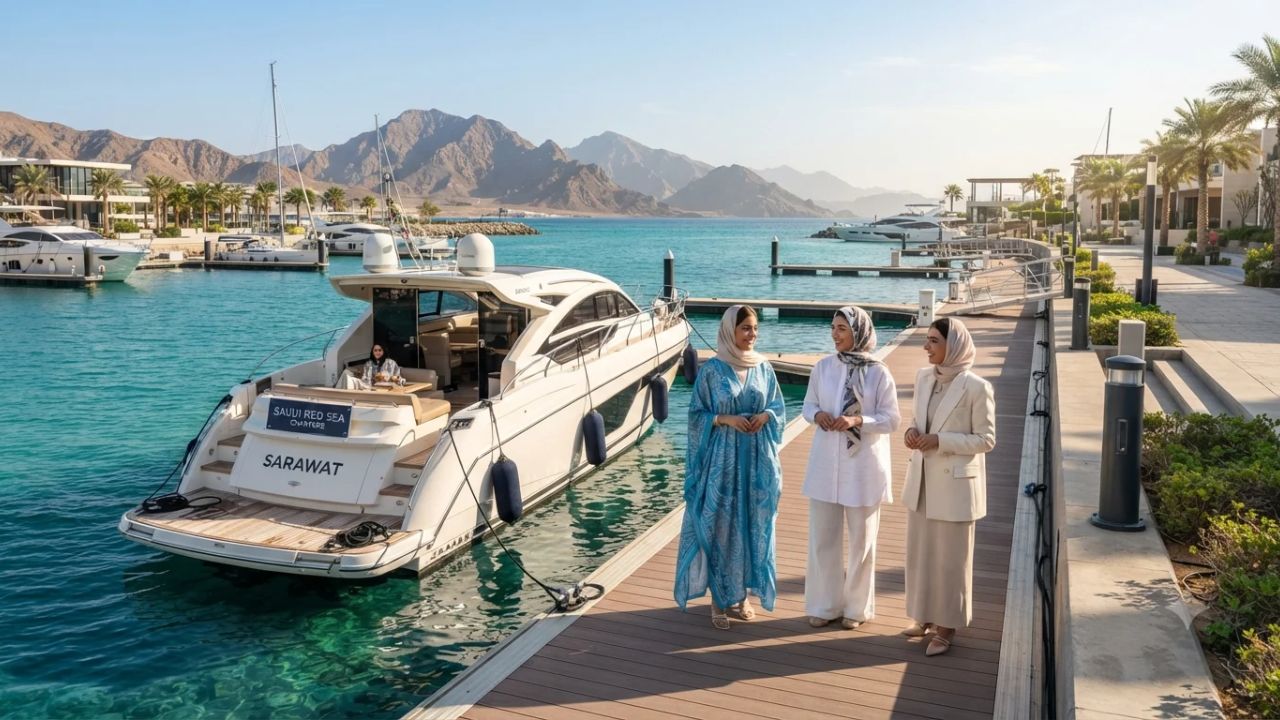
Mountainous regions across the UAE, Oman, and Saudi Arabia emerge as premier high-altitude travel destinations during winter 2026
[DUBAI, Oct 31, 2026] — Across the Arabian Peninsula, a profound transformation in international and domestic travel is underway as mountainous regions across the United Arab Emirates, the Sultanate of Oman, and Saudi Arabia record historic visitor surges, establishing high-altitude adventure and eco-tourism as premier drivers of economic diversification under Vision 2030, UAE Tourism Strategy 2031, and Oman Vision 2040.
[!NOTE] Key Strategic Highlights and Regional Performance Indicators: Official data released by GCC tourism and statistical authorities demonstrates exceptional high-altitude visitor momentum. In the Sultanate of Oman, the National Centre for Statistics and Information (NCSI) recorded 101,608 visitors to Jebel Akhdar during the first half of 2026—a 13.2 percent increase compared to 89,780 in H1 2025—bolstered by the annual Rose Festival. In the United Arab Emirates, Ras Al Khaimah Tourism Development Authority (RAKTDA) announced an all-time record 670,000 visitors in H1 2026, driven by a 47 percent surge in domestic staycations on Jebel Jais, home to the world's longest zipline and the upcoming SAIJ Mountain Lodge by Mantis in Q4 2026. Concurrently, Dubai's mountain enclave of Hatta expanded its eco-glamping and adventure footprint as Dubai welcomed 6.97 million international overnight visitors through August 2026. In southwestern Saudi Arabia, the cool-climate Asir region and its capital Abha prepared to host over 3 million summer and autumn visitors, recording hotel occupancy exceeding 90 percent across 14,000 units and an average per-visitor revenue of $1,365, anchored by the 3,015-meter Soudah Peaks luxury development.
GCC MOUNTAIN TOURISM TRANSFORMATION ARCHITECTURE (2026)
| Column 1 |
|---|
| [ STRATEGIC ECONOMIC FRAMEWORKS ] [ SULTANATE OF OMAN (HAJAR MTNS) ] |
| - Saudi Arabia Vision 2030 (150M Annual Visitors Target) - Jebel Akhdar H1 2026: 101,608 Pax |
| - UAE Tourism Strategy 2031 (40M Hotel Guests Target) - Year-on-Year Inbound Growth: +13.2% |
| - Oman Vision 2040 (Sustainable Heritage & Ecotourism) - Rose Festival & UNESCO Falaj Farms |
| +----------------------------+-----------------------------+ |
| v v |
| [ UNITED ARAB EMIRATES PEAKS ] [ SAUDI ARABIA ASIR HIGHLANDS ] |
| - Ras Al Khaimah: Jebel Jais (Highest Peak in UAE) - Asir Region: 3.0 Million Visitors |
| - RAKTDA H1 2026 Volume: 670,000 Total Visitors - Abha Peak Hotel Occupancy: 90%+ |
| - Domestic Staycation Surge: +47.0% YoY - Hospitality Inventory: 14,000 Units |
| - Jais Flight Zipline & SAIJ Mountain Lodge (Mantis Q4) - Average Per-Visitor Spend: $1,365 |
| - Dubai Hatta Enclave: Glamping & Kayaking Dam Hub - Soudah Peaks: 3,015m Luxury Resort |
| +----------------------------+-----------------------------+ |
| v |
| [ MACROECONOMIC & ENVIRONMENTAL IMPACTS ] |
| - High-Yield Shift: Boutique eco-lodges elevating average daily room rates (ADR) |
| - Year-Round Seasonality: Cool microclimates counteract extreme desert summer temperatures |
| - Rural Agro-Tourism: Direct farm-to-table commercialization for pomegranates, roses, & honey |
| - Ecological Stewardship: Mandatory low-density building codes & off-grid solar micro-grids |
The High-Altitude Pivot: Deconstructing the Arabian Peninsula’s Mountain Strategy
For decades, the global perception of tourism across the Gulf Cooperation Council (GCC) was defined by a predictable collection of travel experiences. International visitors associated the Arabian Peninsula with futuristic urban skylines, climate-controlled mega-malls, gilded five-star coastal resorts, and motorized desert dune safaris. While these assets transformed hubs like Dubai, Abu Dhabi, and Doha into global commercial transit centers, they exposed the regional visitor economy to profound seasonal volatility. When summer temperatures regularly exceed 45 degrees Celsius (113 degrees Fahrenheit), leisure tourism in lowland desert environments faces sharp declines.
Over the past half-decade, however, regional governments have enacted a coordinated geographical rebalancing. Guided by comprehensive macroeconomic transformation blueprints—principally Saudi Arabia’s Vision 2030, the UAE Tourism Strategy 2031, and Oman Vision 2040—GCC member states have deployed billions of dollars into high-altitude mountain territories.
By capitalizing on dramatic geological features that stretch across the Arabian landmass, from the rugged limestone ridges of the Hajar Mountains in northern Oman and the eastern UAE to the dramatic granite peaks of the Sarawat and Asir ranges in southwestern Saudi Arabia, authorities have unlocked an entirely new sector: Middle East mountain tourism.
The strategic rationale behind this high-altitude expansion operates on multiple economic and environmental levels. High-altitude mountain plateaus, situated anywhere from 1,000 to over 3,000 meters above sea level, offer temperate microclimates that are consistently 10 to 15 degrees Celsius cooler than surrounding desert plains. This natural climatic cushion allows GCC destinations to extend their visitor seasons across all twelve months of the year, converting seasonal winter-only destinations into resilient, year-round holiday hubs.
Concurrently, mountain tourism directly advances national economic diversification goals. Developing remote highland valleys stimulates rural employment, preserves historic indigenous architecture, supports traditional terrace agriculture, and channels high-spending international travelers into regional provincial economies situated far beyond national capital districts.
Rather than duplicating the mass-market, high-density hotel towers found along coastal beaches, mountain tourism development throughout the GCC emphasizes low-impact, sustainable luxury, including cliff-edge boutique resorts, eco-glamping reserves, high-altitude trail networks, and certified adventure sports infrastructure.
STRATEGIC FRAMEWORKS GOVERNING GCC MOUNTAIN TOURISM
| Column 1 |
|---|
| Sovereign Jurisdiction National Blueprint Core High-Altitude Development Goals |
| -------------------------------------------------------------------------------------------- |
| Kingdom of Saudi Arabia Vision 2030 (150M Visitors) Asir regional tourism & Soudah Peaks |
| United Arab Emirates UAE Tourism Strategy 2031 Jebel Jais adventure & Hatta eco-hub |
| Sultanate of Oman Oman Vision 2040 Jebel Akhdar conservation & heritage |
| Microclimate Advantage High-Altitude Temperature Drop 10°C to 15°C cooler than lowlands |
| Development Philosophy Low-Density Eco-Luxury Protects biodiversity & cultural arts |
Oman’s Hajar Range: Jebel Akhdar and Jebel Shams as Heritage Benchmarks
The Sultanate of Oman has long functioned as the vanguard of authentic cultural and nature-based tourism in the Arabian Peninsula. At the center of Oman’s highland appeal stands the Western Hajar mountain range within the Al Dakhiliyah Governorate, anchored by two celebrated geological landmarks: Jebel Akhdar (the Green Mountain) and Jebel Shams (the Mountain of the Sun).
Official empirical records compiled by Oman’s National Centre for Statistics and Information (NCSI) illustrate sustained growth in mountain visitation. During the first six months of 2026, Jebel Akhdar welcomed 101,608 visitors. When measured against the 89,780 arrivals registered during the corresponding period in 2025, this milestone represents a robust 13.2 percent year-on-year increase.
Rising to an altitude of approximately 2,000 meters (6,560 feet) above sea level, Jebel Akhdar is characterized by fertile limestone plateaus that have supported agricultural communities for millennia. Indigenous Omani farmers utilize traditional falaj irrigation systems—centuries-old gravity-fed water channels recognized collectively on the UNESCO World Heritage list—to channel natural mountain spring water down stepped hillside terraces.
A primary catalyst behind the early 2026 arrival surge was the annual Jebel Akhdar Rose Festival, held annually from late March through mid-April. During this spring harvest window, thousands of terraced damask rose bushes burst into bloom across historic villages such as Al Ayn, Ash Shirayjah, and Wadi Bani Habib. Visitors journey from across the GCC and Europe to walk along ancient stone pathways, observing local distillers process fresh rose petals inside traditional clay ovens to produce prized Omani rose water.
Beyond Jebel Akhdar lies Jebel Shams, Oman’s highest summit, reaching 3,009 meters (9,872 feet) above sea level. Overlooking Wadi Ghul—widely celebrated as the "Grand Canyon of Arabia"—Jebel Shams offers dramatic vertical drop-offs plunging more than one kilometer down sheer limestone precipices.
The Omani Ministry of Heritage and Tourism has developed marked hiking routes across the plateau, including the famous Balcony Walk (W6 trail) that clings to the canyon rim leading to the abandoned cliffside hamlet of As Sab. By pairing rugged trekking and rock climbing with authentic homestays and luxury properties like the Anantara Al Jabal Al Akhdar Resort and Alila Jabal Akhdar, Oman maintains a delicate balance between high-end hospitality and environmental preservation.
JEBEL AKHDAR PERFORMANCE & VISITATION METRICS (2025 VS 2026)
| Column 1 |
|---|
| Measurement Parameter H1 2025 Baseline H1 2026 Performance Net Growth / Variance |
| -------------------------------------------------------------------------------------------- |
| Recorded Visitors 89,780 Arrivals 101,608 Arrivals +13.2% (+11,828 Visitors) |
| Primary Inbound Driver Seasonal Road Trips Annual Rose Festival Spring blooming harvests |
| Agricultural Heritage Falaj Water NetworksTerraced Orchards Pomegranates, figs, roses |
| Average Elevation Band 2,000m Plateau Temperate Climate Sub-30°C summer conditions |
| Conservation Mandate Strict Zoning Codes Community IntegrationLocal staffing priority |
The UAE’s Adventure Frontier: Jebel Jais and Ras Al Khaimah’s Record 670,000 Visitors
While Oman emphasizes serene heritage and agricultural terraces, the United Arab Emirates has pioneered high-octane adventure and sports tourism in its northernmost territory. The emirate of Ras Al Khaimah (RAK), situated between the Arabian Gulf and the rugged Hajar Mountains, has established itself as the adventure capital of the Middle East, centered around Jebel Jais, the highest mountain peak in the UAE at 1,934 meters (6,345 feet).
Official data published by the Ras Al Khaimah Tourism Development Authority (RAKTDA) confirms that the emirate experienced a record-breaking performance during the first half of 2026, welcoming an unprecedented 670,000 visitors. A particularly notable finding within this data is the 47 percent year-on-year surge in domestic arrivals, demonstrating that residents from Dubai, Abu Dhabi, and Sharjah are increasingly choosing high-altitude mountain getaways over international travel.
Jebel Jais has gained worldwide recognition through world-class adventure attractions managed by Toroverde. Foremost among these is the Jais Flight, certified by Guinness World Records as the world’s longest zipline. Extending 2.83 kilometers across dramatic mountain canyons, the attraction propels thrill-seekers at speeds reaching up to 160 kilometers per hour.
Complementary attractions on the mountain include the Jais Sky Tour (a series of six interconnected canopy ziplines), the Jais Sledder (a mountain toboggan run descending along natural switchbacks), the Bear Grylls Explorers Camp, and high-altitude dining at 1484 by Puro, the highest restaurant in the UAE situated at 1,484 meters above sea level.
Looking toward late 2026 and 2027, Ras Al Khaimah is expanding the mountain’s offerings with pioneering luxury and scientific tourism assets. The emirate is preparing for the late 2026 launch of an astronaut training experience, designed to provide specialized microgravity and space preparation simulations for high-net-worth adventure travelers.
In the hospitality sector, the highly anticipated SAIJ Mountain Lodge by Mantis is scheduled to debut in the fourth quarter of 2026. This retreat will feature sustainably constructed mountain villas, wellness retreats, and guided conservation treks, introducing an eco-luxury residential component to the rugged limestone terrain.
RAS AL KHAIMAH & JEBEL JAIS TOURISM BENCHMARKS (2026)
| Operational Metric Audited Figure / Milestone Strategic Tourism Significance |
|---|
| -------------------------------------------------------------------------------------------- |
| H1 2026 Total Visitation 670,000 Visitors Record-breaking performance for RAK |
| Domestic Arrival Growth +47.0% Year-on-Year Expansion High-altitude staycation boom |
| Flagship Adventure Asset Jais Flight (2.83km Zipline) World's longest mountain zipline |
| Upcoming Luxury Opening SAIJ Mountain Lodge (Mantis) Q4 2026 eco-luxury lodge opening |
| High-Tech Innovation Astronaut Training Programme Late 2026 launch for extreme travel |
| Mountain Summit Elevation 1,934 Meters Above Sea Level Highest geographic point in UAE |
Dubai’s Mountain Sanctuary: Hatta’s Eco-Glamping and Adventure Masterplan
While Ras Al Khaimah captures international headlines for extreme thrills on Jebel Jais, the emirate of Dubai has engineered its own dedicated mountain destination in the picturesque enclave of Hatta. Situated approximately 130 kilometers southeast of downtown Dubai along the Omani border, Hatta provides a tranquil natural escape that contrasts sharply with the glass skyscrapers and coastal boulevards of the metropolis.
Hatta’s ongoing transformation is directed by the Dubai Department of Economy and Tourism (DET) under the comprehensive Hatta Master Development Plan, an integral component of the Dubai 2040 Urban Master Plan. During the first eight months of 2026, Dubai welcomed 6.97 million international overnight visitors, and tourism authorities have actively channeled a portion of this inbound traffic into Hatta to expand regional dwell times and support sustainable tourism.
The centerpiece of Hatta’s recreational offering is the scenic Hatta Dam, where turquoise waters enclosed by craggy jagged mountains create a breathtaking venue for kayaking, pedal-boating, and water biking. Nearby, the Hatta Wadi Hub serves as the regional activity center, providing visitors with over 50 kilometers of marked cross-country mountain bike trails graded into four distinct skill levels, alongside downhill carting, axe throwing, archery, and zip-lining.
Accommodations in Hatta are deliberately oriented around eco-sensitive glamping and boutique hospitality. Venues like the Hatta Sedr Trailers Resort (luxury converted airstream trailers perched on mountain ridges) and Hatta Damani Lodges (terraced wooden chalets overlooking the wadi) operate at near-capacity throughout the winter season.
To improve access, Dubai and Ras Al Khaimah authorities signed a landmark cooperative transport agreement in 2026, establishing integrated tourist shuttle buses and scenic mountain driving routes that connect Hatta directly with Jebel Jais, allowing visitors to experience both premier UAE mountain hubs within a single multi-day itinerary.
HATTA ECO-TOURISM DEVELOPMENT MATRIX (DUBAI ENCLAVE)
| Column 1 |
|---|
| Development Element Infrastructure Profile Visitor Activity & Appeal |
| -------------------------------------------------------------------------------------------- |
| Geographic Positioning Hajar Mountains (130km from DXB)Accessible day-trip & weekend hub |
| Aquatic Recreation Hatta Water Dam Reservoir Kayaking, paddleboarding, boat tours |
| Terrestrial Trail Network 50km+ Mountain Biking Paths Graded trails for beginners to pros |
| Hospitality Architecture Sedr Trailers & Damani Lodges Eco-glamping & low-density cabins |
| Urban Masterplan Alignment Dubai 2040 Urban Master Plan Protects natural wadis & wildlife |
| Cross-Emirate Integration Dubai-RAK Transport Alliance Unified mountain touring circuits |
Saudi Arabia’s Cloud Kingdom: Asir, Abha, and the 3,015-Meter Soudah Peaks Vision
The most extensive and ambitious mountain tourism development in the Middle East is currently unfolding in the Kingdom of Saudi Arabia. As the Kingdom accelerates toward its Vision 2030 objective of welcoming 150 million domestic and international visitors annually, the southwestern province of Asir and its regional capital of Abha have become central to the country's leisure strategy.
Unlike the arid deserts that characterize central and eastern Saudi Arabia, the Asir region is dominated by the majestic Sarawat Mountains, receiving substantial rainfall from monsoon weather patterns that drift across the Red Sea. This results in dense juniper forests, mist-shrouded peaks, and fertile agricultural terraces that remain pleasantly cool throughout the year.
Official performance reviews released by the Saudi Tourism Authority (STA) in mid-2026 illustrate the remarkable expansion of Asir's visitor economy. Preparing for the peak travel season, the region geared up to host over three million visitors during the summer and autumn of 2026.
Hospitality demand surged dramatically, with Abha recording early "Fully Booked" signs across its accommodation inventory as overall hotel occupancy exceeded 90 percent. With approximately 14,000 hotel and serviced apartment units prepared for the influx, the local economy absorbed an immense capital injection, supported by an average per-visitor expenditure reaching $1,365.
The cornerstone of Asir's long-term global positioning is the multi-billion-dollar Soudah Peaks master development, overseen by the Public Investment Fund (PIF). Situated around Jabal Sawda—Saudi Arabia's highest peak rising 3,015 meters (9,892 feet) above sea level—Soudah Peaks is designed as an ultra-luxury mountain hospitality and adventure retreat.
Spanning six distinct development zones, the project integrates ultra-luxury eco-resorts, wellness sanctuaries, mountain golf courses, and high-altitude hiking networks with the preservation of ancient Asiri cultural traditions.
Visitors exploring Asir can tour Rijal Almaa, a UNESCO-recognized heritage village featuring towering multi-story stone watchtowers decorated with intricate white quartz, while discovering the colorful, geometric interior wall art known as Al-Qatt Al-Asiri, designated by UNESCO as Intangible Cultural Heritage.
SAUDI ARABIA ASIR HIGHLANDS & SOUDAH PEAKS METRICS
| Tourism Metric / Asset Audited Figure / Scale Strategic Vision 2030 Role |
|---|
| -------------------------------------------------------------------------------------------- |
| Target Seasonal Volume >3.0 Million Visitors Major domestic & regional summer hub |
| Regional Peak Occupancy Exceeded 90% in Abha Extensive demand across 14,000 units |
| Average Per-Visitor Spend $1,365 USD per Traveler High-yield economic diversification |
| Soudah Peaks Altitude 3,015 Meters Above Sea Level Highest luxury tourism peak in KSA |
| Architectural Heritage Rijal Almaa Stone Gingerbread Centuries-old tribal stone palaces |
| Folkloric Arts Recognition Al-Qatt Al-Asiri Wall Painting UNESCO Intangible Cultural Heritage |
Macroeconomic Implications: Boutique Eco-Lodges, Higher ADR, and Rural Employment
The rapid rise of Middle East mountain tourism represents a fundamental economic evolution across the GCC hospitality landscape. Historically, regional tourism relied on large-scale coastal resorts and urban business hotels characterized by hundreds of standardized rooms competing on volume.
In contrast, high-altitude mountain hospitality operates on a high-yield, low-density model. Boutique eco-lodges, cliffside retreats, and luxury tented encampments feature limited room counts—often between 20 and 80 keys—commanding premium average daily rates (ADR) and driving substantial revenue per available room (RevPAR).
This premium pricing structure is supported by exclusive, bespoke experiences that international travelers are eager to purchase. Guests staying at high-altitude properties readily invest in private guided canyon treks, sunrise yoga sessions on panoramic cliff decks, helicopter transfers, and fine dining menus featuring rare regional ingredients. In Saudi Arabia, the average visitor expenditure of $1,365 illustrates how adventure and eco-tourism generate higher per-capita economic yields than conventional mass-market city breaks.
In addition, mountain tourism functions as an effective engine of rural economic revitalization. Traditional mountain communities that once faced outward migration toward coastal metropolises now benefit from sustainable local employment opportunities. Young nationals are employed as certified mountain guides, park rangers, hospitality managers, and cultural ambassadors.
Local agriculture has experienced a parallel revival through direct farm-to-table commercial partnerships. In Oman and Saudi Arabia, highland farmers cultivating pomegranates, figs, damask roses, and wild mountain honey sell their harvests directly to luxury hotel kitchens, artisan cosmetic producers, and tourist gift markets, ensuring tourism revenues directly empower local agrarian families.
ECONOMIC PROFILE: MOUNTAIN ECO-LODGES VS COASTAL RESORTS
| Column 1 |
|---|
| Economic Dimension Boutique Mountain Eco-Lodge Conventional Coastal Mega-Resort |
| -------------------------------------------------------------------------------------------- |
| Inventory Density Low-Density (20 - 80 Keys) High-Density (300 - 800+ Rooms) |
| Average Daily Rate (ADR) Premium Yield ($450 - $1,200) Volume-Dependent ($150 - $350) |
| Guest Spending Focus Bespoke Treks, Wellness, DiningMass Leisure, Retail, Beach Services |
| Local Workforce Impact High Rural & Indigenous Share Urban Service Labor Dominance |
| Agricultural Integration Direct Farm-to-Table Sourcing Industrial Food Supply Wholesalers |
| Environmental Footprint Low Carbon, Solar, Eco-Zoned High Energy & Water Utility Loads |
Regional Transport Corridors: High-Altitude Highways and Cross-Border Mobility
A vital enabler of the GCC mountain boom is the modernization of transport infrastructure. In previous decades, reaching the high plateaus of Jebel Akhdar, Jebel Jais, or Soudah required arduous journeys over unpaved gravel tracks accessible only by specialized four-wheel-drive vehicles.
Over recent years, government transport ministries have constructed world-class engineered highways that scale steep mountain escarpments with smooth multi-lane asphalt, safety barriers, and solar-powered lighting.
In the UAE, the Jebel Jais Mountain Road (Sheikh Khater Road) stands as an engineering feat, carving through dramatic limestone gorges with sweeping hairpin curves, observation decks, and rest stops that have made the ascent a globally renowned road-trip experience for motorists and cyclists alike. Similarly, in Oman, the paved highway scaling Jebel Akhdar features modern emergency runaway ramps and mandatory royal police vehicle safety inspection checkpoints at the mountain base, ensuring only well-maintained vehicles enter the high-altitude zone.
In Saudi Arabia, modern multi-lane highway networks connect Abha International Airport (AHB)—currently undergoing major terminal expansions to handle international flights—with the surrounding mountain peaks of Soudah and Tanomah.
Cross-border accessibility is also advancing through streamlined immigration policies. Saudi Arabia's progressive liberalization of its tourist e-visa program, now accessible to citizens of more than 60 nations, allows international holidaymakers to seamlessly combine journeys across multiple Gulf destinations.
Concurrently, the phased implementation of the unified GCC tourist visa (Grand Tours visa) enables travelers to explore Oman's Hajar Mountains, the UAE's Jebel Jais and Hatta enclaves, and Saudi Arabia's Asir highlands on a single multi-entry travel authorization.
REGIONAL HIGH-ALTITUDE AVIATION & HIGHWAY GATEWAYS
| Column 1 |
|---|
| Mountain Destination Primary Air Gateway Highway Access & Driving Conditions |
| -------------------------------------------------------------------------------------------- |
| Jebel Jais (Ras Al Khaimah) RAK Airport / DXB (60-90 mins) Multi-lane engineered mountain pass |
| Hatta Enclave (Dubai) Dubai International DXB (75 min)Paved dual-carriageway highway (E44) |
| Jebel Akhdar (Oman) Muscat International (120 mins)Paved pass; Police 4WD inspection |
| Jebel Shams (Oman) Muscat International (150 mins)Partially paved with graded wadi road |
| Asir & Abha (Saudi Arabia) Abha Airport AHB (Direct flights)Expansive regional highway viaducts |
| Unified GCC Visa Framework Multi-Country Regional Access Single entry permit covering 6 states |
Sustainable Mountain Governance: Balancing Conservation, Agriculture, and Luxury Travel
The rapid influx of millions of travelers into ecologically fragile mountain landscapes requires strict environmental governance and thoughtful resource stewardship. Recognizing that uncontrolled mass tourism could degrade the very natural beauty and cultural authenticity that attracts visitors, GCC tourism authorities have implemented comprehensive sustainability protocols.
In Oman, the Ministry of Heritage and Tourism enforces strict zoning laws across Jebel Akhdar and Jebel Shams. Commercial high-rise buildings and brightly illuminated advertising billboards are completely prohibited.
All newly permitted hotels and eco-resorts must comply with traditional Omani architectural standards, incorporating local limestone masonry, natural clay rendering, and earth-toned finishes that blend seamlessly into the mountain topography. In addition, resorts must incorporate closed-loop greywater recycling systems to irrigate native plant landscapes without depleting natural mountain springs.
In the UAE, development on Jebel Jais and in Hatta follows rigorous environmental impact assessments. Projects like the upcoming SAIJ Mountain Lodge are constructed using off-site modular prefabrication techniques, minimizing heavy equipment disruption to mountain rock faces and native animal habitats, such as those of the Arabian tahr and caracal. Off-grid solar photovoltaic micro-grids paired with battery storage banks supply clean energy to remote mountain retreats, reducing reliance on diesel generators.
In Saudi Arabia, the development of Soudah Peaks is bound by the Saudi Green Initiative and strict biodiversity charters. Construction zones are restricted to designated development parcels, ensuring that vast tracts of native juniper forests and mountain ridges remain pristine ecological reserves where endangered wildlife species, including the Arabian leopard and Nubian ibex, are protected through active conservation programs.
SUSTAINABILITY & CONSERVATION GOVERNANCE MATRIX
| Column 1 |
|---|
| Environmental Challenge High-Altitude Vulnerability Strategic Mitigation Policy |
| -------------------------------------------------------------------------------------------- |
| Water Resource Depletion Arid mountain microclimates Closed-loop greywater recycling |
| Visual Landscape Pollution Overbuilding on ridges Mandatory traditional stone designs |
| Wildlife Habitat Disruption Arabian tahr & leopard ranges Ecological corridors & protected parks |
| Energy Supply in Remote CabsGrid distance overheads Solar PV micro-grids & battery banks |
| Solid Waste Accumulation Peak seasonal visitor footfall Zero-waste lodge standards & recycling |
Frequently Asked Questions (PAA)
What are the best mountain destinations to visit in the GCC during winter 2026?
The premier mountain destinations across the GCC include Jebel Jais in Ras Al Khaimah (the UAE’s highest peak, renowned for world-class ziplining and luxury lodges), Jebel Akhdar and Jebel Shams in Oman (famous for historic falaj irrigation, terraced rose orchards, and canyon hiking), Hatta in Dubai (celebrated for kayaking on turquoise reservoir waters and mountain biking), and the Asir Mountains and Abha in southwestern Saudi Arabia (offering cool high-altitude climates, traditional stone watchtower villages, and the ultra-luxury Soudah Peaks development).
Why is mountain tourism growing rapidly across the Arabian Peninsula?
Mountain tourism is expanding across the Middle East due to long-term economic diversification strategies—such as Saudi Arabia’s Vision 2030, the UAE Tourism Strategy 2031, and Oman Vision 2040. Mountain plateaus offer temperate weather that is 10 to 15 degrees Celsius cooler than desert lowlands, providing year-round leisure escapes. Substantial investments in modern paved highways, luxury eco-resorts, adventure sports facilities, and relaxed visa policies have made these dramatic alpine terrains accessible to global and domestic travelers.
Do visitors need a 4WD vehicle to visit Jebel Akhdar and Jebel Jais?
For Jebel Jais in Ras Al Khaimah, a standard passenger vehicle is entirely sufficient, as the mountain is accessed via a smooth, well-lit multi-lane asphalt highway. For Jebel Akhdar in Oman, Royal Oman Police maintain a mandatory safety checkpoint at the base of the mountain where all drivers must present a four-wheel-drive (4WD) vehicle with proper braking systems to ascend the steep mountain highway. Jebel Shams can be partially reached by standard car, but accessing high-altitude lodges and canyon viewpoints requires a 4WD vehicle.
What is the world’s longest zipline and where is it located?
The world's longest zipline is the Jais Flight, certified by Guinness World Records and located on Jebel Jais in Ras Al Khaimah, United Arab Emirates. The zipline spans 2.83 kilometers across dramatic mountain canyons, allowing riders to soar face-down in a superhero harness at speeds of up to 160 kilometers per hour at an altitude of approximately 1,680 meters above sea level.
When is the best time to visit Oman’s Jebel Akhdar for the Rose Festival?
The best time to experience the Jebel Akhdar Rose Festival is between late March and mid-April. During this spring harvest season, thousands of terraced damask rose orchards bloom across ancient cliffside villages such as Al Ayn and Ash Shirayjah. Visitors can take guided walking tours through blooming terraces and observe local artisans distilling fresh rose petals into pure Omani rose water using traditional clay kilns.
Related Travel Guides
This article is for informational purposes. Flight routes, passenger regulations, visa rules, and transit advisories are subject to change by airlines and aviation authorities. Readers are advised to verify schedules and travel documentation with relevant carriers and border agencies before departure.
Related Stories
UAE Tourism Strategy 2031: How Abu Dhabi, Dubai, and Sister Emirates Drive a 40-Million-Guest Hospitality Boom
Tajikistan Elevates Central Asia Tourism Ambitions: International Forum Spotlights Pamir Mountains, Mehrgon Festival, and Silk Road Heritage