
San Francisco Tourism Posts Strong Recovery Driven by Tech Conventions
San Francisco visitor spending is forecast to reach $9.9 billion in 2026, driven by AI conventions, domestic travel, and World Cup preparations.

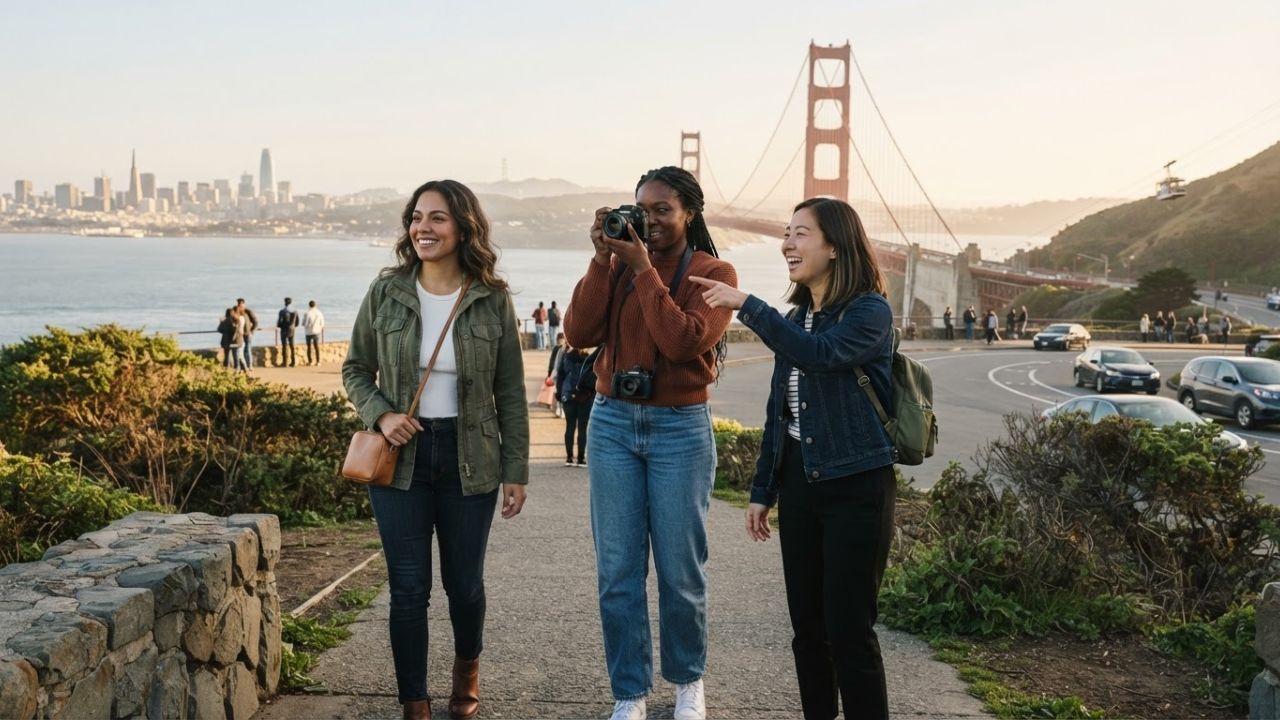
Image generated by AI
Driven by a surge in artificial intelligence conventions and preparatory sporting events, San Francisco's visitor spending is forecast to reach $9.9 billion in 2026, surpassing its nominal pre-pandemic record.
Technology Conventions and Domestic Demand Rebound San Francisco Tourism
San Francisco's visitor economy is showing a strong recovery, defying broader national headwinds in international inbound travel. According to the San Francisco Travel Association, the city is forecast to welcome 24.2 million visitors in 2026 (up from 23.7 million in 2025), generating a record $9.9 billion in visitor spending. This projection would surpass the city's nominal pre-pandemic record of $9.6 billion. In 2025, travel supported 63,900 jobs and generated $655 million in local tax revenue.
This recovery is supported by key hospitality and convention metrics:
- Meetings and Convention Sector: The Moscone Center is scheduled to host 38 events in 2026, generating over 674,000 convention hotel room nights. This represents significant growth from 34 events (635,000 room nights) in 2025 and 25 events (399,000 room nights) in 2024.
- Hotel Sector Rebound: Hotel RevPAR is expected to increase 7.9% year-on-year to $177.85, up from $164.85 in 2025, with occupancy forecast at 69% and average daily rate (ADR) at $257.81.
- Domestic and Regional Travel Shifts: Driven by budget-conscious travel, U.S. domestic leisure spending is projected to reach $909 billion in 2026 (+0.9%). In California, the May 2026 Visit California forecast projects 275.5 million visits (+1.5%) and $166.5 billion in travel spending (+4.8%). In 2025, statewide travel spending reached a record $158.9 billion (+1.7%), supporting 1.17 million jobs across 55 of 58 counties and selling 1.2 million additional room nights (+0.8%).
- International Inbound Travel: San Francisco expects 2.3 million international visitors in 2026 (up from 2.2 million in 2025), spending $5.2 billion (+5.8%). The top five source markets are Mexico, the UK, China, Canada, and India. This contrasts with a slower national recovery, where U.S. international spending is projected to grow 1.6% to $178 billion (18% below 2019 levels). In California, international air arrivals reached 570,584 in May 2026 (a 7.5% year-on-year decline, with Canada down 12.2%) and 560,364 in June 2026 (+0.1% year-on-year, with Canada down 2.2%, China up 4.6%, Australia up more than 10%, and Japan up 18.9%).
- Major Sporting Events: The Bay Area is capitalizing on major demand from Super Bowl LX and preparations for the 2026 FIFA World Cup and the 2028 Los Angeles Olympics.
San Francisco Tourism and Convention Performance
| Performance Metric | 2024 Actual | 2025 Actual | 2026 Forecast |
|---|---|---|---|
| Total Visitor Volume | N/A | 23.7 million | 24.2 million |
| Total Visitor Spending | N/A | $9.4 billion | $9.9 billion (Nominal 2019 record: $9.6 billion) |
| Moscone Center Events | 25 events | 34 events | 38 events |
| Convention Room Nights | 399,000 nights | 635,000 nights | 674,000+ nights |
| Hotel RevPAR | N/A | $164.85 | $177.85 (7.9% year-over-year increase) |
| Hotel Occupancy | N/A | N/A | 69% |
| Average Daily Rate (ADR) | N/A | N/A | $257.81 |
| International Overnight Visitors | N/A | 2.2 million | 2.3 million |
| International Visitor Spending | N/A | N/A | $5.2 billion (5.8% year-over-year increase) |
| Local Tourism-Supported Jobs | N/A | 63,900 jobs | N/A |
| Local Tourism Tax Revenue | N/A | $655 million | N/A |
Supporting Bay Area Small Businesses and Eco-Friendly Urban Transit
For the traveler, the real impact of San Francisco's diversified tourism model is the opportunity to support the local neighborhood economy directly. Tech delegates and leisure visitors are increasingly looking for dining, shopping, and tours outside traditional downtown zones, directing travel spending to family-run spots in neighborhoods like the Mission, Chinatown, and the Richmond District.
The San Francisco Travel Association, Visit California, and the California Department of Parks and Recreation emphasize that promoting public transit is vital for sustainable urban travel. Travelers are encouraged to utilize cable cars, BART, and Muni transit networks rather than private ride-shares, reducing traffic congestion and emissions in the Bay Area. In addition, tax revenues generated from tourism are reinvested directly into public parks, historical preservation, and green spaces, ensuring that visitor spending supports the local community.
Local Insider Tips for Navigating San Francisco and the Bay Area
To make the most of your journey and enjoy this city safely and comfortably, keep these practical visitor tips in mind:
- Identify Favorable Off-Peak Windows: Visit San Francisco during the late spring (May) or early autumn (September to October) when the city experiences its warmest, clearest weather. Avoid summer visits (July to August) when heavy coastal fog (locally named 'Karl') brings cold temperatures and damp winds.
- Observe City Etiquette: When riding the historic cable cars, stand behind the yellow safety lines and hold on tight to the poles. Tipping for taxi and restaurant services is standard, typically between 15% and 20% of the total bill.
- Savor Local Dining Specialties: Support independent culinary spots. Try fresh Sourdough Bread with local seafood at neighborhood bakeries, or sample authentic Mission-style Burritos in the Mission District, avoiding expensive tourist chains on Fisherman's Wharf.
- Explore Under-the-Radar Highlights: Instead of only visiting Alcatraz or Golden Gate Park, take a short ferry trip to explore the quiet trails of Angel Island State Park to learn about regional immigration history while enjoying panoramic views of the bay.
Long-Term Outlook for San Francisco's Hospitality Sector
In the long run, San Francisco's tourism recovery highlights the resilience of a diversified visitor economy. By balancing technology conferences with domestic leisure travel and international inbound markets, the city can maintain hotel demand and support retail sales even when global travel remains volatile.
As the Bay Area prepares for major global events like the 2026 FIFA World Cup, the long-term benefits of infrastructure upgrades and international exposure will continue to yield dividends. Expanding the convention pipeline at the Moscone Center and maintaining strong domestic appeal will ensure that San Francisco remains a premier global hub and an economic leader for decades to come.
Related Travel Guides
Disclaimer
This article is for informational and educational purposes only. It does not constitute legal, financial, or professional advice. While we strive to provide accurate and up-to-date information, travel policies, regulations, and conditions change rapidly. Always verify information with official sources before making travel decisions. Nomad Lawyer makes no representations about the accuracy, reliability, completeness, or suitability of the information provided. Readers should consult qualified professionals for advice specific to their circumstances. The views expressed in this article are those of the author and do not necessarily reflect the views of Nomad Lawyer.
Raushan Kumar
Founder & Lead Developer
Full-stack developer with 11+ years of experience and a passionate traveller. Raushan built Nomad Lawyer from the ground up with a vision to create the best travel and law experience on the web.
Learn more about our team →