
Aviation Updates: Massive Travel Chaos Paralyzes San Francisco Airport (SFO) as United Airlines and Delta Suffer 157 Delays
San Francisco International Airport experiences brutal travel chaos as 157 flight delays and multiple flight cancellations severely fracture transpacific and domestic connectivity.

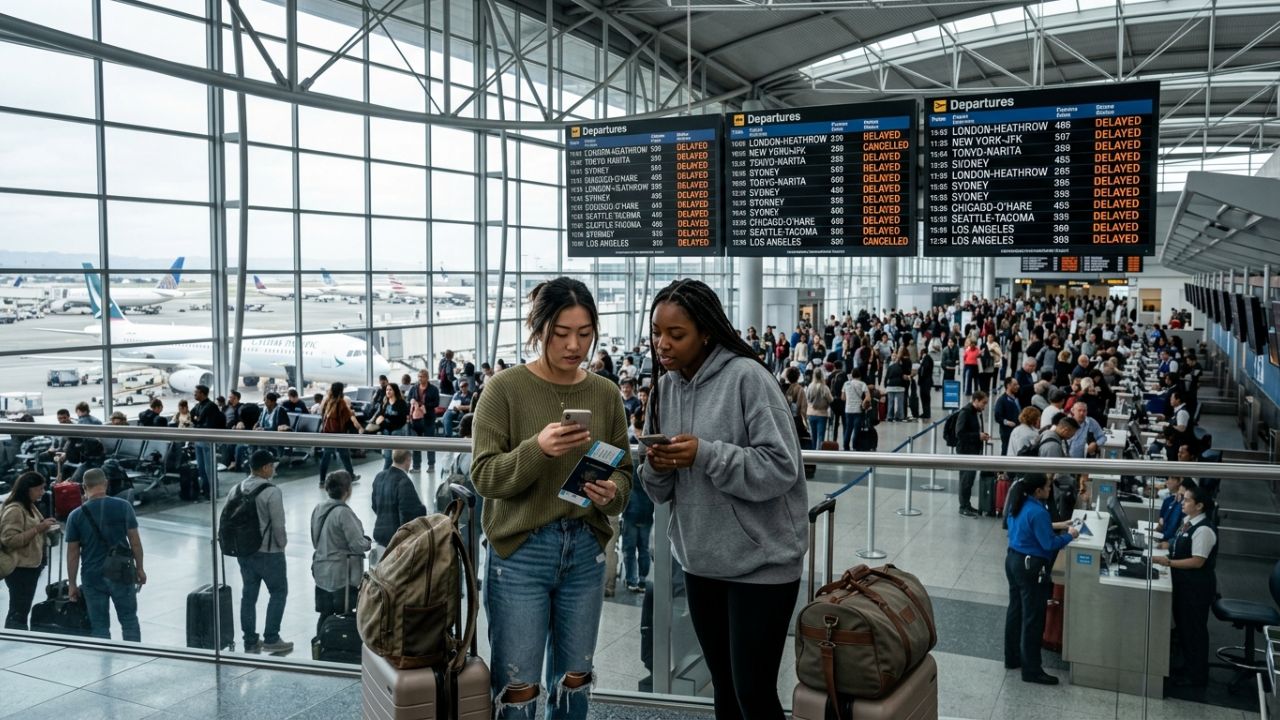
Image generated by AI
Aviation Updates: Massive Travel Chaos Paralyzes San Francisco Airport (SFO) as United Airlines and Delta Suffer 157 Delays
A brutal combination of hub saturation and runway congestion has completely stalled departure banks at California’s premier gateway, severely fracturing routes linking SFO to New York, London, Tokyo, and Sydney.
Image generated by AI
Intense airport disruptions are currently ripping through San Francisco International Airport (SFO), plunging thousands of domestic and international travelers into profound travel chaos. According to the latest airline news and official FlightAware tracking data, the heavily saturated West Coast hub has recorded a staggering 157 flight delays and exactly four official flight cancellations. The widespread gridlock has severely degraded operations across the airfield, heavily striking major hub operators like United Airlines and deeply impacting legacy carriers such as Delta Air Lines, American Airlines, and Alaska Airlines. Because SFO operates as a fundamental anchor for Pacific Rim connectivity, this localized congestion is actively destroying itineraries spanning the entire globe.
Expanded Overview: The Gridlock at SFO
San Francisco International Airport is currently buckling under immense operational pressure. When a massive primary hub begins to experience systemic runway friction, the delays multiply exponentially. The current breakdown clearly indicates a severe traffic buildup, where inbound aircraft cannot secure gates, forcing outbound aircraft to remain trapped on the tarmac.
Because delays significantly outweigh outright cancellations, aviation analysts note that this is a classic scenario of system congestion rather than a total weather-induced service suspension. However, this offers little relief to the passengers trapped inside the terminals. Tight turnaround cycles and rigid aircraft rotation dependencies have been shattered, making connecting flights in every direction virtually impossible and guaranteeing that the disruption will bleed late into the night.
Section-Wise Breakdown: The Domestic Network Collapse
The domestic departure halls at SFO absorbed the absolute heaviest blow. United Airlines, which utilizes San Francisco as its premier transpacific and West Coast fortress hub, leads the disruption with an incredible 47 delayed flights. This massive figure directly reflects severe hub saturation and turnaround constraints.
The regional feeder networks that support this legacy connectivity are also collapsing under the pressure. SkyWest recorded 33 delayed flights, ensuring that passengers traveling from smaller regional airports are missing their vital international connections. High-volume domestic operators including Southwest Airlines (23 delays), Alaska Airlines (9 delays), and American Airlines (6 delays) also reported widespread operational instability, deeply fracturing high-density domestic routes feeding into California and the East Coast.
Section-Wise Breakdown: Global Transpacific Ripple Effects
The congestion has successfully cascaded into the intercontinental departure boards. San Francisco serves as a critical entry point for tourism into California and a primary gateway for flights heading deep into the Asia-Pacific region. As domestic aircraft arrived late, outbound long-haul aircraft missed their incredibly tight slot times.
Major international operators were inevitably dragged into the travel chaos. Carriers including Air Canada and Japan Airlines reported minor delays, while Lufthansa, Qatar Airways, Singapore Airlines, and Cathay Pacific each recorded isolated disruptions. Inbound Asia-Pacific arrivals were delayed due to severe slot restrictions, while outbound European connections were heavily impacted by late-night arrival bottlenecks, severely degrading the overall efficiency of the global travel network.
Flight Details: SFO Airline-Level Disruption Snapshot
The precise operational telemetry detailing this severe hub congestion event has been consolidated into the mandatory matrix below, reflecting the specific damage sustained by carriers across the SFO network.
SFO Airline Disruption Matrix (June 27, 2026)
| Airline | Operational Impact (Delays / Cancellations) |
|---|---|
| United Airlines | 47 delayed flights |
| SkyWest | 33 delayed flights |
| Southwest Airlines | 23 delayed flights |
| Alaska Airlines | 9 delayed flights |
| American Airlines | 6 delayed flights |
| Delta Air Lines | 5 delayed flights, 2 cancellations |
| Multiple international carriers | 1–3 delays each |
(Note: SFO recorded a total of 157 delays and 4 total flight cancellations across all operations).
Passenger Impact: Trapped at the Gate
For the thousands of passengers attempting to navigate SFO, the primary challenge is surviving prolonged waiting times and the terrifying prospect of missed onward connections. Travelers are currently facing extended boarding times and grueling gate holds.
The sheer volume of delayed passengers has created immense rebooking pressure on same-day flights, severely congesting the terminals during peak departure windows. Travelers bound for Asia face the highest disruption risk, as missing a long-haul connection often means waiting a full 24 hours for the next available flight. For inbound tourists, the delays are destroying carefully planned hotel check-ins and tour schedules across the US West Coast.
Industry Analysis: The Cascading Effect of Hub Congestion
Aviation strategists monitoring these aviation updates stress that SFO’s current situation highlights the extreme sensitivity of global mega-hubs. High-density airports operating near absolute capacity thresholds lack the elasticity required to quickly recover from minor sequencing errors. The fact that East Coast arrivals are being delayed by West Coast domestic departures proves that congestion at a single hub like San Francisco will inevitably cascade across intercontinental networks, completely eroding operational stability worldwide.
Conclusion: A Strained Ecosystem
Ultimately, the severe disruptions at San Francisco International Airport showcase the incredibly hectic nature of modern international travel hubs. While airlines are actively adjusting flow rates and utilizing air traffic control holds to prevent mass flight cancellations, the sheer volume of 157 delays proves that the system is currently strained to its absolute limit. Passengers traveling through SFO must remain highly vigilant, rely heavily on real-time app updates, and maintain extreme flexibility as airlines attempt to clear the massive backlog.
Key Takeaways
- Massive Congestion: SFO recorded an astonishing 157 flight delays and 4 total flight cancellations.
- United Takes the Hit: As the primary hub operator, United Airlines absorbed the heaviest damage with 47 delayed flights.
- Feeder Network Strain: Regional operator SkyWest sustained 33 delays, heavily fracturing localized connectivity.
- Global Connectivity Fractured: Delays cascaded into the international networks of Singapore Airlines, Japan Airlines, Lufthansa, and Cathay Pacific.
- Major Routes Impacted: The gridlock affected high-value corridors linking SFO to New York, London, Tokyo, and Sydney.
FAQ: San Francisco Airport Flight Delays 2026
Which airline has the most delays at San Francisco International Airport today? United Airlines is experiencing the highest operational pressure, leading the disruption with exactly 47 delayed flights due to its massive hub presence at SFO.
Are international flights being cancelled at SFO? While the primary impact has been severe delays (157 in total), there have been exactly 4 official flight cancellations, two of which were recorded by Delta Air Lines. Most international carriers are experiencing isolated delays rather than outright cancellations.
Why are there so many flight delays at San Francisco today? The massive volume of delays is caused by severe system congestion and hub saturation. A traffic buildup creates tight turnaround cycles, leading to bottlenecks that delay both inbound and outbound aircraft.
Related Travel Guides
Toronto Pearson Airport Air Canada WestJet Long-Haul Expansion 2026
Copenhagen Airport Delays SAS easyJet Travel Chaos 2026
San Francisco SFO Airport Travel Disruption Survival Guide 2026
Disclaimer: This article is strictly for informational purposes. Delay statistics (157 delays) and cancellation figures (4 cancellations) are based on real-time data from FlightAware at the time of publication. Flight schedules and turnaround cycles are highly dynamic and subject to continuous modification. Passengers must verify their exact flight status directly with their airline before arriving at SFO.
Disclaimer
This article is for informational and educational purposes only. It does not constitute legal, financial, or professional advice. While we strive to provide accurate and up-to-date information, travel policies, regulations, and conditions change rapidly. Always verify information with official sources before making travel decisions. Nomad Lawyer makes no representations about the accuracy, reliability, completeness, or suitability of the information provided. Readers should consult qualified professionals for advice specific to their circumstances. The views expressed in this article are those of the author and do not necessarily reflect the views of Nomad Lawyer.
Raushan Kumar
Founder & Lead Developer
Full-stack developer with 11+ years of experience and a passionate traveller. Raushan built Nomad Lawyer from the ground up with a vision to create the best travel and law experience on the web.
Learn more about our team →