
Samos Airport Passenger Traffic Surges 11.9%: Sweden, Poland, and Norway Power Eastern Aegean Travel 2026

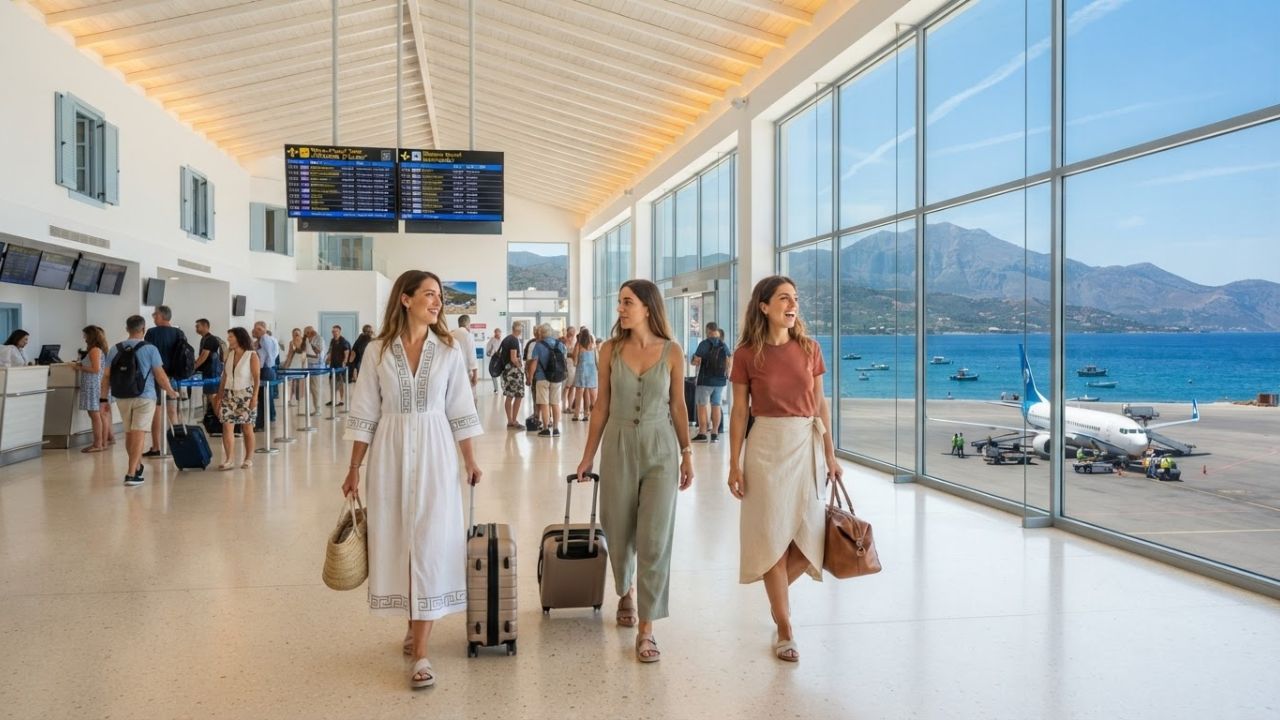
Samos Airport handled 296,233 passengers through July 2026—an 11.9% overall increase powered by a 16.3% jump in international traffic—as direct air routes from Sweden, Poland, Norway, and Denmark generated 56,443 travelers across the early summer season. Paced by Norway’s 176.8% volume rise and Poland’s 166.4% climb from May to July, this Eastern Aegean island is translating northern European flight connections into high-value cultural and sustainable coastal tourism.
The official data released by Fraport Greece highlights a decisive transition in Eastern Aegean transit patterns. Between January and July 2026, international travelers made up 58.0% of all airport throughput, totaling 171,952 passengers compared to 147,862 during the equivalent seven-month timeframe in 2025. Domestic passenger traffic also expanded, rising 6.2% from 116,976 to 124,281 travelers, representing approximately 42.0% of the passenger base. Total aircraft movements at Samos Airport climbed 6.3% to 3,500 flights, up from 3,294 in 2025. International flights grew 11.6% to 1,193 operations (up from 1,069), while domestic flights recorded 2,307 operations, an increase of 3.7% over 2,225. Notably, international passenger numbers grew by 16.3%, outpacing international flight growth by 4.7 percentage points and signaling higher aircraft seat occupancy on cross-border routes.
In absolute terms, Samos Airport accommodated 31,395 more passengers during January to July 2026 than in the corresponding period of 2025, with international arrivals and departures accounting for 24,090 of that total gain.
Northern and Central European Feeders Drive Midsummer Passenger Growth
The primary momentum behind the island's midsummer travel expansion originated from a concentrated cluster of northern and central European origin points. Together, Sweden, Poland, Norway, and Denmark contributed 56,443 separately reported passengers across May, June, and July 2026. This group represented 19.1% of Samos Airport’s total seven-month passenger traffic and 32.8% of its January-to-July international volume. Across this three-month span, the four countries generated 29,783 arriving passengers, 26,660 departing passengers, and 350 commercial aircraft movements, with zero transit passengers recorded.
Monthly volumes across these four markets almost doubled over the quarter, jumping from 11,821 passengers in May to 22,033 in June (an 86.4% month-on-month surge) and reaching 22,589 in July. Their collective share of Samos Airport's monthly traffic remained consistently high, accounting for 21.4% in May, 25.8% in June, and 23.3% in July.
| Country Market | May 2026 Traffic | June 2026 Traffic | July 2026 Traffic | May–July Combined Total | Aircraft Movements |
|---|---|---|---|---|---|
| Sweden | 4,791 | 7,436 | 7,126 | 19,353 | 119 |
| Poland | 2,329 | 5,555 | 6,205 | 14,089 | 82 |
| Norway | 1,862 | 4,927 | 5,154 | 11,943 | 79 |
| Denmark | 2,839 | 4,115 | 4,104 | 11,058 | 70 |
| Combined 4-Market Total | 11,821 | 22,033 | 22,589 | 56,443 | 350 |
Sweden stood out as the largest single contributor among the four nations, registering 19,353 passengers across the three summer months—equaling 6.5% of Samos Airport’s total January-to-July traffic and 11.3% of its international traffic. Swedish passenger volume rose 48.7% from 4,791 in May to 7,436 in June, before settling slightly to 7,126 in July (down 4.2% from June). Sweden logged 119 aircraft movements, 10,213 arriving passengers, and 9,140 departing travelers, yielding a positive net inflow of 1,073 arrivals.
Poland delivered the fastest numerical build-up, expanding from 2,329 passengers in May to 5,555 in June (a 138.5% leap) and peaking at 6,205 in July (166.4% higher than May). Polish operations totaled 82 flight movements, 7,432 arrivals, and 6,657 departures, contributing 14,089 passengers across May to July. This represents 4.8% of the airport's seven-month total and 8.2% of its international count. Aircraft movements connected to Poland doubled from 16 in May to 32 in June, climbing to 34 in July.
Norway posted the steepest percentage expansion over the interval. Rising from 1,862 passengers in May to 4,927 in June (up 164.6%) and reaching 5,154 in July, Norway recorded an overall May-to-July growth rate of 176.8%. With 79 aircraft movements, 6,346 arrivals, and 5,597 departures, Norway added 11,943 passengers to the airport, accounting for 4.0% of total January-to-July traffic and 6.9% of international travelers. Notably, Norway’s July passenger volume reached its seasonal zenith despite flight operations decreasing from 33 in June to 32 in July.
Denmark established an early high volume and held steady throughout peak summer. Danish traffic stepped up from 2,839 passengers in May to 4,115 in June, then remained level at 4,104 in July (a minor difference of only 11 passengers). Across 70 aircraft movements, Denmark generated 5,792 arrivals and 5,266 departures, bringing its three-month total to 11,058 passengers—representing 3.7% of total throughput and 6.4% of international traffic.
National Context: Samos Outpaces Wider Greek Aviation Growth
The robust performance at Samos Airport reflects broader strength across the Hellenic travel sector while outpacing national averages. Official figures from the Bank of Greece indicate that Greece welcomed 13.491 million inbound travelers between January and June 2026, marking a 15.4% year-on-year increase. Over that same six-month window, national travel receipts advanced 14.8% to reach €8.796 billion. Across all Greek airports, passenger movements grew by 7.3%.
| Tourism Performance Metric | Reporting Period | Greece Nationwide Total | Samos Airport Performance |
|---|---|---|---|
| Inbound Traveler Growth | Jan–Jun 2026 | +15.4% (13.491 million) | — |
| National Travel Receipts | Jan–Jun 2026 | €8.796 billion (+14.8%) | — |
| All-Airport Passenger Flows | Jan–Jun 2026 | +7.3% | — |
| Total Passenger Growth | Jan–Jul 2026 | — | +11.9% (296,233 passengers) |
| International Passenger Growth | Jan–Jul 2026 | — | +16.3% (171,952 passengers) |
| Domestic Passenger Growth | Jan–Jul 2026 | — | +6.2% (124,281 passengers) |
| Total Commercial Flights | Jan–Jul 2026 | — | +6.3% (3,500 flights) |
Samos Airport’s 16.3% international passenger expansion through July exceeded the national 7.3% airport growth benchmark by 9.0 percentage points. While the Bank of Greece tracks expenditure on a nationwide basis without isolating regional municipal totals, Fraport Greece's preliminary July figures confirm that the island gained 24,090 additional international air passengers compared to the first seven months of 2025.
Cultural Value and Marine Conservation in the Eastern Aegean
For travelers touching down in Samos, this air connectivity unlocks an island shaped by ancient philosophy, complex topography, and delicate ecosystems. As the historic home of Pythagoras, Epicurus, and the astronomer Aristarchos, Samos pairs coastal leisure with significant archaeological depth.
The island's UNESCO World Heritage core encompasses the Pythagoreion and Heraion of Samos. Walking through the Tunnel of Eupalinos—a sixth-century BC aqueduct engineered from both sides of Mount Ambelos that met with astonishing geometric accuracy—reveals how early Mediterranean civilizations solved essential civil infrastructure challenges.
Preserving this ancient setting requires active environmental stewardship. The waters surrounding Samos and the Fourni archipelago host sensitive seagrass beds (Posidonia oceanica) and provide critical habitat for the endangered Mediterranean monk seal (Monachus monachus) and short-beaked common dolphins. The Archipelagos Institute of Marine Conservation, headquartered in the region, works in partnership with local fishing communities to monitor coastal biodiversity and combat illegal anchoring that destroys ancient underwater flora.
Agricultural heritage also anchors the local economy. The terraced vineyards flanking the northern slopes of Mount Ambelos yield the internationally celebrated Samos Sweet Muscat (Muscat Blanc à Petits Grains). Governed by the United Winemaking Agricultural Cooperative of Samos (UWC Samos), these family-run vineyards practice low-intervention farming on stone terraces that prevent soil erosion and retain vital moisture in dry Aegean summers. Travelers who purchase wine directly from village cooperatives in Vourliotes and Manolates channel funding directly into rural families, preventing the abandonment of inland mountain settlements.
Local Insider Tips: Exploring Samos Responsibly
Navigating Samos during peak seasons requires an understanding of regional microclimates, authentic foodways, and off-path geography:
- Off-Peak Visit Windows: While June and July deliver peak seasonal frequencies from Scandinavia and Poland, the optimal period for experiential exploration falls between mid-September and late October. During autumn, sea temperatures hover around 23°C, the annual Muscat grape harvest is in full swing, and archaeological sites like the Heraion can be explored without midday summer heat.
- Under-the-Radar Excursions: Bypass standard resort beaches to hike the protected coastal track leading to Mikro Seitani and Megalo Seitani. Located west of Karlovasi within a designated Natura 2000 wildlife reserve, these pebble coves feature clear sea shelves and remain accessible strictly on foot or via small sea taxis from Potami. Another rewarding interior excursion is the mountain village of Drakei on the extreme western cliffs of Mount Kerkis, offering clear sunset vistas over Ikaria.
- Culinary Specialties: Samos cooking is rooted in wild herbs, fresh sheep and goat dairy, and mountain produce. Look for tavernas serving bourekia (crisp, phyllo-wrapped parcels filled with sweet yellow pumpkin, cinnamon, and local goat cheese) and armogalo, a creamy, spreadable curd cheese made from indigenous island herds. Pair meals with dry Muscat labels like Psiles Korfes, finishing with chilled Samos Vin Doux.
- Cultural Etiquette and Monastic Respect: When visiting active monasteries such as Panagia Spiliani near Pythagorio or Megali Panagia near Koumaradaioi, travelers must cover their shoulders and knees. Photography inside consecrated chapels is strictly prohibited without prior monastic permission.
- Marine Conservation Etiquette: If renting small motorboats out of Pythagorio or Ormos Marathokampou, never drop anchor into dark underwater meadows. These patches are protected Posidonia oceanica seagrass; dropping anchor tears up roots that take centuries to regenerate. Always use designated public mooring buoys or anchor exclusively in clear, sandy patches.
Tourism Outlook: Sustainable Growth Across Island Gateways
The sustained 11.9% passenger expansion at Samos Airport reflects a structural rebalancing across Greek tourism. Rather than overloading primary transit hubs like Athens, Heraklion, or Rhodes, European travelers are opting for secondary island gateways that offer direct access to uncrowded coastal villages, hiking routes, and genuine local culture.
Maintaining this momentum will depend on the island's capacity to convert seasonal summer arrivals into extended shoulder-season activity. The steady foundation of domestic flights—accounting for 2,307 operations and 124,281 passengers between January and July—ensures that Samos remains linked to mainland Greece throughout the year. By supporting independent tavernas, purchasing cooperative wines, and respecting fragile marine sanctuaries, visitors help ensure that the rise in international flights enriches Eastern Aegean community life for decades to come.
Related Travel Guides
Disclaimer
This article is for informational and educational purposes only. It does not constitute legal, financial, or professional advice. While we strive to provide accurate and up-to-date information, travel policies, regulations, and conditions change rapidly. Always verify information with official sources before making travel decisions. Nomad Lawyer makes no representations about the accuracy, reliability, completeness, or suitability of the information provided. Readers should consult qualified professionals for advice specific to their circumstances. The views expressed in this article are those of the author and do not necessarily reflect the views of Nomad Lawyer.
Raushan Kumar
Founder & Lead Developer
Full-stack developer with 11+ years of experience and a passionate traveller. Raushan built Nomad Lawyer from the ground up with a vision to create the best travel and law experience on the web.
Learn more about our team →