
Crete to Implement 2,000-Visitor Daily Cap at Balos Beach to Combat Overtourism in 2026
Authorities in Crete are proposing a strict 2,000-visitor daily limit for Balos Beach as scientific data reveals peak tourism flows exceed ecological carrying capacities.
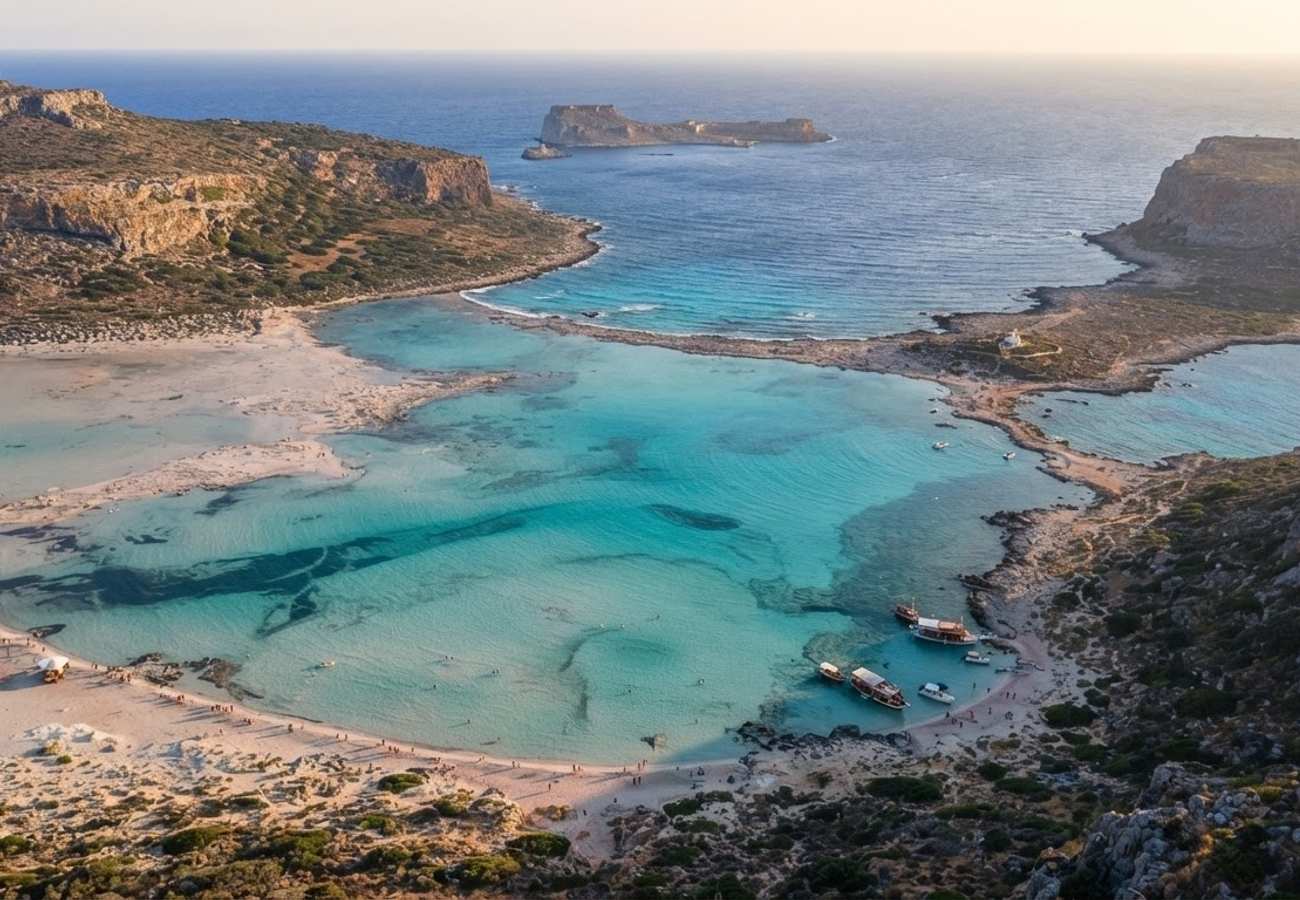
Image generated by AI
Greece is implementing aggressive visitor caps at its most fragile coastal sites, with Balos Beach facing a proposed 2,000-person daily limit to prevent total ecological collapse.
Science-Led Restrictions at Balos Lagoon
The Municipality of Kissamos and the Natural Environment and Climate Change Agency (OFYPEKA) are shifting toward a science-based management framework for western Crete’s most sensitive beaches. Balos, Elafonisi, and Falassarna—all part of the Natura 2000 network—have faced unsustainable pressure for the last four years.
Recent scientific research highlights a critical gap between physical space and ecological endurance. While Balos Beach has a theoretical physical capacity of 6,776 visitors per day, the realistic carrying capacity—accounting for environmental stress and operational constraints—is significantly lower, ranging between 2,695 and 3,039 visitors. Data from 2017 to 2021 indicates that peak August flows routinely exceeded this ecological limit by approximately 1,000 visitors daily.
To mitigate this, authorities propose a management ceiling of 2,000 visitors, distributed across two or three shifts. This limit focuses specifically on sea arrivals, addressing the "bottleneck" effect caused by boat excursions. Research shows that 51% of visitors arrive by boat, creating concentrated waves of arrivals that overwhelm disembarkation points even when the wider beach appears under-capacity.
Balos Capacity and Management Metrics
| Balos Indicator | Figure | Operational Implication |
|---|---|---|
| Physical Carrying Capacity | 6,776 visitors/day | Maximum theoretical limit based on beach area |
| Realistic Carrying Capacity | 2,695–3,039/day | Limit based on environmental and operational constraints |
| Proposed Management Ceiling | Up to 2,000 visitors | Target limit for sea arrivals across 2-3 shifts |
| Boat-Arrival Share | 51% | Primary cause of arrival bottlenecks |
| Peak August Excess | ~1,000 visitors/day | Amount by which peak flows exceeded ecological limits |
Systemic Changes Across Western Crete
The crisis at Balos is mirrored at Elafonisi and Falassarna, where "commercial capacity" is being sacrificed for environmental resilience.
At Elafonisi, which held the top global beach ranking in 2025, the "island of umbrellas" effect led authorities to slash permitted sun loungers from 800 to approximately 200. Balos has seen a similar reduction, with loungers dropping from 400 to roughly 150.
At Falassarna, the focus is on infrastructure. Despite its broad coastline, the surrounding protected landscapes and access roads cannot support unlimited volume. Consequently, the removal of private vehicles and the implementation of strict visitor controls are now central to the regional management strategy.
National Tourism Growth vs. Local Saturation
These local restrictions occur during a period of record-breaking national growth. Bank of Greece data for 2025 reveals a significant increase in volume and spending:
Greece National Tourism Data (2024-2025)
| Metric | 2024 | 2025 | Change |
|---|---|---|---|
| Inbound Travellers | 40.69 million | 43.31 million | +6.4% |
| Travel Receipts | — | €23.63 billion | +9.4% |
| Non-Resident Overnight Stays | 240.82 million | 244.67 million | +1.6% |
| Avg. Expenditure per Trip | €530.60 | €545.50 | +2.8% |
| Avg. Expenditure per Stay | €89.70 | €96.60 | +7.7% |
| Average Stay Duration | 5.9 nights | 5.6 nights | -4.5% |
The data suggests a policy paradox: while Greece is earning more per visitor, the average stay is shortening, leading to higher turnover and more intense, concentrated pressure on "bucket-list" destinations.
Traveler Logistics Guide: Navigating Crete's New Restrictions
From a ground-level perspective, the best way to navigate these changes is to abandon spontaneous visits to western Crete's primary beaches. The era of "drive and park" is ending.
1. Accessing Balos Beach Private vehicle access is being restricted. The current strategy involves parking in a designated area near Kalyviani, from where small shuttle buses transport visitors to the start of the walking route. If you prefer the sea route, be aware that these arrivals are now subject to the 2,000-visitor cap. Book your boat excursions well in advance through official operators to ensure you are within a permitted "shift."
2. Managing Elafonisi and Falassarna With sun lounger availability reduced by over 70% at Elafonisi, travelers should bring their own gear or arrive at dawn. Avoid bringing private cars into the highest-protection zones; utilize the official shuttle systems to avoid fines or being turned away at checkpoints.
3. Optimal Timing Avoid August entirely if possible. The data shows that August flows exceed ecological capacities by 1,000+ people daily. Late September or early June offers a more stable experience with fewer bottlenecks at disembarkation points.
Infrastructure Impact Assessment
The shift from "maximum throughput" to "environmental resilience" marks a turning point for Greek tourism. By prioritizing the Natura 2000 guidelines over immediate commercial gain, Crete is attempting to prevent the permanent degradation of its primary assets. If successful, the Balos model—using scientific carrying capacities to set hard caps—will likely be exported to other high-pressure sites across the Cyclades and Ionian islands.
The balance between economic gain and ecological survival is now the primary driver of Greek transit policy.
Related Travel Guides
Disclaimer
This article is for informational and educational purposes only. It does not constitute legal, financial, or professional advice. While we strive to provide accurate and up-to-date information, travel policies, regulations, and conditions change rapidly. Always verify information with official sources before making travel decisions. Nomad Lawyer makes no representations about the accuracy, reliability, completeness, or suitability of the information provided. Readers should consult qualified professionals for advice specific to their circumstances. The views expressed in this article are those of the author and do not necessarily reflect the views of Nomad Lawyer.