
Russia-India Rail Corridor: Analyzing the 7,200km INSTC Multimodal Link for 2026
The International North-South Transport Corridor (INSTC) aims to link Moscow and New Delhi via a 7,200km multimodal network, bypassing Suez Canal vulnerabilities.

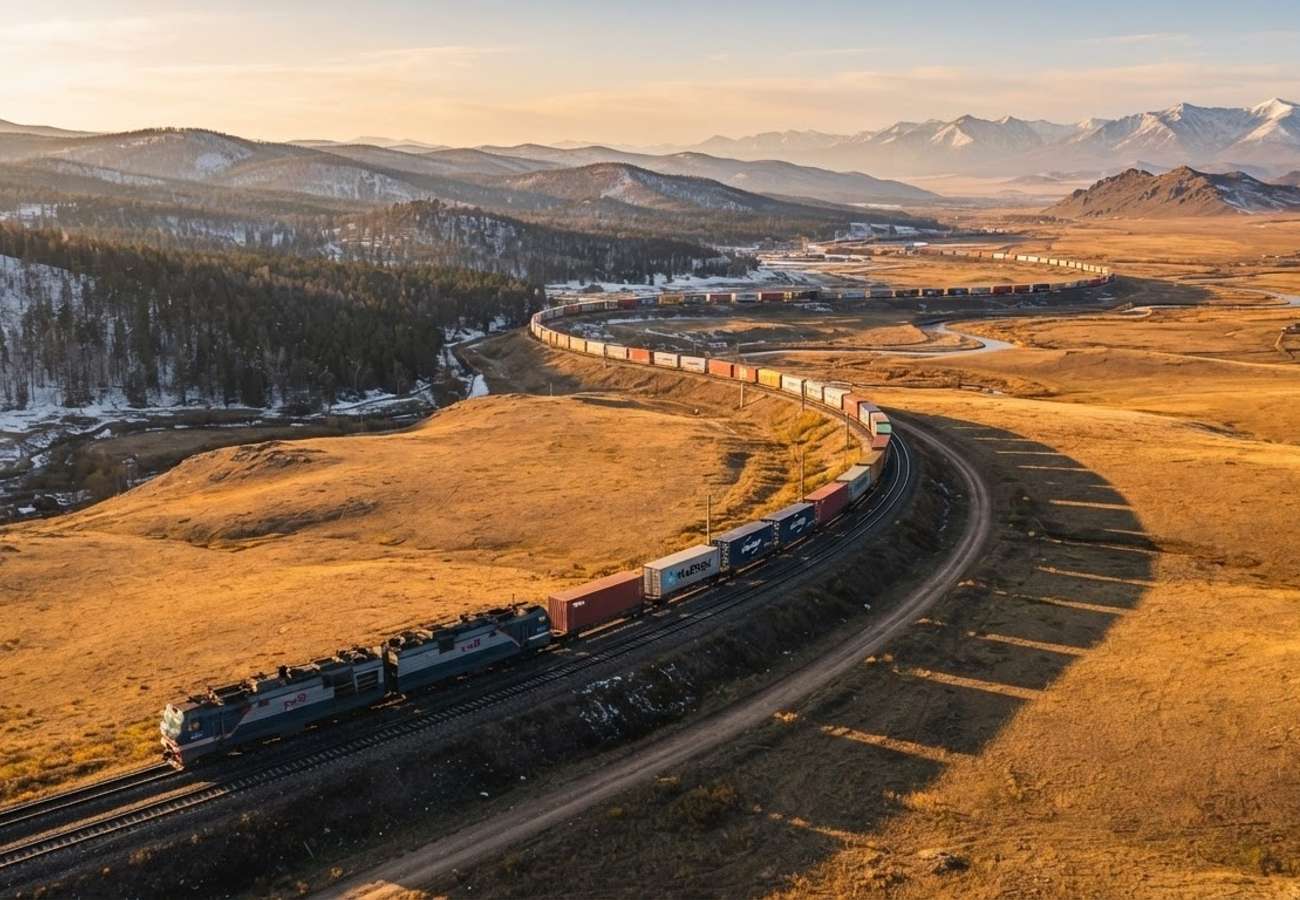
Image generated by AI
The International North-South Transport Corridor (INSTC) is evolving into a 7,200-kilometer multimodal artery designed to decouple Russia-India trade from volatile maritime chokepoints. While currently optimized for heavy industrial freight, the corridor represents a strategic shift toward land-based Eurasian connectivity.
The Shift Toward Multimodal Eurasian Transit
The historical reliance on the Suez Canal for trade between Eastern Europe and South Asia has exposed significant vulnerabilities. Geopolitical instability and security threats in narrow maritime corridors have prompted Moscow and New Delhi to accelerate the development of the International North-South Transport Corridor (INSTC).
This network is not a single railway line but a complex multimodal framework. It integrates existing rail networks across Russia, Kazakhstan, and Turkmenistan, transitioning to maritime segments via Iranian ports to reach the Indian coast. The primary objective is to provide a stable, land-centric alternative for the movement of essential commodities, including energy products, coal, and heavy industrial materials.
INSTC Route Specifications and Operational Flow
The corridor operates through a synchronized hand-off between rail and sea. The following table outlines the current logistics flow of the 7,200km network.
| Segment | Mode of Transport | Primary Transit Territories | Primary Cargo Types |
|---|---|---|---|
| Northern Leg | Rail | Russia $\rightarrow$ Kazakhstan $\rightarrow$ Turkmenistan | Energy, Industrial Materials, Coal |
| Central Leg | Rail / Road | Turkmenistan $\rightarrow$ Iran | Freight Commodities |
| Southern Leg | Maritime | Iran $\rightarrow$ Arabian Sea $\rightarrow$ India | Multimodal Freight |
| Total Distance | Multimodal | $\approx$ 7,200 Kilometers | Bulk Industrial Goods |
Traveler Logistics Guide: Navigating the Corridor
From a ground-level perspective, the INSTC is currently a freight-first operation. For those attempting to navigate these regions or planning for future passenger availability, the logistics are complex.
The Reality of Passenger Transit A direct, singular passenger train from Moscow to Delhi remains theoretical. Travelers cannot currently book a "through-ticket" for this journey. Any attempt to traverse this route requires independent bookings across multiple national rail systems.
Border and Customs Management Navigating this corridor involves crossing several sovereign borders, each with distinct regulatory frameworks.
- Visa Requirements: Travelers must secure individual visas for Russia, Kazakhstan, Turkmenistan, and Iran. These are often not streamlined and require separate applications.
- Customs Protocols: Every international boundary involves rigorous security checks. For those transporting equipment or goods, customs declarations must be filed according to the specific laws of each transit territory.
- Digital Transit: While India has implemented systems like Digi Yatra for domestic aviation, no such unified digital transit pass exists for the INSTC land corridor.
Optimal Transit Strategy For adventure travelers, the best way to approach this route is as a series of legs rather than a single journey. Ensure all transit visas are secured at least 60 days in advance and utilize local agents in Ashgabat and Tehran to manage the transition between rail and road segments.
Infrastructure Impact Assessment
The transition from fragmented regional initiatives to a cohesive policy framework marks a significant change in Eurasian logistics. Historically, these projects suffered from a lack of unified financial backing. The current 2026 trajectory shows a move toward legal harmonization, where participating governments are actively aligning transport laws to reduce friction at border crossings.
If the corridor ever expands to include a fully integrated passenger network, it would redefine continental travel. Such a move would shift the travel paradigm from rapid aviation to long-duration overland mobility, traversing the boreal forests of Russia, the arid plains of Central Asia, and the coastal regions of the Persian Gulf.
While this would not replace air travel for business or mass tourism, it creates a high-value "bucket-list" route for overland exploration, provided that the current regulatory hurdles and security protocols are modernized.
The INSTC remains a strategic freight lifeline, but its evolution signals a broader move toward a multipolar transport map.
Related Travel Guides
Disclaimer
This article is for informational and educational purposes only. It does not constitute legal, financial, or professional advice. While we strive to provide accurate and up-to-date information, travel policies, regulations, and conditions change rapidly. Always verify information with official sources before making travel decisions. Nomad Lawyer makes no representations about the accuracy, reliability, completeness, or suitability of the information provided. Readers should consult qualified professionals for advice specific to their circumstances. The views expressed in this article are those of the author and do not necessarily reflect the views of Nomad Lawyer.
Raushan Kumar
Founder & Lead Developer
Full-stack developer with 11+ years of experience and a passionate traveller. Raushan built Nomad Lawyer from the ground up with a vision to create the best travel and law experience on the web.
Learn more about our team →