
Vietnam, Sri Lanka, Indonesia Dominate Budget Beach Travel for Indians in 2026: Luxury Coastal Escapes Under ₹30,000
Indian travellers are flocking to Southeast Asia's most affordable beach destinations. Vietnam, Sri Lanka, and Indonesia now offer world-class coastal experiences at ultra-low prices, redefining budget travel in 2026.

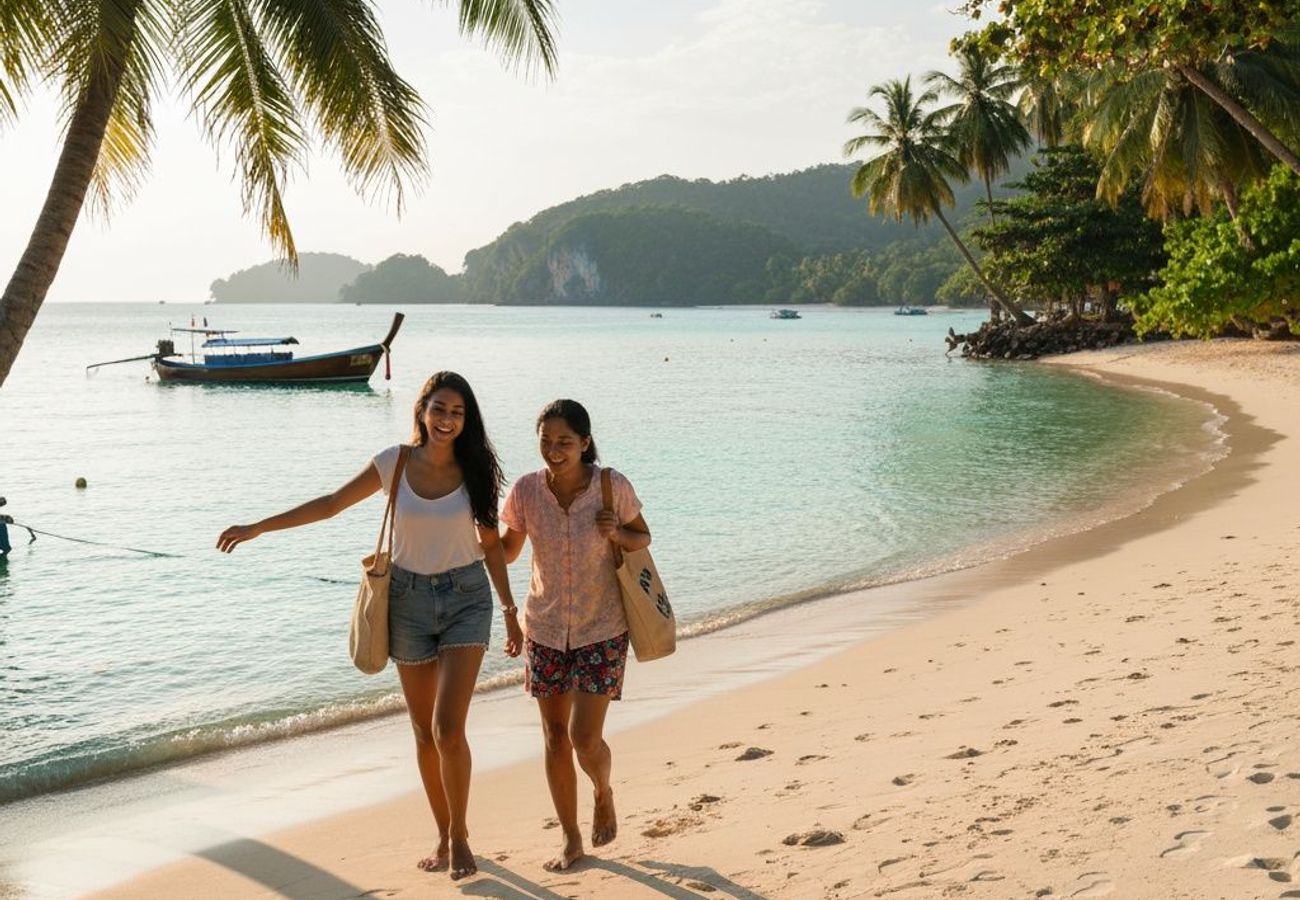
Image generated by AI
The Seismic Shift in How Indian Travellers Holiday Overseas
I watched the trend building for months before it became undeniable: Indian tourists are abandoning the expensive beach circuits of Bali's premium zones and Maldivian luxury resorts. They're not cutting corners. They're getting smarter.
A new geography of affordable coastal travel has emerged across Vietnam, Sri Lanka, and Indonesia, where world-class beach experiences now cost less than a week in India's luxury hotels. This isn't a niche trend—it's a wholesale restructuring of how middle-class Indian families plan international holidays.
The numbers tell the story. Exchange rate advantages, crumbling accommodation prices, and improved air connectivity have converged into a perfect storm of affordability. What required ₹200,000+ in savings five years ago now happens for ₹30,000-₹50,000 per person.
Reddit: "Just returned from a month in Vietnam and Sri Lanka. Spent less than a two-week holiday in Dubai. The beaches were objectively better." — r/IndianTravellersBudget
The result is a tourism explosion that's reshaping the entire Southeast Asian hospitality landscape.
Vietnam's Ultralow Beach Revolution: Where Luxury Feels Like a Steal
Da Nang, Nha Trang, and Phu Quoc have become household names in Indian travel circles. And the economics explain why instantly.
Beachfront resorts that would command ₹15,000-₹20,000 per night in Goa operate at ₹4,000-₹8,000 here. We're talking identical amenities—private beach access, infinity pools, seafood restaurants—at prices that feel almost unreal.
But the real revolution happens in daily living costs. A fresh grilled seafood meal with local beer runs ₹300-₹500. Island hopping tours that cost ₹5,000-₹8,000 in Maldives happen for ₹1,500-₹2,500. Scooter rentals to explore entire coastal regions: ₹400 per day.
What makes Vietnam especially dangerous for traditional beach destinations is that it hasn't yet entered the premium-pricing phase. Local buses, public transport, and street-food culture remain firmly in budget territory. You can eat like royalty and still spend less daily than you would on a mid-range meal in Mumbai.
The limestone cliffs of Ha Long Bay, the crystal lagoons of Lan Ha, and the peaceful beaches of Phu Quoc aren't hidden anymore—but they're still affordable.
Sri Lanka: The Closest International Escape with the Fastest Payback
Geography matters enormously for Indian travellers, and Sri Lanka's proximity creates a unique advantage: short-haul flights mean minimal flight costs.
A three-hour flight to Colombo costs ₹3,000-₹6,000 return. Compare that to ₹8,000-₹12,000 for Vietnam or ₹10,000-₹15,000 for Bali. That flight price difference compounds across family holidays.
Once there, Mirissa, Bentota, and Unawatuna deliver something rarer than affordability—authenticity. These aren't over-commercialized zones. They're working beach towns where tourism coexists with local life.
Accommodation pricing is ferociously competitive. Beachfront guesthouses operate at ₹2,500-₹4,500 per night. Boutique hotels with premium positioning charge ₹6,000-₹10,000. Whale-watching expeditions, surfing lessons, and temple visits remain priced for locals, not tourists.
The food situation amplifies the savings. Sri Lankan cuisine—seafood-heavy, rice-based, fruit-abundant—costs almost nothing. A fresh lobster curry meal for two: ₹600-₹900. That's not a budget meal; that's a celebration meal at budget prices.
What psychologically matters is cultural familiarity blended with novelty. Indian travellers don't feel like foreigners in Sri Lanka. They feel like visitors exploring a neighbor's country. That comfort premium is worth enormous amounts to families planning holidays.
Indonesia's Island Archipelago: Unlimited Beach Variety at Unbeatable Prices
Indonesia isn't a single destination—it's an entire oceanic universe of choices. That multiplicity is itself a competitive advantage.
Bali remains the gateway for most Indian travellers, but—and this matters—Bali's premium zones have become expensive. ₹12,000-₹18,000 nightly resorts in Seminyak aren't the story. The story is Gili Islands, Lombok, Flores, and Sumatra, where you escape both crowds and price inflation.
The logistics work beautifully. Inter-island ferries cost ₹800-₹2,000. Domestic flights run ₹4,000-₹7,000 between islands. Once you're there, scooter rentals at ₹300-₹500 daily unlock entire regions. This creates a peculiar economy of scale: longer trips become proportionally cheaper, not more expensive.
Accommodation stratification is extreme. You can find pristine beachfront bungalows for ₹2,000-₹4,000. You can upgrade to boutique hotels for ₹8,000-₹12,000. You can do beach-hopping islands for ₹15,000-₹20,000 total for a week, accommodations included.
What makes Indonesia dangerous for traditional resort destinations is the variety economy. A traveller can experience spiritual Bali, party Gili Islands, surfing Lombok, and untouched island villages—all within one trip, all under one budget. Repetition kills travel satisfaction; Indonesia defeats repetition through sheer geographic diversity.
The Currency Multiplication Effect: How ₹1 Becomes ₹1.50 Abroad
This is the mechanical truth that drives the entire phenomenon.
The Indian Rupee provides 40-60% greater purchasing power in Vietnam, Sri Lanka, and Indonesia compared to India. A ₹100 meal in Delhi becomes a ₹150 experience in Nha Trang. A ₹5,000 hotel night in Mumbai becomes a ₹7,500-quality experience in Colombo.
This isn't frugality marketing. This is quantifiable value expansion. The same rupee delivers disproportionately better experiences.
This currency advantage doesn't exist in Europe, Thailand's premium zones, or Maldives. It's geographically specific to these three countries, which creates a natural economic barrier that keeps prices depressed. Travellers voting with their bookings reinforce that barrier.
For Indian families, this means something profound: upgrading your travel style doesn't require increasing your budget. You get beachfront instead of back-street. You get resort instead of guesthouse. You get daily activities instead of one splurge experience. Same total spending; exponentially better holiday.
The Predictability Economy: Long Holidays Become Financially Feasible
Budget travel fear is really predictability fear.
Will you run out of money on day eight? Will unexpected costs appear? Will you need to cut the trip short?
Vietnam, Sri Lanka, and Indonesia have transparent, stable daily costs. A family can predict with high accuracy what their ₹40,000 budget delivers for 10 days. That predictability unlocks longer holidays. Parents who couldn't risk a two-week trip now can—the financial risk is manageable.
Street food keeps meal costs stable at ₹200-₹500 per person daily. Public transport costs don't spike unexpectedly. Even "premium" activities like diving (₹2,500-₹4,000), island tours (₹1,500-₹2,500), and snorkeling (₹1,000-₹2,000) have set pricing.
This is the inverse of expensive destinations, where surprise costs constantly appear. It's also why these destinations are enabling longer holidays: the financial anxiety disappears.
Why the Scenery Shatters Expectations
Here's what catches travellers off-guard: these budget destinations possess genuinely world-class natural beauty.
Vietnam's Ha Long Bay and Lan Ha deliver limestone karsts that rival Norway's fjords in visual drama, at one-tenth the cost. Sri Lanka's southern coast offers whale-watching, wildlife, and golden beaches at the exact same latitude as expensive Maldives. Indonesia's coral ecosystems and volcanic islands represent some of Earth's most biodiverse coastal regions.
The beaches themselves—turquoise clarity, white sand, reef systems—compete directly with Caribbean and Mediterranean tourism. Travellers arrive expecting budget compromises and encounter world-class destinations instead.
That disconnect between expectation and reality creates powerful word-of-mouth. Families return to India convinced they discovered "hidden luxury destinations" before the world caught up.
The Connected Reality: Why This Moment Happened in 2026
This convergence of affordability isn't accidental. Three factors aligned simultaneously.
Air connectivity improved dramatically. Budget carriers now operate ₹3,000-₹6,000 routes to Vietnam and Indonesia. Sri Lanka flights remain competitive through multiple operators. Getting there stopped being the expensive part.
Accommodation networks fragmented and became competitive. Guesthouses, homestays, and mid-range hotels proliferated across coastal towns. That supply destroyed pricing power. Hotels now compete on service and location, not scarcity.
Exchange rates shifted in India's favor. The rupee's fluctuation created a window where purchasing power expanded simultaneously across all three destinations. That window may close; travellers know it.
The result is a now-or-next-decade opportunity that's driving decision-making urgently.
What This Means for Traditional Beach Destinations
The implication is severe for expensive coastal resorts globally.
Indian tourists—a massive and growing segment of international arrivals—are voluntarily exiting the Maldives-Mauritius-Caribbean circuit. They're not coming back when they discover ₹8,000 beachfront nights in Vietnam alongside the same experience at ₹20,000 in traditional "luxury" destinations.
This is why hotels in Goa, Bali's premium zones, and Indian Ocean resorts are quietly panicking. The competitive ground has shifted to affordability, not amenities. You can't compete on service or infrastructure against destinations that undercut you on price while matching you on quality.
The smart hotels are adapting: lowering rates, improving service, and creating loyalty programs for Indian travellers. The slow ones are watching bookings evaporate.
The Nomad Reality: Why Remote Workers Are Accelerating This Trend
Digital nomads and remote workers have become inadvertent marketing ambassadors for these destinations.
A software engineer working remotely earns in rupees but lives in Vietnam. Their monthly rent costs ₹25,000. That's sustainable long-term living at beach-town quality. Their families visit for ₹30,000-₹50,000 for two weeks. Suddenly, international beach holidays become recurring events, not once-in-a-lifetime splurges.
This creates a feedback loop. Remote-working professionals share real costs. Social media amplifies authentic experiences. Families see someone they know genuinely living well in these places. Trust builds. Bookings follow.
Traditional travel marketing can't compete with that authenticity.
The Countertrend Nobody Discusses: Capacity and Overtourism Risk
Here's the uncomfortable truth: these destinations' affordability depends on remaining underdeveloped.
As Indian tourist numbers explode—which is happening right now—prices will eventually rise. Locals will demand better wages. Infrastructure will need upgrading. That costs money, which gets passed to tourists.
Vietnam is already experiencing this in peak zones. Sri Lanka's tourism capacity is straining. Indonesia's Bali is visibly overcrowded in high season.
The travellers arriving in 2026 and early 2027 are capturing a historic window of affordable luxury. That window closes as demand peaks. Within 3-5 years, these destinations may look entirely different—more expensive, more crowded, less authentic.
This creates a urgency dynamic that's driving booking surges right now.
The Practical Movement: How to Capture This Moment
The mechanics of this trend are straightforward for Indian travellers planning 2026 holidays.
Vietnam demands 2-3 weeks to justify flight costs. Allocate 5-7 days on beaches, 3-4 days exploring Hanoi or Ho Chi Minh City. Budget ₹40,000-₹60,000 per person all-in.
Sri Lanka works perfectly for 7-10 days. Short flights mean you don't lose two days in travel. A coastal circuit hits Colombo, Mirissa, Bentota, and Unawatuna. Budget ₹25,000-₹35,000 per person all-in.
Indonesia requires commitment. One-week trips barely justify the flight. Two-week island circuits (Bali-Lombok-Gili) deliver exponential value. Budget ₹50,000-₹70,000 per person all-in.
The booking window is December-January and June-July (Indian holiday periods). Prices spike then; book 6-8 weeks in advance.
The Law and Travel Reality: Visa Situations Matter
One often-overlooked advantage: visa accessibility.
Vietnam offers 90-day e-visas online for approximately ₹900. Processing takes 24-48 hours. No embassy visits required.
**Sri Lanka provides 30-day Electronically Travel Authorization (
Disclaimer
This article is for informational and educational purposes only. It does not constitute legal, financial, or professional advice. While we strive to provide accurate and up-to-date information, travel policies, regulations, and conditions change rapidly. Always verify information with official sources before making travel decisions. Nomad Lawyer makes no representations about the accuracy, reliability, completeness, or suitability of the information provided. Readers should consult qualified professionals for advice specific to their circumstances. The views expressed in this article are those of the author and do not necessarily reflect the views of Nomad Lawyer.
Kunal K Choudhary
Co-Founder & Contributor
A passionate traveller and tech enthusiast. Kunal contributes to the vision and growth of Nomad Lawyer, bringing fresh perspectives and driving the community forward.
Learn more about our team →