
Transport Guide: Getting from Rodney Bay to Pigeon Island Saint Lucia in 2026
A comprehensive analysis of transport options from Rodney Bay to Pigeon Island, including taxi fares, minibus routes, and logistical timelines for 2026 visitors.

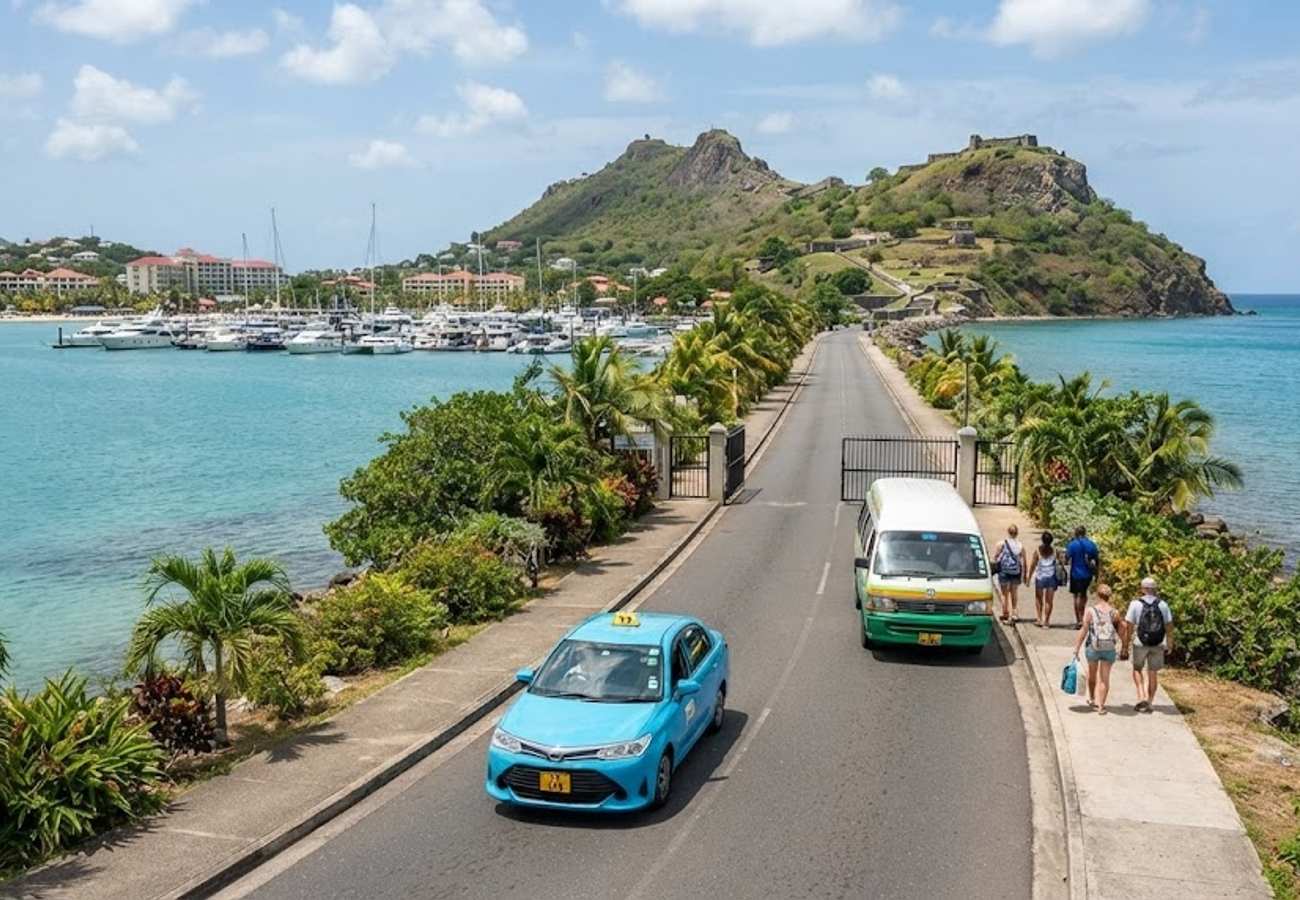
Image generated by AI
Rodney Bay and Pigeon Island are separated by less than 5 kilometers on Saint Lucia’s northwest coast, yet the choice of transport significantly impacts the visitor experience. From high-efficiency taxis to budget-friendly minibuses, navigating this corridor requires a clear understanding of local pricing and infrastructure.
The transit corridor connects the hotel-heavy Reduit Beach and Rodney Bay Marina areas to the Pigeon Island National Landmark. The distance from central Rodney Bay shopping hubs to the Pigeon Island entrance is approximately 4 to 5 kilometers. Under normal traffic conditions, the transit time is 10 to 15 minutes via the Castries–Gros Islet Highway.
Transport Modal Comparison
Taxis: High-Efficiency Transit
For cruise passengers landing at Rodney Bay Marina or resort guests, taxis are the primary recommendation. Official vehicles are identified by light blue license plates marked with "TX."
- Standard Fare: One-way trips from the Rodney Bay hotel strip typically cost 30 to 40 Eastern Caribbean dollars (approximately 12 to 15 US dollars) for up to four passengers.
- Cruise Logistics: Tender passengers at the marina often secure informal round-trip rates. A common arrangement for couples is roughly 25 to 30 US dollars, including a 2-to-3-hour stay.
- Booking Strategy: It is standard practice to agree on the fare before departure. Many travelers arrange a return pickup time with the same driver to avoid waiting at the park exit.
Local Minibuses: The Budget Alternative
Saint Lucia utilizes privately operated minibuses (marked with an "M" license plate) rather than a government-run bus system. The Route 1A serves the Castries to Gros Islet corridor.
- Cost: One-way fares between Rodney Bay and Gros Islet typically range from 1 to 2 US dollars.
- Operational Style: There are no fixed timetables; buses run frequently throughout the day.
- The "Last Mile" Gap: Minibuses do not enter the National Landmark. Passengers must exit at the Pigeon Island/Pigeon Point junction and walk 15 to 20 minutes along the causeway to reach the gate.
Walking and Rental Cars
While the distance is short, walking the full route from Rodney Bay Marina to Pigeon Island takes 45 to 60 minutes. This is generally discouraged due to high heat, limited shade, and fast-moving highway traffic.
Rental cars provide maximum autonomy for those exploring beyond the north coast. Daily rates for small vehicles generally range from 60 to 120 US dollars, depending on the season and insurance coverage.
Transit Logistics Summary
| Mode | Estimated Cost (USD) | Travel Time | Convenience Level |
|---|---|---|---|
| Taxi | $12 - $15 (one way) | 10 - 15 Mins | High |
| Minibus | $1 - $2 (one way) | 20 - 30 Mins* | Low/Medium |
| Rental Car | $60 - $120 (per day) | 10 - 15 Mins | High |
| Walking | Free | 45 - 60 Mins | Low |
*Includes walking time from bus stop to entrance.
Why This Matters: Industry Analysis
From a logistical perspective, the Rodney Bay-to-Pigeon Island route is a microcosm of Saint Lucian tourism infrastructure. The reliance on "informal" agreements for taxi fares and the lack of fixed minibus schedules means that the "Information Gap" is the biggest hurdle for first-time visitors.
For travelers, the real impact is the "last mile" problem. While the minibus is incredibly cheap, the 20-minute walk in tropical humidity to reach the Pigeon Island gate can be grueling. Our analysis suggests that for groups of two or more, the taxi is the only logical choice, as the price difference is negligible when split, but the time and energy savings are substantial.
Furthermore, the proximity of Reduit Beach, Pigeon Island, and Gros Islet allows for a "cluster itinerary." The most efficient logistical flow is: Reduit Beach (Morning) $\rightarrow$ Pigeon Island (Afternoon) $\rightarrow$ Gros Islet (Evening).
Forward Outlook
As tourism volume increases in the north, we expect a shift toward more formalized shuttle services from major resorts. However, the "Friday Night Jump-Up" in Gros Islet remains a peak congestion event; travelers should book return transport in advance or expect significant taxi delays after sunset on Fridays.
Precise planning of the "last mile" is the difference between a seamless day trip and a grueling trek in the Caribbean sun.
Related Travel Guides
Disclaimer
This article is for informational and educational purposes only. It does not constitute legal, financial, or professional advice. While we strive to provide accurate and up-to-date information, travel policies, regulations, and conditions change rapidly. Always verify information with official sources before making travel decisions. Nomad Lawyer makes no representations about the accuracy, reliability, completeness, or suitability of the information provided. Readers should consult qualified professionals for advice specific to their circumstances. The views expressed in this article are those of the author and do not necessarily reflect the views of Nomad Lawyer.
Preeti Gunjan
Contributor & Community Manager
A passionate traveller and community builder. Preeti helps grow the Nomad Lawyer community, fostering engagement and bringing the reader experience to life.
Learn more about our team →