
Ireland Advances Sustainable Rail Travel as €600 Million Framework Powers DART Expansion and Regional Railway Connectivity Across the Island
Iarnród Éireann has launched a €600M infrastructure framework with Arcadis and Tetra Tech, powering DART+ battery trains and All-Island Strategic Rail Review goals.

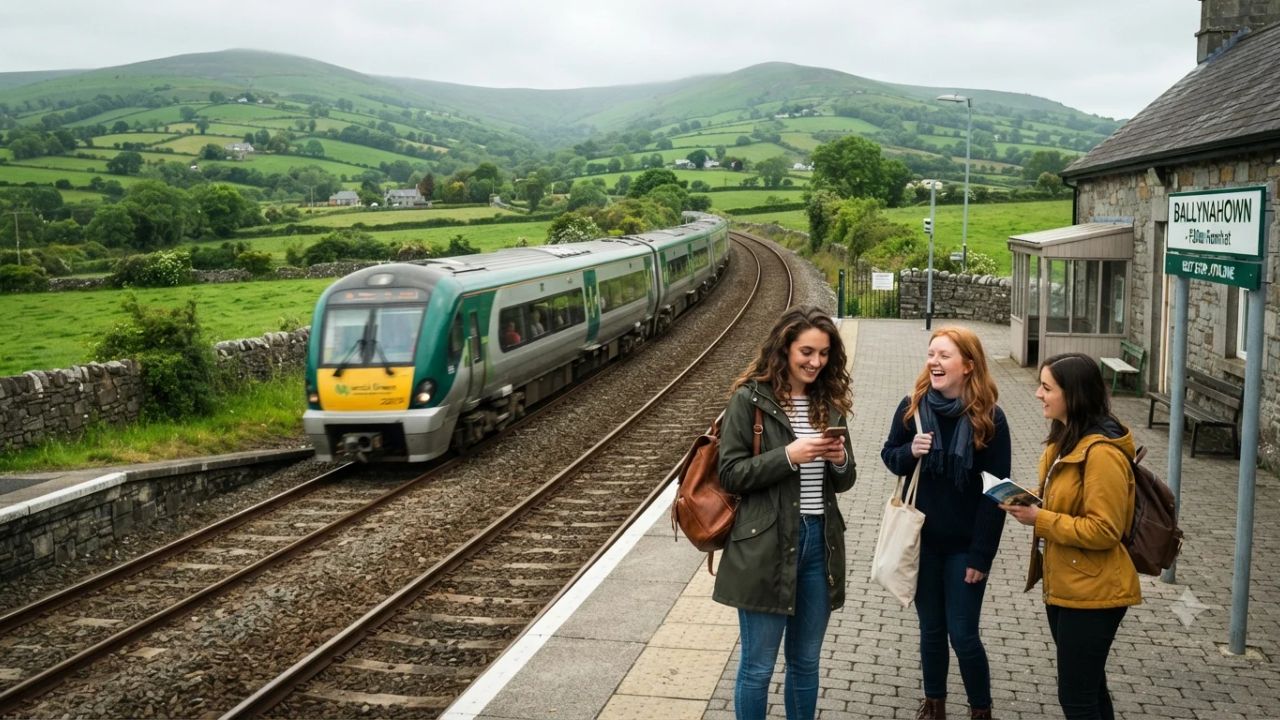
Image generated by AI
Ireland's national railway operator, Iarnród Éireann, has launched a landmark €600 million multi-disciplinary framework to accelerate nationwide track upgrades, fleet electrification, and regional connectivity across the island. Driven by partnerships with consortiums including Arcadis, Tetra Tech, and IDOM, the five-to-eight-year programme directly underpins the All-Island Strategic Rail Review, advancing 200 km/h intercity speeds, DART+ battery-electric train rollouts, and seamless car-free tourism links from Dublin to Cork, Galway, and Limerick.
The procurement structure, officially designated as the Multi-Party Framework for Multi-Disciplinary Consultants (MDC) Project Management Procedures (PMP) Phases 1–5, provides Iarnród Éireann with top-tier technical advisory, civil engineering, and environmental design capabilities. Operating over an initial five-year term with up to three one-year extensions, the mechanism establishes the engineering pipeline required to decarbonize Ireland's public transit network, ease highway gridlock, and deliver balanced regional development away from Dublin-centric patterns.
Project MDC PMP Phases 1–5: Architecture of the €600 Million Framework
Under Iarnród Éireann Capital Investments standard operating procedures (PMP-001), major railway projects must clear rigorous design gateways before ground-breaking civil construction commences. The €600 million framework ceiling funds the specialized pre-construction phases:
| PMP Development Stage | Core Engineering and Planning Deliverables | Key Project Gateways |
|---|---|---|
| Phase 1: Concept & Feasibility | Network capacity modeling, identifying single-track bottlenecks, corridor demand analysis | Establishes strategic business cases for line expansions |
| Phase 2: Option Selection | Multi-criteria engineering analysis, cost-benefit evaluations, selecting preferred alignments | Defines preferred routes and station locations |
| Phase 3: Preliminary Design | Environmental Impact Assessment Reports (EIAR), architectural plans, public consultations | Prepares detailed spatial and environmental filings |
| Phase 4: Statutory Approvals | Railway Order drafting, submissions to An Bord Pleanála, oral hearing representation | Secures national legal planning consent |
| Phase 5: Detailed Design & Procurement | Tender-ready construction documentation, bill of quantities, contractor selection assistance | Produces shovel-ready civil engineering contracts |
Up to five multi-disciplinary supplier groups share the framework panel, including the appointed Arcadis–Tetra Tech joint venture (partnered with Spanish engineering firm IDOM) alongside consortiums including Mott MacDonald and Roughan & O’Donovan.
Implementing the All-Island Strategic Rail Review (AISRR)
The engineering framework functions as the primary delivery mechanism for the recommendations of the landmark All-Island Strategic Rail Review (AISRR), a joint initiative between the Department of Transport in the Republic of Ireland and Northern Ireland's Department for Infrastructure. Targeting complete operational carbon neutrality by 2050, the plan prioritizes four core network transformations:
[All-Island Strategic Rail Review Targets]
├── 1. Heavy Route Electrification (Dublin-Belfast, Dublin-Cork, Dublin-Galway)
├── 2. Speed Upgrades to 200 km/h on Primary Intercity Corridors
├── 3. Track Duplication & Passing Loops for 30- to 60-Minute Service Intervals
└── 4. Regional Reopenings (Western Rail Corridor & Navan Rail Line)
1. Intercity Speed and Capacity Upgrades
Major track alignment straightening, ballast renewal, and advanced European Rail Traffic Management System (ERTMS) signaling will upgrade core lines to support operating speeds of up to 200 km/h. Passing loops and twin-tracking will eliminate single-track bottlenecks, permitting regular-interval 30- to 60-minute intercity departures connecting Dublin to Cork, Galway, Limerick, and Waterford.
2. Reactivating Dormant Regional Corridors
The framework provides design resources to progress railway restoration projects, notably sections of the Western Rail Corridor (connecting Athenry, Tuam, and Claremorris) and the strategic Navan rail extension in County Meath. Reopening these rights-of-way will integrate historically underserved rural and commuter populations directly into the national economic spine.
3. Lateral Regional Connections and Freight Growth
Addressing the historical limitation of radial routes that force all travel through Dublin, the strategy expands lateral connectivity between southern and western cities. Simultaneously, developing rail-connected freight terminals at major maritime ports—including Foynes and Rosslare Europort—will divert heavy cargo off national motorways.
Transforming Greater Dublin Rail Transit: The DART+ Fleet Revolution
The immediate beneficiary of accelerated engineering design is the DART+ (Dublin Area Rapid Transit) capital expansion programme. At the center of this transition is the retirement of four-decade-old rolling stock in favor of a modern zero-emission commuter fleet.
Modular Alstom X'trapolis Battery-Electric Trains (BEMUs)
Iarnród Éireann is introducing state-of-the-art modular Alstom X’trapolis train sets. Engineered with flexible propulsion architecture, these trains draw power directly from traditional 1,500-volt DC overhead catenary wires where available, while simultaneously charging onboard roof-mounted 840 kWh lithium-ion battery cells. When operating beyond electrified track limits, the trains switch seamlessly to battery mode, providing zero tailpipe emissions and whisper-quiet operation through urban and coastal zones.
High-Power Terminus Fast-Charging Sub-Stations
To operate battery-electric services across extended suburban distances without waiting for full overhead wire installation, targeted charging hubs are deploying at outer line terminals:
- Drogheda MacBride Station (Northern Line): High-voltage sub-stations and overhead conductor rails enable trains to rapid-charge their battery banks during routine 10-to-15-minute turnaround windows, unlocking high-frequency battery DART operations from Drogheda to central Dublin.
- Wicklow Station (South Eastern Line): A dedicated €20 million electrical infrastructure installation at platforms 1 and 2 facilitates an hourly zero-emission direct connection to Dublin Connolly, avoiding costly and disruptive catenary construction along the narrow, cliff-bound coastal rock faces south of Greystones.
Fleet Capacity and the Regional Rolling Stock Cascade
Configured in modern ten-carriage formations, each new DART train accommodates upwards of 1,100 passengers—more than doubling peak passenger throughput on Dublin's most crowded transit corridors. Features include level boarding for universal step-free access, real-time digital transit screens, accessible charging points, and regenerative braking systems that return kinetic energy directly to the power grid.
The arrival of the new electric fleet triggers a major nationwide rolling stock cascade. Modern Class 22000 Intercity Railcars (ICRs) currently tied up on Dublin commuter services will be systematically redeployed to regional commuter networks around Cork, Galway, and Limerick, increasing frequency and seating capacity across provincial Ireland.
Comparative Overview: Ireland's Rail Modernization Milestones
The table below summarizes the key infrastructure pillars advancing under the €600 million framework and the All-Island Strategic Rail Review:
| Project / Programme | Technical Scope | Target Corridors | Passenger & Environmental Impact |
|---|---|---|---|
| DART+ Fleet Modernization | Alstom X'trapolis BEMU deployment; 1,100-passenger capacity per set | Drogheda, Maynooth, Hazelhatch, Wicklow | Over 100% capacity boost; zero tailpipe emissions on non-wired tracks |
| Terminal Fast-Charging Hubs | 840 kWh battery top-up substations and overhead charge gantries | Drogheda MacBride & Wicklow Stations (€20M scheme) | Eliminates expensive coastal catenary installation; enables hourly service |
| Class 22000 ICR Cascades | Redeployment of modern diesel railcars to regional lines | Cork Commuter, Limerick Junction, Galway corridors | Increases regional service frequencies and seating availability |
| Intercity Corridor Acceleration | Track realignment, ERTMS signaling, passing loop construction | Dublin–Cork, Dublin–Belfast, Dublin–Galway | Up to 200 km/h top speeds; 30-to-60-minute departure cadences |
| Regional Line Reactivations | Feasibility, EIAR, and Railway Order statutory approvals | Western Rail Corridor & Navan Rail Line | Re-links isolated towns; encourages balanced economic growth |
Economic and Tourism Implications: Expanding Car-Free Travel
The modernization of Ireland's rail system provides substantial economic advantages for both domestic residents and international travelers:
1. Facilitating Sustainable, Car-Free Tourism
International visitors seeking to explore beyond Dublin often encounter steep car rental fees, expensive fuel, and unfamiliar left-side rural driving conditions. Electrified, high-frequency rail services enable seamless multi-city itineraries. Tourists can travel quickly from Dublin Airport to central transit terminals, journey by rail to regional hubs like Galway, Killarney, or Kilkenny, and connect to local electric buses or walking routes, keeping tourism revenues distributed across local economies.
2. De-Stressing the National Motorway Network
Heavy intercity commuting along the M1, M7, and M50 motorways has generated severe peak congestion and carbon emissions. Diverting passenger travel to high-speed rail, combined with moving bulk freight onto rail corridors connected to Dublin Port and Waterford, directly advances Ireland's legally binding carbon emission reduction targets under the Climate Action Plan.
3. Strengthening North-South All-Island Connectivity
Coordinated planning between Iarnród Éireann and Translink (Northern Ireland Railways) along the Enterprise route connecting Dublin Connolly and Belfast Grand Central Station will reduce travel times toward the 90-minute benchmark, fostering seamless cross-border business collaboration and cultural exchange.
Traveler Logistics Guide: Navigating Irish Rail Networks
For visitors and commuters utilizing Iarnród Éireann's expanding railway system, the following practical guidelines ensure seamless travel:
- Ticketing and Seat Reservations on Intercity Routes: Unlike Dublin suburban transit, InterCity services (e.g., Dublin Heuston to Cork Kent or Galway Ceannt) offer dynamic pricing. Booking in advance via irishrail.ie guarantees significant discounts over station walk-up fares and secures mandatory assigned seating during peak holiday and weekend departures.
- TFI Leap Card Utilization: For travel across the Greater Dublin Area—including the existing DART line, Commuter rail zones, Luas trams, and Dublin Bus—use a digital or physical Transport for Ireland (TFI) Leap Card. Leap Card fares provide automated discounts of approximately 30% compared to single cash tickets and feature daily and weekly fare capping.
- Connecting Dublin Airport to the Rail Spine: Dublin Airport (DUB) is not yet directly linked to the heavy rail network. Travelers can take express coach services (Dublin Express Routes 782 and 784, or Aircoach Route 700) directly from airport arrivals to Dublin Connolly Station (for northern, southeastern, and Sligo lines) or Dublin Heuston Station (for southern, western, and southwestern lines) in 25 to 45 minutes.
- Station Navigation and Accessibility: Major terminal upgrades ensure level, step-free boarding on new DART+ fleets. Travelers requiring specialized mobility assistance should notify Iarnród Éireann at least 4 hours in advance via their customer care line or digital booking portal to guarantee ramp deployment at unstaffed regional stations.
- Bicycle Carriage on Irish Trains: Standard DART trains accommodate bicycles outside weekday peak hours (07:00–10:00 and 16:00–19:00). InterCity trains feature dedicated bicycle compartments, but space is limited to two to four bicycles per train and must be reserved online during initial ticket booking.
Strategic Outlook: Building the Spine of Ireland's Clean Mobility
Iarnród Éireann’s €600 million framework demonstrates how structured engineering planning transforms national transit policy into tangible infrastructure. By pairing the long-term vision of the All-Island Strategic Rail Review with immediate, innovative deployments like battery-electric DART trains and terminus charging hubs, Ireland is establishing a resilient, decarbonized transport backbone.
As PMP Phases 1 through 5 progress into active civil construction, communities and travelers across the island can look forward to faster journeys, cleaner air, and unprecedented regional access, proving that sustainable rail travel is central to Ireland's modern economic future.
FAQ: Ireland's €600 Million Rail Infrastructure Framework
What is the €600 million railway framework in Ireland?
It is a multi-disciplinary consultancy framework established by Iarnród Éireann for Project Management Procedures (PMP) Phases 1 to 5, providing engineering, environmental, and design services to advance national rail capital projects over 5 to 8 years.
What are the DART+ battery-electric trains?
They are modular Alstom X’trapolis commuter trains equipped with onboard 840 kWh lithium-ion battery cells. They draw overhead catenary electricity where available and switch to battery power on non-electrified routes like Drogheda and Wicklow.
How does the All-Island Strategic Rail Review impact passengers?
The review sets national targets through 2050, including 200 km/h top speeds on core intercity routes, full route electrification, regular 30-to-60-minute service intervals, and the reopening of closed regional lines like the Western Rail Corridor.
What happens to older diesel trains when new electric trains arrive?
Modern Class 22000 Intercity Railcars currently operating on Dublin commuter lines will be cascaded to provincial commuter networks around Cork, Galway, and Limerick, significantly boosting regional seating and service frequencies.
Related Travel Guides
The 10 Best Scenic Train Routes Across Ireland for Car-Free Travelers, According to Reddit
Disclaimer
This article is for informational and educational purposes only. It does not constitute legal, financial, or professional advice. While we strive to provide accurate and up-to-date information, travel policies, regulations, and conditions change rapidly. Always verify information with official sources before making travel decisions. Nomad Lawyer makes no representations about the accuracy, reliability, completeness, or suitability of the information provided. Readers should consult qualified professionals for advice specific to their circumstances. The views expressed in this article are those of the author and do not necessarily reflect the views of Nomad Lawyer.
Kunal K Choudhary
Co-Founder & Contributor
A passionate traveller and tech enthusiast. Kunal contributes to the vision and growth of Nomad Lawyer, bringing fresh perspectives and driving the community forward.
Learn more about our team →