
San Diego Becomes World's Premier Space Tourism Hub After Historic Artemis II Splashdown on April 10, 2026
San Diego transforms into global space tourism destination following successful Artemis II Orion capsule recovery, reshaping hospitality and travel demand in Southern California.

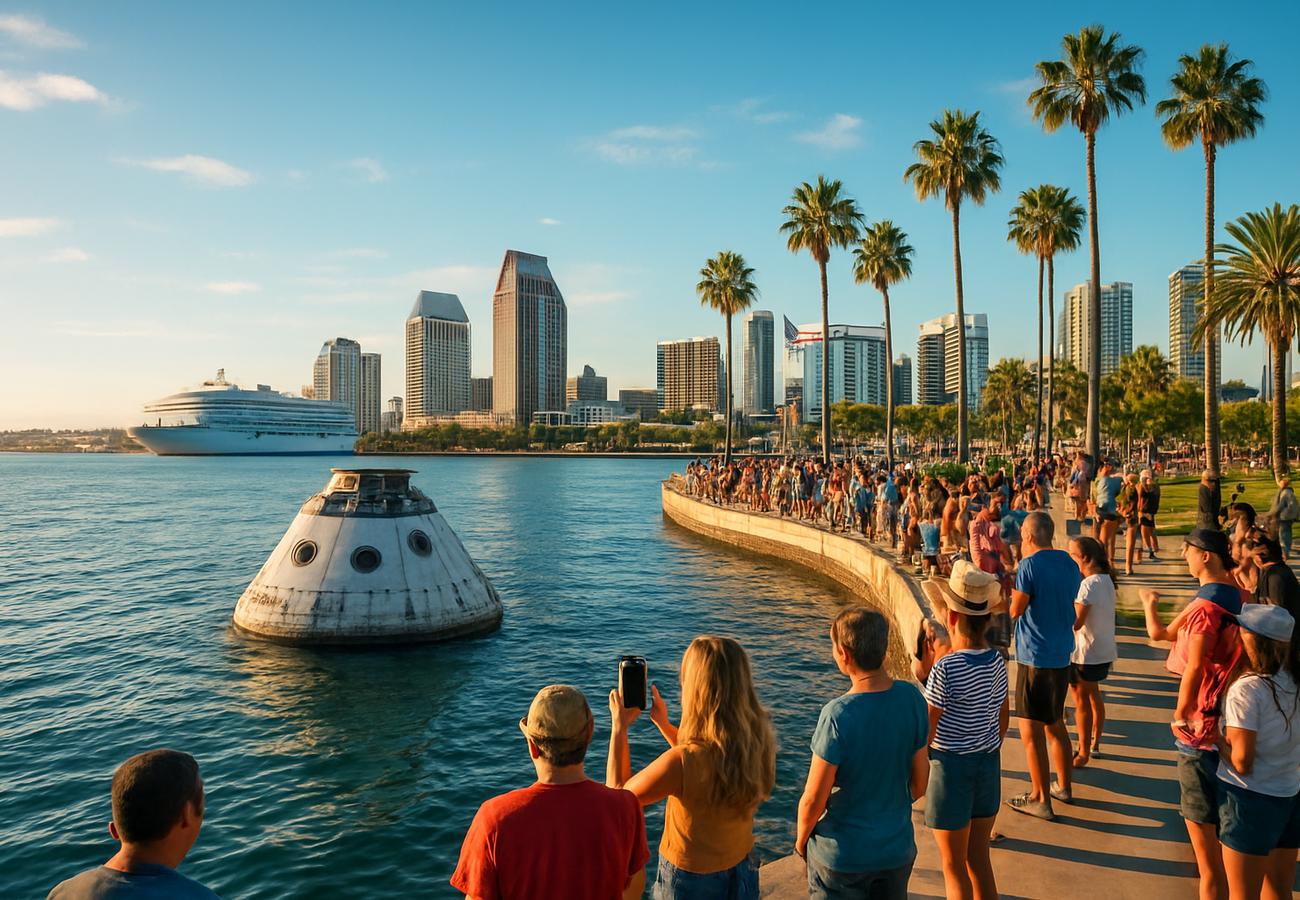
Image generated by AI
San Diego Emerges as Global Space Tourism Capital Following Historic Artemis II Recovery
San Diego has catapulted into the international spotlight as the world's premier space tourism destination following the triumphant splashdown of the Artemis II Orion capsule on April 10, 2026—marking humanity's first crewed lunar mission in over 50 years. The successful recovery operation, executed just offshore from the Pacific coast, has ignited unprecedented global travel interest in the Southern California metropolis, fundamentally reshaping the region's tourism identity and establishing it as an essential pilgrimage site for space exploration enthusiasts worldwide.
The historic recovery, coordinated by Navy amphibious forces stationed at Naval Base San Diego, has positioned the city at the epicenter of modern spaceflight operations. Unlike traditional tourism destinations, San Diego now offers travelers an authentic connection to active aerospace infrastructure—a distinction that few global locations can claim. The integration of military recovery capabilities with public tourism infrastructure has created a unique market opportunity that is already transforming hospitality demand patterns across the region.
Military Infrastructure Becomes Tourism Asset
The selection of San Diego as the primary splashdown zone was driven by the region's unparalleled deep-water naval capabilities and decades of specialized amphibious expertise. Prior to the mission, extensive rehearsals were conducted using transport vessels including the USS San Diego and USS John P. Murtha, which performed precision capsule retrieval exercises into flooded well decks and simulated medical transfer protocols. This rigorous preparation ensured flawless execution during the actual recovery operation on April 10.
Tourism officials have capitalized on this military heritage by developing harbor-based experiences that trace the recovery fleet's operational routes. Waterfront educational displays now provide visitors with detailed narratives of the mission's technical conclusion, transforming military infrastructure into accessible public learning experiences. According to the NASA Artemis Program, this recovery represents a critical milestone in humanity's return to lunar exploration, and San Diego's role ensures the city will remain central to future crewed missions.
Hospitality Sector Undergoes Rapid Transformation
The arrival of the Orion capsule has triggered a comprehensive restructuring of San Diego's hospitality landscape. Premium oceanfront properties have introduced specialized Artemis Splashdown View packages priced between $189 and $399 per night, featuring direct views of the recovery zone combined with guided educational seminars and narrated harbor tours. Multi-night bundles incorporating museum admissions and expert-led aerospace presentations command premiums of 15% to 25% above standard seasonal rates.
Boutique hotels have curated space-themed libraries featuring Apollo-era memorabilia and contemporary documentaries, while science museums have expanded exhibits focusing specifically on ocean recovery technology. Dining establishments have introduced menus inspired by international Artemis program partners, and special events featuring aerospace historians and engineers now provide guests with deep technical insights into the mission's complexities. These curated experiences represent a fundamental shift in how destinations market themselves to the growing space tourism demographic.
Market Data Reveals Explosive Growth Trajectory
Market analysis indicates that space-centric travel has emerged as one of the fastest-growing segments in regional tourism. Booking platforms have adapted by introducing dedicated filters for space mission experiences, signaling long-term industry recognition of this distinct traveler demographic. Domestic and international travelers are increasingly seeking information about public tours, educational schedules, and mission-specific accommodations at unprecedented rates.
The San Diego Tourism Authority has announced plans for permanent waterfront interpretation centers designed to compete with established aerospace tourism hubs in Houston and Florida. These facilities will support multi-day itineraries focused on space exploration, positioning the city within the global commercial lunar industry marketplace. The infrastructure investment reflects confidence that Artemis III, projected for the 2027–2028 timeframe, will sustain San Diego's momentum as a premier space tourism destination.
What This Means for Travelers
Visitors planning trips to experience San Diego's space tourism offerings should book accommodations six to eight weeks in advance, particularly during NASA mission windows when demand rivals peak summer travel seasons. The city now offers authentic aerospace experiences unavailable at traditional tourist destinations—direct access to active recovery operations, specialized educational programming, and immersive mission-focused hospitality. Travelers should expect premium pricing during recovery milestones but can anticipate world-class facilities and expert-led experiences that justify the investment.
Expert Insight: San Diego's transformation from military logistics hub to space tourism capital demonstrates how strategic infrastructure can create entirely new travel markets when aligned with global scientific achievements.
The April 10, 2026 splashdown has fundamentally redefined San Diego's position within global travel markets. As NASA commits to successive Artemis missions, the city's role as the primary corridor for lunar returns ensures sustained international attention and continued economic growth. The convergence of authentic aerospace infrastructure, curated hospitality experiences, and educational programming has established San Diego not merely as a travel destination, but as a living gateway to humanity's next era of space exploration—a distinction that will attract space enthusiasts, educators, and curious travelers for decades to come.
Related Travel Guides
Disclaimer
This article is for informational and educational purposes only. It does not constitute legal, financial, or professional advice. While we strive to provide accurate and up-to-date information, travel policies, regulations, and conditions change rapidly. Always verify information with official sources before making travel decisions. Nomad Lawyer makes no representations about the accuracy, reliability, completeness, or suitability of the information provided. Readers should consult qualified professionals for advice specific to their circumstances. The views expressed in this article are those of the author and do not necessarily reflect the views of Nomad Lawyer.
Kunal K Choudhary
Co-Founder & Contributor
A passionate traveller and tech enthusiast. Kunal contributes to the vision and growth of Nomad Lawyer, bringing fresh perspectives and driving the community forward.
Learn more about our team →