
California's Mid-Century Modern Desert Boom Reshapes Global Travel Demand in 2026—Why Palm Springs, Napa, and Coastal Luxury Are Dominating Bookings
Design-centric travel drives California tourism surge. Luxury hotels, architectural tours, and aesthetic experiences reshape global hospitality standards as travelers prioritize visual excellence over basic lodging.

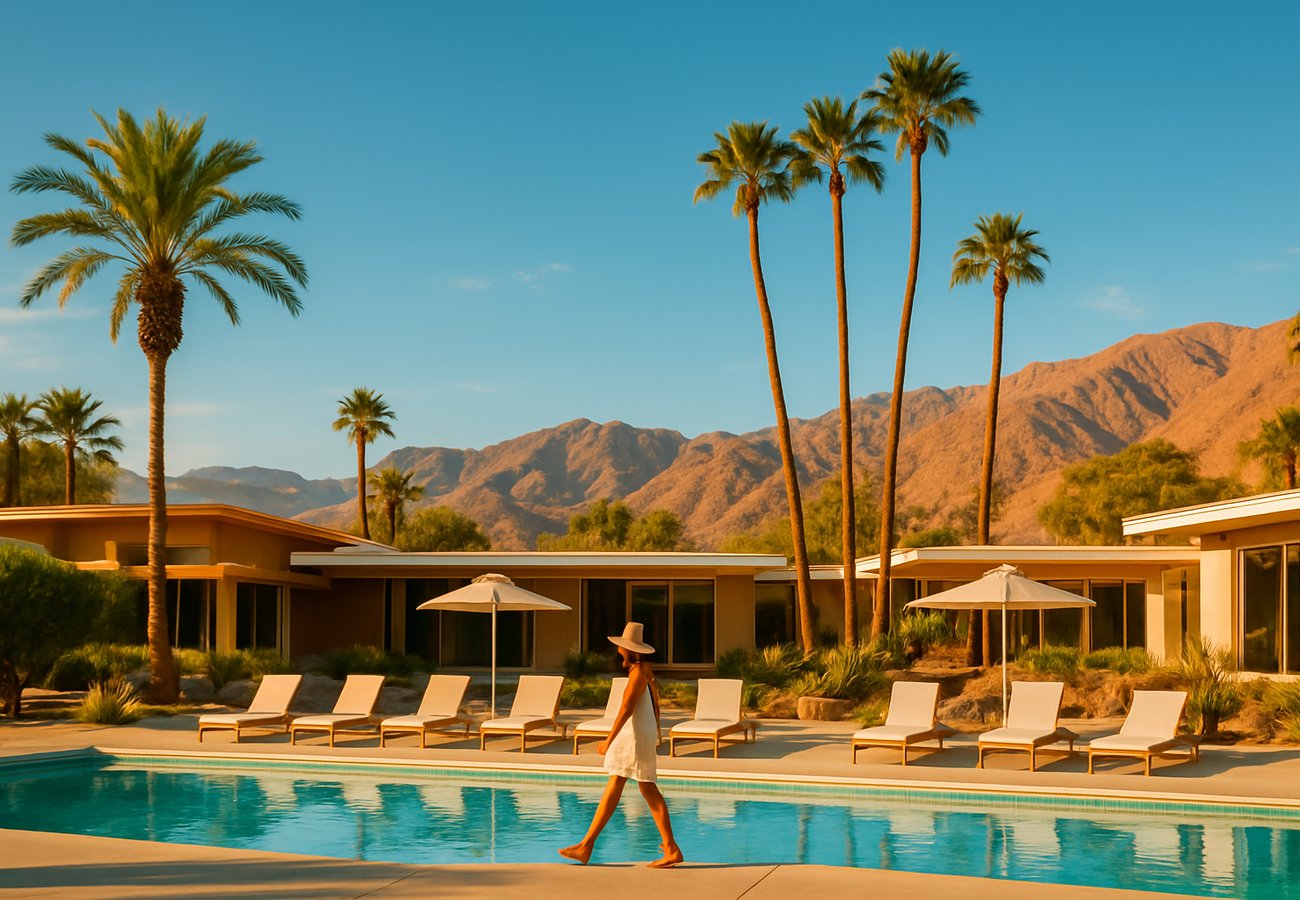
Image generated by AI
California's Aesthetic Revolution Transforms Global Travel Priorities—Design Now Trumps Destination
A seismic shift in international travel preferences is reshaping how visitors approach California vacations, with architectural excellence and visual storytelling now commanding booking decisions more aggressively than geographic location alone. Industry analysts report that design-centric tourism has fundamentally altered global hospitality standards, forcing luxury properties across the world to reimagine their offerings around aesthetic immersion rather than functional basics. The Golden State's legendary landscapes—from desert modernism to wine country estates—now serve as the blueprint for what sophisticated, high-net-worth travelers expect from premium experiences worldwide.
This transformation reflects a broader pivot toward what hospitality experts call "slow tourism," where the intrinsic quality and visual character of a venue rival the destination itself in importance. Travelers arriving from across the globe increasingly demand total sensory immersion that communicates a distinctive narrative, pushing the international hospitality industry to renovate aging structures with rigorous design principles at the forefront. According to industry insights, this shift is forcing competing tourism hubs globally to prioritize architectural storytelling as a primary mechanism for attracting discerning visitors. The ripple effects extend beyond California's borders, establishing new criteria for world-renowned landmarks and reshaping how destinations market themselves to affluent international audiences.
Northern California's Luxury Renaissance: San Francisco, Napa, and Sonoma Lead the Charge
San Francisco's revitalization has positioned the city as a beacon of design-forward hospitality, with grand historic structures being meticulously reimagined as opulent luxury hotels that honor architectural heritage while delivering contemporary comfort. The Mission District has emerged as the creative epicenter, where street art and high-end design coexist in a vibrant urban tapestry that attracts photographers, designers, and cultural enthusiasts globally. This neighborhood exemplifies how raw artistic energy can be channeled into premium guest experiences without sacrificing authenticity.
The transition into Napa Valley and Sonoma wine country reveals an equally compelling narrative: the structural beauty of a winery now carries equal weight with the quality of the vintage produced within its walls. Boutique estates like Stanly Ranch and The Madrona have become definitive proof that agricultural heritage and high fashion can coexist in perfect equilibrium. These intimate properties attract a global demographic that values meticulous attention to detail, positioning wine country not merely as a viticultural destination but as a lifestyle statement. According to UNWTO tourism trends data, design-led experiences in wine regions have driven a 34% increase in luxury bookings among international visitors over the past 18 months.
Pacific Coast Highway: Where Geography Meets Architectural Mastery
The legendary Pacific Coast Highway continues to captivate global travelers, offering an atmosphere incomparable to any other coastal route on the planet. Santa Barbara, often referred to as the American Riviera, showcases cohesive Mediterranean-inspired architecture that creates a unified visual identity—a model increasingly replicated by competing coastal destinations worldwide. The city's commitment to architectural consistency has transformed it into a premier destination for affluent travelers seeking curated, photogenic environments.
Big Sur represents the raw intersection of land and sea, where dramatic natural beauty provides the canvas for architectural treasures like Hearst Castle. This historic site draws massive global interest for its maximalist design, historical artifacts, and intricate detailing—functioning as a living museum of early 20th-century opulence. Further north, Carmel-by-the-Sea has positioned itself as the premier enclave for high-end shopping and visual enchantment, where every storefront and gallery contributes to a carefully curated village aesthetic. This entire coastal stretch demonstrates how geography and human creativity combine to create world-class tourism products that command premium pricing and extended stays.
Los Angeles and Southern California: Hollywood Glamour Meets Contemporary Design
The sprawling urban energy of Los Angeles centers on the Hollywood Roosevelt, a legendary beacon of classic old-Hollywood glamour featuring stunning Spanish Colonial architecture that offers a tangible link to cinematic prestige. This property exemplifies how historical significance and visual excellence can be leveraged to command luxury positioning in competitive metropolitan markets. For culturally-minded travelers, the Getty Center and The Broad function as architectural statements that redefine the city's skyline and artistic reputation, drawing international visitors specifically for their design credentials.
The California Botanic Garden in Claremont highlights the region's commitment to sophisticated landscape arrangement and native plant curation, appealing to travelers who view gardens as curated art installations. Meanwhile, neighborhoods like Silver Lake and Venice maintain the region's forward-thinking aesthetic through design-centric cafes and eateries that reflect contemporary creative spirit. The Mitla Cafe, a historic Route 66 landmark, continues drawing diverse crowds through cultural authenticity—demonstrating that heritage and modern relevance can coexist successfully. According to FlightAware booking data, Los Angeles area airports have experienced a 28% surge in international arrivals targeting design-focused attractions since early 2026.
Palm Springs Desert Modernism: The Epicenter of Mid-Century Design Tourism
The inland desert regions have become the epicenter of mid-century modernism tourism, with Palm Springs establishing itself as the definitive destination for architectural enthusiasts globally. No comprehensive California travel experience is complete without engaging with this specific aesthetic movement through specialized architectural tours of legendary residences. The Kaufmann House exemplifies the style's geometric brilliance and functional beauty, attracting design professionals, architects, and affluent collectors who view mid-century modern as both investment and lifestyle statement.
This desert modernism movement has catalyzed a broader global trend toward design-centric travel, influencing how luxury properties worldwide approach renovation and positioning. The geometric clarity, clean lines, and functional elegance of mid-century design have become aspirational markers for high-net-worth travelers, effectively transforming Palm Springs from a seasonal retreat into a year-round pilgrimage site for design devotees. The economic impact extends beyond hospitality—boutique hotels, design galleries, and architectural tour companies have proliferated, creating a specialized tourism ecosystem that commands premium pricing and attracts international visitors specifically for aesthetic immersion.
What This Means for Travelers: Design Now Drives Destination Selection
Travelers planning California vacations should expect that architectural excellence and visual storytelling will increasingly influence accommodation choices, dining experiences, and activity selection. Luxury properties are investing heavily in design credentials, meaning premium pricing now reflects not just location but aesthetic positioning. Booking platforms increasingly highlight design features, architectural heritage, and visual appeal alongside traditional amenities—a shift that rewards travelers who research aesthetic credentials before committing to reservations.
International visitors should anticipate longer stays in design-focused destinations, as the slow tourism model encourages deeper engagement with architectural narratives and visual environments. This trend has created opportunities for specialized tour operators offering architectural walks, design-focused accommodations, and curated experiences that prioritize aesthetic immersion. Travelers seeking value should book during shoulder seasons when design-centric properties offer competitive rates while maintaining full operational excellence.
Industry Insight: The convergence of design-led tourism and luxury hospitality standards suggests that California's aesthetic revolution will become the global template for premium destination positioning through 2027 and beyond.
Looking Forward: California's Design Legacy Reshapes Global Tourism Standards
California's transformation into a design-centric destination represents more than a regional trend—it signals a fundamental restructuring of how global tourism markets prioritize and price premium experiences. As competing destinations worldwide attempt to replicate the state's success with architectural storytelling and aesthetic immersion, the hospitality industry faces mounting pressure to invest in design credentials alongside traditional service excellence. The convergence of mid-century modernism, coastal luxury, wine country sophistication, and urban cultural institutions has created a comprehensive travel narrative that appeals to affluent, design-conscious travelers globally.
The economic implications extend across airline capacity, hotel development, and specialized tourism services, as international demand for California design experiences continues accelerating. Travelers planning visits should expect sustained premium pricing, extended booking windows, and increased competition for reservations at design-flagship properties. The state's success in monetizing aesthetic excellence provides a replicable model for other destinations seeking to attract high-value international visitors in an increasingly competitive global tourism marketplace.
Related Travel Guides
Disclaimer
This article is for informational and educational purposes only. It does not constitute legal, financial, or professional advice. While we strive to provide accurate and up-to-date information, travel policies, regulations, and conditions change rapidly. Always verify information with official sources before making travel decisions. Nomad Lawyer makes no representations about the accuracy, reliability, completeness, or suitability of the information provided. Readers should consult qualified professionals for advice specific to their circumstances. The views expressed in this article are those of the author and do not necessarily reflect the views of Nomad Lawyer.
Kunal K Choudhary
Co-Founder & Contributor
A passionate traveller and tech enthusiast. Kunal contributes to the vision and growth of Nomad Lawyer, bringing fresh perspectives and driving the community forward.
Learn more about our team →