
Qatar and Gulf Nations Launch Major Tourism Recovery Push
Qatar, Saudi Arabia, the UAE, Oman, and Bahrain are launching a major tourism recovery strategy with new one-year visas and international events in 2026.

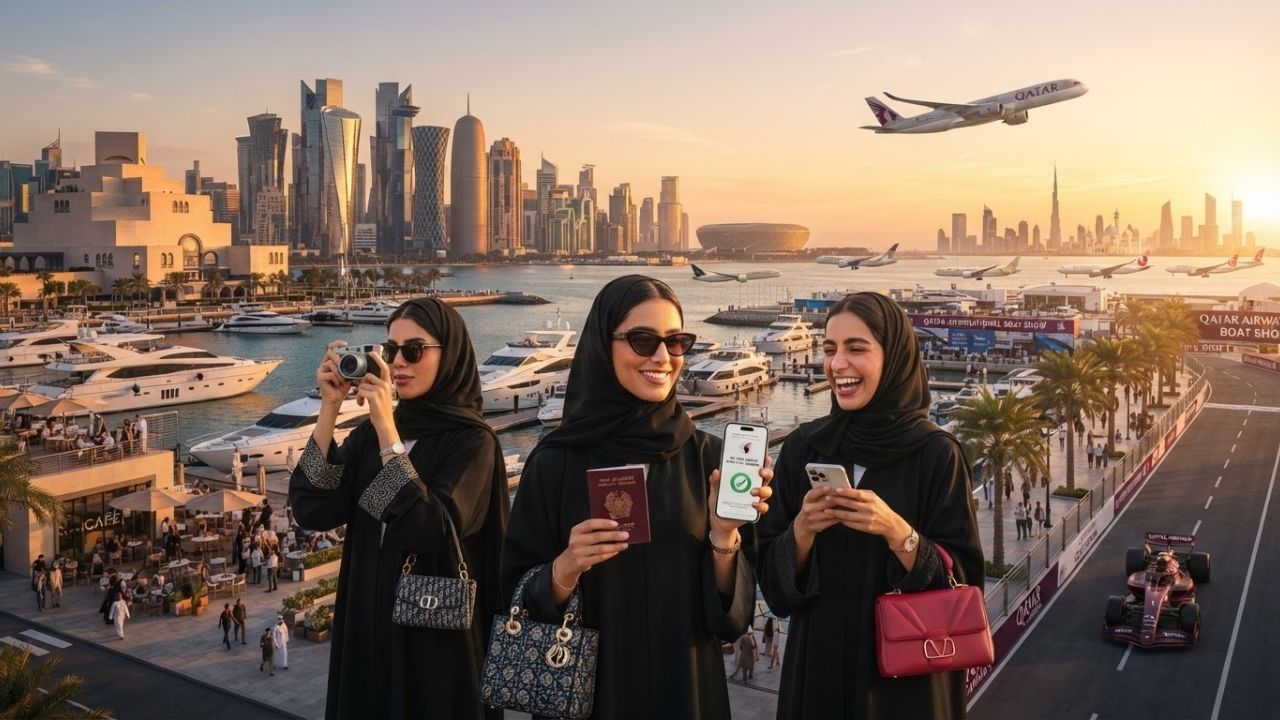
Image generated by AI
Gulf nations are coordinating a major tourism recovery strategy for 2026, launching one-year electronic visas and hosting major international events. Despite regional security challenges, airports and national carriers are expanding capacity to support massive traveler volumes.
Gulf Nations Launch Tourism Recovery Campaign and Event Calendars
Our analysis of Middle Eastern aviation and visa registries indicates that Qatar, Saudi Arabia, the United Arab Emirates, Oman, and Bahrain are intensifying collaborative tourism efforts. Qatar is leading this recovery strategy by coordinating easier visa access with a packed calendar of international gatherings. The upcoming calendar includes the Formula 1 Qatar Airways Qatar Grand Prix, MotoGP Grand Prix of Qatar, FIFA U-17 World Cup, Mobile World Congress Doha 2026, and the Design Doha Biennial 2026.
Saudi Arabia is concurrently expanding its tourism network under Vision 2030, introducing electronic tourist visas, stopover visa programs, and multiple-entry visitor options. The country is preparing for Riyadh Season and the upcoming FIFA World Cup 2034, while developing premium destinations like AlUla and the Red Sea. Meanwhile, the UAE continues to offer multiple-entry options to sustain traveler flows from major markets, Oman is simplifying access to target adventure travelers, and Bahrain is utilizing the Bahrain Formula 1 Grand Prix to attract regional visitors.
Airport and Flight Network Impact
The coordination of major events is concentrating passenger traffic across primary Gulf hubs:
- Doha Transit Hub: Hamad International Airport (DOH) is handling increased charter and scheduled arrivals for motorsport and design events.
- Saudi Gateway Infrastructure: King Abdulaziz International Airport (JED) in Jeddah and King Khalid International Airport (RUH) in Riyadh are expanding facilities to manage Vision 2030 transit.
- UAE Luxury Corridors: Dubai International Airport (DXB) and Abu Dhabi International Airport (AUH) maintain high passenger volumes for seasonal shopping and business exhibitions.
- Regional Connectivity Links: Airlines like Qatar Airways, Emirates, and Etihad are maintaining scheduled flights to reassure international travelers of regional stability.
Passenger Rights & Advisory (Information Gain & Experience)
For the international traveler transferring through Gulf hubs, understanding regional passenger rights is vital when flight delays or visa issues arise. Our analysis of aviation guidelines suggests passengers keep these rules in mind:
- Montreal Convention Delay Claims: Under the Montreal Convention, if your international flight connecting through the Gulf is delayed, the carrier is liable for damages up to 1,288 Special Drawing Rights (about US$ 1,700), unless they can prove they took all necessary prevention measures.
- Gulf Carrier Care Standards: Qatar Civil Aviation Authority rules require carriers to provide free food, drinks, and communication for flight delays exceeding three hours. If a delay forces an overnight stay, the airline must arrange free hotel accommodation and ground transport.
- Visa Verification Requirements: Travelers must ensure their one-year electronic visa or stopover visa is fully approved and printed before airport check-in. If entry documentation is incomplete, the airline is legally required to deny boarding, and ticket refunds will not be issued in this scenario.
Industry Analyst View
The alignment of Gulf nations to ease visa access and host global events is a resilient response to regional security uncertainties. By diversifying their offerings into sports, technology, and luxury exhibitions, these countries are successfully shifting their economies away from oil dependency.
In addition, the focus on distinct tourism identities—such as Oman's nature-based travel and Qatar's high-value event tourism—reduces direct competition within the Gulf. This collaborative approach allows the region to build a continuous travel corridor, encouraging visitors to combine destinations on a single trip. To sustain this growth, aviation authorities must continue to streamline customs procedures and optimize transfer times at primary hubs.
Related Travel Guides
Disclaimer
This article is for informational and educational purposes only. It does not constitute legal, financial, or professional advice. While we strive to provide accurate and up-to-date information, travel policies, regulations, and conditions change rapidly. Always verify information with official sources before making travel decisions. Nomad Lawyer makes no representations about the accuracy, reliability, completeness, or suitability of the information provided. Readers should consult qualified professionals for advice specific to their circumstances. The views expressed in this article are those of the author and do not necessarily reflect the views of Nomad Lawyer.
Kunal K Choudhary
Co-Founder & Contributor
A passionate traveller and tech enthusiast. Kunal contributes to the vision and growth of Nomad Lawyer, bringing fresh perspectives and driving the community forward.
Learn more about our team →