
Retired QantasLink Fokker 100 VH-NPU Arrives at HARS Museum for Preservation
QantasLink donates its retired Fokker 100 VH-NPU, named Meekatharra, to the HARS Museum in Wollongong after 7,500 flights and 9 million kilometers.

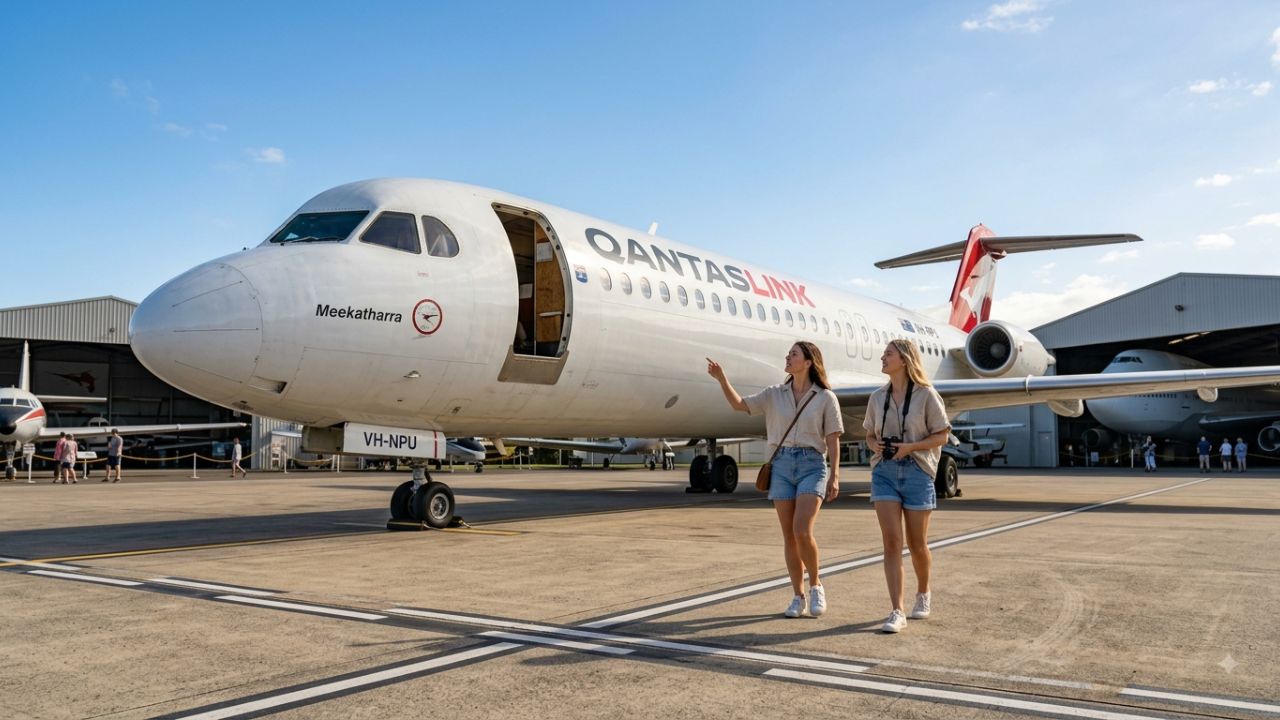
Image generated by AI
A retired QantasLink Fokker 100 aircraft, registered as VH-NPU, has completed its final commercial flight to join the Historical Aircraft Restoration Society (HARS) Museum in the Illawarra region. Having completed more than 7,500 flights and covered nearly 9 million kilometers during its service career, the regional passenger jet is transitioning into a permanent aviation heritage attraction.
The preservation of historic aircraft is emerging as a major segment of regional tourism, offering travelers an interactive, educational experience that highlights the evolution of transportation networks. Rather than scrapping older fleets, airlines and restoration bodies are collaborating to display retired commercial passenger planes. A key milestone in this preservation effort is the donation of the QantasLink Fokker 100 registered as VH-NPU, named "Meekatharra". The aircraft completed its final journey from Perth with a stopover in Kalgoorlie before landing at HARS Museum at Shellharbour Airport, Wollongong, marking the end of its active operational career.
For the traveler, the real impact of this development is the addition of a new, highly accessible aviation attraction in New South Wales. Visitors can walk through the passenger cabin, inspect the cockpit controls, and learn about the regional routes that connected isolated Western Australian communities with larger capital hubs. This project provides a physical connection to the history of domestic travel in Australia.
Preserving Regional Heritage Alongside Long-Haul Giants
The addition of the Fokker 100 VH-NPU strengthens the HARS Museum's collection, providing a regional counterpart to the international commercial jets already on display. Specifically, the regional jet will take its place alongside the first Boeing 747-400 operated by Qantas, registered as VH-OJA and named "City of Canberra". The Boeing 747-400 arrived at the Wollongong museum in 2015 after 26 years of commercial service. The HARS Museum collection features iconic vintage aircraft such as the Lockheed Super Constellation (Connie), the Douglas DC-3 and DC-4 passenger liners, and cold war military aircraft like the Neptune maritime patrol bomber. These flying and static exhibits are meticulously maintained in working order by the museum's dedicated engineering teams. Visitors can tour the large hangars, getting up close to radial engines, historical propeller planes, and early jet aircraft that shaped post-war travel.
These two distinct aircraft classes represent different eras and scales of Australian aviation history:
- The Boeing 747-400 (VH-OJA): Symbolizes the expansion of long-distance international travel, connecting Australia with global hubs across the Pacific, Asia, and Europe.
- The Fokker 100 (VH-NPU): Represents the network of regional aviation that served as an essential lifeline for remote communities, mine workers, and local business travelers across Western Australia.
By displaying these aircraft together, the museum offers visitors a comprehensive view of how the domestic and international aviation sectors developed. This contrast is further supported by another donated Fokker 100, registered as VH-NHO, which is preserved at the organization's Parkes Museum, expanding the preservation of this aircraft type in regional New South Wales.
Fleet Transition and the End of the Fokker 100 Era
The retirement of the Fokker 100 fleet comes as QantasLink continues its modern fleet transition program. The carrier is gradually replacing its older regional passenger jets with next-generation embrace E190 aircraft, which are designed to improve reliability, fuel efficiency, and passenger comfort. This fleet modernizing effort reflects a broader industry movement toward reducing operating costs and carbon emissions while updating cabin amenities for regional commuters.
While the Fokker 100 is disappearing from active commercial service, its donation to HARS ensures that its technical design, operational record, and the memories of the passengers and crew who flew on it are preserved. The aircraft becomes an educational tool where visitors can learn about the turbofan engineering, cabin design, and cockpit systems that defined regional aviation from the late 20th century into the early 21st century.
Ecotourism and Community-First Travel in the Illawarra
Wollongong's development as an aviation tourism hub operates alongside the region's commitment to environmental preservation and community support. For the visitor, the real impact is the ability to plan a low-emission trip utilizing regional public transit. Travelers can take the scenic South Coast rail line from Sydney's Central Station directly to Albion Park Station, which is located adjacent to Shellharbour Airport. This rail journey minimizes carbon emissions and avoids the road congestion associated with private car rentals. Wollongong is nestled between the towering sandstone cliffs of the Illawarra Escarpment and the turquoise waters of the Tasman Sea. The region offers stunning coastal bike paths, the Lake Illawarra wetland reserve, and the coastal rain forests of Macquarie Pass National Park. Supporting local tourism operators who run low-impact kayaking tours on the lake or walking tours of Wollongong's industrial heritage directly assists in diversifying the regional economy beyond steel manufacturing.
Once in Wollongong, travelers can support the local economy by visiting family-owned coastal cafes, purchasing seafood directly from regional fishermen at Wollongong Harbour, and visiting Nan Tien Temple, the largest Buddhist temple in the Southern Hemisphere. The HARS Museum itself is run primarily by retired engineers, pilots, and local volunteers who donate their time to restore and maintain the aircraft. Direct admission fees and donations support these restoration projects, keeping vocational heritage skills alive within the Illawarra community.
Destination Specialist Local Insider Tips
To help you explore the HARS Museum and the scenic attractions of the Illawarra region safely and responsibly, local specialists suggest the following tips:
- Travel via the South Coast Train Line: Take the train from Sydney Central to Albion Park Station (approximately 2 hours). It is a scenic route that winds through the Royal National Park and along the coastline, delivering you right next to the airport.
- Savor Sydney Rock Oysters and Local Craft Beer: Sample local culinary specialties. Enjoy fresh Sydney Rock Oysters at Wollongong Harbour or visit craft breweries in Shellharbour and Wollongong for locally produced beers.
- Explore Nan Tien Temple: Visit this major cultural site in Berkeley, just 15 minutes north of the museum. Keep your voice lowered inside the shrine halls, dress modestly with covered shoulders, and try the traditional vegetarian buffet at the temple tea house.
- Target the Spring and Autumn Shoulder Seasons: Plan your visit in October or April to enjoy mild temperatures, low rainfall, and comfortable conditions for coastal walking, while avoiding the busy summer beach crowd.
- Drive the Grand Pacific Drive and Sea Cliff Bridge: If you travel by car, drive north over the iconic Sea Cliff Bridge along the Grand Pacific Drive for panoramic views of the ocean cliffs.
Long-Term Outlook for Aviation Heritage Tourism
The long-term outlook for aviation heritage tourism in Wollongong is positive, supported by the growing interest in educational, nostalgic travel experiences. By preserving aircraft like the Fokker 100 VH-NPU and the Boeing 747-400 VH-OJA, HARS is building a world-class historical park that attracts domestic and international tourists.
As the museum expands its exhibition spaces and restoration hangars, continued collaboration with commercial airlines for aircraft donations, volunteer training programs, and interactive digital guides will be essential. This balanced approach protects Australia's transport history while supporting the regional economy, ensuring that the stories of regional connections like "Meekatharra" continue to inspire future generations of aviation enthusiasts.
Related Travel Guides
Disclaimer
This article is for informational and educational purposes only. It does not constitute legal, financial, or professional advice. While we strive to provide accurate and up-to-date information, travel policies, regulations, and conditions change rapidly. Always verify information with official sources before making travel decisions. Nomad Lawyer makes no representations about the accuracy, reliability, completeness, or suitability of the information provided. Readers should consult qualified professionals for advice specific to their circumstances. The views expressed in this article are those of the author and do not necessarily reflect the views of Nomad Lawyer.
Kunal K Choudhary
Co-Founder & Contributor
A passionate traveller and tech enthusiast. Kunal contributes to the vision and growth of Nomad Lawyer, bringing fresh perspectives and driving the community forward.
Learn more about our team →