
Portugal Unlocks A New Era Of Accessible Travel With Growing Facilities And Smarter Tourism Planning
Portugal Unlocks A New Era Of Accessible Travel With Growing Facilities And Smarter Tourism Planning

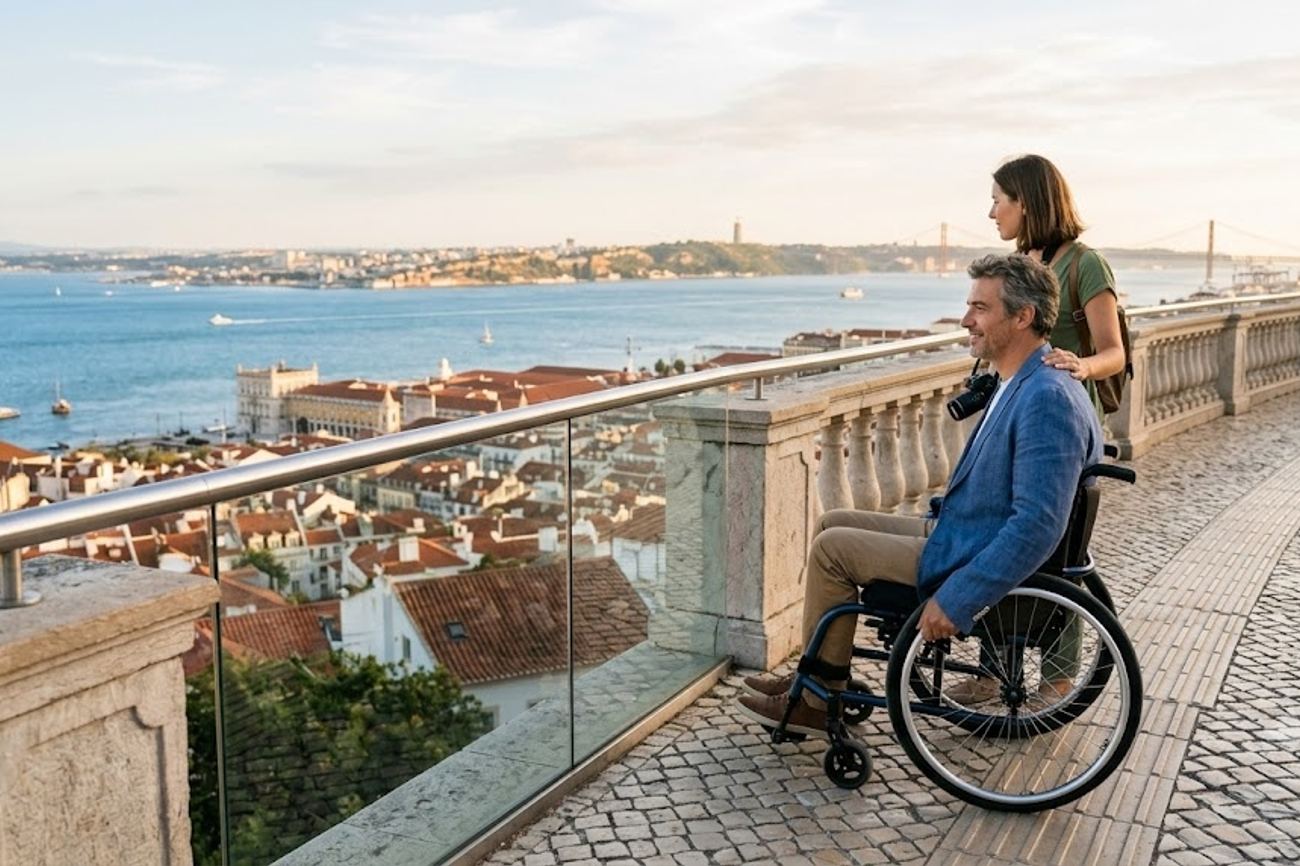
Image generated by AI
A 265% increase in the number of accommodation establishments providing adapted bathrooms—rising from 60 in 2005 to 219 by 2025—signals a structural shift in how Portugal approaches the inclusive travel market. While this growth indicates a clear trajectory toward accessibility, the data reveals a persistent gap between the physical installation of hardware and the systemic delivery of a seamless travel experience. For the modern nomad or traveler with mobility requirements, the presence of a ramp or a modified bathroom is only one component of a journey that requires integrated planning across transport, digital interfaces, and human service.
The Gap Between Academic Research and Operational Reality
Portugal has positioned itself as a significant contributor to the global study of inclusive tourism, particularly following a surge in research activity after 2010. However, a critical disconnect exists: the proliferation of academic papers on "accessible tourism" and "inclusive tourism" has not consistently translated into operational changes on the ground. This friction is exacerbated by inconsistent terminology and varying measurement methods across different studies, which often cloud the actual progress being made.
The current state of the industry suggests that while the theoretical framework for inclusivity is expanding, the implementation remains fragmented. The World Tourism Organization (UNWTO) has long advocated for the "Tourism for All" philosophy, yet the Portuguese experience demonstrates that knowledge creation is not a proxy for destination accessibility. The lack of international cooperation in these studies further limits the ability of Portuguese authorities to adopt proven global solutions, leaving the country to develop its inclusive infrastructure in relative isolation.
Regional Disparity in Inclusive Infrastructure
The expansion of accessible accommodation is not uniform across the Portuguese territory. While the national percentage of establishments meeting accessibility criteria rose from 3% in 2005 to 9.8% in 2025, the distribution reveals a heavy tilt toward the north and center of the country.
The following data outlines the distribution of establishments providing at least three accommodation units with adapted bathrooms as of 2025:
| Region | Number of Qualifying Establishments (2025) |
|---|---|
| Northern Portugal | 60 |
| Centre Region | 45 |
| Algarve | 37 |
| Lisbon | 27 |
| Alentejo | 26 |
| Madeira | 18 |
| Azores | 6 |
The data indicates that Northern Portugal leads in sheer volume, while the Alentejo region has achieved the highest proportional increase. Conversely, the Atlantic archipelagos of Madeira and the Azores lag significantly behind, with the Azores recording only 6 qualifying establishments. This disparity is often attributed to the structural limitations of heritage buildings and the high costs of renovating older properties, though these factors do not fully explain the wide variance between the mainland and the islands.
Expert Analysis: The "Verification Void" in Travel Planning
For travelers booking routes through Portugal, the direct consequence of these findings is a high level of "information anxiety." The current system relies heavily on self-declarations from businesses. When a hotel claims to be "accessible," there is often no third-party verification to confirm if the entrance is truly step-free or if the staff is trained to assist neurodivergent guests. This creates a verification void where the traveler assumes all the risk.
The pricing pressure this creates is subtle but real. Travelers with specific mobility needs often have to pay a premium for "guaranteed" accessibility in high-end, newer hotels that integrated these features from the start, as older, more affordable boutique options in historic centers remain inaccessible.
Portugal is enhancing its infrastructure to support inclusive tourism through strategic investments in urban mobility and accessible lodging. Travelers can find comprehensive guides and certified accessible destinations via Visit Portugal, the official national tourism authority.
Furthermore, the lack of integration in tourism education—highlighted by the limited number of doctoral and master's studies on accessibility between 2011 and 2025—means that the human element of the journey is the weakest link. A modified bathroom is useless if the concierge cannot provide directions to an accessible transit hub or if the digital booking tool lacks audio descriptions. To move from "accessible" (physical) to "inclusive" (experiential), Portugal must shift its focus from building ramps to training people. For those relying on the International Air Transport Association (IATA) standards for mobility assistance upon arrival, the transition from the airport to the hotel remains the most precarious segment of the trip due to this lack of coordinated regional planning.
Key Takeaways
- Infrastructure Growth: Accessible accommodation grew from 60 establishments in 2005 to 219 in 2025, though only 9.8% of total national accommodation meets these specific criteria.
- Regional Imbalance: Northern Portugal (60 properties) and the Centre region (45 properties) are the most equipped, while the Azores (6 properties) remain severely underserved.
- Educational Lag: Despite rising demand, postgraduate tourism research and professional training regarding accessibility remained stagnant between 2011 and 2025.
- Information Risk: Current accessibility data is largely based on business self-reporting, creating a need for independent verification systems to ensure traveler safety and confidence.
- Digital Necessity: Mobile apps and audio descriptions are identified as critical tools to bridge the gap between physical infrastructure and traveler confidence.
FAQ: Portugal Accessible Travel 2025
Which region of Portugal has the most accessible hotels? Northern Portugal currently leads the country with 60 establishments that provide at least three accommodation units with adapted bathrooms.
Is accessibility information in Portugal verified? Currently, most accessibility information is based on declarations made by the businesses themselves. There is a recognized need for independent verification systems to confirm these facilities are genuinely usable.
Are the islands of Madeira and Azores accessible? They are less equipped than the mainland. As of 2025, Madeira has 18 qualifying establishments and the Azores has 6, reflecting a significant regional gap in inclusive infrastructure.
What is the difference between accessible and inclusive tourism in Portugal? Accessible tourism focuses on the physical removal of barriers (like adapted bathrooms), while inclusive tourism encompasses a broader approach, including staff training, digital tools, and support for neurodivergent visitors.
The transition from a checklist of modified bathrooms to a truly inclusive destination requires a systemic overhaul of how Portugal trains its people, not just how it builds its hotels.
Tags: Portugal Tourism Board, Inclusive Tourism Portugal 2025, Accessible Travel Madeira Azores, Portuguese Hospitality Regulations, Mobility Access Portugal
Related Travel Guides
Disclaimer
This article is for informational and educational purposes only. It does not constitute legal, financial, or professional advice. While we strive to provide accurate and up-to-date information, travel policies, regulations, and conditions change rapidly. Always verify information with official sources before making travel decisions. Nomad Lawyer makes no representations about the accuracy, reliability, completeness, or suitability of the information provided. Readers should consult qualified professionals for advice specific to their circumstances. The views expressed in this article are those of the author and do not necessarily reflect the views of Nomad Lawyer.
Preeti Gunjan
Contributor & Community Manager
A passionate traveller and community builder. Preeti helps grow the Nomad Lawyer community, fostering engagement and bringing the reader experience to life.
Learn more about our team →