Abu Dhabi and Maldives Emerge Alongside Luxury Rivals as Coastal Tourism Pursues Higher-Value Travel

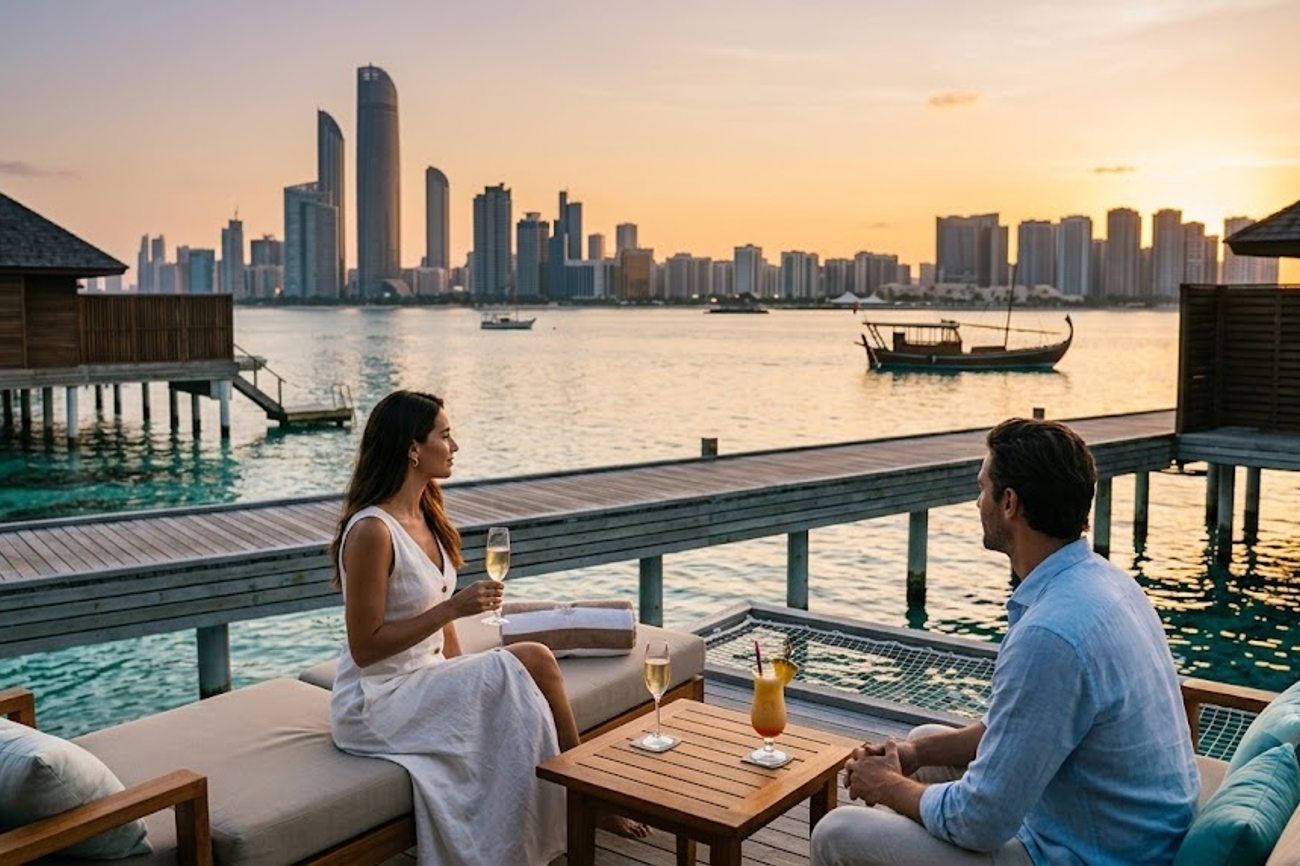
Image generated by AI
AED9.1 billion in hotel revenue generated by Abu Dhabi in 2025 signals a pivot in coastal tourism where destinations are prioritizing high-yield spending over raw arrival numbers. This shift indicates a broader industry trend: the "volume era" of tourism is being replaced by a "value era." Across the Maldives, Mauritius, Seychelles, and Oman, the strategic objective has shifted from filling beds to maximizing the economic footprint of every single guest.
The Architecture of High-Yield Coastal Tourism
The traditional model of coastal luxury relied on a static formula: pristine beaches, high-end villas, and seasonal demand. However, the 2025 data suggests that scenery is now considered a baseline requirement rather than a competitive advantage. To maintain growth, destinations are building "experience ecosystems" that integrate wellness, gastronomy, and cultural immersion to extend the length of stay and increase per-capita spending.
This transition is a response to a critical industry vulnerability: the risk of "hollow growth." When a destination increases its visitor count but sees a decline in average daily rates (ADR) or shorter stays, the economic gain is offset by increased pressure on infrastructure and the environment. By shifting the focus to "value over volume," these five regions are attempting to decouple economic growth from environmental degradation.
Revenue Performance and Capacity Metrics
The divergence in how these destinations monetize their assets is evident in their 2025 performance indicators. While Abu Dhabi leverages a diversified urban-resort hybrid model, the Maldives relies on a highly specialized, nature-centric luxury engine.
Abu Dhabi 2025 Economic Indicators
| Metric | Value |
|---|---|
| Total Visitors | 26.6 million |
| Hotel Guests | 5.9 million |
| Hotel Revenue | AED9.1 billion |
| Hotel Occupancy | 81% |
| Average Length of Stay | 2.9 nights |
| ADR Growth | 19% |
| RevPAR Growth | 23% |
| MICE Delegates | 2.2 million |
| Culture/Leisure Attendance | 4.2 million |
Abu Dhabi's growth is particularly aggressive in its revenue efficiency. Hotel revenue grew by 19.5% year-on-year, a rate that significantly outpaced the growth of actual guests. This suggests that the destination is successfully pushing higher price points and capturing more spend per visitor. The integration of MICE (Meetings, Incentives, Conferences, and Exhibitions) travel, which saw a 40% surge to 2.2 million delegates, creates a stable revenue floor that offsets the volatility of seasonal leisure travel.
The Maldives Capacity Paradox
The Maldives presents a cautionary tale regarding capacity expansion. In 2025, the nation welcomed 2,246,516 visitors (a 9.8% increase) and generated over US$5.57 billion in tourism receipts, marking a 16.4% rise. However, the bed-night data reveals a disconnect:
- Bed-night growth: 2.4% (13.67 million total)
- Bed-capacity growth: 4.3% (64,377 beds in operation)
When capacity grows faster than actual bed-night utilization, it indicates a saturation point in the traditional resort model. To counter this, the Visit Maldives initiative is shifting toward conservation-led luxury, turning coral restoration and marine protected areas into premium, billable experiences.
Mauritius and the Spending Gap
Mauritius welcomed 1,436,250 tourists in 2025, with a notable 33.5% surge in arrivals from India (75,808 guests). The most striking data point here is the spending disparity based on accommodation type:
- Average spend (Hotel Guest): Rs93,900
- Average spend (Non-Hotel Guest): Rs34,300
- Overall Average spend per tourist: Rs74,200
This gap proves that the hotel infrastructure acts as the primary engine for local economic injection. For Mauritius, the goal is no longer just attracting air arrivals—which accounted for over 98% of 2025 traffic—but converting non-hotel visitors into high-spending guests.
Expert Analysis: The Logistics of Luxury Displacement
For the modern luxury traveler, these figures translate into a tangible change in the "cost of exclusivity." The 23% growth in RevPAR (Revenue Per Available Room) in Abu Dhabi and the 19% increase in ADR indicate that the entry price for premium coastal experiences is rising sharply. This is not merely inflation; it is a deliberate pricing strategy to filter for higher-spending demographics.
Abu Dhabi is aggressively diversifying its luxury portfolio to attract high-net-worth individuals through strategic infrastructure investments. Travelers can explore these high-value developments via the Visit Abu Dhabi official portal, which highlights the emirate's shift toward cultural and wellness tourism.
The most significant trend is the "diversification of the itinerary." Abu Dhabi is no longer just a stopover; with 4.2 million people attending culture and leisure events, it is positioning itself as a primary destination. For travelers, this means that "luxury" is being redefined from "isolation in a villa" to "access to exclusive events."
Furthermore, the aviation data reveals a strategic pivot toward the Indian market. With a 22% increase in Indian guests to Abu Dhabi and a 33.5% increase to Mauritius, these destinations are aggressively courting the growing Indian ultra-high-net-worth (UHNW) segment. This shift reduces their reliance on traditional European markets and creates a more resilient, multi-polar demand base.
The Maldives' struggle with bed-capacity growth warns us that the "private island" model has limits. The direct consequence for travelers booking this route is a shift toward "active luxury"—where the value is found in manta encounters and whale-shark excursions rather than just the room itself. This is a survival mechanism for the destination; as climate change threatens the reefs, the International Air Transport Association (IATA) and local regulators must balance the carbon cost of flights with the necessity of high-value tourism to fund conservation.
Key Takeaways
- Revenue Over Volume: Abu Dhabi's 19.5% revenue growth outstripping guest growth proves that luxury destinations are successfully prioritizing yield over arrival counts.
- Capacity Warning: The Maldives' 4.3% increase in bed capacity against only 2.4% growth in bed-nights suggests a looming oversupply of traditional luxury rooms.
- Spending Disparities: In Mauritius, hotel guests spend nearly 3x more (Rs93,900) than non-hotel visitors (Rs34,300), making hotel infrastructure the primary driver of economic impact.
- Market Pivot: A massive surge in Indian luxury travelers to both Mauritius (33.5% growth) and Abu Dhabi (22% growth) is reshaping the demographic profile of coastal tourism.
- Experience Diversification: The rise of MICE travel (2.2 million delegates in Abu Dhabi) and conservation tourism in the Maldives indicates that "beach only" models are obsolete.
FAQ: Coastal Luxury Trends 2025
Why are hotel prices rising in Abu Dhabi and the Maldives? Destinations are moving toward a "value-over-volume" strategy. By increasing Average Daily Rates (ADR), they can generate more revenue while reducing the physical number of tourists, thereby lowering the environmental impact on fragile coastal ecosystems.
Is the Maldives becoming too crowded with resorts? The 2025 data shows bed-capacity grew by 4.3% while bed-nights only grew by 2.4%. This suggests that while new resorts are opening, they aren't always filling up, forcing operators to create new "experiences" to attract guests.
Which market is currently driving the most growth in Indian Ocean tourism? The Indian outbound market is a primary driver. India saw a 33.5% increase in arrivals to Mauritius and a 22% increase in hotel guests in Abu Dhabi, signaling a shift in luxury travel origins.
What is the difference between a "volume" and "value" tourism strategy? A volume strategy focuses on increasing total visitor arrivals (the "headline number"). A value strategy focuses on increasing the average spend per visitor, the length of stay, and the revenue generated per available room (RevPAR).
The era of the passive beach holiday is ending; the era of the engineered luxury experience has arrived.
Tags: Abu Dhabi Tourism 2025, Maldives Tourism Master Plan, Mauritius Indian Market Growth, RevPAR Coastal Luxury, Visit Maldives, MICE Abu Dhabi
Related Travel Guides
This article is for informational purposes. Flight routes, passenger regulations, visa rules, and transit advisories are subject to change by airlines and aviation authorities. Readers are advised to verify schedules and travel documentation with relevant carriers and border agencies before departure.
Related Stories

European Mass Protests Disrupt Travel Across France, Italy, Belgium, and Turkey in 2026

Storm Bruna 2026: Iberia Faces 200mm Rainfall and 6m Swells Triggering Mass Travel Chaos