Nepal’s Baglung And Parbat Boost Tourism With Record-Breaking Suspension Bridge Over The Kaligandaki River

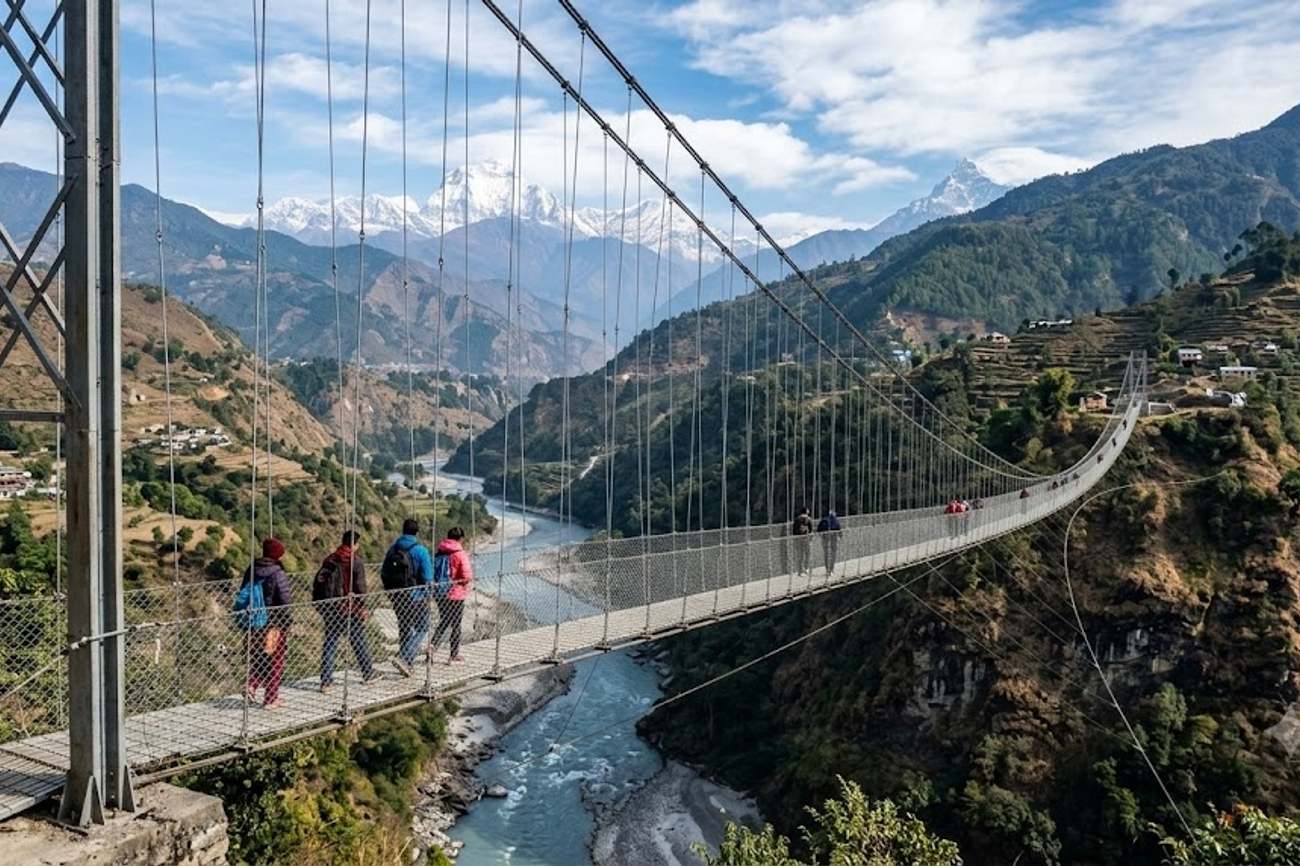
Image generated by AI
[Baglung, Nepal] — The Gandaki Golden Bridge has triggered a surge in tourist arrivals across Nepal's Baglung and Parbat districts, transforming a former geographical barrier into one of Western Nepal's primary travel landmarks.
The record-breaking single-span suspension bridge connects Baglung Municipality-1 Bangechaur with Kushma Municipality-1 Pang in the Parbat district. By spanning the deep gorge of the Kaligandaki River, the structure has eliminated a grueling multi-hour trek for locals and travelers, reducing the transit time between the two hubs to approximately 10 minutes. The bridge is now a critical node for visitors traversing the corridor toward the high-altitude regions of Myagdi and Mustang.
Engineering the Kaligandaki Crossing
The Gandaki Golden Bridge, known locally as Gandaki Sunauolo Jhula, represents a significant leap in regional infrastructure. The bridge is recognized as one of the world's longest single-span suspension bridges, stretching 567 metres across the river gorge. Unlike traditional bridges that rely on mid-river support pillars, this structure utilizes a single span to clear the valley, an engineering feat that allows for an unobstructed view of the terrain below.
Constructed at an estimated cost of NPR 9.25 crore, the bridge sits approximately 122 metres above the rushing waters of the Kaligandaki River. Since becoming operational in 2077 BS, the bridge has shifted from a purely utilitarian piece of infrastructure to a destination in its own right. The height and length of the span provide a high-adrenaline experience for pedestrians, offering panoramic views of the surrounding hills and the distant Himalayan peaks.
Regional Impact and Market Reach
The bridge has fundamentally altered the tourism flow in Western Nepal. While the region was previously known for its religious sites and rugged trekking, the bridge has introduced "experience-based" tourism to a wider demographic.
The following areas and demographics are seeing the most significant impact:
- Baglung Municipality: Increased foot traffic to the Baglung Kalika Temple, Panchakot, and the Shaligram Museum as visitors add the bridge to their itineraries.
- Parbat District: Enhanced accessibility for the village of Pang, which previously suffered from isolation due to the river gorge.
- Transit Travelers: Tourists heading toward Mustang and Myagdi now utilize the bridge as a primary waypoint and photography stop.
- Adventure Tourists: A new segment of "light adventure" travelers who seek the thrill of height and engineering without the physical demand of high-altitude trekking.
- Local Entrepreneurs: Small-scale providers of transport, lodging, and food services in the Bangechaur and Pang areas are reporting higher demand.
Practical Traveler Advisory and Strategic Insights
For the modern traveler, the Gandaki Golden Bridge removes a significant logistical hurdle in Western Nepal. Previously, navigating between Baglung Bazaar and Pang village required extensive walking or long detours. The reduction of this journey to a 10-minute walk means travelers can now execute more ambitious itineraries in shorter timeframes.
Visitors should note that the bridge is a pedestrian-only suspension structure. While it provides a "thrill" factor similar to trekking, it is accessible to those who may not be equipped for full Himalayan expeditions. For those booking trips via the Nepal Tourism Board, the bridge serves as a viable alternative or supplement to traditional temple tours, allowing for a blend of cultural sightseeing and architectural exploration.
The bridge also serves as a strategic "pause point." Because it is located on the route to more remote districts, travelers can now integrate a high-value scenic stop into their transit without adding significant hours to their travel day.
The Evolution of Western Nepal Tourism
The success of the Gandaki Golden Bridge is part of a broader trend in Nepal to diversify its tourism offerings beyond the Everest and Annapurna circuits. By leveraging infrastructure projects to create "Instagrammable" landmarks, the government is successfully drawing visitors into the less-explored districts of the west.
The new suspension bridge over the Kaligandaki River significantly enhances connectivity between the Baglung and Parbat districts, reducing travel time for locals and visitors alike. This infrastructure project supports the broader strategic goals of the Nepal Tourism Board to promote sustainable tourism and accessibility in the country's underdeveloped rural highlands.
Baglung is now positioning itself as a hub for suspension bridge tourism. Given the mountainous geography and the prevalence of river systems, the district has long relied on these structures for survival. However, the scale of the Golden Bridge has shifted the narrative from survival to spectacle.
As connectivity improves, the ripple effect is expected to reach deeper into the Kaligandaki corridor. The ease of movement between Baglung and Parbat encourages "cluster tourism," where visitors stay longer in the region to visit multiple sites rather than treating the area as a quick pass-through on the way to the mountains.
FAQ: Gandaki Golden Bridge 2024
How long is the Gandaki Golden Bridge and how high is it? The bridge spans 567 metres in length and is suspended approximately 122 metres above the Kaligandaki River. It is noted for being one of the longest single-span suspension bridges globally.
How much time does it save when traveling between Baglung and Parbat? The bridge has reduced a journey that previously took several hours of difficult walking to a simple 10-minute crossing between Baglung Municipality-1 Bangechaur and Kushma Municipality-1 Pang.
Is the bridge suitable for non-trekkers? Yes. Unlike high-altitude trekking routes, the bridge provides an adventure experience and panoramic Himalayan views that are accessible to general tourists without requiring specialized gear or extreme physical fitness.
What other sites are near the Gandaki Golden Bridge? Visitors typically combine a trip to the bridge with visits to the Baglung Kalika Temple, the Shaligram Museum, and the scenic heights of Panchakot.
A triumph of engineering turning a geographical divide into a global destination.
Related Travel Guides
This article is for informational purposes. Flight routes, passenger regulations, visa rules, and transit advisories are subject to change by airlines and aviation authorities. Readers are advised to verify schedules and travel documentation with relevant carriers and border agencies before departure.
Related Stories

European Mass Protests Disrupt Travel Across France, Italy, Belgium, and Turkey in 2026
Storm Bruna 2026: Iberia Faces 200mm Rainfall and 6m Swells Triggering Mass Travel Chaos