
Barcelona Tourism Boom Reveals the Powerful New European Travel Shift
Barcelona Tourism Boom Reveals the Powerful New European Travel Shift

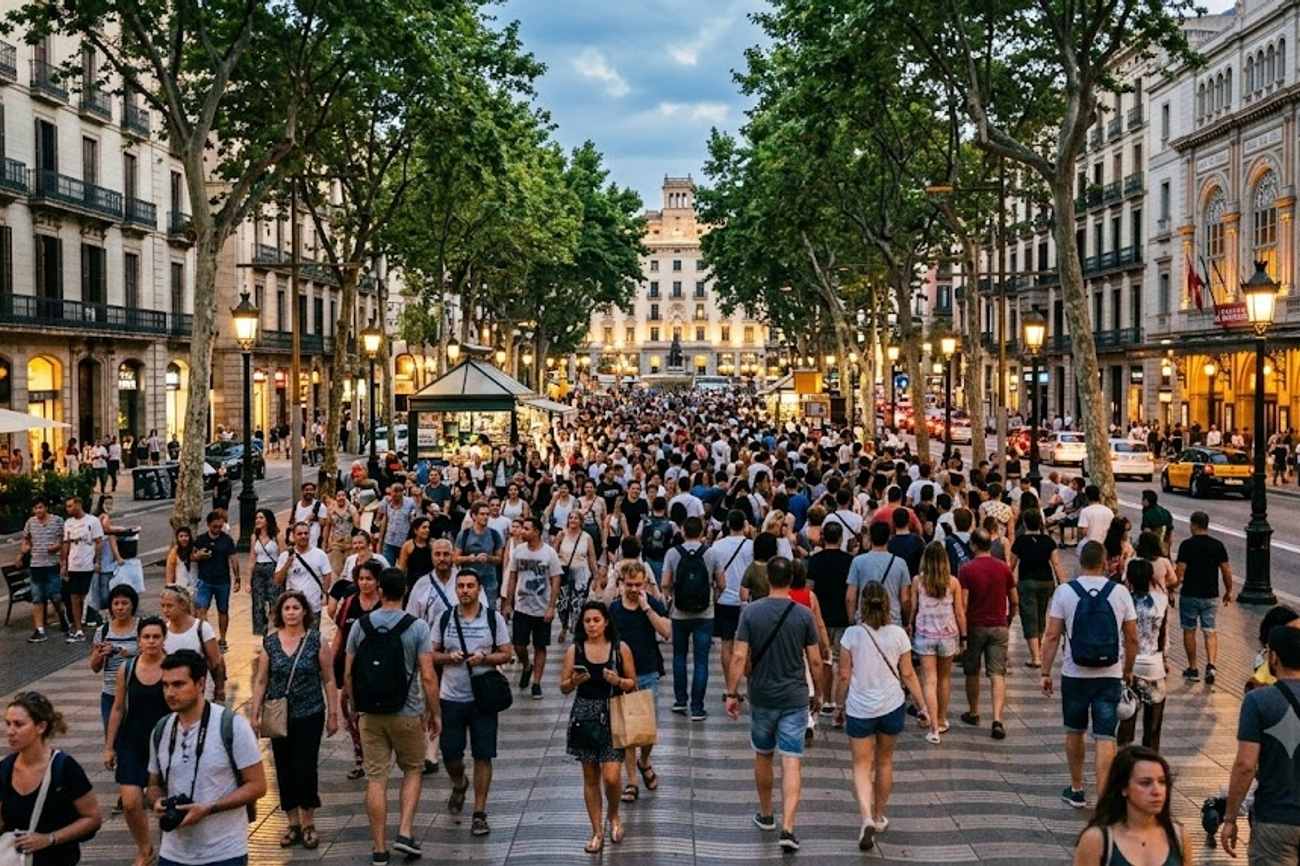
Image generated by AI
[Barcelona, August 2026] — Barcelona has emerged as the primary engine of a shifting European travel trend, recording an increase of 193,712 hotel arrivals during the first seven months of 2026. The city welcomed a total of 5,365,534 hotel guests between January and July, marking a 3.7% rise in arrivals and a 1.9% uptick in overnight stays compared to the previous year.
This surge is part of a broader, albeit uneven, recovery across the European Union. Official data indicates that between January and June 2026, tourist accommodations across the EU recorded 1.321 billion overnight stays, a 1.7% increase over the same period in 2025. This growth is heavily reliant on foreign markets; overnight stays by international visitors climbed by 2.5%, while domestic travel grew by a marginal 0.9%.
The Catalyst for Divergent Growth
The current volatility in European tourism is driven by a redistribution of traveler preferences. While the aggregate EU numbers are positive, the gains are concentrated in specific hubs. High-capacity urban centers like Barcelona and Madrid, alongside coastal strongholds like Palma de Mallorca, are capturing the bulk of international demand.
Conversely, traditional cultural hubs and smaller inland cities are experiencing a sharp contraction. This divergence suggests a "winner-take-all" dynamic where primary gateways are expanding while secondary destinations struggle to maintain their 2025 benchmarks. According to the European Travel Commission, such shifts often correlate with changes in flight connectivity and a preference for multi-purpose "super-destinations."
Affected Travelers, Airlines and Logistics: Market Winners and Losers
The impact of this trend is most visible in Spain, which has become the primary battleground for European tourism shifts. The following data details the specific impact on Spanish hotel markets from January to July 2026:
The Growth Leaders
| Spanish City | Hotel Arrivals (Jan–Jul 2026) | Arrival Change (vs 2025) | Overnight Stay Change |
|---|---|---|---|
| Barcelona | 5,365,534 | +193,712 (+3.7%) | +1.9% |
| Madrid | 6,085,379 | +129,984 (+2.2%) | +1.4% |
| Palma de Mallorca | 1,697,068 | +142,734 (+9.2%) | +3.9% |
| Torremolinos | 695,651 | +51,812 (+8.0%) | +4.2% |
| Bilbao | 702,642 | +35,963 (+5.4%) | +6.2% |
| Marbella | 458,375 | +34,198 (+8.1%) | +5.3% |
| Castelldefels | 159,061 | +34,907 (+28.1%) | +18.0% |
The Declining Markets
| Spanish City | Hotel Arrivals (Jan–Jul 2026) | Arrival Change (vs 2025) | Overnight Stay Change |
|---|---|---|---|
| Santiago de Compostela | 465,055 | -49,029 (-9.5%) | -11.9% |
| Málaga | 989,320 | -47,628 (-4.6%) | +3.0% |
| Córdoba | 540,475 | -44,860 (-7.7%) | -7.1% |
| Donostia–San Sebastián | 568,261 | -41,575 (-6.8%) | -3.2% |
| Vigo | 251,451 | -31,282 (-11.1%) | +1.4% |
| Vitoria-Gasteiz | 194,344 | -28,015 (-12.6%) | -6.2% |
| Badajoz | 105,584 | -20,477 (-16.2%) | -18.8% |
Beyond Spain, the trend is mirrored across the continent. Ireland saw a massive 14.6% spike in tourism nights, and Malta grew by 9.9%, while Slovakia rose by 5.9%. In contrast, Romania and Cyprus recorded the most significant national-level declines. Individual cities like Berlin have also seen a drop in international demand, while Vienna and Poreč continue to grow.
Practical Traveler Advisory and Strategic Insights
For the average traveler, these statistics translate into tangible changes in cost, availability, and experience.
1. Hyper-Congestion in Primary Hubs: With Barcelona adding nearly 194,000 new hotel guests and Madrid adding 130,000, travelers should expect higher hotel ADRs (Average Daily Rates) and increased crowds at major attractions. Booking windows for these cities will likely need to be extended to avoid price spikes.
2. Opportunities in "Under-Visited" Cities: The sharp declines in cities like Santiago de Compostela (-9.5%) and Córdoba (-7.7%) may lead to more competitive pricing and better availability for hotel rooms. Travelers seeking a quieter experience may find these destinations more accessible and affordable than in previous years.
3. Shift in Logistics: The growth of periphery cities—most notably Castelldefels, which saw a staggering 28.1% jump in arrivals—suggests a trend toward "satellite tourism." Travelers are increasingly staying in smaller towns near major hubs to avoid the congestion of city centers.
4. Market-Specific Availability: The data shows a stark divide between domestic and international demand. In Palma de Mallorca, domestic arrivals surged by 28.0%, meaning Spanish national holidays will likely cause extreme bottlenecks that international travelers should plan around.
The Path Forward: 2026 and Beyond
The current trajectory suggests that European tourism is entering a phase of extreme polarization. The World Tourism Organization (UNWTO) frequently monitors these shifts, and the 2026 data indicates that "brand-name" cities are absorbing the majority of global travel spend.
The most critical metric moving forward will be the "stay duration" versus "arrival count." In cities like Vigo, arrivals dropped by 11.1%, yet overnight stays actually rose by 1.4%. This indicates a shift toward "slow travel," where fewer people visit but stay longer. This trend could potentially save struggling secondary cities by increasing the per-visitor spend even as total foot traffic declines.
Barcelona is implementing stricter regulations on short-term rentals and cruise arrivals to combat overtourism and preserve local infrastructure. These strategic shifts are monitored by the Agència de Turisme de Barcelona, which focuses on promoting a more sustainable and distributed model of urban visitation.
Industry analysts expect the second half of 2026 to see further pressure on Barcelona's infrastructure. With 5.37 million arrivals already recorded, the city's transport and hospitality sectors are operating at near-maximum capacity. Regulatory bodies may introduce new measures to manage the flow of visitors to prevent "overtourism" from degrading the visitor experience.
FAQ: European Tourism Trends 2026
Which Spanish city saw the highest percentage growth in hotel arrivals? Castelldefels recorded the strongest percentage increase, with hotel arrivals growing by 28.1% to reach a total of 159,061 guests.
Is European tourism declining overall in 2026? No. Overall EU tourism is growing. Between January and June 2026, there were 1.321 billion overnight stays, a 1.7% increase over 2025.
Which cities are seeing a decrease in hotel guests? Several Spanish cities faced declines, including Santiago de Compostela (-9.5%), Córdoba (-7.7%), and Donostia–San Sebastián (-6.8%). Berlin also reported a decrease in international demand.
What is driving the growth in cities like Barcelona and Madrid? International demand is the primary driver. In Madrid, international arrivals increased by 3.4%, while Barcelona saw an increase of nearly 122,000 international hotel guests.
Europe's travel map is being redrawn in real-time, favoring the giants while the periphery fades.
Related Travel Guides
Disclaimer
This article is for informational and educational purposes only. It does not constitute legal, financial, or professional advice. While we strive to provide accurate and up-to-date information, travel policies, regulations, and conditions change rapidly. Always verify information with official sources before making travel decisions. Nomad Lawyer makes no representations about the accuracy, reliability, completeness, or suitability of the information provided. Readers should consult qualified professionals for advice specific to their circumstances. The views expressed in this article are those of the author and do not necessarily reflect the views of Nomad Lawyer.
Kunal K Choudhary
Co-Founder & Contributor
A passionate traveller and tech enthusiast. Kunal contributes to the vision and growth of Nomad Lawyer, bringing fresh perspectives and driving the community forward.
Learn more about our team →