
Portugal Named World's Happiest Holiday Destination in 2026 as Lisbon Tops Global Vitality Tourism Index

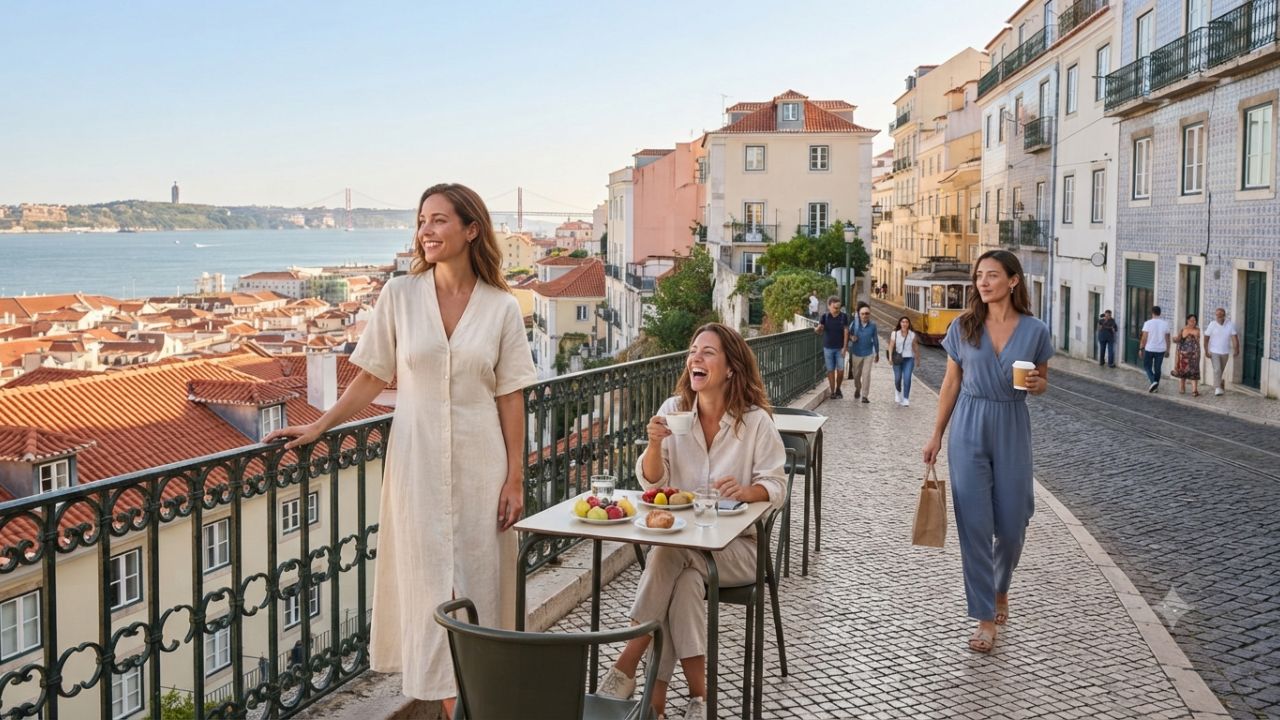
Lisbon ranks No. 1 globally in BookRetreats' 2026 Holiday Happiness Index, leading a shift toward vitality wellness tourism across Portugal.
Lisbon has been named the world's happiest vacation destination in the 2026 Holiday Happiness Index published by BookRetreats in collaboration with Harvard University clinical psychologists. Outperforming traditional long-term happiness leaders like Helsinki, the Portuguese capital leads a broader shift toward "Vitality Tourism"—a wellness travel model focused on immediate physiological recovery, natural sunlight exposure, walkability, and healthy gastronomy.
Global Holiday Happiness Index 2026 Top Rankings
[LISBON, October 4, 2026] — Evaluating 47 global cities across scientific wellness benchmarks—including annual sunshine hours, green space per capita, walkability metrics, sleep quality, and access to healthy dining—the 2026 Index highlights how short-term vacation factors differ from long-term civic satisfaction metrics. Powered by 2,828 annual sunshine hours and 49 square meters of urban green space per resident, Lisbon secured the top overall score.
| Rank | City & Country | Happiness Index Score (0–10 Scale) | Primary Scientific Wellbeing & Metric Highlight |
|---|---|---|---|
| 1 | Lisbon, Portugal | 10.0 | 2,828 annual sunshine hrs; 10% healthy dining ratio; 49m² green space/person. |
| 2 | Helsinki, Finland | 9.0 | 126m² green space/person (over double EU avg); high safety & forest access. |
| 3 | Orlando, USA | 8.0 | 2,930 annual sunshine hrs; theme park recreation & natural lake reserves. |
| 4 | Athens, Greece | 7.0 | Mediterranean diet gut health; historic outdoor walking under bright sunlight. |
| 5 | Edinburgh, Scotland | 6.0 | High sleep quality & healthy dining scores; volcanic trail walkability (Arthur's Seat). |
| 6 | Madrid, Spain | 5.0 | Sprawling plazas & outdoor tapas culture driving social connection. |
| 7 | Vienna, Austria | 4.0 | Public transport efficiency; slow coffeehouse culture & high sleep quality. |
| 8 | Budapest, Hungary | 3.0 | Geothermal thermal bath culture (Széchenyi & Gellért); high travel affordability. |
| 9 | Oslo, Norway | 2.0 | Outdoor friluftsliv living; unpolluted air & immediate fjord access. |
| 10 | Vilnius, Lithuania | 1.0 | Compact urban footprint; low-density green space & low sensory stress. |
Holiday Happiness vs. Long-Term Civic Contentment
The study clarifies a key distinction between long-term civic happiness and short-term vacation satisfaction:
- Long-Term Civic Happiness (Everyday Life): Measured by the UN World Happiness Report, where Finland has ranked first for nine consecutive years based on social safety nets, healthcare, free education, and institutional trust.
- Short-Term Vacation Happiness (Holiday Vitality): Requires rapid biological stimulation. Travelers seeking relief from occupational burnout benefit immediately from Lisbon's 2,828 hours of annual sunshine, vibrant street life, affordable Atlantic seafood, and active outdoor topography.
Lisbon Biological Vitality Indicators:
• Annual Sunlight Exposure: 2,828 Hours per Year
• Urban Green Space: 49 m² per Resident (vs. Madrid's 13 m²)
• Healthy Gastronomy Ratio: 10% of Restaurants Classified as Healthy Dining (Ranked 2nd Globally)
• Active Topography: 7 Historic Hills Driving Incidental Endorphin-Releasing Exercise
Detailed Breakdown of the Top Global Destinations
The index reveals how different international destinations foster physiological recovery:
1. Lisbon, Portugal: Unrivaled Sensory Synergy
Lisbon combines physical movement with coastal nutrition. With 10% of its restaurants meeting strict healthy dining criteria, high Atlantic seafood availability, and immediate proximity to surf beaches at Costa da Caparica and Cascais, the city provides an optimal environment for rapid stress reduction.
2. Helsinki, Finland: Urban Forest Sanctuary
Helsinki provides 126 square meters of green space per resident—more than double the European urban average. Its seamless integration of coastal forest trails and high societal safety allows travelers to completely disarm their nervous systems.
3. Orlando, USA: Endorphin-Driven Recreation
As the only non-European city in the top 10, Orlando leverages 2,930 hours of annual sunshine and high-intensity theme park entertainment to trigger endorphins and psychological play.
4. Athens, Greece: Mediterranean Sunlight and Gastronomy
Securing fourth place, Athens combines deep historical walking with a Mediterranean diet rich in fresh olive oil, seafood, and seasonal produce, naturally supporting gut health and serotonin synthesis.
5. Edinburgh, Scotland: Sleep Quality and Urban Trails
Ranking fifth, Edinburgh scored high across sleep quality, healthy dining, and green space, offering volcanic trail walkability (such as Arthur's Seat) despite lower annual sunshine hours.
6. Madrid, Spain: High-Energy Outdoor Socializing
Madrid claimed sixth place by combining 13 square meters of green space per person with a vibrant outdoor plaza and tapas culture that fosters social connection and oxytocin release.
7. Vienna, Austria: Frictionless Cultural Living
Vienna ranked seventh through its public transport efficiency, impeccable cleanliness, and world-famous coffeehouse culture, encouraging slow, unhurried traveler conversations.
8. Budapest, Hungary: Geothermal Wellness Culture
Budapest secured eighth position via its historic geothermal thermal bath culture (Széchenyi and Gellért baths), offering affordable physical rejuvenation and stress relief.
9. Oslo, Norway: Fjords and Clean Air
Oslo ranked ninth by offering unpolluted air and immediate access to coastal fjords and pine forests under the Norwegian concept of friluftsliv (open-air living).
10. Vilnius, Lithuania: Low-Stress Compact Haven
Vilnius anchored tenth position as a compact, low-density green capital, allowing travelers to unwind without urban noise or crowd-induced stress.
Portugal's €16M Vitality Tourism Master Strategy
To capitalize on its top global ranking, the Portuguese government and national tourism boards have deployed a comprehensive Vitality Tourism growth strategy:
- Wellness Sector Growth: Driven by Global Wellness Institute data showing nearly 2.5 million annual inbound wellness trips to Portugal, regional authorities are promoting the Azores, Alentejo, and the Vicentine Coast for yoga retreats, digital detoxes, and medicinal spa therapies.
- National Branding Campaigns: Targeted initiatives including "Portugal, an unwritten recipe" highlight authentic regional gastronomy, while "Tourism is made of people" invests in hospitality training for chefs, sommeliers, and local guides.
- €16 Million Sustainable Investment Plan: Funding is directed toward sustainable regional infrastructure to prevent urban congestion in central Lisbon and distribute tourist spending into lesser-known rural districts.
- Off-Peak Workcation Promotion: Utilizing its 2,828 hours of annual sunshine, Portugal is targeting digital nomads and remote workers from colder Northern European countries for off-peak winter stays.
Related Travel Guides
Disclaimer
This article is for informational and educational purposes only. It does not constitute legal, financial, or professional advice. While we strive to provide accurate and up-to-date information, travel policies, regulations, and conditions change rapidly. Always verify information with official sources before making travel decisions. Nomad Lawyer makes no representations about the accuracy, reliability, completeness, or suitability of the information provided. Readers should consult qualified professionals for advice specific to their circumstances. The views expressed in this article are those of the author and do not necessarily reflect the views of Nomad Lawyer.
Raushan Kumar
Founder & Lead Developer
Full-stack developer with 11+ years of experience and a passionate traveller. Raushan built Nomad Lawyer from the ground up with a vision to create the best travel and law experience on the web.
Learn more about our team →