
Portugal's Évora-Elvas High-Speed Rail Enters Final Tests for 2026 Lisbon-Madrid Launch
Portugal's first purpose-built high-speed rail line between Évora and Elvas is undergoing final 200 km/h tests, paving the way for a transformed Lisbon-Madrid corridor by late 2026.

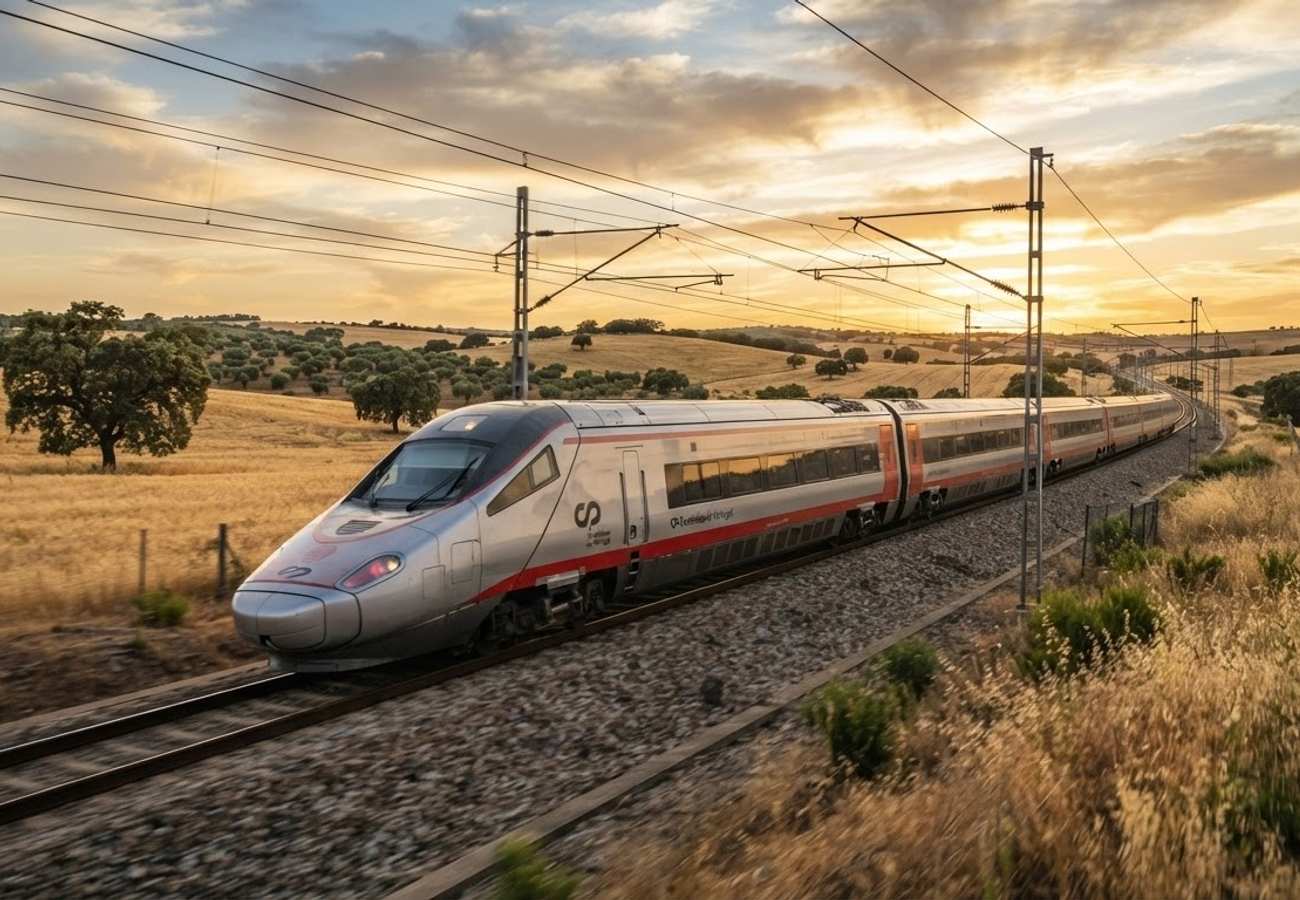
Image generated by AI
Portugal is nearing a historic shift in Iberian mobility as the Évora-Elvas high-speed rail line enters its final validation phase. This 88-kilometre stretch is the first in the country specifically engineered for high-speed operations, targeting a commercial debut by the end of 2026.
The project, managed by Infraestruturas de Portugal (IP), is a cornerstone of the European Union’s TEN-T Atlantic Corridor. It serves as a critical link in the broader Sines–Badajoz High-Speed Corridor, designed to integrate Portugal’s Atlantic coast with the Spanish rail network.
On August 4, 2026, technical teams initiated the first 200 km/h traffic tests. These trials are the final hurdle before the line opens to the public, marking a departure from Portugal's traditional rail infrastructure which primarily served conventional speeds.
Technical Specifications of the Évora-Elvas Connection
Unlike legacy lines, this infrastructure was built with a dual-purpose mandate: facilitating rapid passenger transit while maintaining robust freight capabilities. While currently constructed as a single-track line, the project includes reserved space for future double-tracking to accommodate rising demand.
| Feature | Specification |
|---|---|
| Total Line Length | 88 kilometres |
| Max Passenger Speed | 250 km/h |
| Max Freight Speed | 120 km/h |
| Infrastructure Status | Single-track (expandable to double) |
| Strategic Alignment | TEN-T Atlantic Corridor / Sines–Badajoz Corridor |
| Commercial Launch Target | End of 2026 |
Redefining the Lisbon-Madrid Travel Corridor
For decades, the journey between Lisbon and Madrid has been dominated by short-haul flights due to the inefficiency of existing rail links. The completion of the Évora-Elvas section is the first major step in making rail a competitive alternative.
The long-term objective is the full integration of the Madrid–Badajoz high-speed corridor with Portuguese networks. By 2030, authorities project that the total travel time between Lisbon and Madrid will be reduced to approximately five hours.
This shift provides several direct benefits for international travelers and digital nomads:
- Sustainable Transit: A viable, low-emission alternative to regional flights.
- Regional Access: Easier entry into the Alentejo region, Évora, and Spanish Extremadura.
- Seamless Itineraries: Improved ability to link Iberian capitals with secondary cities.
- Enhanced Comfort: Modern high-speed coaches offering a more scenic and relaxing experience than air travel.
Rigorous Testing and Safety Validation
Before the first paying passenger boards, the line must undergo exhaustive technical certification. Comboios de Portugal is currently utilizing a specialized test train—consisting of electric locomotive 5616 and two Intercidades passenger coaches—to stress-test the system.
The current validation phase focuses on:
- Signaling & Control: Testing the ERTMS Level 2 signaling technology to ensure precision at high speeds.
- Electrical Integrity: Evaluating overhead contact line performance and power distribution.
- Physical Stability: Analyzing track geometry, alignment, and overall infrastructure condition.
- Operational Safety: Validating communication systems between the train and control centers.
Investment and European Integration
The project represents a massive financial commitment to the modernization of the Iberian Peninsula. The total investment for the Évora-Elvas section stands at €460 million.
The financial burden has been shared through a strategic partnership with the European Union. The Connecting Europe Facility provided €235 million in funding, underscoring the project's importance to the EU's goal of creating an interconnected, sustainable transport grid across the continent.
Planning Your Future Journey
While the infrastructure is nearing completion, travelers should note that the end of testing does not mean an immediate start to ticket sales. Commercial operations are slated for the end of 2026, following final certification.
Travelers planning trips for late 2026 and beyond should monitor official updates from Portuguese and Spanish railway operators regarding schedules and booking windows.
The transition to a five-hour Lisbon-Madrid rail journey will fundamentally alter how the Iberian Peninsula is navigated, shifting the balance from air to rail.
Related Travel Guides
Disclaimer
This article is for informational and educational purposes only. It does not constitute legal, financial, or professional advice. While we strive to provide accurate and up-to-date information, travel policies, regulations, and conditions change rapidly. Always verify information with official sources before making travel decisions. Nomad Lawyer makes no representations about the accuracy, reliability, completeness, or suitability of the information provided. Readers should consult qualified professionals for advice specific to their circumstances. The views expressed in this article are those of the author and do not necessarily reflect the views of Nomad Lawyer.
Kunal K Choudhary
Co-Founder & Contributor
A passionate traveller and tech enthusiast. Kunal contributes to the vision and growth of Nomad Lawyer, bringing fresh perspectives and driving the community forward.
Learn more about our team →