
India IRCTC Dwarka Train Redefines Pilgrimage-Beach Rail Travel in 2026
IRCTC's Dwarka-Somnath Bharat Gaurav train from Mangaluru merges Gujarat temples and Goa beaches in a groundbreaking 2026 rail pilgrimage package for travelers.

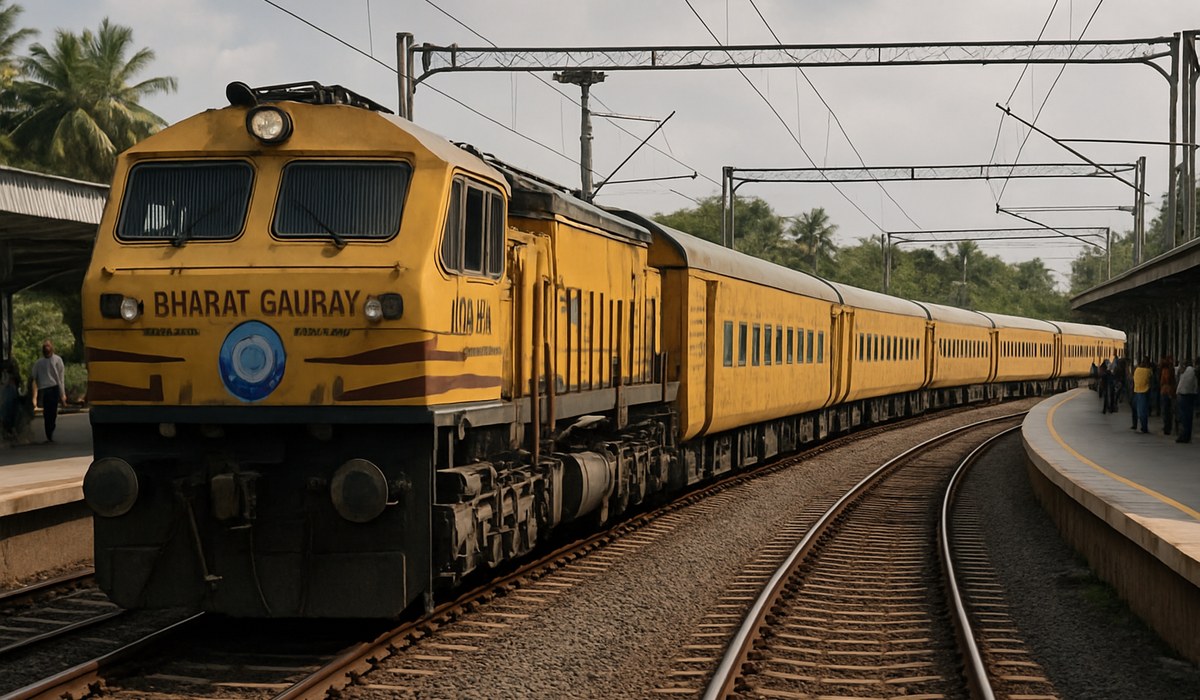
Image generated by AI
Quick Summary • IRCTC launches Dwarka-Somnath Bharat Gaurav train from Mangaluru combining religious pilgrimage with coastal relaxation • Eight-day journey covers Gujarat's Dwarka and Somnath temples plus Goa's beaches in one seamless package • All-inclusive pricing bundles rail travel, accommodation, meals, and guided temple visits • Represents India's strategic pivot toward experiential tourism via regional rail infrastructure
A train departing from Mangaluru is revolutionizing how Indian travelers experience religious pilgrimage by combining Gujarat's holiest temples with Goa's serene coastlines in a single, seamless rail journey. The india irctc dwarka service under the Bharat Gaurav initiative marks a shift from traditional point-to-point rail operations toward curated, multi-destination tourism packages that rival international rail experiences.
The Indian Railway Catering and Tourism Corporation launched this specialized service in late March 2026, targeting pilgrims and leisure travelers seeking a dual-purpose trip. Unlike conventional train routes focused solely on transportation, this Bharat Gaurav offering integrates lodging, meals, and cultural excursions into the fare structure. The eight-day circuit departs from Karnataka's Mangaluru and threads through Dwarka, Somnath, and select Goan coastal towns before returning passengers to their origin station.
IRCTC officials confirmed the inaugural departure carried approximately 780 passengers in air-conditioned coaches, with occupancy rates exceeding 92 percent within the first booking window. "Demand for faith-based tourism combined with beach leisure has surged 34 percent year-on-year in South India," noted Rajesh Sharma, regional manager for IRCTC's theme-based tourist trains. "This route addresses a market gap where travelers previously needed to book separate flights, hotels, and guides."
What the IRCTC Dwarka-Somnath Bharat Gaurav Train Offers
The Bharat Gaurav model transforms standard rail carriages into mobile hotels. Each coach features reclining berths, charging stations, and shared washrooms upgraded to tourist-class standards. Passengers receive three meals daily prepared in onboard pantry cars, eliminating the need for station food stops. The package includes overnight stays in pre-arranged hotels near Dwarka's Dwarkadhish Temple and Somnath's Jyotirlinga shrine, both ranked among Hinduism's most sacred sites.
At Dwarka, travelers access the ancient temple complex believed to be Krishna's kingdom, along with visits to Nageshwar Jyotirlinga and Rukmini Devi Temple. The somnath leg covers the 12th-century shore temple destroyed and rebuilt multiple times throughout history, now a symbol of resilience. Guides fluent in Kannada, Hindi, and English accompany all temple tours, providing historical context often missing from independent pilgrimages.
Goa's inclusion separates this service from purely religious circuits. After temple visits, the train proceeds to Goa's Palolem and Agonda beaches for a two-day coastal interlude. Passengers can explore spice plantations, Portuguese-era churches, or simply relax by the Arabian Sea. This blend addresses feedback from previous pilgrimage-only trains where travelers reported fatigue from consecutive temple-heavy days.
The gaurav branding emphasizes national pride, with carriages decorated in saffron, white, and green motifs. Onboard entertainment includes regional music performances and documentary screenings about Gujarat's history. IRCTC partnered with state tourism boards to ensure sites remain accessible despite the influx of train-based tourist groups.
Complete Itinerary: Temples, Beaches, and Cultural Stops
Day one begins with departure from Mangaluru Junction at 6:15 AM. The train travels northwest through Karnataka and Maharashtra, reaching Gujarat's Dwarka by dawn of day two. Passengers detrain for hotel check-in, followed by afternoon darshan at Dwarkadhish Temple. Evening includes a visit to Bet Dwarka island, accessible via ferry, where Krishna is said to have resided.
Day three covers Nageshwar Temple in the morning and Rukmini Temple post-lunch, with free time allocated for souvenir shopping at local bazaars. The train departs Dwarka late evening, arriving at Somnath station by midnight. Day four features sunrise viewing at Somnath Temple, when golden light illuminates the oceanfront structure, followed by a visit to Bhalka Tirtha and Triveni Sangam.
Day five transitions to leisure mode. The train proceeds to Goa, reaching Madgaon station by afternoon. Coaches remain parked as passengers transfer to beach resorts. Days six and seven offer optional excursions: Old Goa's Basilica of Bom Jesus, Dudhsagar Waterfalls, or guided beach walks. IRCTC provides shuttle buses between hotels and activity hubs.
Day eight marks the return leg. Breakfast at the resort precedes a mid-morning departure from Madgaon, with the train arriving back in Mangaluru by late evening. The compressed timeline requires disciplined adherence to schedules, with train crew enforcing strict boarding times to prevent delays cascading through the multi-state route.
This itinerary structure mirrors practices used by international rail operators offering scenic and cultural packages, though India's focus remains heavily tilted toward spiritual tourism. While high-speed rail services across Europe prioritize rapid city-to-city connections, India's tourist trains emphasize leisurely multi-day journeys with extended station stops.
Booking Details and Pricing Breakdown
Tickets opened for purchase on March 10, 2026, through IRCTC's official portal and authorized travel agents. Three fare categories exist: Economy (three-tier air-conditioned), Comfort (two-tier air-conditioned), and Deluxe (first-class air-conditioned). Economy berths start at ₹18,500 per adult, Comfort at ₹24,000, and Deluxe at ₹32,500. Children aged 5-12 receive a 25 percent discount; under-fives travel free without dedicated berths.
Inclusions cover rail transport both ways, seven breakfasts, seven lunches, seven dinners, four nights hotel accommodation (two in Gujarat, two in Goa), all temple entry fees, guide services, and shuttle buses between stations and hotels. Exclusions comprise personal expenses, monument photography fees, and optional activities like water sports in Goa.
Senior citizens above 60 qualify for a 10 percent discount when booking at least 30 days ahead. Groups of ten or more earn an additional 5 percent reduction. Payment accepts credit cards, debit cards, UPI, and net banking, with full refunds available if canceled more than 15 days before departure. Cancellations between 8-14 days incur a 25 percent fee; within seven days, 50 percent.
The pricing strategy bundles components that would separately cost ₹22,000-₹28,000 if booked independently—regular train tickets, mid-range hotels, meals, and guide fees. By leveraging bulk agreements with hoteliers and restaurants, IRCTC achieves economies of scale. This approach parallels how Southeast Asian operators are redefining trip value beyond price by integrating convenience and cultural access into package costs.
Subsequent departures are scheduled monthly through December 2026, with June-August monsoon months seeing reduced frequency due to heavy rains affecting coastal Goa. Festive season departures around Diwali in October already show wait-lists exceeding 200 passengers for Deluxe categories.
What Sets This Rail Experience Apart from Standard Pilgrimage Tours
Traditional pilgrimage tours in India typically involve budget buses, basic lodges, and self-navigation at temple complexes. The Bharat Gaurav train elevates this with controlled environments and predictable schedules. Unlike overnight buses where breakdowns and traffic jams disrupt plans, rail travel ensures fixed arrival times, allowing travelers to plan days precisely.
Onboard medical facilities include a trained paramedic and first-aid kits in each coach, addressing concerns among elderly pilgrims. Wheelchairs and ramps facilitate access for mobility-impaired passengers at stations, though temple sites themselves may present accessibility challenges due to historic architecture. Security personnel patrol coaches round-the-clock, a feature appreciated by solo women travelers and families.
The Goa component introduces a secular dimension absent from pure pilgrimage circuits. Families with teenagers often book this train because it balances parental religious goals with younger passengers' interest in beach activities. "My parents wanted Dwarka and Somnath darshan, but my kids needed something beyond temples," explained Priya Menon, a Bangalore-based accountant traveling with her family. "This train solved that conflict."
Environmentally, consolidating 780 passengers onto one train reduces carbon emissions compared to 200 individual cars making the same route. IRCTC's sustainability report for 2025-26 estimated theme trains cut per-passenger emissions by approximately 40 percent versus equivalent road trips, though critics note hotel stays and shuttle buses still contribute significant footprints.
Compared to international luxury trains like India's own Maharajas' Express or Palace on Wheels, the Bharat Gaurav series occupies a middle market. It lacks ultra-premium amenities such as private cabins or fine dining restaurants, instead focusing on affordable access to curated experiences. This democratization of rail tourism expands the potential customer base beyond wealthy retirees to include middle-class families and young professionals.
FAQ: Your Questions About the Mangaluru-Gujarat-Goa Train Answered
Q: Can I board from stations other than Mangaluru?
A: Currently, boarding is exclusive to Mangaluru Junction for this departure. IRCTC plans to trial alternate origin cities like Mysuru and Kochi in late 2026 based on demand patterns. Passengers from other regions must arrange their own transport to Mangaluru by the 6:15 AM departure time.
Q: Are vegetarian and special diet meals available?
A: All meals are vegetarian by default, aligning with pilgrimage norms. Jain, vegan, and gluten-free options require advance notice during booking. Meals feature South Indian, Gujarati, and Goan cuisines rotating throughout the journey. Passengers with severe allergies should carry supplemental food as cross-contamination in shared kitchens cannot be guaranteed.
Q: What happens if the train is delayed?
A: IRCTC includes buffer time in the itinerary for minor delays. If delays exceed two hours, scheduled activities may be shortened, though temple visits remain prioritized. Hotels and guides adjust timings within a six-hour window. In extreme cases causing overnight disruptions, IRCTC provides meal vouchers and arranges temporary accommodation, per railway consumer protection guidelines.
Q: How does this compare to other regional getaways?
A: The Dwarka-Somnath-Goa train targets spiritual-leisure travelers, differing from pure business or beach vacations. For urban getaways, the Hong Kong vs Singapore debate highlights how travelers compare cities based on specific needs—financial conferences, shopping, or cuisine. Similarly, this train appeals to those valuing temple access combined with coastal downtime, a niche underserved by standard tour packages.
Q: Is travel insurance included, and is it necessary?
A: Basic travel insurance covering trip cancellations and medical emergencies is not included but highly recommended. Third-party insurers offer policies starting at ₹400 for eight-day domestic trips. Given the train involves multiple states and activities like temple crowds and beach outings, insurance mitigates risks from lost luggage, minor injuries, or sudden itinerary changes.
Related Articles:
Disclaimer
This article is for informational and educational purposes only. It does not constitute legal, financial, or professional advice. While we strive to provide accurate and up-to-date information, travel policies, regulations, and conditions change rapidly. Always verify information with official sources before making travel decisions. Nomad Lawyer makes no representations about the accuracy, reliability, completeness, or suitability of the information provided. Readers should consult qualified professionals for advice specific to their circumstances. The views expressed in this article are those of the author and do not necessarily reflect the views of Nomad Lawyer.
Raushan Kumar
Founder & Lead Developer
Full-stack developer with 11+ years of experience and a passionate traveller. Raushan built Nomad Lawyer from the ground up with a vision to create the best travel and law experience on the web.
Learn more about our team →