
Infraestruturas de Portugal Begins Construction on 71-Kilometre Porto–Oiã High-Speed Rail Section to Cut Lisbon–Porto Travel Times to 75 Minutes
Infraestruturas de Portugal breaks ground on the 71 km Porto–Oiã high-speed railway, beginning a multi-phase €2B project to cut Lisbon–Porto travel to 75 minutes.

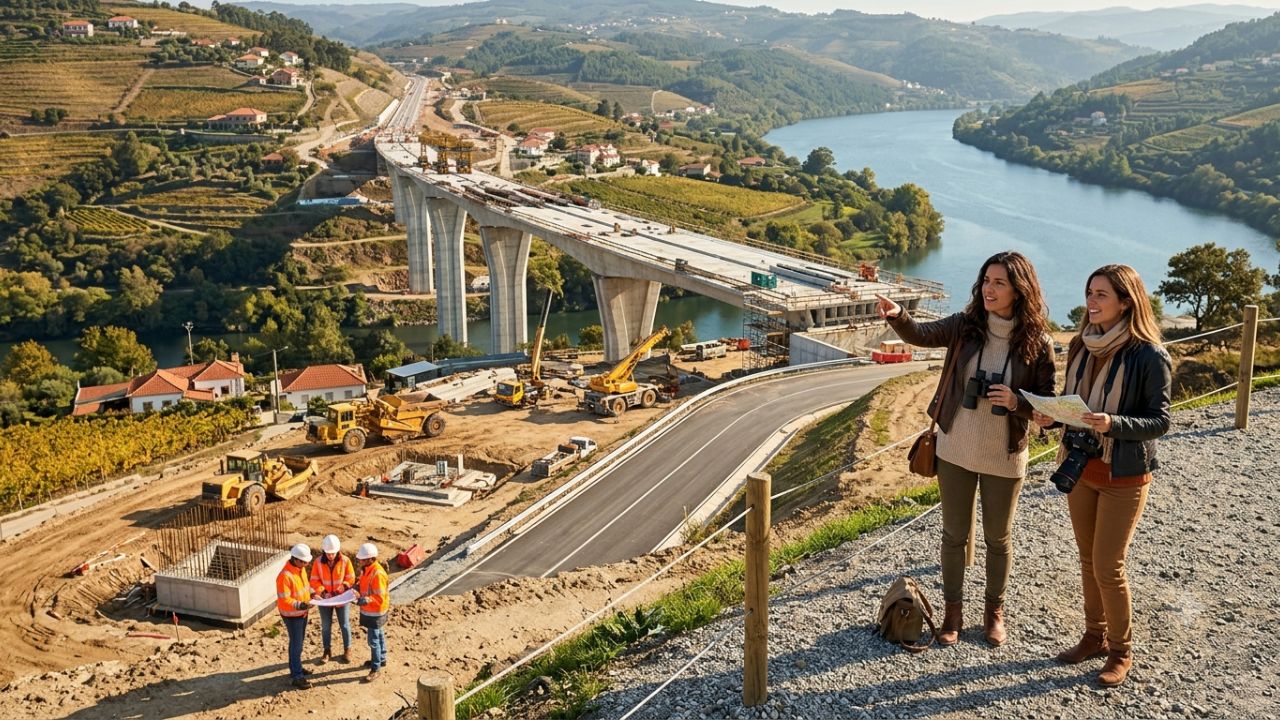
Portugal has formally commenced civil engineering works on its long-planned high-speed railway network, breaking ground on a 71-kilometre northern segment between Porto Campanhã and Oiã designed for 300 km/h operations that will ultimately shrink travel times between Lisbon and Porto to 75 minutes.
National railway infrastructure manager Infraestruturas de Portugal launched construction on 12 October 2026, marking the start of a phased multi-billion-euro investment aimed at replacing congested conventional tracks with a dedicated passenger corridor.
When the complete route reaches full operational readiness, direct express services will slash current journey times of two hours and 50 minutes down to one hour and 15 minutes, reconfiguring domestic passenger transit across central and northern Portugal while expanding capacity for freight and regional commuter rail.
===================================================================================
       PORTUGAL HIGH-SPEED RAIL NETWORK: PHASED DELIVERY TIMELINE
===================================================================================

 [PHASE 1A: PORTO CAMPANHÃ TO OIÃ] - 71 KM
  * Construction Launch: 12 October 2026 | Target Completion: 2030
  * Engineering: 19 km Viaducts, 8 km Tunnels, New Double-Deck Douro Bridge
  * Key Stations: Porto Campanhã, Santo Ovídio (Underground), Aveiro Link

 [PHASE 1B: OIÃ TO SOURE]
  * Procurement: Retendered Jan 2026 | Contract Signing: Early 2027
  * Target Completion: 2032 | Extends High-Speed Track Toward Coimbra

 [PHASE 2: SOURE TO CARREGADO]
  * Target Completion: 2033 | Slashes Direct Porto–Lisbon Journey to 79 Mins
  * Stopping Pattern Services (Gaia, Aveiro, Coimbra, Leiria): ~1 Hour 45 Mins

 [PHASE 3: CARREGADO TO LISBON ORIENTE]
  * Dedicated Terminal Route Completes Ultimate 75-Minute Non-Stop Transit
  * International Expansion: Lisbon–Madrid (3 Hours by 2034); Porto–Vigo (50 Mins)
===================================================================================
The Core High-Speed Transit Update: 300 km/h Corridor Breaks Ground
The inaugural construction phase centers on the 71-kilometre alignment connecting Porto Campanhã with Oiã, located in the municipality of Oliveira do Bairro within the Aveiro district.
Unlike the existing Northern Line (Linha do Norte), which forces high-speed Alfa Pendular trains, regional stopping services, urban commuter runs, and heavy freight convoys to share the same tracks, the new development introduces a grade-separated, double-track electrified railway engineered for operating speeds up to 300 km/h.
The route traverses ten municipalities:
- Porto
- Vila Nova de Gaia
- Santa Maria da Feira
- Espinho
- Oliveira de Azeméis
- Ovar
- Estarreja
- Albergaria-a-Velha
- Aveiro
- Oliveira do Bairro
Project execution is governed by a 30-year public-private concession agreement signed on 29 July 2025. The contract allocates five years for engineering design, physical construction, and European rail safety certification, followed by 25 years of private-sector maintenance and guaranteed infrastructure availability.
The baseline operating model provides capacity for up to 60 high-speed services per day in each direction, setting the stage for open-access carrier competition alongside national passenger operator Comboios de Portugal.
PORTO–OIÃ HIGH-SPEED SECTION: TECHNICAL SPECIFICATIONS
| Category / Entity | Details / Impact |
|---|---|
| PARAMETER | VERIFIED PROJECT SPECIFICATION |
| Total Segment Length | 71 kilometres (Porto Campanhã to Oiã) |
| Maximum Design Speed | 300 km/h operating velocity |
| Track Geometry & Gauge | Double-track standard European interoperable |
| Tunnelling Works | Approximately 8 kilometres of bored tunnels |
| Elevated Structures | 19 kilometres of viaducts and major bridges |
| Major River Crossing | New double-deck road/rail River Douro Bridge |
| Subsurface Hub | Santo Ovídio station (~60m subterranean depth) |
| Conventional Line Interlink | 8.3-kilometre link to Northern Line at Canelas |
| Concession Window | 30 years (5 years build/certify + 25 years O&M) |
Construction Phases, Timetable Projections, and Route Specifications
The full corridor between Lisbon and Porto will roll out across distinct delivery blocks, allowing travelers to experience progressive travel-time reductions as intermediate track sections enter commercial operation.
PORTUGUESE HIGH-SPEED RAILWAY ROLLOUT PROGRAMME
| Entity / Route | Metrics | Operational Status |
|---|---|---|
| RAILWAY SECTION | PLANNED COMPLETION | OPERATIONAL FUNCTIONALITY |
| Porto Campanhã–Oiã | 2030 | Northern 71 km section; opens modern |
| Douro bridge and Santo Ovídio hub | ||
| Oiã–Soure | 2032 | Extends high-speed tracks south past |
| Coimbra; connects central regional hubs | ||
| Soure–Carregado | 2033 | Enables 79-minute direct journeys; |
| intermediate multi-stop runs hit 1h45 | ||
| Carregado–Lisbon | Later Phase | Completes dedicated high-speed entry |
| Oriente | into Lisbon, achieving 75-minute run | |
| Lisbon–Madrid (Intl) | 2034 Target | Separate corridor cutting cross- |
| (2030: 5h interim) | border journey to 3 hours direct | |
| Porto–Vigo (Intl) | Future Extension | Northern cross-border connection |
| targeting a 50-minute transit time |
Following the completion of Phase 2 around 2033, non-stop trains operating between Porto Campanhã and Lisbon Oriente will complete the trip in 79 minutes.
Services stopping at intermediate hubs—including Vila Nova de Gaia, Aveiro, Coimbra, and Leiria—will record run times of approximately one hour and 45 minutes.
The subsequent construction of the dedicated Carregado-to-Lisbon alignment will remove the final speed restrictions along the suburban approaches of the capital, unlocking the ultimate 75-minute non-stop timing.
JOURNEY TIME PROGRESSION: PORTO TO LISBON
| Entity / Route | Metrics | Operational Status |
|---|---|---|
| ERA / OPERATIONAL STAGE | NON-STOP EXPRESS | MULTI-STOP INTERMEDIATE |
| Current Alfa Pendular (2026) | ~2 Hours 50 Mins | ~3 Hours 15 Mins |
| Phase 1 & 2 Complete (2033) | ~1 Hour 19 Mins | ~1 Hour 45 Mins |
| Final Buildout (Post-2033) | 1 Hour 15 Mins | ~1 Hour 35 Mins |
Engineering Architecture: The Douro Bridge and Santo Ovídio Station
Building a 300 km/h railway through the hilly, densely populated terrain of northern Portugal requires significant engineering structures. Approximately 27 kilometres of the 71-kilometre Porto–Oiã route—nearly 38% of the alignment—consists of bridges, viaducts, and tunnels.
NEW DOURO RIVER CROSSING: DUAL-MODAL ELEVATION MODEL
| Column 1 |
|---|
| [UPPER DECK: MUNICIPAL HIGHWAY TRAFFIC] |
| ================================================================================ |
| Vehicular lanes connecting Porto and Vila Nova de Gaia road networks |
| [LOWER DECK: TWIN-TRACK HIGH-SPEED RAILWAY] |
| -------------------------------------------------------------------------------- |
| Electrified 300 km/h standard-gauge rail connecting Campanhã & Santo Ovídio |
| ~~~~~~~~~~~~~~~~~~~~~~~~~~~~~ [DOURO RIVER GORGE] ~~~~~~~~~~~~~~~~~~~~~~~~~~~~~~ |
The Double-Deck River Douro Bridge
Crossing the steep Douro gorge between Porto and Vila Nova de Gaia requires a new bridge structure. Engineered with two levels, the bridge accommodates highway traffic on its upper deck to relieve severe urban automotive gridlock, while the lower deck carries the high-speed railway line directly into the expanded Porto Campanhã rail complex.
Porto Campanhã Terminal Expansion
Campanhã station will undergo significant modifications to become northern Portugal's primary transport hub. The expanded complex will integrate high-speed platforms with five Porto Metro lines, regional commuter routes, international coach networks, and the municipal intermodal bus terminal.
The Santo Ovídio Subterranean Interchange
In Vila Nova de Gaia, engineers will build a new underground station at Santo Ovídio, situated approximately 60 metres beneath surface level.
The station design integrates directly with two Porto Metro lines (Line D and the future Ruby Line) and an adjacent regional bus terminal, providing seamless connections for passengers across the southern metropolitan area without requiring travel into central Porto.
The Canelas Connection to Aveiro
To extend high-speed benefits to existing stations during initial rollout phases, the project incorporates an 8.3-kilometre spur linking the new high-speed line with the conventional Northern Line near Canelas. This track interlink will allow high-speed trainsets to divert seamlessly into the historic city center of Aveiro.
FINANCING STRUCTURE: PORTO–OIÃ INITIAL PHASE
| FUNDING SOURCE | ALLOCATED CAPITAL | STRATEGIC FACILITY |
|---|---|---|
| Commercial & Institutional Debt | ~€900 Million | National and global banks |
| European Investment Bank (EIB) | €875 Million | Initial tranche of €3B pool |
| Connecting Europe Facility (CEF) | €480 Million | Trans-European grant award |
| Infraestruturas de Portugal | €150 Million | Direct state equity co-fund |
| TOTAL SECTION INVESTMENT | ~€2.000 Billion | Phase 1A total capitalization |
The wider high-speed program is backed by an approved €3 billion financing facility from the European Investment Bank (EIB) authorized in 2024, alongside €813 million in total grant allocations under the European Union’s Connecting Europe Facility.
The EIB projects that the completed Lisbon–Porto corridor will support approximately 10 million passenger journeys annually.
Traveler Logistics Guide: Navigating Intercity Transit Across Portugal
For independent travelers, corporate commuters, and international tourists planning itineraries across Portugal, understanding the connection patterns between high-speed rail, regional transit, and international air gateways is essential.
PORTUGAL MULTI-MODAL AIR-RAIL TRANSIT BLUEPRINT
| Category / Entity | Details / Impact |
|---|---|
| GATEWAY / HUB | TRANSIT CONNECTION PARAMETERS & RECOMMENDED WINDOWS |
| Lisbon Humberto Delgado | Metro Red Line connects airport terminals to Lisbon |
| Airport (LIS) | Oriente rail station in 6 minutes; minimum layover for |
| international arrivals to train departure: 75 minutes | |
| Porto Francisco Sá | Metro Line E (Violet) links airport to Campanhã station |
| Carneiro Airport (OPO) | in 33 minutes; recommended transfer window: 60 minutes |
| European Travel Policy | Non-EU passport holders entering Portugal by air or rail |
| (ETIAS & Schengen Entry) | must register via ETIAS prior to departure; biometric |
| entry checks apply at international port-of-entry hubs | |
| Ticketing & Advance | High-speed long-distance tickets require seat allocation; |
| Booking Guidance | dynamic yield pricing rewards bookings made 30-60 days |
| in advance via official digital rail booking portals |
Air-to-Rail Airport Transfer Protocols
- Lisbon Connections via Oriente: International passengers arriving at Lisbon Humberto Delgado Airport (LIS) can transfer to Lisbon Oriente station via the direct Metro Red Line (Linha Vermelha) in approximately six minutes, or via a short five-minute taxi ride. When planning same-day flight-to-rail connections, allow at least 75 minutes between flight touchdown and train departure to clear baggage reclaim and customs.
- Porto Connections via Campanhã: Arriving travelers at Porto Francisco Sá Carneiro Airport (OPO) can board the Metro Line E directly to Porto Campanhã in 33 minutes. A minimum connection window of 60 minutes is recommended.
ETIAS and Schengen Digital Border Compliance
International visitors originating from visa-exempt third countries (such as the United States, Canada, the United Kingdom, and Australia) must ensure compliance with the European Travel Information and Authorization System (ETIAS) before entering the Schengen Area.
ETIAS authorization is digitally linked to the traveler's passport and verified by airlines and border authorities prior to boarding.
Dual-City Itinerary Planning
The reduction of travel time to 75 minutes transforms domestic tourism geography. Travelers will no longer need to book separate multi-night hotel stays in both cities:
- Base Hub Selection: Visitors can establish a single hotel base in Lisbon and complete comfortable day excursions to Porto's wine cellars, returning to Lisbon in time for dinner.
- Intermediate Regional Stops: High-speed stopping services allow travelers to explore the canal district of Aveiro, the Roman ruins of Conímbriga near Coimbra, or the medieval castle of Leiria in a single afternoon without hiring a car.
Conventional Rail and Economic Impact: Relieving the Northern Line
While cutting Lisbon–Porto travel times by over 50% captures the headlines, the new line will also transform capacity across Portugal's conventional railway network.
By shifting non-stop express services off the existing Northern Line, infrastructure planners unlock track capacity along the historical rail network.
The mixed-traffic bottleneck that has constrained rail operations for decades will ease, creating significant operational benefits:
- Suburban Frequency Expansion: Commuter networks serving greater Porto and metropolitan Lisbon can double peak-hour train frequencies, providing relief for highway corridors like the A1 motorway.
- Regional Connectivity: Towns between Aveiro, Coimbra, and Santarém will benefit from more reliable regional stopping services that no longer need to be held in sidings to let faster intercity trains pass.
- Rail Freight Competitiveness: Nighttime and daytime freight paths from maritime container ports in Leixões, Sines, and Lisbon will expand, helping shift industrial cargo from diesel highway trucks onto electrified rail.
PORTUGAL CONVENTIONAL RAIL INFRASTRUCTURE BENEFITS
| Category / Entity | Details / Impact |
|---|---|
| SERVICE SECTOR | OPERATIONAL IMPROVEMENT ON EXISTING NORTHERN LINE |
| Suburban Commuter Rail | Up to 50% increase in peak-hour train frequency |
| Freight Logistics | Dedicated daytime freight paths linking deepwater ports |
| Regional Stopping Trains | Elimination of siding delays caused by express trains |
| Schedule Reliability | Significant reduction in network-wide cascading delays |
Connecting the domestic corridor with the planned Lisbon–Madrid high-speed project—targeted to achieve three-hour journey times by 2034, with an interim five-hour service by 2030—and the northern Porto–Vigo route (targeting a 50-minute run time) will firmly position Portugal within the trans-European high-speed rail map.
Frequently Asked Questions
When will the first section of Portugal's high-speed rail line open?
The first 71-kilometre section between Porto Campanhã and Oiã is scheduled for completion in 2030. Subsequent sections will open in stages through 2033, progressively reducing journey times between Lisbon and Porto.
How fast will trains travel on the new Lisbon–Porto high-speed line?
Trains will operate at design speeds of up to 300 km/h along dedicated double-track electrified infrastructure, reducing non-stop travel times between Lisbon and Porto from two hours and 50 minutes to 75 minutes.
How much does the Porto–Oiã high-speed rail section cost?
The Porto–Oiã section involves an investment of approximately €2 billion, financed through the European Investment Bank, €480 million in Connecting Europe Facility grants, commercial loans, and direct co-funding from Infraestruturas de Portugal.
Will high-speed trains stop at intermediate cities between Lisbon and Porto?
Yes. Selected high-speed services will serve intermediate stations at Vila Nova de Gaia (Santo Ovídio), Aveiro, Coimbra, and Leiria, completing the journey between Porto and Lisbon in approximately one hour and 45 minutes.
Related Travel Guides
Disclaimer
This article is for informational and educational purposes only. It does not constitute legal, financial, or professional advice. While we strive to provide accurate and up-to-date information, travel policies, regulations, and conditions change rapidly. Always verify information with official sources before making travel decisions. Nomad Lawyer makes no representations about the accuracy, reliability, completeness, or suitability of the information provided. Readers should consult qualified professionals for advice specific to their circumstances. The views expressed in this article are those of the author and do not necessarily reflect the views of Nomad Lawyer.
Naina Thakur
Contributor & Travel Specialist
Travel enthusiast and legal writer covering visa regulations, responsible tourism, and cultural journeys across global destinations.
Learn more about our team →