Poland and Emerging Destinations Reshape Europe's Winter Tourism: ETC Report Analyzes Surging 2026–2027 Travel Demand

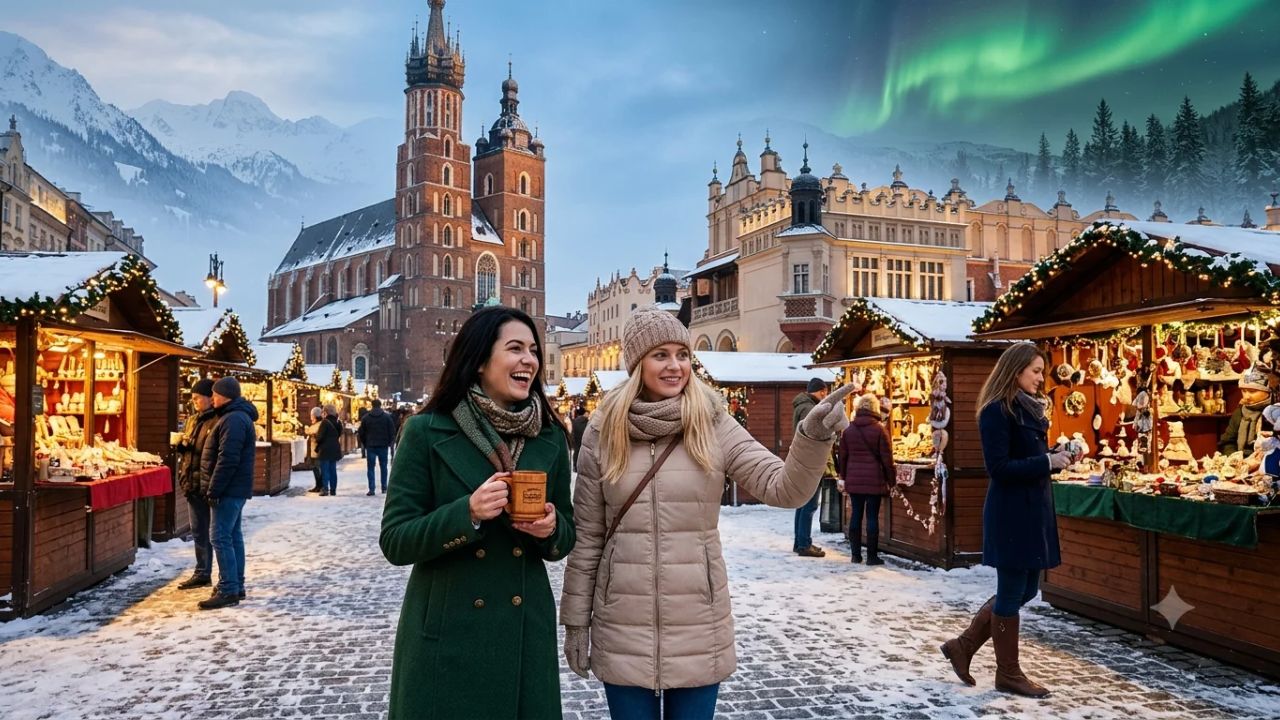
European winter tourism is undergoing a structural transformation ahead of the 2026–2027 season, driven by shifting traveler preferences toward crowd-free cultural destinations, explosive demand for Arctic Northern Lights expeditions, and unseasonable climate pressures across Alpine ski corridors.
According to comprehensive research released on November 9, 2026, by the European Travel Commission (ETC), 76 percent of surveyed Europeans intend to take an overnight holiday between October 2026 and March 2027—a three-percentage-point increase compared to the previous year. Poland has emerged as the continent's strongest outbound source market, with an extraordinary 87 percent of surveyed residents planning winter getaways, outpacing traditional leaders including Spain (82 percent), Germany (79 percent), and the Netherlands (79 percent).
Simultaneously, travel patterns are diverging from traditional Alpine ski monocultures. While Southern Europe captures 53 percent of prospective holiday preferences due to milder climates and heritage appeal, Northern Europe is experiencing a commercial surge, with international bookings for aurora-viewing packages up 225 percent on global travel platforms. As travelers contend with cost-of-living constraints and unseasonable snowfall deficits that forced the cancellation of 25 Ski World Cup races, tourism boards and hospitality operators are aggressively expanding winter offerings into late-season February and March windows.
EUROPEAN WINTER TOURISM SENTIMENT: 2026–2027 KEY METRICS
| Metric Dimension | Recorded Data / Proportion | Key Trend & Strategic Context |
|---|---|---|
| Overall Travel Intent | 76% of Surveyed Europeans | +3% increase YoY; high holiday demand |
| Top Source Market | Poland (87% travel intention) | Highest outbound & domestic intent |
| Follow-Up Markets | Spain (82%), Germany/NL (79% each) | Sustained travel appetite across EU |
| Destination Regional | Southern Europe: 53% | Milder weather, heritage, food |
| Preferences | Western Europe: 23% | Traditional markets, Alpine resorts |
| Northern Europe: High Growth | Arctic adventures, aurora packages | |
| Trip Timing Windows | December Peak: 23% of planned trips | Christmas markets & festive breaks |
| Feb–March 2027: +8% intent rise | Shoulder-season late-winter expansion | |
| Multi-Trip Behavior | 56% planning 2 or more journeys | Multiple short city & nature escapes |
| Economic Headwinds | 37% cite financial pressures | Inflation & travel cost concerns |
| Booking Lead Times | 55% have not yet booked trips | Late-booking trend favors agility |
| AI Adoption in Travel | 40% utilize AI planning tools | Itinerary curation & price comparison |
Poland's Double Milestone: Outbound Enthusiasm Meets Inbound Winter Appeal
The November 2026 European Travel Commission data positions Poland at the forefront of European leisure mobility. With 87 percent of Polish respondents confirming plans to take an overnight vacation between October and March, Poland registered the highest domestic and international travel intention of any surveyed European nation.
EUROPEAN WINTER TRAVEL INTENTIONS BY SOURCE COUNTRY (2026–2027)
| Entity / Route | Metrics | Operational Status |
|---|---|---|
| Country | Travel Intention (%) | Primary Travel Focus & Characteristic |
| Poland | 87% | Strong domestic mountain stays & Mediterranean sun |
| Spain | 82% | Regional cultural breaks & cross-border city trips |
| Germany | 79% | Alpine skiing, Christmas markets, Southern Europe |
| Netherlands | 79% | Active winter touring & short European city breaks |
| Italy | 77% | Domestic mountain escapes & European capital tours |
| France | 75% | Domestic ski resorts & overseas winter sunshine |
| United Kingdom | 73% | Canaries winter sun & European festive markets |
| European Average | 76% | Up 3 percentage points from winter 2025–2026 |
Understanding Polish Outbound Demand
Polish consumer sentiment has displayed remarkable resilience despite broader macroeconomic fluctuations across Central Europe:
- Domestic Mountain and Spa Migration: A significant portion of Poland's 87 percent travel intention represents domestic movement. The southern Małopolska and Podhale regions—centered on the winter capital of Zakopane, Białka Tatrzańska, and Krynica-Zdrój—witness surging advance reservations for thermal mineral bath complexes (termy) and family ski touring in the Tatra Mountains.
- Escape to Southern European Sun: Cross-border outbound bookings by Polish travelers are heavily weighted toward Southern Europe. Budget carrier networks connecting Warsaw, Kraków, Katowice, and Gdańsk with Spanish coastal destinations (Alicante, Málaga, Tenerife), Italy, and Malta have maintained robust pre-holiday booking velocity.
- Economic Stabilization: Real wage gains in Poland throughout 2026, combined with stable domestic inflation compared to peak 2023 levels, have empowered middle-class households to treat annual winter getaways as an essential lifestyle priority rather than a discretionary luxury.
Inbound Momentum: Poland's Growing Winter Allure
Poland is simultaneously establishing itself as an attractive, value-driven alternative to expensive Western European winter destinations:
- Summer Momentum Feeds Winter Inflow: Official statistics recorded an 11 percent increase in international tourist arrivals to Poland during summer 2026, reflecting heightened awareness among British, German, and Scandinavian visitors.
- Zakopane and the High Tatras: For foreign skiers and winter trekkers priced out of the French and Swiss Alps, Zakopane offers picturesque wooden architecture, reliable mid-winter snow conditions, and lift ticket prices at less than half of Alpine equivalents.
- Festive Heritage in Kraków and Wrocław: The historic Christmas markets of Kraków's Rynek Główny and Wrocław's Gothic market square draw international city-break enthusiasts looking for authentic festive artisan traditions without the crushing crowds of Central European megacities.
POLAND'S WINTER TOURISM ECOSYSTEM
+----------------------------------+       +----------------------------------+
| DOMESTIC & INBOUND WINTER HUBS   |       | OUTBOUND PASSENGER CORRIDORS     |
| - Zakopane & Tatra National Park |       | - Spain (Canary Islands, Málaga) |
| - Podhale Thermal Bath Resorts   |  <->  | - Italy (Rome, Milan, Dolomites) |
| - Kraków & Wrocław Festive Mkts  |       | - Malta, Greece, Portugal        |
+----------------------------------+       +----------------------------------+
                 \                                   /
                  \                                 /
                   v                               v
             +-------------------------------------------+
             | 87% RESIDENT WINTER TRAVEL INTENTION      |
             | - Strongest in Europe (ETC Wave 20)       |
             | - Fueling domestic & cross-border airlines|
             +-------------------------------------------+
Regional Preference Dynamics: Southern Europe Dominates as Travelers Seek Milder Climates
A central finding of the ETC survey is the overwhelming popularity of Southern Europe during the colder months. Rather than seeking sub-zero temperatures, 53 percent of prospective European winter holidaymakers prefer Southern European destinations, compared to 23 percent choosing Western Europe.
REGIONAL PREFERENCES FOR EUROPEAN WINTER TRAVEL (2026–2027)
| Entity / Route | Metrics | Operational Status |
|---|---|---|
| Destination Region | Market Share (%) | Primary Consumer Appeal & Travel Style |
| Southern Europe | 53% | Mild Mediterranean climate, heritage, lower costs |
| Western Europe | 23% | Historic Christmas markets, traditional skiing |
| Northern Europe | 13% | Northern Lights, Arctic wildlife, winter wilderness |
| Central/Eastern Europe | 11% | Value city breaks, thermal spas, historic towns |
The "Winter Sun" and Cultural Migration
The preference for Southern Europe reflects an evolving definition of the European winter vacation:
- Spain's Diverse Winter Portfolio: Beyond the perennial winter sunshine of the Canary Islands, mainland Spanish hubs including Seville, Valencia, and Madrid offer comfortable daytime temperatures (15°C to 20°C), enabling outdoor dining, architectural tours, and cycling without the intense heat and overtourism of July and August.
- Italy's Off-Peak Cultural Haven: Italian heritage cities—Florence, Venice, and Rome—offer cultural travelers dramatically shorter museum queues and lower hotel rates between November and February, while the Dolomites and Italian Alps cater to mountain sports enthusiasts.
- Greece and Portugal: Portugal's Algarve and the Greek islands of Crete and Rhodes have successfully extended their tourism seasons by marketing hiking routes, culinary olive harvests, and surfing breaks to northern European retirees and digital nomads.
Christmas Markets as Strategic Economic Generators
Despite diversification toward late-winter travel, December remains the focal point of the European winter season, accounting for 23 percent of all planned winter journeys. The economic catalyst behind this peak is Europe's historic Christmas market network.
TOP EUROPEAN WINTER FESTIVE DESTINATIONS (TRIPADVISOR RANKING)
| Entity / Facility | Delays | Cancellations | Details |
|---|---|---|---|
| Rank | Destination | Country | Core Festive & Seasonal Appeal |
| 1 | Strasbourg | France | "Capital of Christmas" (Christkindelsmärik since 1570) |
| 2 | Tromsø | Norway | Polar night, Northern Lights, Arctic holiday setting |
| 3 | Ghent | Belgium | Historic medieval center, illuminated canal stalls |
| 4 | Bruges | Belgium | Winter Glow light festival, ice skating, chocolates |
| 5 | Nuremberg | Germany | World-renowned Christkindlesmarkt, gingerbread, crafts |
| 6 | Salzburg | Austria | Baroque architecture, Alpine choir carols, Mozart |
| 7 | Riga | Latvia | Traditional wooden market stalls, Baltic folk gifts |
Urban Regeneration and Local Business Multipliers
The commercial footprint of Christmas markets extends far beyond temporary wooden stalls:
- Hospitality Compression: In cities like Strasbourg, Nuremberg, and Salzburg, boutique hotels and luxury properties report December occupancy rates exceeding 95 percent, with room yields matching summer highs.
- Retail and Culinary Spinoffs: Local independent bakeries, craft breweries, and artisanal leather and textile workshops experience an annual revenue spike that subsidizes slower first-quarter retail periods.
- Secondary City Elevation: Cities such as Ghent and Bruges in Belgium, alongside Riga in Latvia, have utilized distinctive illumination festivals and historic canal backdrops to divert visitors away from saturated megacities like Paris and Berlin.
The Arctic Explosion: Trip.com Documents a 225% Surge in Northern Lights Bookings
While traditional winter markets remain dependable anchors, the most dramatic commercial growth in European winter tourism is occurring in the Arctic circle. Data released by Trip.com Group on November 9, 2026, reveals a transformative surge in consumer demand for Northern Lights (Aurora Borealis) expeditions.
ARCTIC TOURISM & NORTHERN LIGHTS SURGE: TRIP.COM GROUP DATA
| Metric Category | Recorded Growth Rate (%) | Market Context & Drivers |
|---|---|---|
| Global Searches for Aurora | +132% YoY | Unprecedented global interest |
| Bookings for Aurora Tour Packages | +225% YoY | Multi-day guided adventure demand |
| Rovaniemi, Finland Bookings | +72% YoY | Official Santa Claus village & snow |
| Kiruna, Sweden Bookings | +56% YoY | Icehotel, wilderness husky safaris |
| Tromsø, Norway Bookings | +48% YoY | Fjord aurora cruises & whale tours |
Drivers Behind the Arctic Boom
The tripling of aurora tour bookings is driven by several interrelated factors:
- Solar Maximum Phenomenon: Increased solar flare activity associated with Solar Cycle 25 has resulted in more frequent, intense, and geographically widespread aurora displays throughout late 2026, generating viral visual content across social media channels.
- Expansion of Direct Airline Links: Low-cost and charter airlines have introduced direct seasonal routes connecting major European hubs directly with Arctic gateways, such as direct flights from London, Paris, and Frankfurt to Rovaniemi, Evenes, and Tromsø, eliminating the need for expensive transfers through capital hubs.
- High-Yield Experiential Travel: Modern travelers are willing to allocate significant budgets toward "bucket-list" experiential holidays, booking luxury glass igloos, snowmobile excursions, and indigenous Sami cultural encounters.
ARCTIC DESTINATION BOOKING GROWTH (WINTER 2026–2027)
Rovaniemi (Finland) : [====================================] +72%
Kiruna (Sweden)     : [============================] +56%
Tromsø (Norway)     : [========================] +48%
Overall Aurora Pkgs : [==================================================] +225%
Alpine Skiing Under Pressure: Climate Realities and Resort Adaptation
In sharp contrast to the buoyant performance of Arctic and Mediterranean destinations, traditional Alpine winter sports hubs in Switzerland, Austria, France, and Italy face accelerating operational and environmental challenges.
ALPINE SKI TOURISM CLIMATE INDICATORS: WINTER 2026–2027
| Entity / Route | Metrics | Operational Status |
|---|---|---|
| Indicator Category | Statistical Finding | Source & Operational Significance |
| Ski World Cup Races | 25 Races Canceled | World Meteorological Organization (WMO) |
| Cancellations (2025–2026) | Due to Snow Deficits | High-altitude venues affected by warming |
| Swiss Winter Overnight | 18.7 Million Stays | KOF Swiss Economic Institute |
| Stay Forecast (2026–2027) | (-0.1% YoY Contraction) | Margin stagnation amid volatile snow conditions |
| Snowline Elevation Rise | +200m to +300m Over | European Environment Agency |
| Across Central Alps | Historical Averages | Resorts below 1,800m require artificial snow |
The Climate Squeeze on Mid-Altitude Resorts
The World Meteorological Organization's November 3, 2026 report highlighted the operational vulnerability of competitive winter sports, noting that 25 Ski World Cup events were canceled during the preceding season due to inadequate snow cover and unseasonably warm slope conditions.
For commercial ski destinations:
- Resorts Below 1,800 Meters: Mid- and low-altitude resorts across the French Jura, Austrian Tyrol, and Bavarian Alps face escalating artificial snowmaking costs. High energy prices and water withdrawal restrictions make continuous snow cannon operation economically precarious.
- Swiss Forecast Moderation: The KOF Swiss Economic Institute projects 18.7 million overnight stays in Switzerland for the 2026–2027 winter season—a slight contraction of 0.1 percent compared to 2025–2026. While premier high-altitude resorts (Zermatt, Verbier, St. Moritz) maintain stable demand, mid-altitude properties face soft early-season bookings.
The Four-Season Mountain Pivot
To insulate against snow volatility, progressive Alpine communities are aggressively diversifying their winter portfolios:
- Thermal and Wellness Spas: Expanding luxury alpine spa complexes, yoga retreats, and cold-plunge hydrotherapy centers that operate independently of slope conditions.
- Winter Walking and Nature Treks: Developing groomed winter hiking (Winterwandern) trails, marked snowshoe loops, and high-alpine suspension bridges for sightseers.
- Gastronomic Alpine Tourism: Promoting high-altitude gourmet dining, cheese and wine cellars, and winter music festivals that draw affluent visitors seeking mountain ambiance rather than downhill skiing.
The Late-Winter Opportunity: Unlocking February and March 2027
A decisive shift documented in the ETC report is the extension of the European winter holiday calendar into the first quarter of 2027.
LATE-WINTER TRAVEL INTENTIONS: FEBRUARY & MARCH 2027
| Entity / Route | Metrics | Operational Status |
|---|---|---|
| Travel Timing Window | Intent Growth Rate | Key Consumer Motivations |
| Feb–March 2027 Combined | +8% Increase YoY | Off-peak pricing, better availability |
| March 2027 Standalone | +6 Percentage Points YoY | Longer daylight hours, early spring sun |
| Multi-Trip Travelers | 56% Planning 2+ Trips | Short city escapes following festive season |
Why Late Winter Is Surging
Several structural factors explain why travelers are booking beyond December:
- Avoiding Festive Price Gouging: With peak Christmas and New Year hotel rates often double or triple standard tariffs, budget-conscious travelers deliberately delay trips until late January, February, or March.
- Longer Daylight and Spring Conditions: In Southern Europe, February and March bring almond blossoms in Mallorca, pleasant hiking weather in the Algarve, and vibrant carnival celebrations in Venice, Nice, and Cadiz. In the Arctic, March offers the ideal combination of deep snowpacks, high aurora probability, and extended daylight hours for daytime excursions.
- The Multi-Trip Phenomenon: The fact that 56 percent of prospective travelers plan two or more getaways before the end of March demonstrates that winter travel is no longer a single annual event. Consumers are pairing an affordable domestic or regional city break in November with an extended sun or ski vacation in late winter.
Economic Headwinds, Crowd Dispersal, and the AI Revolution
While overall holiday intention is exceptionally strong at 76 percent, the ETC survey highlights substantial consumer caution and evolving booking behavior.
TRAVELER CONCERNS & BEHAVIORAL SHIFTS (ETC WAVE 20 AUDIT)
| Behavioral Dimension | Statistical Metric | Operational Impact on Tourism Industry |
|---|---|---|
| Financial Pressure | 37% of Travelers | High sensitivity to transport & lodging costs |
| Geopolitical Concerns | 23% of Travelers | Preference for politically stable, close-to-home |
| Unbooked Travel Pipeline | 55% Yet to Book | Shortened booking windows; last-minute volatility |
| Crowd Avoidance | 44% Seek Low-Crowd | Dispersal toward regional towns and nature havens |
| Wilderness / Remote Pref | 10% Seek Isolation | Growth of off-grid cabins and rural retreats |
| AI Tool Utilization | 40% Use AI Tools | Algorithmic itinerary curation & price tracking |
The Cost-of-Living Constraint
Affordability remains the single greatest impediment to European tourism growth:
- 37 percent of prospective holidaymakers identify financial pressures and elevated living expenses as their primary travel concern.
- 55 percent of respondents had not yet finalized bookings at the time of the survey, representing a substantial uncommitted pool of travelers waiting for promotional airfare discounts, package deals, or flexible cancellation policies.
- Destinations that present clear, all-inclusive pricing and affordable dining will capture a disproportionate share of this price-sensitive late-booking cohort.
The Rise of Crowd-Free "Secondary" Destinations
Overtourism concerns during summer 2026 have produced a noticeable psychological shift in winter planning:
- 44 percent of travelers explicitly prefer destinations with lower visitor density, while 10 percent actively seek remote wilderness locations.
- This sentiment creates unprecedented commercial opportunities for secondary European cities—such as Wrocław in Poland, Bergamo in Italy, Oviedo in Spain, and Tartu in Estonia—which offer rich cultural heritage without excessive crowds.
Artificial Intelligence Transforms Winter Trip Planning
The ETC report reveals that 40 percent of prospective European winter travelers now use generative AI tools during their travel planning journey:
- Inspiration and Destination Discovery: Utilizing conversational AI to uncover off-the-beaten-path winter towns matching specific budget and climate criteria.
- Dynamic Price Optimization: Deploying automated price-tracking platforms to identify flight and accommodation deals.
- Complex Multi-City Itinerary Generation: Using AI to construct detailed public transport itineraries connecting regional Christmas markets, thermal spas, and scenic railways.
THE EVOLVING EUROPEAN WINTER TRAVEL DECISION MATRIX
[40% Use AI Tools to Identify Low-Crowd, High-Value Destinations]
                               |
                               v
[Financial Audit: 37% Sensitive to Cost Inflation]
                               |
            +------------------+------------------+
            |                                     |
            v                                     v
[Southern Europe: 53%]                 [Arctic & Secondary Hubs: 24%]
- Spain, Italy, Portugal, Greece       - Northern Lights (Trip.com +225%)
- Milder climates, heritage            - Poland (Zakopane, Wrocław)
- Affordable off-peak dining           - Secondary festive market towns
            |                                     |
            +------------------+------------------+
                               |
                               v
[Timing Selection: 56% Plan 2+ Trips / +8% Surge in Feb–March 2027]
Strategic Traveler Protocol: Maximizing European Winter Journeys
To navigate elevated holiday costs, snowline fluctuations, and booking volatility during the 2026–2027 winter season, travelers should adopt structured booking protocols:
PRACTICAL TRAVELER ACTION MATRIX: WINTER EUROPE 2026–2027
| Entity / Route | Metrics | Operational Status |
|---|---|---|
| Phase | Recommended Traveler Action | Practical Strategic Value |
| 1. Timing Selection | Target late January, February, or | Avoids December peak tariffs; offers |
| early March rather than Christmas | longer daylight and lower crowd count | |
| 2. Ski Venue Audit | Choose ski resorts with base | Guarantees ski-in/ski-out terrain; |
| elevations above 1,800–2,000 meters | mitigates low-altitude thaw risks | |
| 3. Arctic Aurora Prep | Reserve glass igloos and guided | Aurora packages sell out months in |
| tours at least 8–12 weeks ahead | advance due to Solar Maximum demand | |
| 4. Secondary Cities | Substitute megacity markets with | Delivers 30–50% savings on lodging |
| regional gems (Wrocław, Ghent) | and authentic local artisan crafts |
Actionable Guidance for Winter Travelers
-
Leverage the February–March Shoulder Window:
- Delay non-essential holiday trips to February or March 2027. In destinations like Andalusia, Sicily, or the Algarve, daytime temperatures are comfortable, tourist sites are peaceful, and hotel room rates drop by up to 40 percent compared to holiday peaks.
- For winter sports enthusiasts, high-altitude Alpine resorts in March offer excellent snow depths, sunny bluebird skiing conditions, and extended afternoon lift hours.
-
Mitigate Alpine Snow Risk with High-Altitude Bookings:
- When booking ski vacations, audit the resort's vertical profile. Prioritize ski areas with base villages situated above 1,800 meters or interconnected glacier terrain (such as Val Thorens, Tignes, Saas-Fee, or Sölden).
- Ensure hotel bookings include flexible cancellation terms or "snow guarantee" refund clauses in case of unseasonable slope closures.
-
Book Arctic Aurora Expeditions Early:
- Because global demand for Northern Lights viewing has surged by 225 percent, boutique wilderness lodges, glass igloos, and professional photography guides in Tromsø, Abisko, and Rovaniemi experience constrained capacity. Secure reservations well ahead of departure dates.
- Plan stays of at least four to five nights in the Arctic zone to maximize statistical probability of witnessing strong auroral activity during clear weather windows.
-
Embrace Regional Polish and Central European Value:
- Consider Poland as a high-value winter destination. A four-day winter break combining Kraków's medieval heritage with Zakopane's Tatra snowscapes and thermal mineral pools offers world-class winter charm at a fraction of the cost of traditional French or Swiss vacations.
Frequently Asked Questions
Which European country has the highest winter travel intention for 2026–2027?
Poland leads all surveyed European nations with an extraordinary 87 percent of residents planning to take an overnight trip between October 2026 and March 2027, according to the European Travel Commission's November 2026 report. Spain follows in second place at 82 percent, with Germany and the Netherlands tied at 79 percent.
Why is Southern Europe more popular than traditional ski destinations this winter?
Southern Europe captures 53 percent of prospective European destination preferences because travelers increasingly prioritize mild Mediterranean climates, outdoor cultural exploration, lower living costs, and crowd-free historic sites over expensive ski vacations. Rising travel costs and snowline uncertainties across Alpine resorts have further accelerated this trend.
What is causing the dramatic surge in Northern Lights tourism?
According to Trip.com Group, searches for the Northern Lights have jumped 132 percent and aurora tour package bookings have increased 225 percent year on year. This surge is driven by heightened solar flare activity linked to the solar cycle peak, expanded direct seasonal flight routes into Arctic gateways, and viral social media interest in experiential winter adventures.
How is climate change affecting Alpine ski holidays in 2026–2027?
Unseasonably warm winter temperatures and rising snowlines have significantly disrupted mid-altitude resorts. The World Meteorological Organization reported that 25 Ski World Cup races were canceled during the 2025–2026 season due to lack of snow. In Switzerland, the KOF Economic Institute projects a slight 0.1 percent decline in winter overnight stays, prompting resorts to pivot toward wellness spas, winter hiking, and culinary tourism.
Why are February and March 2027 becoming popular for winter travel?
Travel intentions for February and March 2027 have risen by 8 percent year on year, with March showing a six-percentage-point increase. Travelers choose late-winter periods to avoid peak December holiday surcharges, enjoy longer daylight hours, and take advantage of milder late-winter weather in Southern Europe and reliable snow conditions in high-altitude mountain resorts.
How are AI tools changing European winter travel planning?
Approximately 40 percent of surveyed Europeans planning winter trips now use generative AI tools. Travelers utilize AI for personalized itinerary building, finding crowd-free secondary destinations, discovering seasonal deals, and tracking dynamic flight and hotel pricing across the continent.
Related Travel Guides
- United States and Emerging Asian Markets Propel Philippines Tourism Past 5 Million Arrivals: 2026 Target Analysis
- US Strengthens Airline Passenger Rights Amid Ebola Travel Restrictions: DOT Refund and Voucher Mandates Explained
- Taiwan Entry Declaration Sparks Cross-Strait Tourism Controversy: Immigration Rules, Hotel Vouchers, and Traveler Guide
- Germany Achieves Record Tourism Momentum as International Overnight Stays Jump 4.8% in September 2026
This article is for informational purposes. Flight routes, passenger regulations, visa rules, and transit advisories are subject to change by airlines and aviation authorities. Readers are advised to verify schedules and travel documentation with relevant carriers and border agencies before departure.
Related Stories
Germany Achieves Record Tourism Momentum as International Overnight Stays Jump 4.8% in September 2026
Tybee Island Holiday 2026: Festive Programming Drives Winter Tourism Surge in Coastal Georgia