Germany Achieves Record Tourism Momentum as International Overnight Stays Jump 4.8% in September 2026

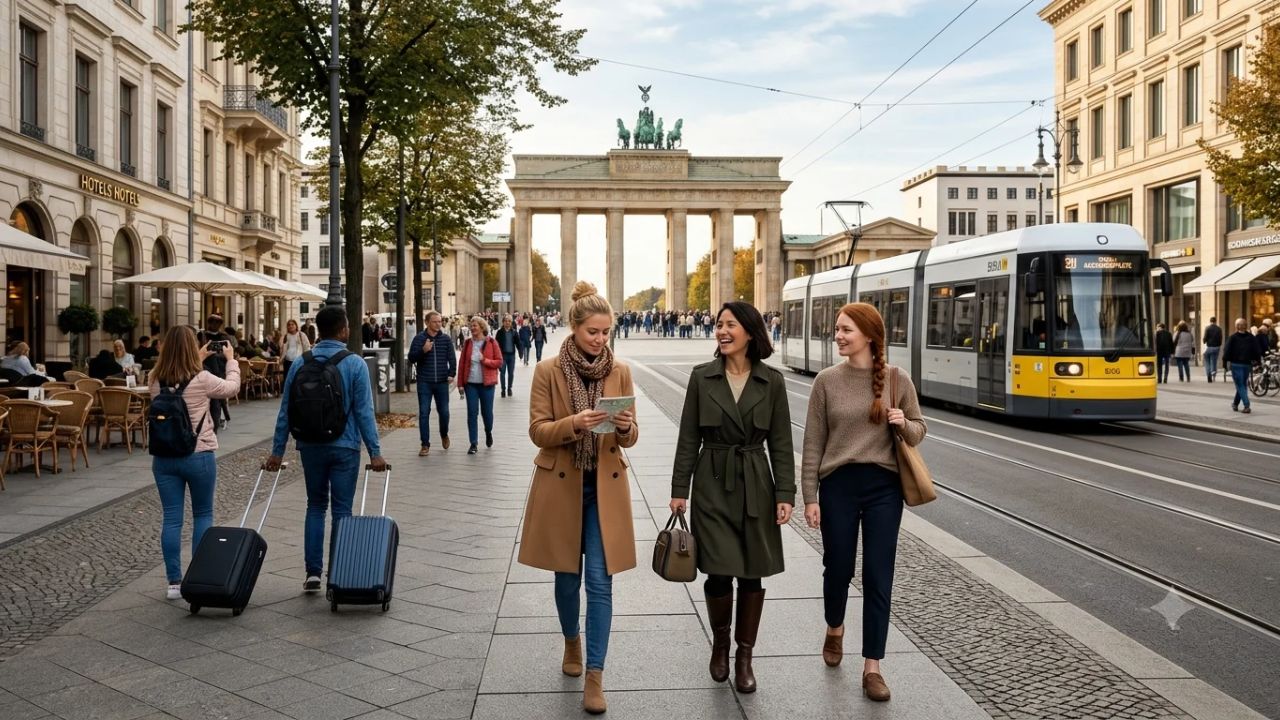
Germany’s tourism sector established a historic performance milestone during the first nine months of 2026, reaching 389.8 million overnight stays as an autumn surge in international visitor nights accelerated by 4.8% in September.
Provisional accommodation statistics released by the Federal Statistical Office (Destatis) in November 2026 reveal that German accommodation establishments registered 48.9 million overnight stays in September alone, representing an overall 0.8% increase compared to the corresponding period in 2025. While domestic travel volume remained completely flat at 40.8 million guest nights, international inbound travelers generated 8.1 million overnight stays, expanding at six times the rate of total industry growth. This foreign visitor rebound provided the decisive momentum required to lift national lodging figures across the threshold of a new all-time record, surpassing the previous nine-month peak of 387.6 million stays set in 2025.
The findings illustrate fundamental behavioral transitions across the European travel landscape. Inbound visitors are increasingly arriving via cross-border high-speed rail, booking longer multi-night stays, and reserving lodging directly with operators rather than relying on third-party aggregators. With 389.8 million overnight stays banked through September, Germany enters the critical fourth-quarter festive market season requiring just 110.2 million stays to cross the historic 500-million annual visitor night milestone for the first time in the nation's history.
Destatis Accommodation Data: International Inbound Powers September Expansion
According to Destatis, which surveys all accommodation establishments with at least ten guest beds or pitch spaces, September 2026 highlighted the vital role that foreign travelers play in maintaining industry revenue when domestic demand stabilizes.
GERMANY TOURISM ACCOMMODATION SUMMARY: SEPTEMBER 2026
| Entity / Route | Metrics | Operational Status |
|---|---|---|
| Indicator | Volume (Sept 2026) | YoY Change |
| Total Overnight Stays | 48.9 Million | +0.8% |
| Domestic Overnight Stays | 40.8 Million | 0.0% (Flat) |
| International Overnight Stays | 8.1 Million | +4.8% |
| Domestic Share of Total Stays | 83.4% | -0.7% pts |
| International Share of Stays | 16.6% | +0.7% pts |
Although domestic holidaymakers formed the bedrock of the market—accounting for 83.4% of total bed-nights—their volume was unchanged from September 2025. Consequently, 100% of the net volume growth achieved by German lodging operators in September was driven by inbound cross-border arrivals.
The 4.8% expansion in international guest nights reflects a confluence of seasonal factors:
- Major Autumn Trade Fairs: Germany’s exhibition centers in Frankfurt, Munich, Hannover, and Cologne hosted major international commercial congresses and industrial fairs, drawing high-spending business delegations.
- Cultural Festivals and City Breaks: Cultural events, including early Oktoberfest arrivals in Munich and late-summer urban festivals across Hamburg and Berlin, attracted robust cross-border European attendance.
- Favorable Shoulder Season Climate: Mild early-autumn temperatures extended outdoor sightseeing and recreational travel well into late September.
The Historic Nine-Month Record: 389.8 Million Stays Through September 2026
Between January and September 2026, German accommodation establishments logged an unprecedented 389.8 million overnight stays. This result eclipsed the previous national record of 387.6 million stays registered during the same period in 2025 by 0.6%, confirming the resilience of the German tourism economy in the face of broader European macroeconomic headwinds.
GERMANY JAN–SEPT OVERNIGHT STAYS: THREE-YEAR TRAJECTORY
2024: [====================================] 379.2 Million
2025: [======================================] 387.6 Million (+2.2%)
2026: [=======================================] 389.8 Million (+0.6% Record)
A granular analysis of the nine-month cumulative figures demonstrates balanced structural support:
- Cumulative Domestic Stays: Rose by 0.4% to reach 324.7 million nights, showing that German residents continued to prioritize internal leisure and business travel despite elevated domestic cost-of-living pressures.
- Cumulative International Stays: Rose by 1.5% to reach 65.0 million nights, demonstrating steady international rehabilitation across both European short-haul corridors and select long-haul aviation markets.
Monthly Volatility Across the Summer Quarter
The historic nine-month milestone was achieved despite significant month-to-month seasonal fluctuations:
- July 2026: Recorded 58.4 million stays, a strong year-on-year increase of 3.2%, propelled by midsummer family vacations and school holiday departures.
- August 2026: Reached 58.7 million stays but contracted by 1.1% compared to August 2025, as heatwaves across Central Europe and shifting school vacation calendars redistributed holiday timings.
- September 2026: Rebounded to 48.9 million stays (+0.8%), demonstrating the stabilizing impact of post-summer business travel and late-season leisure getaways.
Regional Disparities: Bavaria's Outdoor Boom vs. Berlin's Urban Recalibration
National averages disguise contrasting performances across Germany’s federal states, highlighting divergent trends between alpine outdoor destinations and urban metropolis centers.
REGIONAL PERFORMANCE DIVERGENCE: BAVARIA VS. BERLIN (2026)
| Column 1 | Column 2 | Column 3 | Column 4 | Column 5 |
|---|---|---|---|---|
| Federal State | Sept 2026 Volume | Sept YoY Change | Jan–Sept 2026 Total | Jan–Sept YoY Change |
| Bavaria | 10.5 Million | +3.2% | 81.2 Million | +1.5% |
| Berlin | 2.9 Million | +1.1% | 21.6 Million | -2.2% |
Bavaria (Bayern): The Outperformer of the South
Bavaria solidified its status as Germany’s premier travel destination, generating 10.5 million overnight stays in September alone—a 3.2% year-on-year increase. Over the full January–September period, the Free State registered 81.2 million overnight stays, expanding by 1.5% over 2025.
A primary catalyst behind Bavaria’s strong showing was the camping and outdoor hospitality sector:
- Camping Surge: September campsite overnight stays in Bavaria surged by an extraordinary 21.8% year-on-year, driven by motorhome travelers taking advantage of dry weather in the Bavarian Alps, the Allgäu, and the Franconian Lake District.
- Alpine Leisure Appeal: International travelers from neighboring Austria, Switzerland, Italy, and the Netherlands drove high occupancy across southern wellness resorts and mountain lodges.
Berlin: Navigating Post-Event Consolidation
In contrast, the federal capital of Berlin navigated a more complex operating environment:
- Nine-Month Dip: Over the first nine months of 2026, Berlin registered 21.6 million overnight stays, representing a 2.2% contraction compared to the high base of 2025 (which had been boosted by major international political summits and sporting events).
- September Inbound Turnaround: Despite the nine-month decline, Berlin recorded a positive inflection in September, as foreign overnight stays returned to solid positive growth. Business delegations attending major technology expos and autumn cultural events helped lift mid-week hotel occupancy across central Mitte, Charlottenburg, and Friedrichshain.
Inbound Source Market Breakdown: Proximity and Long-Haul Momentum
Inbound visitor arrivals to Germany showed distinctive geographical dynamics, with established European neighbors maintaining high volume while emerging long-haul markets provided rapid growth.
INBOUND OVERNIGHT STAYS: PRIMARY SOURCE MARKET DYNAMICS (2026)
Netherlands   : [================================================] Leading European Market
Switzerland   : [==============================================] Strong Alpine & Border Flow
France        : [========================================] Stable Cultural & Business Demand
Poland        : [=======================================] Expanding Cross-Border Connectivity
United Kingdom: [======================================] Sustained Aviation & City-Break Demand
India         : [=========================] Rapid Growth Engine (High Spending)
Brazil        : [======================] Emerging Long-Haul Expansion
European Feeder Corridors
European source markets accounted for nearly three-quarters of all international arrivals into Germany:
- The Netherlands: Remained Germany’s largest foreign source market, supplying heavy vehicular and rail traffic into North Rhine-Westphalia, Lower Saxony, and Rhineland-Palatinate camping and holiday parks.
- Switzerland and Austria: Generated substantial cross-border shopping, cultural weekend breaks, and trade fair visits, benefiting from integrated rail connections into Munich, Stuttgart, and Frankfurt.
- France and the United Kingdom: Maintained consistent demand for urban city breaks, museum retrospectives, and corporate meetings in Berlin, Munich, and Cologne.
- Poland: Benefited from expanding direct regional express rail links and shared commercial supply chains, driving steady double-digit growth in business stays across eastern German states like Saxony and Brandenburg.
Long-Haul Expansion: The Rise of India and Brazil
Beyond the European perimeter, specialized tourism tracking highlighted significant inbound growth from non-European origin markets:
- India: Emerged as one of Germany’s fastest-growing long-haul markets, with arrivals expanding across corporate IT consulting, automotive engineering partnerships, and luxury leisure itineraries connecting Frankfurt, Munich, and the Black Forest.
- Brazil: Displayed strong recovery in long-haul leisure travel, driven by seasonal flight frequency restorations by Lufthansa and European partner airlines.
Structural Shifts in Visitor Behavior: The 10% Cross-Border Rail Surge
Research conducted by the German National Tourist Board (GNTB / Deutsche Zentrale für Tourismus - DZT) reveals profound structural changes in how international tourists reach and navigate Germany.
STRUCTURAL VISITOR BEHAVIOR CHANGES (GNTB RESEARCH JAN–AUG 2026)
Cross-Border Rail Travel  : [========================================] +10%
Direct Hotel Bookings     : [================================================] +15%
Direct Transport Bookings : [========================================] +10%
Longer Stays (4+ Nights)  : [=================] +4%
Shorter Stays (1-3 Nights): [====] +1%
1. The Cross-Border Rail Transition (+10%)
Cross-border rail travel to Germany jumped by 10% among European travelers during the first eight months of 2026. This modal shift away from short-haul regional flights was accelerated by several factors:
- High-Speed ICE and TGV Expansion: Expanded high-speed services operated jointly by Deutsche Bahn (DB), SNCF, SBB, and ÖBB—such as the direct high-speed Paris–Berlin connection and expanded ICE frequencies from Brussels, Amsterdam, and Zurich—provided competitive city-center-to-city-center travel times.
- Nightjet Sleeper Routes: Expanded ÖBB Nightjet networks connecting Berlin and Hamburg with Vienna, Zurich, and Paris provided viable overnight alternatives for climate-conscious business and leisure travelers.
- Aviation Friction: High airfare inflation, airport security queues, and baggage fees prompted travelers from neighboring nations to choose rail corridors.
2. Preference for Extended Stays (4+ Nights Up 4%)
Travelers are taking fewer rushed weekend trips in favor of deeper, more comprehensive regional journeys:
- Stays of four nights or longer grew by 4%, while short trips of one to three nights grew by only 1%.
- International visitors increasingly combine urban exploration in primary hubs (such as Munich or Frankfurt) with secondary countryside excursions into the Bavarian Forest, the Harz Mountains, or the Rhine Valley wine country.
3. The Direct-to-Consumer Booking Pivot
The research documented a decisive migration toward direct supplier channels:
- Direct Hotel Bookings Rose 15%: International guests increasingly book directly through official hotel brand websites and independent property portals, motivated by loyalty points, flexible cancellation terms, and transparent room-tier selection.
- Direct Transport Bookings Rose 10%: Travelers bypass online ticket aggregators in favor of direct booking on the DB Navigator app, securing real-time train delay notifications and seat reservations.
Chasing the 500-Million-Stay Milestone: Fourth-Quarter Projections
Germany’s record nine-month performance has placed an unprecedented milestone within striking distance: exceeding 500 million total overnight stays in a single calendar year.
THE PATHWAY TO 500 MILLION OVERNIGHT STAYS
Full-Year 2025 Benchmark Total       : 497.5 Million Stays
Jan–Sept 2026 Realized Total         : 389.8 Million Stays
Threshold Required in Q4 2026        : 110.2 Million Stays
Equivalent Q4 Volume in 2025         : 109.9 Million Stays
Required Year-on-Year Q4 Growth Rate : +0.27% (Approx. 0.3%)
In 2025, Germany registered 497.5 million overnight stays across the entire twelve-month period. Having banked 389.8 million stays through September 2026, the national hospitality industry requires 110.2 million stays during the fourth quarter (October, November, and December) to breach the 500-million mark.
Because accommodation establishments generated 109.9 million stays during Q4 2025, the sector needs only 0.27% net year-on-year growth during the final quarter of 2026 to establish the half-billion record.
Several demand drivers support this projection:
- World-Renowned Christmas Markets: Beginning in late November, signature festive markets—such as Nuremberg’s Christkindlesmarkt, Dresden’s Striezelmarkt, Munich’s Christkindlmarkt on Marienplatz, and Cologne’s Cathedral Market—attract millions of regional European and long-haul international visitors.
- Winter Corporate Conventions and Autumn Fairs: November remains one of the busiest months in the German commercial calendar, with major medical, machinery, and logistics expos filling hotel capacities in Düsseldorf, Frankfurt, and Munich.
- Early Alpine Ski and Wellness Influx: High-altitude alpine resorts in southern Bavaria typically open ski runs and wellness facilities in December, capturing holiday vacationers from across Central Europe.
Strategic Implications for Hoteliers, Rail Operators, and Tourism Boards
Germany's expanding tourism numbers carry direct commercial implications for destination managers, hotel chains, and transport providers:
1. Yield Management and Event Compression
With autumn and winter hotel occupancies rising in prime metropolitan areas, revenue managers must balance corporate contract rates with dynamic leisure pricing. During peak Christmas market weekends, luxury and boutique hotels in cities like Nuremberg, Dresden, and Cologne routinely achieve average daily rates (ADR) exceeding €280 per night. Hoteliers are introducing minimum two- and three-night stay restrictions over festive weekends to maximize per-room profitability.
2. Capitalizing on Public Transit Integration
The nationwide popularity of the Deutschlandticket (the monthly national public transit pass) has demonstrated consumer demand for simplified mobility. Destination marketing organizations (DMOs) are increasingly partnering with local transport associations to bundle visitor city cards (such as the Berlin WelcomeCard, Frankfurt Card, or Hamburg Card) with museum admissions, encouraging foreign tourists to disperse from crowded city centers into surrounding suburban and rural districts.
3. Adapting to the Rail-First Traveler
With cross-border rail travel growing at 10%, hotels situated within immediate walking distance of central railway stations (Hauptbahnhöfe) enjoy a distinct competitive advantage. Operators are reconfiguring guest services—offering automated early luggage drop-offs, express breakfast boxes for early train departures, and digital concierges with live Deutsche Bahn departure boards—to cater directly to the rail-borne international demographic.
| Tourism Sector | Primary Operational Advantage | Critical Commercial Dependency |
|---|---|---|
| Urban Hotels | Strong corporate midweek demand; festive weekend leisure | Dynamic yield management; direct-channel website incentives |
| Rail Networks (DB / SBB / ÖBB) | Expanding cross-border European market share (+10%) | On-time dispatching reliability; integrated digital ticketing |
| Bavarian Camping & Resorts | Massive outdoor hospitality expansion (+21.8%) | Weather resilience; winterization of camping infrastructure |
| Cultural & Heritage Venues | Sustained international visitor footfall | Multi-lingual digital ticketing; crowd management systems |
| Regional Tourism Boards | Dispersal of visitor spending to secondary towns | Direct marketing in feeder markets (Netherlands, Switzerland, UK) |
Practical Traveler Guide: Maximizing an Autumn and Winter Itinerary in Germany
For international travelers planning journeys to Germany between November 2026 and February 2027, the following practical guidelines ensure cost efficiency and comfortable transit:
Strategic Rail Booking
- Advance Sparpreis Fares: Long-distance ICE and Intercity train tickets should be reserved via the official DB Navigator app four to eight weeks prior to departure. Deeply discounted Sparpreis and Super Sparpreis fares offer savings of up to 70% compared to walk-up Flexpreis tickets.
- Seat Reservations: While seat reservations are optional on most domestic German ICE trains, they are strongly recommended during Friday afternoons, Sunday evenings, and the peak December Christmas market season, when trains operate at maximum capacity.
- Direct Regional Cards: For unlimited local transit within specific federal states, travelers can purchase regional day passes (such as the Bayern-Ticket in Bavaria or Schöner-Tag-Ticket NRW in North Rhine-Westphalia), which provide unlimited regional train, subway, and tram travel for small groups at fixed daily prices.
Planning for the Christmas Market Season
- Opening Timelines: Most German Christmas markets open during the final week of November (typically the Monday before the first Sunday of Advent) and conclude on December 23 or 24. A select number of urban markets (such as in Berlin and Speyer) remain open through early January.
- Cash and Digital Payments: While digital card payments and mobile contactless options have expanded significantly across Germany, many traditional artisanal craft and food stalls at historic Christmas markets operate on a cash-only basis. Travelers should carry sufficient Euro currency for small transactions.
- Daylight Hours Management: By December, daylight in Germany spans roughly from 08:15 to 16:15. Plan outdoor walking tours, castle visits, and architectural sightseeing during the midday hours, reserving late afternoons and evenings for illuminated festive markets, classical concerts, and heated thermal baths.
Frequently Asked Questions
What do the latest Destatis statistics reveal about Germany's tourism performance in September 2026?
According to Destatis, Germany recorded 48.9 million overnight stays in September 2026, representing a 0.8% increase compared to September 2025. Growth was driven entirely by international visitors, whose overnight stays surged by 4.8% to 8.1 million, while domestic stays remained flat at 40.8 million.
What historic record did German tourism achieve during the first nine months of 2026?
Between January and September 2026, Germany registered an all-time record of 389.8 million overnight stays, outperforming the previous peak of 387.6 million set during the same period in 2025 by 0.6%. Domestic stays reached 324.7 million (+0.4%), and foreign guest nights totaled 65.0 million (+1.5%).
How did regional tourism vary between Bavaria and Berlin?
Bavaria demonstrated strong growth, recording 10.5 million stays in September (+3.2%) and 81.2 million stays through September (+1.5%), with campsite stays surging 21.8%. Berlin recorded 21.6 million stays over the first nine months (-2.2%), though its international visitor numbers returned to positive growth in September.
What are the chances of Germany reaching 500 million overnight stays in 2026?
The 500-million milestone is well within reach. Having banked 389.8 million stays through September, Germany requires 110.2 million stays during the fourth quarter (October–December) to hit 500 million. Given that Q4 2025 generated 109.9 million stays, the country needs just 0.27% growth in late 2026 to cross the threshold.
How are travel preferences changing among European visitors heading to Germany?
Research by the German National Tourist Board shows that cross-border rail travel to Germany grew by 10% during the first eight months of 2026. In addition, holidays of four nights or longer increased by 4%, while direct hotel and transport bookings rose by 15% and 10%, respectively.
Which international source markets are driving inbound tourism growth in Germany?
Established European neighbors—including the Netherlands, Switzerland, France, and Poland—continue to provide the largest volume of foreign visitors. Among long-haul markets, India and Brazil recorded substantial growth, supported by expanded business links and restored aviation frequencies.
Related Travel Guides
- Cyprus and Mediterranean Tourism Real Estate Face Debt Restructuring and Green Investment Reset
- Kenya Targets 60% MICE Tourism Growth by 2027: Convention Infrastructure, JKIA Expansion, and Global Source Markets
- Happy Passports Index 2026: Sweden, Finland, and Global Destinations Lead Tourism Mobility and Living Standards
- European Winter Travel Surge as 76% Plan Seasonal Getaways Across France, Spain, and Italy
This article is for informational purposes. Flight routes, passenger regulations, visa rules, and transit advisories are subject to change by airlines and aviation authorities. Readers are advised to verify schedules and travel documentation with relevant carriers and border agencies before departure.
Related Stories

Albania Euro Exchange Rate Plummets 35% Against Lek Since 2016 as Tourism Inflows and Property Boom Reshape Travel Costs