
Phu Quoc Island Evolution Showing Smart Long-Term Travel Planning Protecting Delicate Coastal Systems In Vietnam
Phu Quoc Island Evolution Showing Smart Long-Term Travel Planning Protecting Delicate Coastal Systems In Vietnam

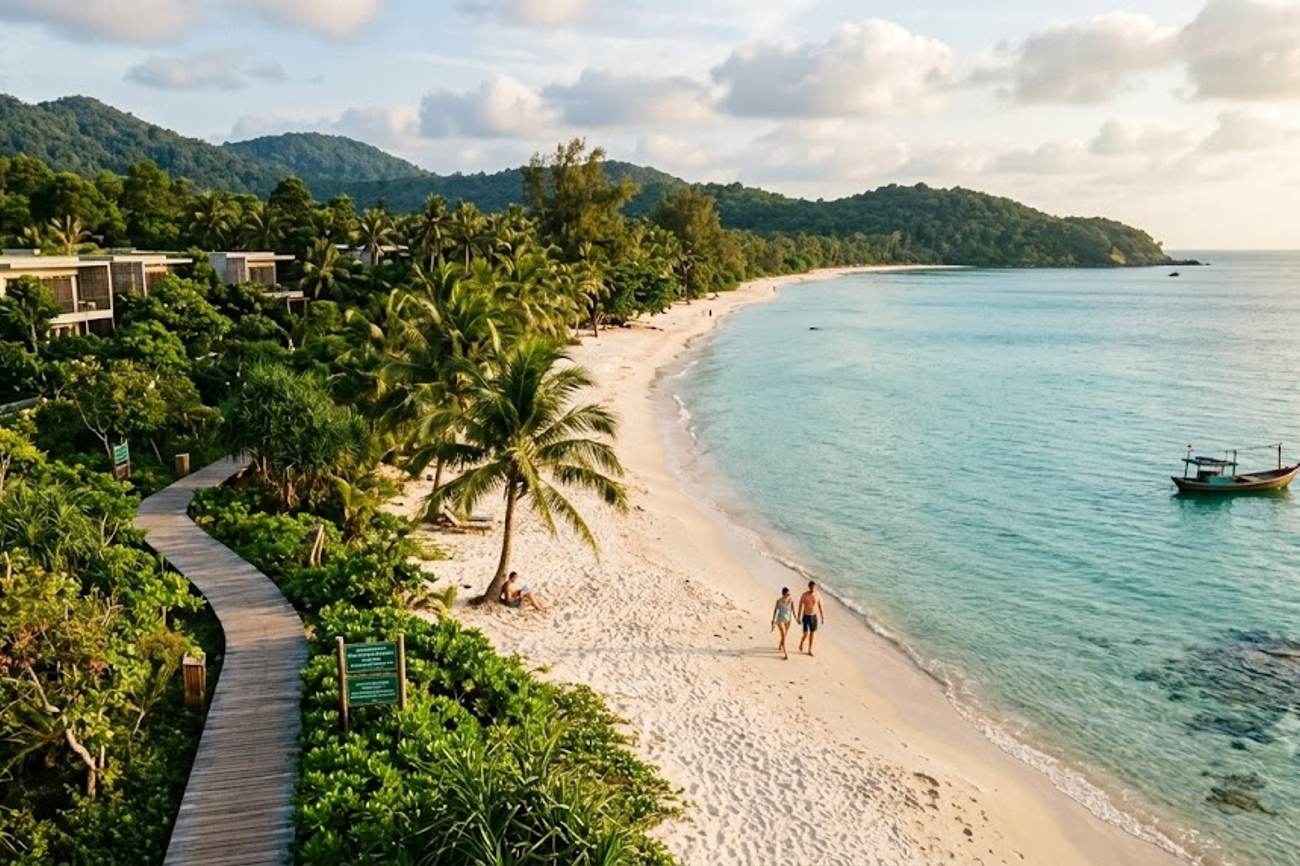
Image generated by AI
8.5 million tourists is the target arrival figure for Phu Quoc by 2024, a milestone that serves as the catalyst for a massive overhaul of the island's physical and social infrastructure. This aggressive scaling is not merely about hotel room counts but is a strategic preparation for the 2026 Annual Meetings of the APEC forum. By positioning itself as a diplomatic and luxury hub, the Vietnamese government is attempting to pivot the island from a seasonal getaway to a permanent fixture on the global high-end circuit.
The Geopolitics of Island Development
The current construction surge on Phu Quoc is the culmination of a process that began in 2000, when Vietnam initiated a series of legislative amendments to open its economy to global capital. This liberalization triggered a boom in international-standard resorts across major urban centers. However, the island presents a unique legal and environmental challenge: the tension between unconstrained development—often permitted by international investment agreements—and the fragility of marine ecosystems.
Unlike previous development cycles in Vietnam, the Phu Quoc strategy is attempting to avoid the "Bali-Phuket Trap." These neighboring hubs provide a cautionary tale of unmanaged over-tourism, where the lack of structural oversight led to systemic traffic congestion, the collapse of public utilities, and the erosion of the very cultural heritage that initially attracted visitors. To counter this, the local government has implemented a proactive spatial strategy that organizes the island into specialized coastal tourism clusters. This method is designed to distribute visitor density across multiple geographic zones rather than concentrating it in a single, suffocating core.
Infrastructure Scaling and Passenger Metrics
The ambition of the island's growth is most evident in its transport logistics. The expansion of the Phu Quoc International Airport is being executed in stages to ensure the island can handle the projected surge in long-haul arrivals. The operational trajectory is steep: the airport is moving from a capacity of under 5 million annual passengers to a target of 10 million by 2030, with a long-term 2050 goal of 18 million passengers and 50,000 tonnes of annual cargo.
Recent data indicates that this growth is already in motion. In a single seven-month window, the airport processed over 4.48 million air travelers across 27,920 take-offs and landings. This aviation growth is mirrored by maritime investments, specifically the development of deep-water cruise ports and modern passenger terminals designed for high-capacity international vessels.
| Metric | Current/Recent | 2030 Target | 2050 Target |
|---|---|---|---|
| Annual Passenger Volume | < 5 Million | 10 Million | 18 Million |
| Annual Cargo Capacity | N/A | N/A | 50,000 Tonnes |
| 7-Month Flight Movements | 27,920 | N/A | N/A |
| 7-Month Passenger Count | 4.48 Million | N/A | N/A |
Expert Analysis: The Human Capital Deficit
For the global traveler, the most critical variable in Phu Quoc's success is not the number of runways or five-star lobbies, but the "human infrastructure." There is a staggering disparity between the projected workforce needs and the current population. The island requires a long-term tourism workforce exceeding 300,000 skilled professionals, yet the native resident population base is under 180,000.
This creates a structural void that, if left unfilled, will lead to the "service dilution" seen in other rapidly scaled resort zones. When guest volume outpaces labor readiness, the result is high staff turnover, language barriers, and a degradation of the luxury experience. To mitigate this, the government is integrating social infrastructure—vocational schools, hospitality academies, and affordable housing—directly into the commercial development plans.
To manage the influx of visitors while protecting coastal ecosystems, the Vietnamese government has implemented specific visa exemptions for international travelers arriving directly at the island's airport. Travelers can coordinate their arrivals through the Vietnam National Administration of Tourism, which provides updated guidelines on sustainable visiting practices.
The pricing pressure this creates is significant. As the island competes for talent to fill a 120,000+ person deficit, operational costs for resorts will likely rise. For travelers booking these routes, the direct consequence will be a shift in pricing models; luxury premiums will no longer just cover the view, but the cost of importing and housing a professional workforce in an environment where native labor is insufficient. Furthermore, the shift toward "eco-sensitive" development, championed by the Vietnam National Authority of Tourism, suggests that "green taxes" or sustainability levies may become common as the island attempts to preserve its rainforests and marine waters against the weight of 8.5 million annual visitors.
Key Takeaways
- Aggressive Growth Targets: The island is scaling for 8.5 million visitors by 2024 and preparing for the 2026 APEC forum.
- Aviation Expansion: Airport capacity is projected to nearly quadruple from current levels to 18 million passengers by 2050.
- Labor Shortage: A critical gap exists between the required workforce (300,000+) and the native population (< 180,000).
- Spatial Planning: Development is shifting toward "coastal clusters" to prevent the over-tourism degradation seen in Bali and Phuket.
- Diversified Transit: Growth is being supported by a dual-track expansion of both international flight paths and deep-water cruise terminals.
FAQ: Phu Quoc Travel 2024-2026
Is Phu Quoc becoming too crowded for luxury travelers? The government is implementing "coastal clusters" and spatial planning to distribute crowds. While visitor numbers are rising toward 8.5 million, new developments like Thom Island and Primavera Village are designed to isolate high-end experiences from high-density zones.
How will the 2026 APEC forum affect visitors? Expect significant infrastructure improvements in roads, hotels, and airport facilities. However, during the event, there may be increased security and temporary restrictions on certain areas to accommodate diplomatic delegates.
What makes Phu Quoc's development different from Bali or Phuket? Phu Quoc is utilizing a multi-decade master plan (extending to 2050) that prioritizes social infrastructure—like worker housing and vocational schools—alongside luxury resorts to avoid the utility collapses seen in other hubs.
Are there sustainable options for visiting the island? Yes, the regional strategy emphasizes ecotourism initiatives focused on protecting local rainforests and marine ecosystems, moving away from unconstrained development toward a more managed, eco-sensitive model.
The race to build a diplomatic paradise often risks erasing the very serenity that makes a destination worth visiting.
Tags: Phu Quoc, APEC 2026, Vietnam National Authority of Tourism, Phu Quoc International Airport, Vietnam Tourism Strategy 2050
Related Travel Guides
- Colombia Steps Up With Peru and Others as Caminos Andinos Puts Local Tourism Spending Into Focus
- United States Aligns With Outdoor Escapes As Hidden Lakes Offer Tahoe Inspired Adventures Without Crowds
- Nepal’s Laligurans Trail Tourism Project Opens New Himalayan Trekking Destination Connecting Nature and Culture
Disclaimer
This article is for informational and educational purposes only. It does not constitute legal, financial, or professional advice. While we strive to provide accurate and up-to-date information, travel policies, regulations, and conditions change rapidly. Always verify information with official sources before making travel decisions. Nomad Lawyer makes no representations about the accuracy, reliability, completeness, or suitability of the information provided. Readers should consult qualified professionals for advice specific to their circumstances. The views expressed in this article are those of the author and do not necessarily reflect the views of Nomad Lawyer.
Naina Thakur
Contributor & Travel Specialist
Travel enthusiast and legal writer covering visa regulations, responsible tourism, and cultural journeys across global destinations.
Learn more about our team →