
Nepal’s Laligurans Trail Tourism Project Opens New Himalayan Trekking Destination Connecting Nature and Culture
Nepal’s Laligurans Trail Tourism Project Opens New Himalayan Trekking Destination Connecting Nature and Culture

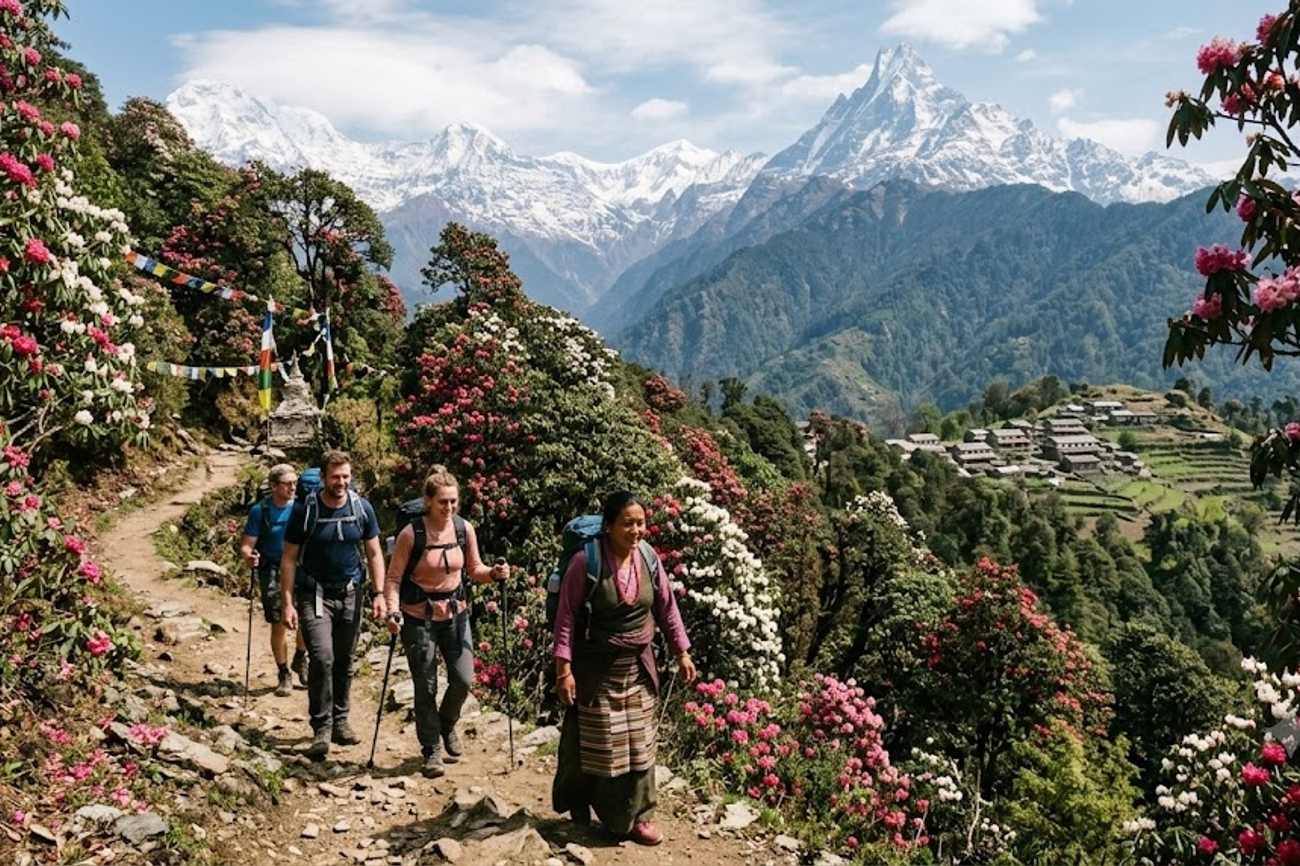
Image generated by AI
While traditional trekking hubs in the Everest and Annapurna regions have historically captured the vast majority of Nepal's tourism revenue, the launch of the Laligurans Trail signals a strategic shift toward regional diversification. By targeting the underdeveloped Tehrathum and Sankhuwasabha districts, the Nepal government is attempting to pivot from a high-density "hub" model to a distributed "corridor" model, aiming to reduce the ecological pressure on the Sagarmatha region while tapping into the growing global demand for low-impact, community-based eco-tourism.
The Laligurans Corridor in Numbers
The Laligurans Trail Tourism Project is not merely a path-clearing exercise but a structured economic intervention scheduled for completion in 2028. Launched in 2024, the project operates on a four-year development timeline designed to integrate 12 distinct local government areas across the Tehrathum and Sankhuwasabha districts of the Koshi province.
The financial architecture of the project reveals a heavy reliance on international development aid, which is a common pattern in Himalayan infrastructure projects. The funding is distributed as follows:
- Swiss Government: 51%
- Local Governments: 22%
- Koshi Provincial Government: 22%
- Government of Nepal: 5%
This 51% majority stake from Switzerland suggests that the project is being held to international sustainability and transparency standards, likely aligning with the World Tourism Organization (UNWTO) guidelines for sustainable rural development. The objective is to transform the eastern hills into a competitive trekking destination by installing specific sustainable infrastructure: stone steps, dry-stone retaining walls, side drains, cross-drainage systems, and public drinking water facilities.
The biological draw of the region is quantified by Nepal's possession of approximately 32 rhododendron species, a significant concentration of which are located in this eastern sector. By integrating these biodiversity hotspots with high-altitude peaks—specifically providing views of Makalu, Kanchenjunga, Lhotse, and Everest—the project is attempting to create a "multi-peak" attraction that rivals the singular focus of the Everest Base Camp trek.
Comparative Regional Analysis: East vs. Central Nepal
Historically, Nepal's tourism has been characterized by extreme geographic concentration. Data from IATA and regional tourism boards indicate that the majority of international arrivals are funneled into a few specific corridors. The Laligurans Trail is a direct attempt to shift this market share.
The following table compares the traditional "Hub" model of the Everest/Annapurna regions against the "Corridor" model being implemented in the Koshi province.
| Metric | Traditional Hubs (Everest/Annapurna) | Laligurans Trail (Koshi Province) |
|---|---|---|
| Visitor Density | High / Overcrowded | Low / Emerging |
| Economic Focus | Large Lodge Operators | Community Homestays |
| Primary Attraction | Summit Peaks / Base Camps | Rhododendron Biodiversity / Culture |
| Infrastructure State | Established / Commercialized | Under Development (2024-2028) |
| Activity Mix | Trekking / Climbing | Trekking / Paragliding / Rafting / Biking |
| Funding Source | Private Investment / Entry Fees | International Aid (51% Swiss) / Gov |
This shift represents a move toward "Slow Tourism." While the traditional hubs focus on the achievement of reaching a specific altitude or landmark, the Laligurans model emphasizes the journey through 12 local government areas, integrating sites like Tin Jure Danda, Milke Danda, and the lakes of Gupha Pokhara, Rat Pokhara, Dhan Pokhara, and K hoping Pokhara.
Practical Traveler Advisory and Strategic Insights
For the individual traveler, the development of the Laligurans Trail changes the risk-reward calculus of visiting eastern Nepal. Currently, the region is "lesser-explored," which often translates to a lack of standardized safety infrastructure and lodging.
1. Booking Window and Timing: Because the project is in a development phase until 2028, travelers should not expect "turnkey" luxury. However, the spring season is the critical data point for visit planning. Given the focus on the 32 rhododendron species, peak bloom periods in the eastern Himalayas will likely see a surge in demand. If planning a visit for the 2025-2027 window, booking local guides 12-16 weeks in advance is recommended, as the pool of certified guides for this specific corridor is smaller than in the central regions.
2. Diversification of Activity: The integration of private-sector adventure tourism—specifically bungee jumping, zip-lining, paragliding, and kayaking—means that the "trekker" profile is expanding. Travelers who previously avoided the Himalayas due to the physical rigor of high-altitude trekking can now utilize the trail as a base for adventure sports.
3. Budgetary Shifts: The emphasis on homestay development suggests a lower average daily spend compared to the commercial tea houses of the Khumbu region. Travelers can expect a more authentic, community-led pricing structure, though the lack of competition in these 12 local areas may lead to price volatility until the project reaches full maturity in 2028.
Forward Projection: The 2028 Horizon
Based on current trajectory and the funding model, the Laligurans Trail is positioned to become the primary alternative to the "over-tourism" seen in Nepal's central corridors. We can project three primary outcomes by 2028:
First, the "Biodiversity Premium." As global travelers move away from trophy-hunting (summiting) toward ecological education, the focus on rhododendron conservation will likely attract a higher-spending, environmentally conscious demographic. This aligns with broader trends tracked by the World Travel & Tourism Council (WTTC) regarding the rise of nature-positive tourism.
Second, the decentralization of the Himalayan economy. By linking 12 local government areas, the project will create a distributed revenue stream. This reduces the economic vulnerability of the region; if one area faces a climate-related closure, the other 11 nodes of the corridor can maintain tourism flow.
Third, the evolution of the "Adventure Hybrid." The combination of traditional trekking with modern adrenaline sports (bungee, zip-lining) will likely attract a younger, Gen Z and Millennial demographic that seeks "Instagrammable" adventure combined with cultural authenticity.
FAQ: Laligurans Trail 2024-2028
Will trekking prices increase as the trail is developed? Initially, costs may remain low due to the homestay model. However, as infrastructure improves and the "biodiversity premium" attracts more international tourists, expect a gradual increase in guide fees and specialized tour packages by 2028.
Is this a good time to book a trip to eastern Nepal? For the "pioneer" traveler, yes. However, for those requiring high-end facilities, waiting until 2026-2028—when the Swiss-funded infrastructure and public toilets are fully operational—is a smarter data-driven decision.
Which activities are most recommended for this route? Beyond trekking, the data suggests focusing on the spring bloom for rhododendrons and utilizing the new adventure offerings like paragliding and rafting, which differentiate this route from the drier, high-altitude Everest treks.
How does this route differ from the Everest Base Camp trek? The Laligurans Trail focuses on biodiversity, indigenous culture, and diverse adventure sports across 12 local areas, whereas EBC is a linear ascent focused on altitude and the summit of the world's highest peak.
The shift from peak-centric tourism to corridor-based eco-exploration marks the beginning of Nepal's second era of Himalayan travel.
Related Travel Guides
- Macao Expands Heritage Tourism Beyond Its Casino Districts
- Trinidad And Tobago Aligns With Jamaica And More Countries As Aruba Tourism Surges 11% Through Strong Branding And Sustainable Growth
- Saudi Arabia Entry Rules Update is Now a Thing for Better Travel as E-Visa Checks Arrive and KSA Tourist Permit Comes Next
Disclaimer
This article is for informational and educational purposes only. It does not constitute legal, financial, or professional advice. While we strive to provide accurate and up-to-date information, travel policies, regulations, and conditions change rapidly. Always verify information with official sources before making travel decisions. Nomad Lawyer makes no representations about the accuracy, reliability, completeness, or suitability of the information provided. Readers should consult qualified professionals for advice specific to their circumstances. The views expressed in this article are those of the author and do not necessarily reflect the views of Nomad Lawyer.
Raushan Kumar
Founder & Lead Developer
Full-stack developer with 11+ years of experience and a passionate traveller. Raushan built Nomad Lawyer from the ground up with a vision to create the best travel and law experience on the web.
Learn more about our team →