Philadelphia Tourism Rebrand 2027: Convention Growth and Cultural Travel Guide

Between May 1 and August 31, 2026, Center City Philadelphia hotels generated approximately US$335.6 million in room revenue—a 20.6% surge over the previous year fueled by America's 250th anniversary celebrations, six FIFA World Cup matches, and the MLB All-Star Week. Capitalizing on this unprecedented global exposure, the city's official convention and international marketing arm announced on November 25, 2026, that it will officially rename itself Philadelphia Conventions & Tourism on January 7, 2027. The strategic overhaul marks a unified effort to convert international sporting prestige and corporate exhibition traffic into enduring leisure tourism.
For business delegates, solo cultural travelers, and international convention attendees arriving in Pennsylvania's largest city, this evolution reshapes how the destination connects meeting spaces with historic civic neighborhoods.
Deciphering the 2027 Tourism and Convention Evolution
The shift from the historic Philadelphia Convention and Visitors Bureau moniker to Philadelphia Conventions & Tourism clarifies the agency’s dual mission: driving corporate event acquisitions while spearheading overseas group tourism promotion. The restructuring operates alongside Visit Philadelphia, which continues its independent stewardship of domestic leisure marketing without an agency merger.
The operational timing directly follows a landmark 2026 calendar. On July 4, 2026, Philadelphia hosted a FIFA World Cup Round of 16 fixture that coincided exactly with the nation's 250th birthday commemorations at Independence Hall. Alongside the PGA Championship and MLB All-Star Week, the sporting calendar confirmed Philadelphia's ability to coordinate mass international logistics while maintaining visitor satisfaction.
The table below contextualizes key performance benchmarks and operational metrics defining Philadelphia’s convention and hospitality economy:
| Economic & Operational Indicator | Reported Performance Data | Reference Period / Source | Strategic Significance |
|---|---|---|---|
| Center City Hotel Revenue | US$335.6 million (+20.6% YoY) | May 1 – August 31, 2026 | Record summer lodging performance |
| Annual Visitor Volume | 26.6 million visitors | 2024 Municipal Filings | Established domestic & overseas appeal |
| Annual Visitor Spending | US$4.5 billion direct spend | 2024 Municipal Filings | High-yield dining, cultural & retail impact |
| Total Economic Impact | Estimated US$7.0 billion | 2024 Municipal Filings | Broad regional employment support |
| Convention Center Space | Over 1.0 million sq ft | Facility Specifications | Multi-hall flexible exhibition capacity |
| Capital Facility Investments | US$93.8 million | Since 2020 (Bureau Data) | Upgraded digital signage & accessibility |
| Convention Center Events Hosted | 147 major events | 2024 Annual Total | Core meeting and exhibition demand |
| Convention Delegate Attendance | 942,977 registered attendees | 2024 Annual Total | Direct commercial patron base for downtown |
The Pennsylvania Convention Center as an Urban Anchor
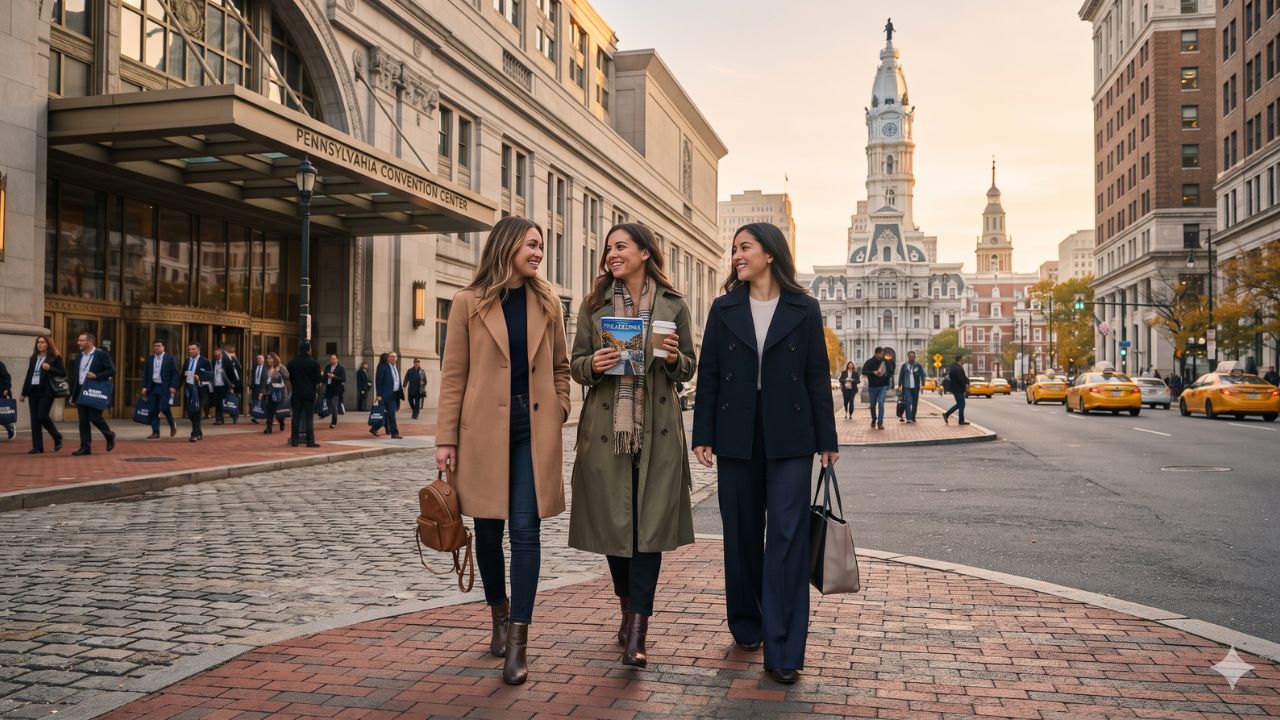
Unlike isolated suburban exhibition barns common across the United States, the Pennsylvania Convention Center anchors the heart of Center City. Spanning more than one million square feet of flexible meeting space, ballrooms, and exhibition floors, the facility allows convention delegates to step straight into walkable neighborhoods without requiring shuttle buses.
Since 2020, the facility has absorbed US$93.8 million in targeted capital improvements. These funds modernized high-speed digital communications, upgraded accessibility standards, enhanced meeting halls, and introduced digital wayfinding signage designed to streamline navigation for international delegations.
During 2024 alone, the center hosted 147 discrete events that drew 942,977 participants. When paired with the city's 2024 annual performance—recording 26.6 million total visitors who generated US$4.5 billion in direct expenditure and an estimated US$7 billion in economic output—the venue serves as the financial engine for surrounding restaurants, transit routes, and family-owned storefronts.
Exploring Philadelphia’s Historic Core and Living Culture
The primary advantage for travelers visiting Philadelphia lies in the compactness of its cultural assets:
The Cradle of American Independence
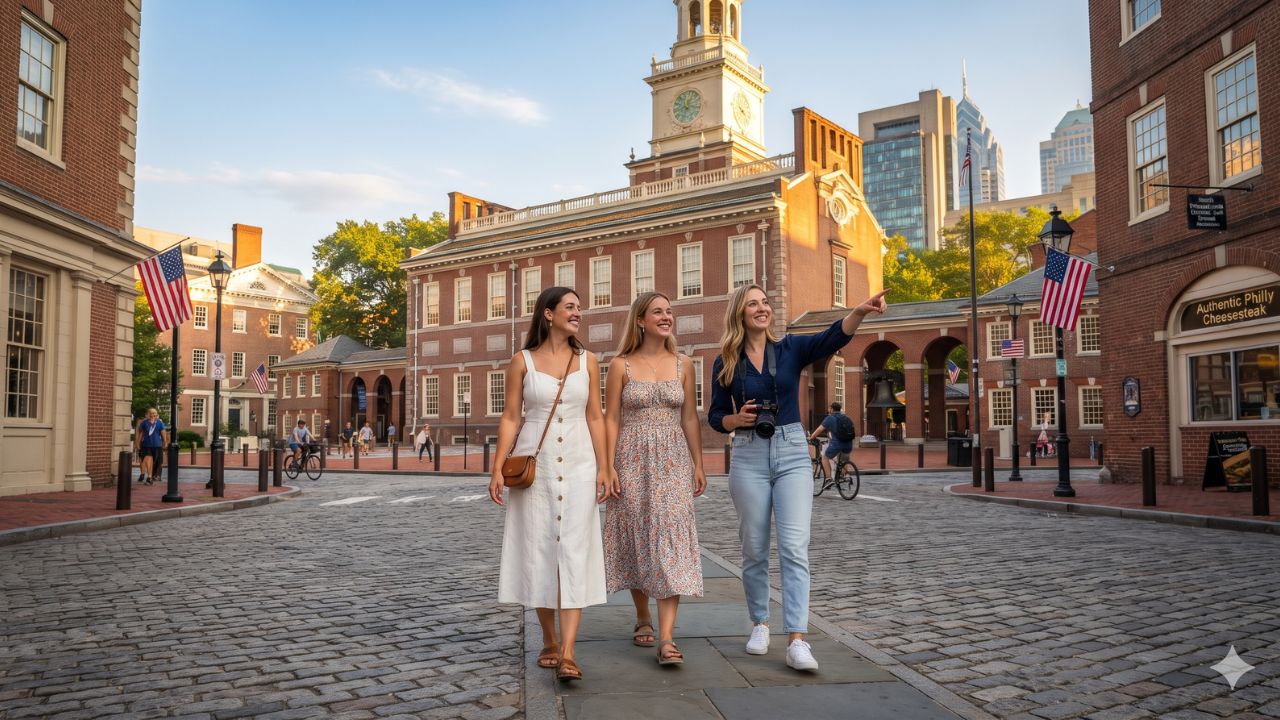
Centuries of civic history sit within a ten-minute walk of the convention halls at Independence National Historical Park. Travelers can view the iconic Liberty Bell and stand inside Independence Hall, inscribed by the UNESCO World Heritage Centre for its role as the birthplace of the Declaration of Independence and the United States Constitution. Surrounding cobblestone avenues throughout Society Hill and Old City showcase preserved eighteenth-century brick townhomes and courtyards.
Culinary Traditions at Reading Terminal Market
Positioned directly beneath the former train shed of the convention complex, Reading Terminal Market has operated continuously since 1893. Delegates and food lovers can navigate stalls run by Pennsylvania Dutch merchants, sampling fresh warm shoofly pie, Amish butter-basted pretzels, roast pork sandwiches layered with broccoli rabe and sharp provolone, and artisanal cheeses.
World-Class Arts and Public Murals
Walking west along the tree-lined Benjamin Franklin Parkway leads past the Barnes Foundation and The Franklin Institute to the Philadelphia Museum of Art. Beyond formal museum galleries, the city doubles as an open-air exhibition through Mural Arts Philadelphia, displaying thousands of community-painted exterior murals that narrate neighborhood struggles, civil rights achievements, and community identity.
Visitor Insider Tips: Maximizing Your Philadelphia Stay
- Leverage Center City Walkability: Avoid renting a car. Center City is laid out on William Penn’s grid plan, making walking between hotels, the convention center, and historic sights straightforward. For longer trips, SEPTA subway and trolley lines connect efficiently across town.
- Access Early Morning Historic Sites: Independence Hall requires timed-entry reservations through recreation.gov during peak seasons. Book the earliest 09:00 morning slot to view the Assembly Room before midday tour groups arrive.
- Dine Beyond Standard Tourist Steakhouses: While cheesesteaks are famous, Philadelphia's culinary reputation thrives on neighborhood BYOB (Bring Your Own Bottle) bistros in Midtown Village, Fishtown, and South Philadelphia, where diners bring their own wine with zero corkage fees.
- Airport Rail Link: The SEPTA Airport Line train departs every 30 minutes from all Philadelphia International Airport (PHL) terminals, reaching Jefferson Station—directly connected inside the convention center—in precisely 25 minutes for under $7.
Cultural Stewardship and Civic Preservation
Philadelphia’s hospitality expansion demonstrates how historic preservation coexists with modern infrastructure. Rather than replacing historic fabric, civic initiatives convert eighteenth- and nineteenth-century banks, railway terminals, and civic halls into boutique lodging and adaptive culinary venues.
Tourism revenues support neighborhood initiatives that extend beyond downtown monument zones, funding urban greening, public school arts partnerships, and exterior mural restoration. By patronizing independent immigrant-owned eateries along the 9th Street Italian Market and Chinatown, visitors sustain the multi-generational communities that give Philadelphia its distinct identity.
FAQ: Philadelphia Travel and Rebranding 2027
Does the January 7, 2027 rebrand affect travel entry rules?
No. The rebranding of Philadelphia Conventions & Tourism is an organizational name change for the convention bureau. It does not alter US visas, airport procedures, hotel occupancy taxes, or event registration fees.
How do I travel from Philadelphia International Airport to Center City?
The direct SEPTA Airport Line train operates every 30 minutes, delivering passengers directly to Center City stations (including Jefferson Station at the convention center) in 25 minutes.
What is the difference between Philadelphia Conventions & Tourism and Visit Philadelphia?
Philadelphia Conventions & Tourism focuses primarily on corporate conventions, business meetings, and international group marketing, while Visit Philadelphia manages domestic leisure tourism promotion.
When is the best time of year to visit Philadelphia?
Spring (April to May) and autumn (September to November) provide comfortable temperatures for walking, active outdoor dining, and cultural festivals without summer heat or winter chills.
Philadelphia enters 2027 by uniting historic pride with forward-looking hospitality, inviting the world to discover an authentic American metropolis.
Related Travel Guides
This article is for informational purposes. Flight routes, passenger regulations, visa rules, and transit advisories are subject to change by airlines and aviation authorities. Readers are advised to verify schedules and travel documentation with relevant carriers and border agencies before departure.
Related Stories
Philadelphia 2026 Semiquincentennial Guide: Historic Icons, Parkway Arts, and Food Rhythms

Alaska and North Dakota Wilderness Guide 2026: Glaciers, Badlands, and Frontier Towns