New Jersey Hidden Gems Guide 2026: Eight Towns for Historic and Nature Road Trips

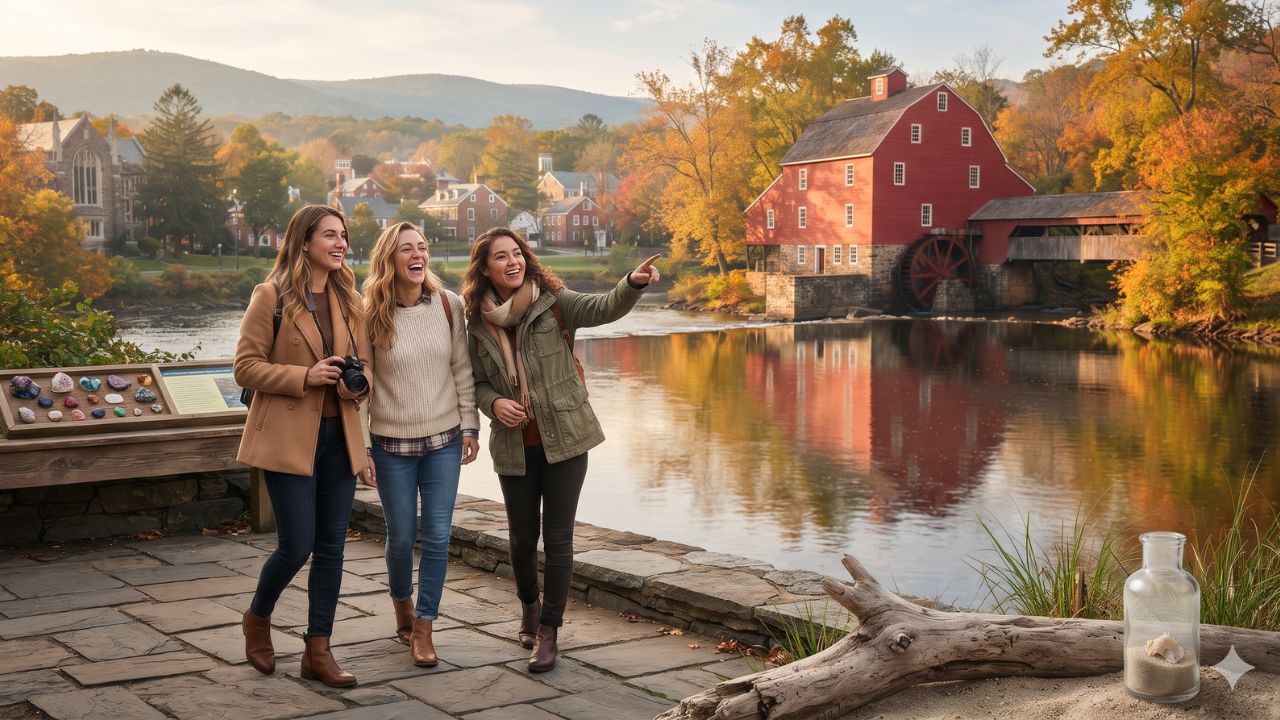
In a zinc mining borough tucked into northern New Jersey, a single quarry has yielded more than 350 distinct mineral species—including dozens that glow in neon reds, greens, and yellows under ultraviolet light, making Franklin the fluorescent mineral capital of the world. Long eclipsed by highway transit corridors, Atlantic City boardwalks, and suburban commuter hubs outside New York City and Philadelphia, New Jersey holds dramatic geographical diversity across its twenty-one counties. Within a two-hour drive, travelers can traverse the Appalachian ridges of Sussex County, walk the Continental Army winter encampments in Morristown, and birdwatch along barrier island dunes where swimming is barred to protect endangered shorebirds.
Exploring these eight underrated towns reveals a slower, deeply historic side of the Garden State, connecting travelers to independent arts communities, living maritime ecosystems, and colonial crossroads.
Eight Distinctive New Jersey Towns at a Glance
The eight featured communities represent the varied geographic zones of New Jersey—from northern mountain ridges and central river valleys to southern salt marshes:
| Destination | County & Region | Signature Attraction | Primary Focus |
|---|---|---|---|
| Wantage | Sussex County (North) | High Point State Park | Mountain hiking & panoramic views |
| Franklin | Sussex County (North) | Franklin Mineral Museum | Fluorescent mineral science & mining |
| Morristown | Morris County (North-Central) | Morristown National Historical Park | Revolutionary War encampments |
| Clinton | Hunterdon County (West-Central) | Red Mill Museum Village | Riverside 19th-century mills & art |
| Princeton | Mercer County (Central) | Princeton University Campus & Museum | Gothic architecture & nature trails |
| Long Branch | Monmouth County (Shore) | Seven Presidents Oceanfront Park | Coastal walking trails & Pier Village |
| Brigantine | Atlantic County (South Shore) | North Brigantine Natural Area | Dune preservation & birdwatching |
| Stone Harbor | Cape May County (Cape May) | Stone Harbor Point & Wetlands Institute | Salt marsh ecology & beach escapes |
Character and Heritage of the Eight Gateways
Wantage: The Crown of the Kittatinny Ridge
In Sussex County, Wantage is home to High Point State Park, managed by the New Jersey Department of Environmental Protection. At 1,803 feet, High Point marks the highest elevation in New Jersey. The granite Veterans’ Memorial obelisk provides vistas sweeping across New Jersey, New York, and Pennsylvania. Trails connect with the Appalachian Trail, while winter brings cross-country skiing. Nearby Mountain Creek in Vernon offers downhill skiing and water recreation.
Franklin: Subterranean Geological Wonders
Known globally among geologists, Franklin’s mineral wealth originated from ancient volcanic sea floor deposits. The Franklin Mineral Museum exhibits specimens of willemite, calcite, and esperite that phosphoresce under black light. In nearby Ogdensburg, the Sterling Hill Mining Museum takes visitors deep into underground tunnels, showcasing historic zinc mining and the "Rainbow Tunnel" where veins of fluorescent ore illuminate the bedrock.
Morristown: Where the Continental Army Survived
Known as the military capital of the American Revolution, Morristown sheltered George Washington’s troops during the winters of 1777 and 1779–1780. Preserved by the National Park Service as America's first National Historical Park, the site encompasses the Ford Mansion (Washington’s headquarters) and Jockey Hollow, where reconstructed soldier huts demonstrate camp conditions. Nearby, the Morris Museum and Mayo Performing Arts Center provide contemporary cultural experiences.
Clinton: A Historic Gristmill Riverfront
Divided by the South Branch of the Raritan River, Clinton centers on the Red Mill Museum Village, an 1810 four-story red wool and grist mill overlooking falls. On the opposing bank, the Hunterdon Art Museum occupies a stone mill, hosting contemporary craft exhibitions. Nearby, Spruce Run Recreation Area offers freshwater boating and shoreline trails.
Princeton: Intellectual Legacy and Forest Trails
Beyond collegiate Gothic architecture, Princeton blends scholarly heritage with historic conservation. Visitors can tour Princeton University's campus and Nassau Hall, browse bookshops along Nassau Street, and wander Palmer Square. Nature lovers can walk Institute Woods, a forest preserve where Albert Einstein walked daily. Nearby, Princeton Battlefield State Park and Terhune Orchards showcase colonial history and local farming.
Long Branch: Gilded Seaside Heritage
Long Branch was the favored ocean retreat for seven American presidents, including Ulysses S. Grant and Woodrow Wilson. Seven Presidents Oceanfront Park preserves this heritage with boardwalks, dune paths, and seasonal beaches. Next door, Pier Village offers oceanfront dining and lodging, while nearby Monmouth University houses the Bruce Springsteen Archives.
Brigantine: Pristine Barrier Island Sanctuaries
Directly north of Atlantic City lies Brigantine, an unspoiled barrier island. At its northern tip, North Brigantine Natural Area protects maritime dunes and salt marsh nesting grounds for piping plovers and least terns. To safeguard wildlife, swimming is prohibited within the natural reserve. Adjacent tidal wetlands connect to the Edwin B. Forsythe National Wildlife Refuge along the Atlantic Flyway.
Stone Harbor: Maritime Ecology and Salt Marshes
Resting on the southern end of Seven Mile Island, Stone Harbor balances quiet streets with coastal ecology. Stone Harbor Point provides a sand spit for beachcombing and seasonal bird observation. Inland, The Wetlands Institute educates visitors on salt marsh ecology, operating marsh boat tours, turtle rescue programs, and elevated boardwalk nature paths.
Visitor Insider Tips: Practical Road Trip Advice
- Avoid Parkway Summer Bottlenecks: The Garden State Parkway encounters heavy southbound traffic on Friday afternoons and northbound queues on Sunday evenings. Plan coastal drives on weekday mornings or early afternoons.
- Respect Protected Shorebird Nesting Rules: When exploring North Brigantine Natural Area or Stone Harbor Point, stay strictly seaward of marked roped areas. Disturbing nesting migratory birds carries federal penalties.
- Carry Ultraviolet Lights for Rockhounding: Visiting the mine dumps at Sterling Hill or the Franklin Mineral Museum allows personal mineral collecting. Bring a portable shortwave UV lamp to identify glowing zinc ores in outdoor rock collecting pits.
- Use Train Connections to Princeton and Morristown: Both Princeton and Morristown sit directly on NJ Transit rail lines out of New York Penn Station and Newark, making car-free day trips easy and inexpensive.
Environmental Stewardship and Community Preservation
New Jersey’s natural spaces face intense urbanization pressures. The survival of fragile ecosystems—from coastal salt marshes in Stone Harbor and Brigantine to Kittatinny Mountain ridges in Wantage—depends on strict community zoning and environmental regulations.
Organizations like The Wetlands Institute and local park authorities lead coastal habitat restorations that buffer barrier islands from coastal storms. By adhering to trail boundaries, avoiding single-use plastics, and supporting locally owned farm markets and downtown diners in places like Clinton and Wantage, travelers help sustain local economies and preserve the state's agricultural open spaces.
Plan state park routes through Visit NJ and explore historical monuments via official regional guides.
FAQ: Exploring New Jersey Road Trips 2026
What is the highest point in New Jersey?
High Point State Park in Wantage reaches 1,803 feet above sea level, marked by a granite obelisk offering views of three states.
Where can I see glowing rocks in New Jersey?
The Franklin Mineral Museum in Franklin and Sterling Hill Mining Museum in Ogdensburg display rare minerals that glow neon under ultraviolet light.
Can you swim at North Brigantine Natural Area?
No. Swimming is prohibited in the North Brigantine Natural Area to protect sensitive coastal dunes and endangered nesting shorebirds.
Is Princeton accessible without a car?
Yes. NJ Transit Northeast Corridor trains connect to Princeton Junction, where the "Dinky" shuttle train delivers passengers directly to Princeton's historic campus.
Slowing down to explore New Jersey’s backroads reveals an astonishing mosaic of mountain summits, Revolutionary battlegrounds, and pristine coastal sanctuaries.
Related Travel Guides
This article is for informational purposes. Flight routes, passenger regulations, visa rules, and transit advisories are subject to change by airlines and aviation authorities. Readers are advised to verify schedules and travel documentation with relevant carriers and border agencies before departure.
Related Stories
Alaska and North Dakota Wilderness Guide 2026: Glaciers, Badlands, and Frontier Towns
Alabama Road Trip Guide 2026: Cullman and Seven Underrated Mountain and Heritage Towns