12 Beautiful Cities in Germany That Reddit Travelers Prefer Over the Most Famous Tourist Stops

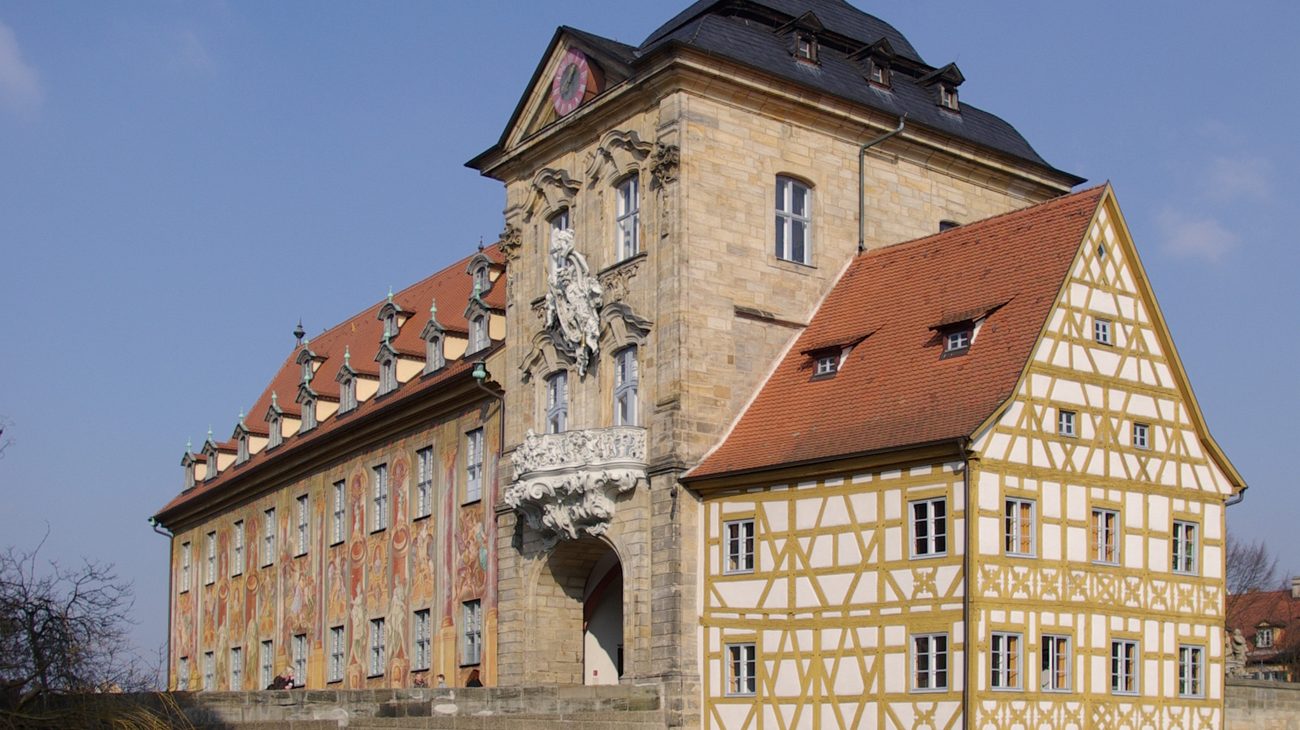
The 14th-century Old Town Hall (Altes Rathaus) perched dramatically over the Regnitz River in Bamberg.
For decades, the standard foreign tourist itinerary across Germany has followed an unvarying path: a frantic sprint through Berlin's Cold War memorials, a tour bus stop in Munich for an overpriced liter of beer at the Hofbräuhaus, and a selfie in front of the rebuilt castle gates of Neuschwanstein alongside thousands of selfie-stick wielding crowds.
While those landmarks have their place, they often fail to deliver what travelers crave most: the intimate, romantic, and deeply layered historical soul of Deutschland.
My first trip off the standard rail corridor took me into Upper Franconia to the medieval town of Bamberg. Sitting on an outdoor wooden bench outside the 15th-century Schlenkerla brewery on a crisp October afternoon, smelling the rich, smoky aroma of malt dried over open beechwood fires and sipping a deep copper glass of Aecht Schlenkerla Rauchbier while the Regnitz River flowed beneath ancient half-timbered fishermen's cottages, I discovered the Germany I had always envisioned.
Over on r/germany and r/travel, local residents and frequent visitors consistently emphasize one rule: Germany's finest treasures are its historic medium-sized cities that survived wartime destruction. Here are twelve breathtaking German cities that Reddit travelers overwhelmingly prefer over the conventional tourist hubs.
1. Bamberg (Bavaria / Franconia): The Seven Hills and Smoky Beer
Spared almost completely from wartime bombings, Bamberg’s entire medieval and baroque town center is an intact UNESCO World Heritage site built across seven hills.
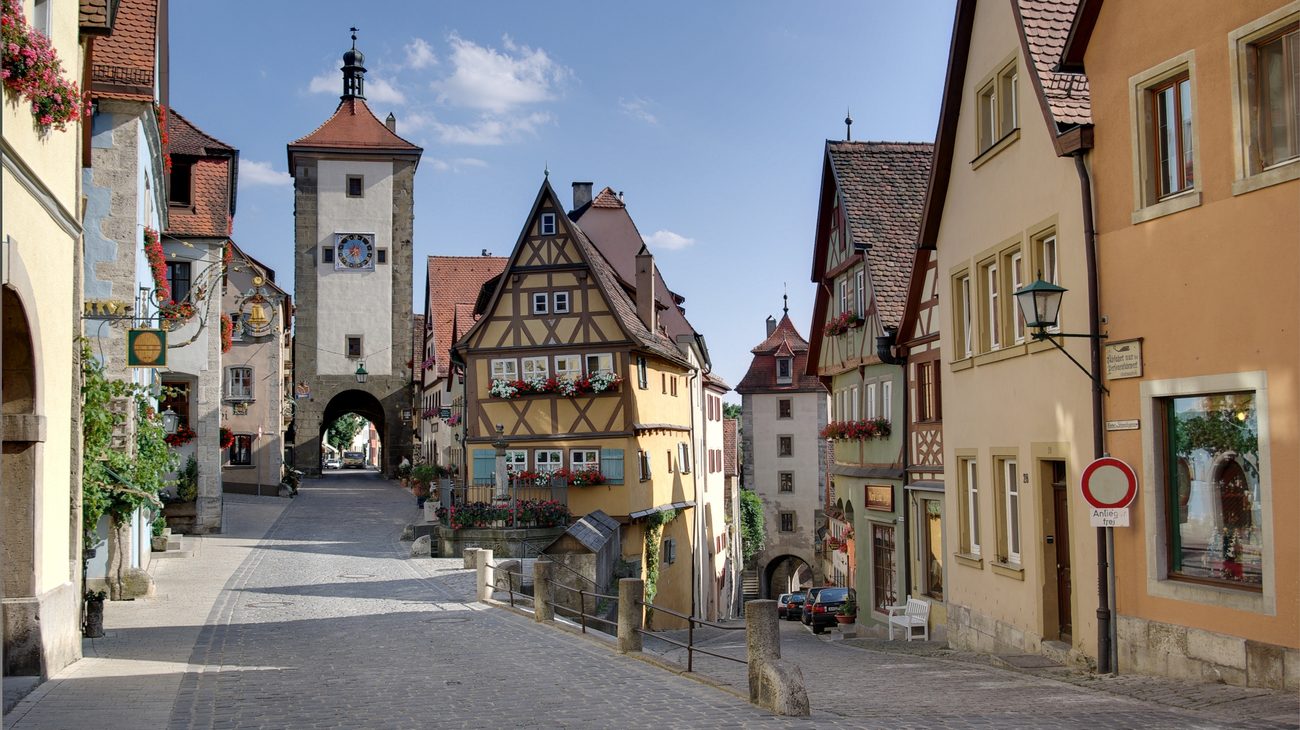 The storybook timbered houses and medieval tower of the Plönlein in Rothenburg ob der Tauber.
The architectural centerpiece is the Altes Rathaus (Old Town Hall), perched extraordinarily on an artificial island in the middle of the roaring Regnitz River, flanked by twin arched stone bridges and covered in colorful trompe-l'œil frescoes. Bamberg is also the undisputed beer capital of Germany: with eleven independent family-owned breweries within city limits, it is famous worldwide for Rauchbier (smokebeer), brewed with malt cured over beechwood fires since the 14th century.
2. Rothenburg ob der Tauber (Bavaria): The Fairytale Medieval Walled Town
Perched above the Tauber River along Germany's famous Romantic Road, Rothenburg ob der Tauber is the quintessential German storybook town.
Surrounded by two miles of completely intact medieval defensive stone walls punctuated by 42 fortified towers and gates, you can walk the entire perimeter ramparts for bird's-eye views over red-tiled gables. The iconic postcard viewpoint is the Plönlein—a picturesque fork in the cobblestone road with a narrow half-timbered yellow townhouse framed by two ancient defensive gate towers.
- Reddit Tip (via r/germany): Avoid visiting only as a mid-day tour bus passenger. Stay overnight! Join the famous Night Watchman Tour at 8:00 PM, and wander the cobblestones after dark when the tour buses have returned to Frankfurt and Munich.
3. Heidelberg (Baden-Württemberg): Romantic Castle Ruins and River Poetry
Cradled in the deep, forested valley of the Neckar River, Heidelberg has long been celebrated as the spiritual capital of German Romanticism.
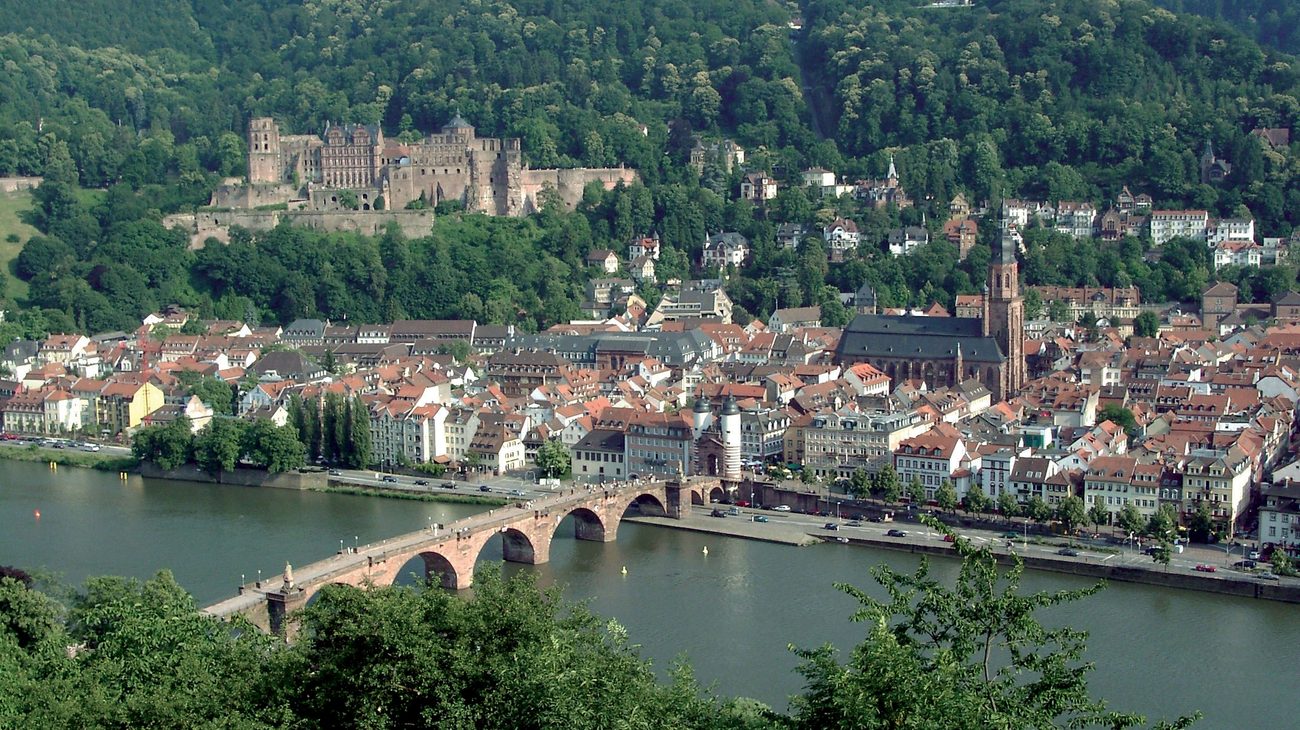 Heidelberg Castle ruins perched above the red-roofed Old Town and Neckar River bridge.
Home to Germany's oldest university (founded in 1386), Heidelberg feels eternally youthful. Looming 300 feet above the red-roofed baroque Altstadt stands the magnificent, red-sandstone ruins of Heidelberg Castle—partially destroyed by French troops in 1689 and lightning strikes in 1764. Cross the 18th-century Old Bridge (Alte Brücke) and hike up the Philosophenweg (Philosophers' Walk) on the northern riverbank for the legendary view that inspired poets Goethe, Mark Twain, and Turner.
4. Freiburg im Breisgau (Baden-Württemberg): Sun, Canals, and Black Forest Vines
Located in Germany's southwest corner near the French and Swiss borders, Freiburg is officially Germany's sunniest and warmest city. It serves as the primary urban gateway to the deep fir forests of the Black Forest (Schwarzwald).
 Crystal-clear water running through historic stone Bächle canals in Freiburg.
The city’s trademark feature is its Bächle—a network of small, crystal-clear water gutters running through almost every cobblestone street in the Old Town, fed by the roaring Dreisam River since the 13th century (local legend says that if you accidentally step into a Bächle, you are destined to marry a Freiburg local!). The city is dominated by the Freiburg Minster, an 800-year-old red sandstone cathedral whose 116-meter openwork gothic tower was praised by historian Jacob Burckhardt as "the most beautiful spire on earth."
5. Lübeck (Schleswig-Holstein): Hanseatic Queen of the North
Situated on the Baltic coast, Lübeck was once the mighty medieval capital of the Hanseatic League—the maritime trading confederation that ruled northern European commerce for four centuries.
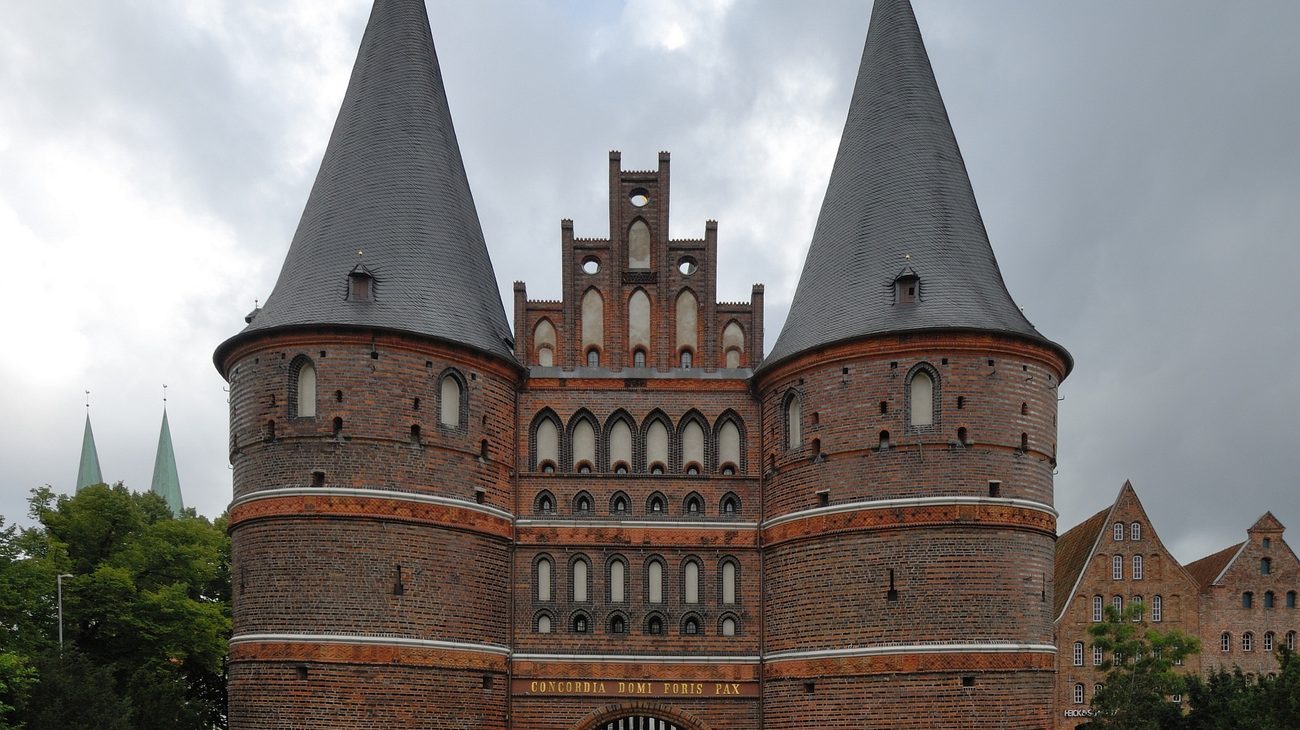 The imposing twin brick towers of the medieval Holstentor gate in Lübeck.
Surrounded entirely by water on an island in the Trave River, Lübeck is the global capital of Brick Gothic architecture. Its western approach is guarded by the Holstentor: a colossal 15th-century fortified twin-towered red-brick city gate leaning slightly into the marshy soil. Lübeck is also world-renowned for Niederegger marzipan—visit the historic Café Niederegger to sample decadent marzipan cakes and almond confections made from 100% pure Mediterranean almond paste.
6. Regensburg (Bavaria): Two Millennia on the Blue Danube
Located at the northernmost bend of the Danube River, Regensburg is the best-preserved large medieval city in Germany. Spared from World War II devastation, it boasts over 1,500 listed heritage buildings spanning Roman, Romanesque, and Gothic eras.
Walk across the Steinerne Brücke (Stone Bridge)—built between 1135 and 1146, a medieval engineering marvel that carried crusaders across the Danube to the Holy Land. Right at the foot of the bridge, pull up a wooden stool at the Historische Wurstkuchl (Historic Sausage Kitchen), which has been serving charcoal-grilled pork sausages with homemade sweet mustard and sauerkraut continuously since 1146.
7. Quedlinburg (Saxony-Anhalt): Over 1,300 Half-Timbered Gems
Nestled at the northern foot of the Harz Mountains, Quedlinburg is an architectural miracle. With over 1,300 half-timbered houses spanning six centuries, it possesses the highest concentration of timber-framed architecture in Europe.
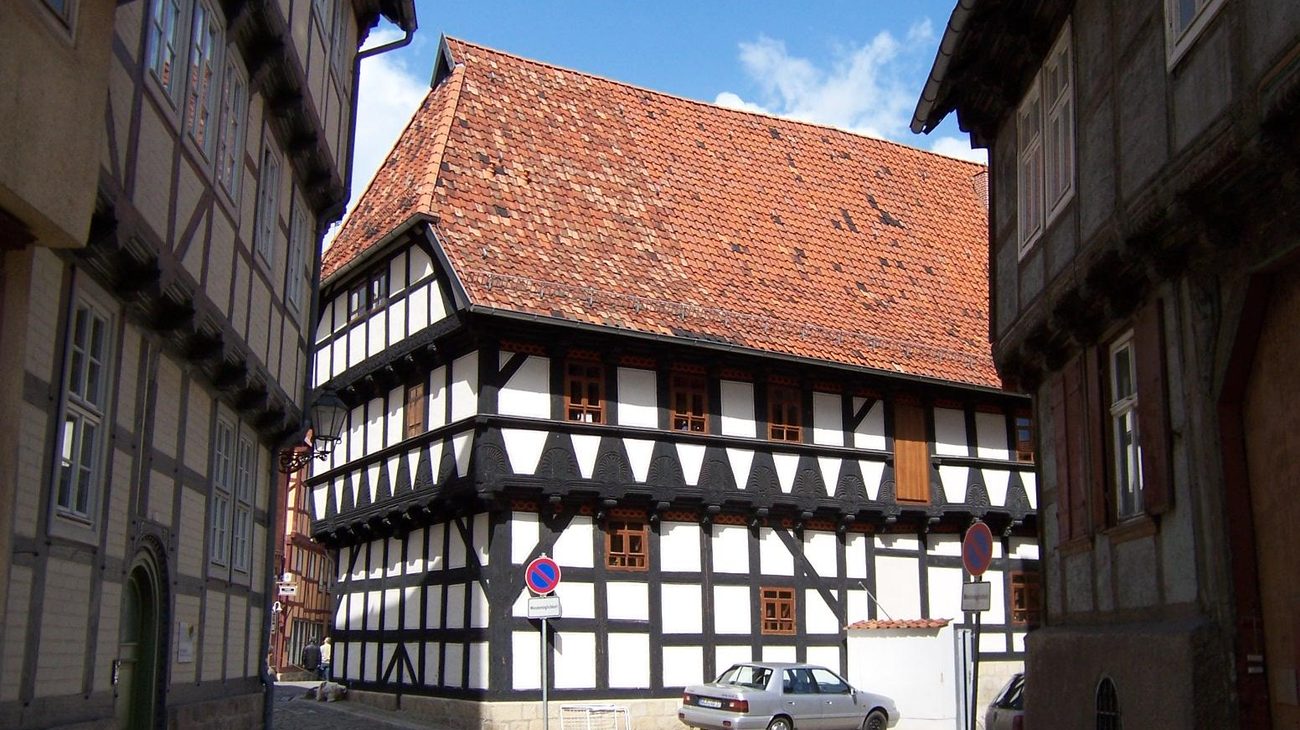 Centuries-old half-timbered merchant homes on cobblestone lanes in Quedlinburg.
The town is crowned by the Castle Hill (Schlossberg) and the Collegiate Church of St. Servatius, holding one of the wealthiest medieval church treasuries in Christendom. Wandering down Münzenberg hill, narrow lanes wind between pastel-painted timber buildings whose upper stories overhang so closely they nearly touch above your head.
8. Görlitz (Saxony): "Görliwood" on the Polish Border
Located on the Lusatian Neisse River on the border with Poland, Görlitz is arguably the most impeccably preserved architectural jewel in Central Europe. With over 4,000 carefully restored historical monuments spanning Gothic, Renaissance, Baroque, and Art Nouveau periods, the city has become a favorite filming location for Hollywood directors (earning the nickname "Görliwood"), starring in films like Wes Anderson’s The Grand Budapest Hotel and Quentin Tarantino's Inglourious Basterds.
9. Goslar (Lower Saxony): The Imperial City of the Harz
Also situated in the Harz Mountains, Goslar was founded in 922 around rich silver, copper, and lead mines at Rammelsberg. For centuries, Holy Roman Emperors held imperial diets inside the monumental Romanesque Imperial Palace (Kaiserpfalz). Today, its cobblestone squares are lined with slate-roofed half-timbered houses adorned with carved wooden guild emblems and wood-fired schnitzel taverns.
10. Tübingen (Baden-Württemberg): Riverside Punting and Youthful Spirit
Located just south of Stuttgart along the Neckar River, Tübingen is a historic university town with a vibrant, eco-conscious student population. The classic Tübingen experience is renting or riding a Stocherkahn—a traditional flat-bottom wooden punting boat propelled by a long wooden pole along the willow-lined riverbanks, passing the picturesque yellow pastel facade of the Hölderlinturm tower.
11. Meissen (Saxony): Porcelain Heritage on the Elbe
Set in the vineyard-covered hills of the Elbe River valley just 30 minutes downstream from Dresden, Meissen is famous worldwide as the birthplace of European hard-paste porcelain ("White Gold"). High above the river stands the dramatic late-Gothic Albrechtsburg castle and Meissen Cathedral, surrounded by historic wine taverns serving local crisp Saxon Sächsischer Landwein.
12. Schwerin (Mecklenburg-Vorpommern): The Fairytale Lake Palace
Surrounded by a shimmering network of twelve glacial lakes in northern Germany, Schwerin is dominated by the fairytale Schwerin Palace (Schloss Schwerin). Perched on its own island in Lake Schwerin, the palace features over 600 rooms and hundreds of golden spires, turrets, and gilded domes modeled on the French Renaissance Château de Chambord.
Germany Regional Cities Comparison Table
| City | State / Region | Rail Access From | Best Season | What Makes It Special |
|---|---|---|---|---|
| Bamberg | Bavaria (Franconia) | 45 min from Nuremberg | Year-round | Intact UNESCO old town & smoky Rauchbier |
| Rothenburg | Bavaria | 2 hrs from Frankfurt | May – Oct / Dec | Fairytale medieval walls & Night Watchman |
| Heidelberg | Baden-Württemberg | 1 hr from Frankfurt | Apr – Oct | Romantic castle ruins & Neckar river |
| Freiburg | Baden-Württemberg | 2 hrs from Frankfurt | May – Oct | Bächle canals, Black Forest, sunny climate |
| Lübeck | Schleswig-Holstein | 45 min from Hamburg | May – Sep / Dec | Hanseatic Brick Gothic & marzipan |
| Regensburg | Bavaria | 1.5 hrs from Munich | Year-round | Best-preserved medieval Danube city |
| Quedlinburg | Saxony-Anhalt | 2 hrs from Leipzig | May – Oct | Over 1,300 timber-framed houses |
This article is for informational purposes. Flight routes, passenger regulations, visa rules, and transit advisories are subject to change by airlines and aviation authorities. Readers are advised to verify schedules and travel documentation with relevant carriers and border agencies before departure.
Related Stories
10 Charming Cities in Taiwan That Deserve More International Attention
10 Beautiful Cities in Brazil That International Travelers Often Overlook