Philadelphia 2026 Semiquincentennial Guide: Historic Icons, Parkway Arts, and Food Rhythms

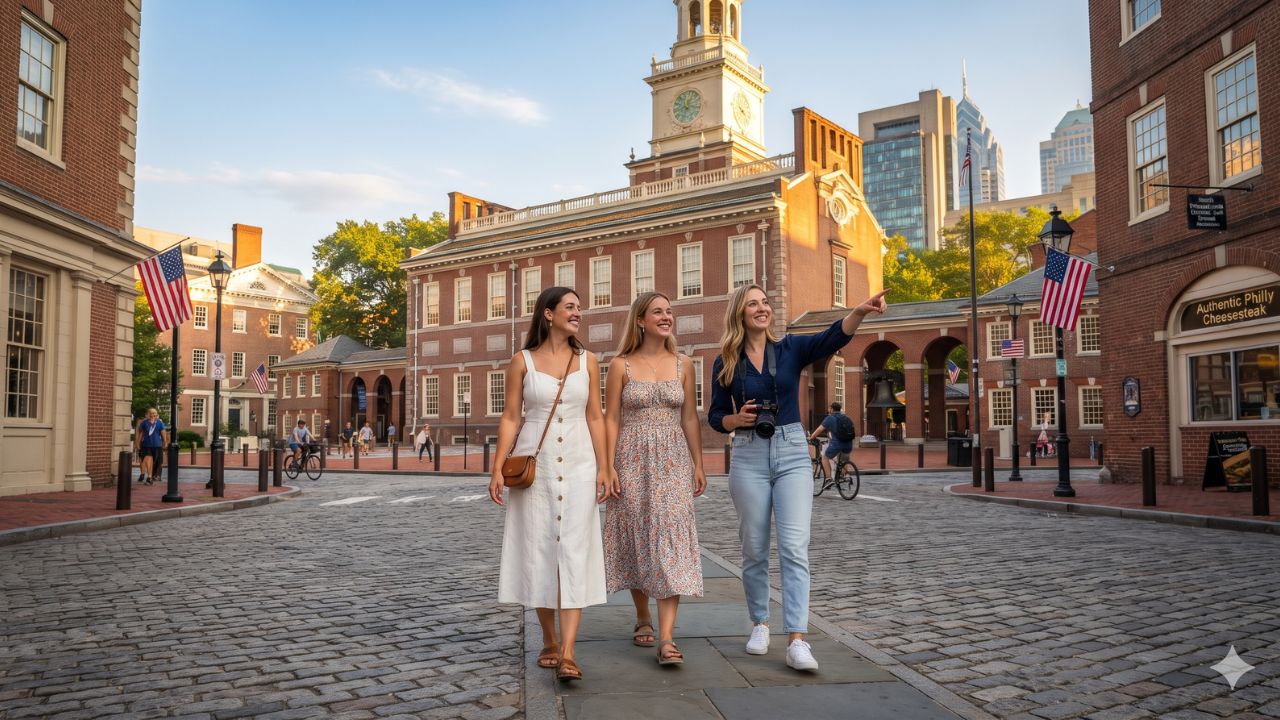
While millions travel to Philadelphia to stand where the Declaration of Independence was adopted in 1776, admission to both Independence Hall and the Liberty Bell remains completely free year-round. As the United States commemorates its 250th anniversary in 2026, Pennsylvania's largest city stands at the center of international attention. Beyond its colonial red-brick monuments, Philadelphia offers one of America's most walkable metropolitan cores, where century-old market stalls, world-renowned museum boulevards, and working-class culinary traditions thrive side by side.
With international travelers descending on the birthplace of American independence, navigating the city requires an insider understanding of timed entry releases, neighborhood micro-cultures, and local dining etiquette that generic guides overlook.
The Semiquincentennial Turning Point: Old City and Beyond
The year 2026 represents a landmark moment for Philadelphia. As the host city for America's Semiquincentennial celebrations, Independence National Historical Park anchors national retrospectives exploring the democratic debates of 1776 and 1787. Independence Hall, inscribed as a UNESCO World Heritage Site, preserves the assembly room where delegates debated the Declaration of Independence and drafted the US Constitution.
A few strides away inside the Liberty Bell Center, the 2,080-pound bell remains a global icon of emancipation. Its famous Biblical inscription ("Proclaim Liberty Throughout All the Land Unto All the Inhabitants Thereof") was championed by 19th-century abolitionists, women's suffragists, and 20th-century civil rights organizers.
Yet Philadelphia's current momentum extends far beyond colonial history. The Delaware River waterfront has completed a major transformation, turning post-industrial shipping wharves into community-centered public spaces like Race Street Pier and Cherry Street Pier beneath the sweeping cables of the Benjamin Franklin Bridge. Northwest of City Hall, the grand Benjamin Franklin Parkway connects an extraordinary concentration of cultural venues, including the Barnes Foundation, the Rodin Museum, the Franklin Institute, and the Philadelphia Museum of Art.
| Philadelphia Landmark | Neighborhood / District | Admission Policy | Reservation Requirement | Primary Experience |
|---|---|---|---|---|
| Independence Hall | Old City | Free admission | Timed ticket via Recreation.gov ($1 fee) | 1776 Assembly Room & early US history |
| Liberty Bell Center | Independence Mall | Free admission | No advance reservation required | Historic abolitionist and civil rights icon |
| Reading Terminal Market | Center City East | Free entry | Open daily; walk-in access | Pennsylvania Dutch fare & food market |
| Philadelphia Museum of Art | Parkway District | Ticketed gallery entry | Advance booking recommended for specials | Global art galleries, Rocky Steps & statue |
| Barnes Foundation | Benjamin Franklin Parkway | Ticketed admission | Timed entry slots strictly enforced | Post-Impressionist and early modern art |
| Longwood Gardens | Kennett Square (Chester Co.) | Ticketed estate entry | Timed admission tickets mandatory | 1,000+ acres of conservatory & fountains |
What Makes Philadelphia Experientially Unique
Unlike sprawling car-dependent American metropolises, Philadelphia was laid out by William Penn in 1682 on a disciplined grid between the Delaware and Schuylkill rivers. This compact geometry makes it one of the most walkable urban destinations in North America.
The architectural contrast is immediate. In Old City, cobblestone passages like Elfreth's Alley—the nation's oldest continuously inhabited residential street—stand minutes from the soaring granite tower of Philadelphia City Hall, crowned by Alexander Milne Calder's bronze statue of William Penn. Head west along the tree-lined Benjamin Franklin Parkway, designed in imitation of Paris's Champs-Élysées, and the scale shifts to neoclassical grandeur. At the end of the boulevard, the monumental staircase of the Philadelphia Museum of Art offers dual appeal: a world-class repository of painting and sculpture alongside the cinematic pop-culture heritage of the Rocky Steps.
Center City's culinary crown jewel is Reading Terminal Market, housed in a cavernous former train shed operating continuously since 1893. Here, generational Pennsylvania Dutch bakers from Lancaster County share corridors with Italian salumerias, Soul Food counters, and Middle Eastern bakeries, reflecting the city's layered immigration patterns.
Visitor Insider Tips: Timing, Transit, and Dining Etiquette
Experiencing Philadelphia like a local means avoiding midday tourist bottlenecks and respecting neighborhood customs:
Historic District Navigation Hacks
- Securing Independence Hall Passes: While entrance is free, tickets during peak 2026 dates sell out weeks in advance on Recreation.gov. Tickets drop daily at 7:00 AM Eastern Time for next-day visits. If you miss online slots, queue at the Independence Visitor Center before 8:30 AM for a limited pool of walk-up standby tickets.
- Liberty Bell Security Timing: Security queues at the Liberty Bell Center stretch around the block between 11:00 AM and 2:00 PM. Arrive either right at the 9:00 AM opening or after 4:00 PM to walk straight in without waiting.
Reading Terminal Market Strategy
- Beat the Lunch Stampede: Reading Terminal fills with convention attendees and downtown office workers between 11:30 AM and 1:30 PM. Visit between 8:30 AM and 10:00 AM for warm Pennsylvania Dutch apple cider donuts and shoofly pie. Note that Amish-run merchants close on Sundays.
Cheesesteak Protocols in South Philadelphia
- Master the Order Code: When ordering a traditional Philadelphia cheesesteak in South Philadelphia, state your cheese preference and onion choice in three words: "Whiz wit" (Cheez Whiz with fried onions) or "Provolone witout" (provolone cheese without onions). Have your payment ready before reaching the counter.
- Look Beyond the Tourist Crossroads: While the neon-lit intersection of Pat's and Geno's in South Philly provides classic atmosphere, regional food writers consistently favor neighborhood corner institutions like Angelo's Pizzeria on South 9th Street or John's Roast Pork down on Snyder Avenue for crustier bread and hand-carved meat.
Transit and Neighborhood Pacing
- Rely on SEPTA: Avoid rental cars and hotel parking fees averaging $55 to $75 per night. The SEPTA Market-Frankford Line ("the El") connects Old City to the dining and live-music corridors of Fishtown in 10 minutes, while walking or using regional Indego bike-share stations covers Center City effortlessly.
Cultural Preservation and Civic Renewal
Philadelphia's 2026 milestone arrives amidst ongoing neighborhood preservation and environmental revitalization efforts overseen by Visit Philadelphia.
Historic neighborhoods like Old City, Queen Village, and Society Hill balance heritage conservation regulations with the economic needs of small commercial businesses. Strict building facade protections ensure that 18th-century brickwork and gas lamps remain intact, while community land trusts in North and South Philadelphia fight to protect longtime residents from displacement caused by rapid urban development.
Along the Delaware River, environmental stewardship has turned once-abandoned piers into living urban wetlands and open-air studios. Cherry Street Pier maintains resident artist workspaces inside a 1919 municipal cargo hall, while Race Street Pier features multilevel decking built around existing physical pilings, giving visitors unobstructed river breezes without disturbing aquatic habitats. For travelers seeking nature, the rolling conservatory grounds of Longwood Gardens in neighboring Chester County demonstrate sustainable horticultural practices, recycling rainwater and maintaining rare plant germplasm across 1,000 acres.
FAQ: Visiting Philadelphia in 2026
Do I need tickets to enter Independence Hall?
Admission is free, but timed-entry reservation tickets purchased online via Recreation.gov are mandatory during peak seasons. A nominal $1 processing fee applies per ticket.
Is the Liberty Bell accessible without an advance reservation?
Yes. The Liberty Bell Center operates on a free, first-come, first-served basis. No advance reservations are required, though visitors must clear standard airport-style security.
How do I travel between Philadelphia's museum district and the historic district?
Center City's grid makes walking straightforward (about 25 minutes), or you can board SEPTA bus routes 38 or 48, which run directly between Old City and the Benjamin Franklin Parkway.
What is the best neighborhood to stay in for first-time visitors?
Center City and Rittenhouse Square provide central bases within walking distance of Reading Terminal Market, the Parkway museums, and transit links to Old City.
Related Travel Guides
- California Tourism 2027 Playbook: Super Bowl LXI, Pebble Beach U.S. Open, and Ahwahnee Centenary
- Jamaica Unveils $125M Richmond Hill Club in Montego Bay: Hillside Luxury and Heritage Travel Guide
- Miami Tourism Surges as 3.2 Million International Visitors Drive Record Hotel Rates in 2026
Trace the footsteps of early democracy along cobblestone alleys, order like a local in South Philly, and experience the living history of America's original capital.
This article is for informational purposes. Flight routes, passenger regulations, visa rules, and transit advisories are subject to change by airlines and aviation authorities. Readers are advised to verify schedules and travel documentation with relevant carriers and border agencies before departure.
Related Stories

California Tourism 2027 Playbook: Super Bowl LXI, Pebble Beach U.S. Open, and Ahwahnee Centenary

Jamaica Unveils $125M Richmond Hill Club in Montego Bay: Hillside Luxury and Heritage Travel Guide