
Peru Launches La Ruta de León: 38 Papal Heritage Sites Across 4 Cities to Drive New Tourism Economy
Peru is leveraging the legacy of Pope Leo XIV to establish 'La Ruta de León,' a strategic pilgrimage circuit featuring 38 attractions across four key cities to boost regional economic growth.

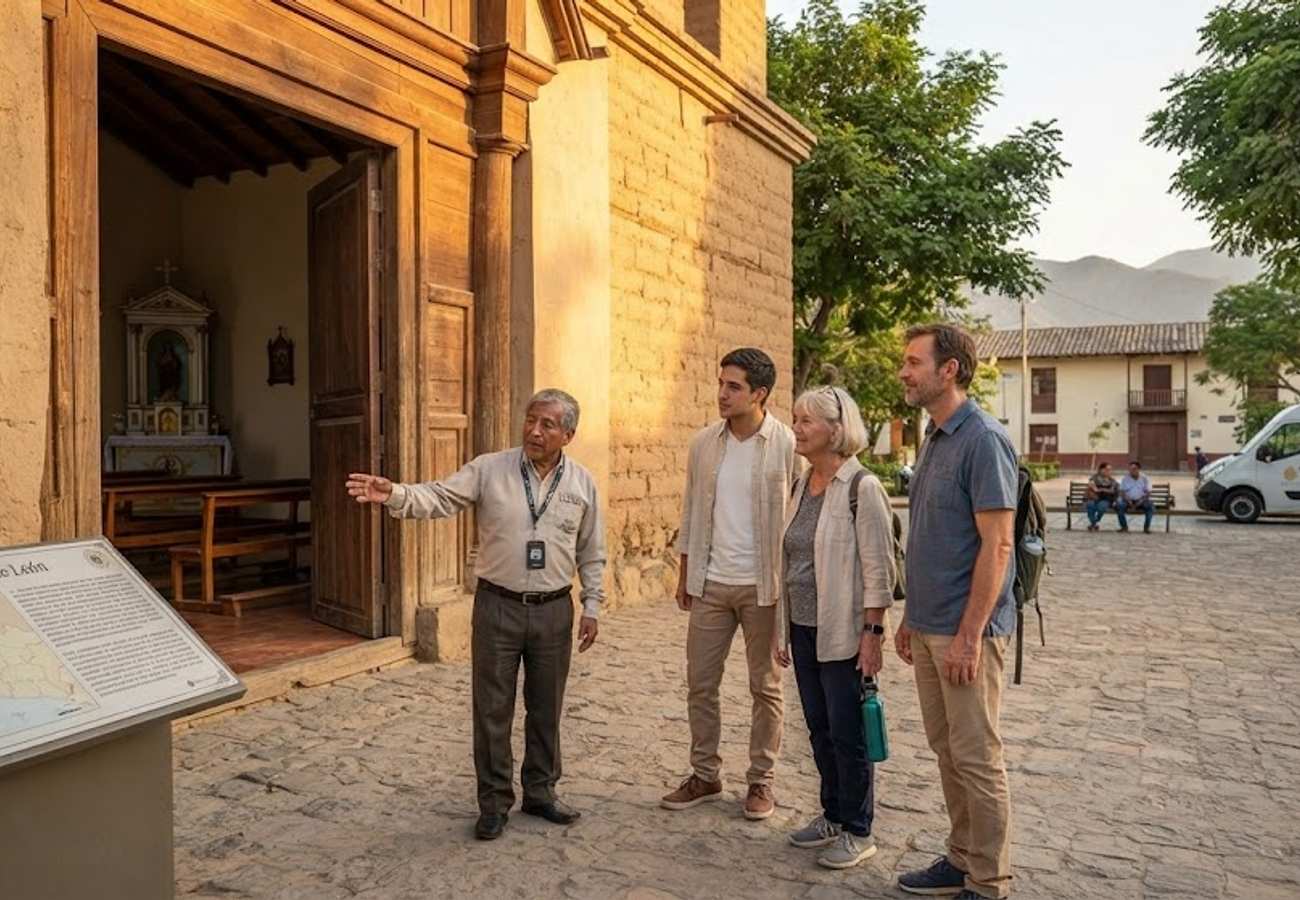
Image generated by AI
Peru is transforming the spiritual legacy of Pope Leo XIV into a scalable economic engine by developing a specialized tourism circuit involving 38 distinct points of interest across four major cities. This initiative aims to pivot the nation's travel appeal beyond traditional landmarks, tapping into the global surge of faith-based travel to stimulate growth in regional hospitality and infrastructure.
The strategy centers on the creation of "La Ruta de León," a curated religious and cultural corridor. This route maps the locations where Robert Francis Prevost served during his tenure in Peru, effectively bridging the gap between sacred history and modern economic development. By formalizing this path, Peruvian authorities are attempting to capture a segment of a massive global market; according to data from PROMPERÚ, between 300 million and 330 million people travel annually for spiritual or religious purposes, representing roughly 20% of all global tourism traffic.
Strategic Expansion Across Four Peruvian Regions
The "La Ruta de León" is not a localized project but a multi-regional effort spanning Lambayeque, Piura, La Libertad, and Callao. The current national framework integrates 38 specific tourism resources, ranging from traditional cathedrals and sanctuaries to natural landmarks and cultural centers.
Government agencies, including MINCETUR, view this as a method to decentralize tourism revenue. Rather than concentrating visitors in a few over-saturated hubs, the route encourages a flow of travelers through diverse provinces. This shift is designed to create immediate employment opportunities for local guides, transportation providers, and artisans, while simultaneously funding the improvement of public spaces and urban infrastructure.
Regional Breakdown of the Papal Circuit
The route is structured to provide a comprehensive narrative of the Pope's pastoral work, ensuring that each stop offers a distinct value proposition for the visitor.
| City / Destination | Region | Key Connection | Tourism Opportunity |
|---|---|---|---|
| Chiclayo | Lambayeque | Pope Leo XIV served as Bishop of Chiclayo | Religious, archaeological, cultural and nature tourism |
| Chulucanas | Piura | Connected with his pastoral work | Pilgrimage, local culture and regional tourism |
| Santo Domingo | Piura | Linked to the Pope’s pastoral mission | Religious and community-based tourism |
| Trujillo | La Libertad | Pope Leo XIV carried out pastoral and evangelisation work | Religious, heritage and cultural tourism |
| Callao | Callao | Pope Leo XIV served as Apostolic Administrator | Religious, cultural, museum and gastronomy tourism |
Chiclayo as the Primary Economic Hub
Within the national circuit, Chiclayo serves as the most critical node. Located in the Lambayeque region, the city holds a deep personal connection to the Pope due to his tenure as its bishop. MINCETUR reports that Lambayeque is the cornerstone of the initiative, housing 23 of the 38 identified tourism resources.
The economic objective in Chiclayo is to transition "single-stop" visitors into multi-day tourists. A standard visit to the Santa María Cathedral provides minimal local spending; however, by integrating the visit with other regional attractions—such as the Bosque de Pómac Historical Sanctuary—the government hopes to extend stays to two or three days. This extension significantly increases the average spend per visitor on lodging, dining, and local transport, effectively turning a religious pilgrimage into a comprehensive destination experience.
Diversifying the Piura and La Libertad Experience
In the Piura region, the focus shifts toward more intimate, community-based tourism in Chulucanas and Santo Domingo. In Chulucanas, sites like the San José Obrero Parish and La Sagrada Familia Church allow travelers to follow a personal narrative of the Pope's mission. This emotional connection is a key driver for spiritual travelers, who are more likely to seek out authentic, off-the-beaten-path experiences than traditional sightseers.
Similarly, Trujillo in the La Libertad region allows Peru to merge the papal route with its existing cultural infrastructure. By adding religious milestones to Trujillo's already established architectural and historical offerings, the city can attract a hybrid traveler—someone who seeks spiritual meaning alongside academic or cultural exploration.
The Shift Toward Transformative Travel
The development of La Ruta de León aligns with a broader global trend in the travel industry. PROMPERÚ indicates that approximately 28% of modern travelers are now seeking "transformative" or spiritual experiences. This suggests that the route's appeal extends beyond the Catholic faith to include those interested in history, architecture, and the broader Peruvian identity.
By positioning the Pope's legacy as a gateway to the country's diverse regions, Peru is attempting to build a sustainable tourism product that is resilient to the volatility of general leisure travel. The integration of gastronomy in Callao and archaeology in Lambayeque ensures that the route remains attractive to a wide demographic of international visitors.
Why This Matters: The Impact on the Modern Traveler
For the traveler, the formalization of La Ruta de León means a shift from fragmented sightseeing to a structured, narrative-driven journey. Instead of navigating the logistical hurdles of visiting remote parishes or historical sites independently, visitors now have a government-backed framework that improves safety, accessibility, and service quality.
From a logistical standpoint, this creates a "multiplier effect." When a traveler visits a small town like Santo Domingo, the economic benefit is not limited to the church; it extends to the small-scale hotel owner, the local taxi driver, and the street-food vendor. For the digital nomad or the slow traveler, this provides an opportunity to explore the "real Peru" outside of the Cusco-Lima axis, offering a more authentic engagement with local communities.
Peru is effectively turning a spiritual legacy into a blueprint for regional economic resilience.
Related Travel Guides
Disclaimer
This article is for informational and educational purposes only. It does not constitute legal, financial, or professional advice. While we strive to provide accurate and up-to-date information, travel policies, regulations, and conditions change rapidly. Always verify information with official sources before making travel decisions. Nomad Lawyer makes no representations about the accuracy, reliability, completeness, or suitability of the information provided. Readers should consult qualified professionals for advice specific to their circumstances. The views expressed in this article are those of the author and do not necessarily reflect the views of Nomad Lawyer.
Preeti Gunjan
Contributor & Community Manager
A passionate traveller and community builder. Preeti helps grow the Nomad Lawyer community, fostering engagement and bringing the reader experience to life.
Learn more about our team →