
Parthenon Sculptures Dispute 2026: Guide to Seeing the Marbles in Athens and London
A comprehensive guide to the fragmented location of the Parthenon Sculptures, detailing the legal dispute between Greece and the UK and how to visit the remains in 2026.

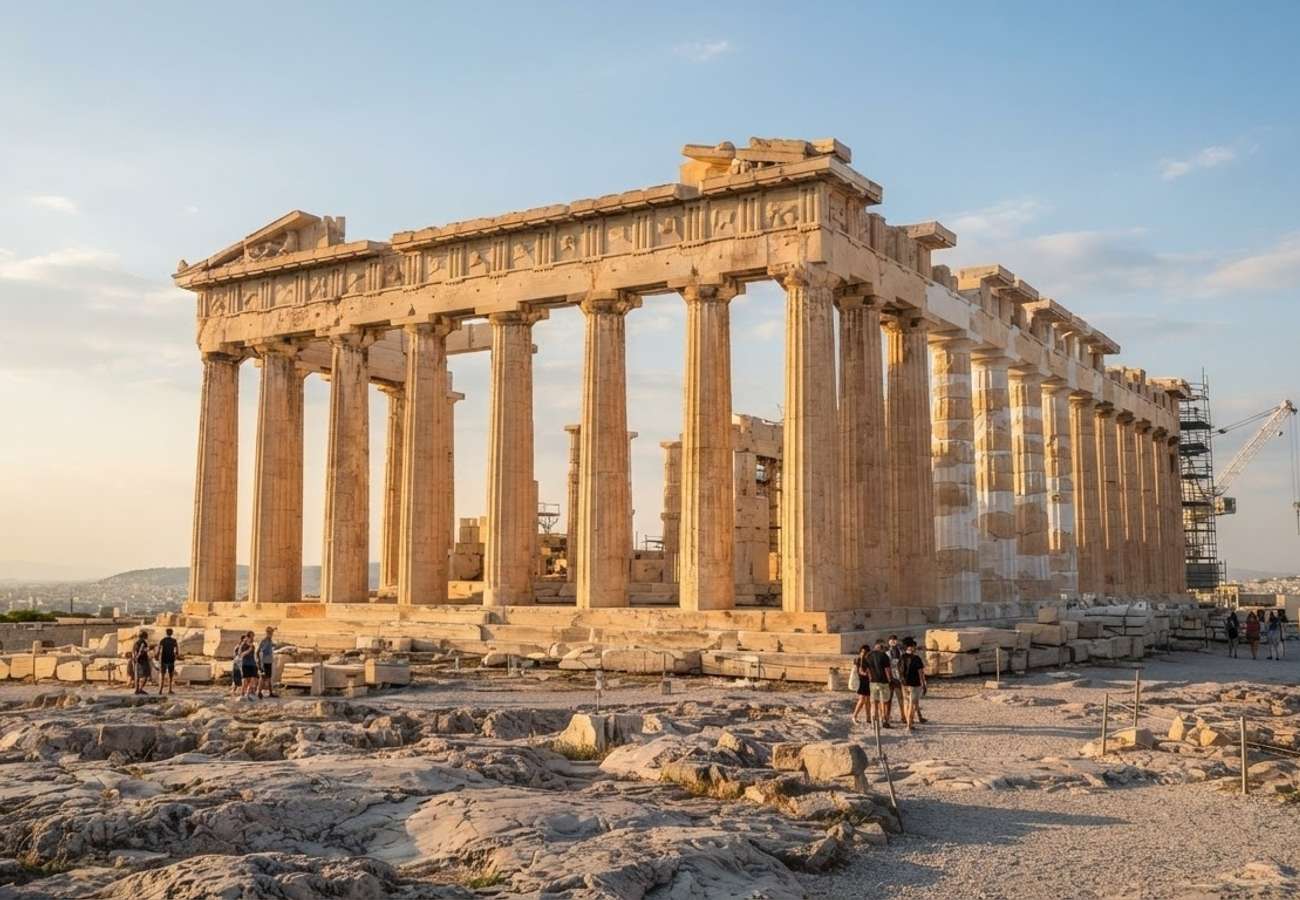
Image generated by AI
The world's most famous architectural dispute is physically split between two cities, forcing travelers to visit both Athens and London to see the complete story of the Parthenon Sculptures. For those planning trips in 2026, understanding this fragmentation is essential to navigating the Acropolis and the museums that house these ancient treasures.
The Parthenon, a temple dedicated to Athena and constructed between 447 and 432 BC, once boasted the most ambitious sculptural program of the Greek world. This included a continuous inner frieze, high-relief metopes, and massive pedimental statues depicting the gods and heroes of antiquity. However, the monument has suffered centuries of trauma, most notably a 1687 gunpowder explosion that shattered much of its decoration.
The current geopolitical tension surrounding the works stems from the early 19th century, when Lord Elgin, the British ambassador to the Ottoman Empire, removed approximately half of the surviving sculptures and transported them to the United Kingdom. This action created a permanent divide: some originals remain in Greece, some are in London, and others are scattered in smaller quantities across Europe.
Navigating the Split Between Athens and London
For the modern traveler, the experience of viewing the Parthenon Sculptures is divided between two primary institutions. The Acropolis Museum in Athens and the British Museum in London each hold a significant portion of the original marble, creating two very different viewing experiences.
The Acropolis Museum, which opened its doors in 2009, is located roughly 300 meters from the temple itself. Its top floor, the Parthenon Gallery, is a feat of architectural storytelling. The room is designed to mirror the exact footprint and orientation of the temple on the hill. Through floor-to-ceiling glass, visitors can look directly at the Parthenon while standing beside the sculptures that once adorned it.
In contrast, the British Museum houses its collection in the Duveen Gallery. Opened in the 1930s, this expansive hall presents the marbles as masterpieces of classical art within a global context. While the Duveen Gallery allows for an intimate study of the carving's precision, it lacks the geographic and visual connection to the original site that defines the Athens experience.
Beyond these two hubs, smaller fragments exist in other European capitals. The Louvre in Paris possesses a metope featuring a battle between a Lapith and a centaur, while the National Museum of Denmark in Copenhagen holds a piece of the frieze. While these are rarely the primary destination for tourists, they serve as a reminder that the sculptures' displacement was a widespread phenomenon.
The Reality of Visiting the Acropolis Site in 2026
Many first-time visitors are surprised to find that the Parthenon temple on the Acropolis plateau is largely devoid of its original sculptural decoration. Because of the extreme vulnerability of the Pentelic marble to wind, sun, and urban pollution, Greek authorities have moved almost all surviving artwork indoors.
What remains on the temple today is primarily architectural. Visitors will see the iconic colonnade and the restored entablature, but the metopes and pedimental figures are gone. Much of the site remains under active restoration; as of 2026, scaffolding and cranes are common sights, particularly on the north and west elevations.
For an efficient visit, industry observers suggest a specific sequence. Spending 45 to 60 minutes on the Acropolis plateau provides the necessary scale and context, followed by a 90-minute to two-hour visit to the Acropolis Museum. In the summer months, when temperatures on the rock frequently exceed 32 degrees Celsius, starting at the air-conditioned museum is highly recommended.
Estimated Entry Costs and Logistics for 2026
| Location | High Season Price (Approx.) | Low Season Price | Ticket Type |
|---|---|---|---|
| Acropolis Archaeological Site | €20 - €30 | Reduced | Timed Entry |
| Acropolis Museum | €10 - €15 | Reduced | Standard/Combined |
Note: Timed tickets are strongly advised for peak months to bypass security bottlenecks.
Inside the Parthenon Gallery's Design
The Parthenon Gallery is more than a display space; it is a three-dimensional reconstruction. The gallery features an inner rectangular core representing the cella (the temple's main chamber), with sculptures mounted at their original heights and positions.
As visitors move clockwise through the gallery, they follow the narrative of the Panathenaic procession. The museum uses a poignant visual strategy: original honey-colored marble blocks are placed alongside bright white plaster casts of the pieces currently held in London. This stark color contrast makes the "missing" pieces of the puzzle immediately apparent to the viewer.
The perimeter of the gallery houses the metopes and pediment fragments. For example, the chariot of the moon goddess Selene is positioned to suggest its original place in the triangular gables. By leaving the gaps where sculptures are absent, the museum turns the gallery into a physical manifestation of the repatriation dispute.
Why This Matters: The Traveler's Perspective
From a logistical and educational standpoint, the fragmentation of the Parthenon Sculptures transforms a simple sightseeing trip into a lesson in cultural diplomacy and law. For the traveler, this means that seeing the sculptures in only one city provides an incomplete narrative.
In London, the sculptures are presented as "universal" art, stripped of their architectural context but elevated as standalone masterpieces. In Athens, they are presented as "stolen" limbs of a living monument, where the empty spaces in the gallery are as meaningful as the marble itself.
For those interested in the legalities of cultural heritage, the dispute highlights the tension between the "universal museum" concept (where art is accessible to a global audience in hubs like London) and the "contextual" approach (where art belongs to its place of origin). Visiting both sites allows a traveler to decide for themselves whether the sculptures are better served as global ambassadors of Greek art or as integral parts of the Athenian skyline.
The silence of the empty pedestals in Athens speaks as loudly as the marble in London.
Related Travel Guides
Disclaimer
This article is for informational and educational purposes only. It does not constitute legal, financial, or professional advice. While we strive to provide accurate and up-to-date information, travel policies, regulations, and conditions change rapidly. Always verify information with official sources before making travel decisions. Nomad Lawyer makes no representations about the accuracy, reliability, completeness, or suitability of the information provided. Readers should consult qualified professionals for advice specific to their circumstances. The views expressed in this article are those of the author and do not necessarily reflect the views of Nomad Lawyer.
Kunal K Choudhary
Co-Founder & Contributor
A passionate traveller and tech enthusiast. Kunal contributes to the vision and growth of Nomad Lawyer, bringing fresh perspectives and driving the community forward.
Learn more about our team →